G x M x E =Yield
Many (all) saleable varieties will yield 35-40bu. If you’re in an area that has a 30yr average precip of 6”, saving a few bucks on seed Might be a good strategy.
Opportunity cost of hitting a year with 10+” could be massive.
You have control on G & M
Vegas odds…
@bscomet22 I would agree. More than five years worth of testing is incrementally more valuable. Sampling in the right spot also 🔑
Curious why you’re not going down to 24”? We don’t go deeper than 24 due to liability.
I’m glad you got your top depth right 😉
Our career nutrient making the news again.
Phosphorus is the nutrient of biggest concern long term.
We might have 100’s, even 1000’s of lbs in the soil, but I still haven’t seen any system that truly unlocks it for plant availability.
We still need lbs applied.
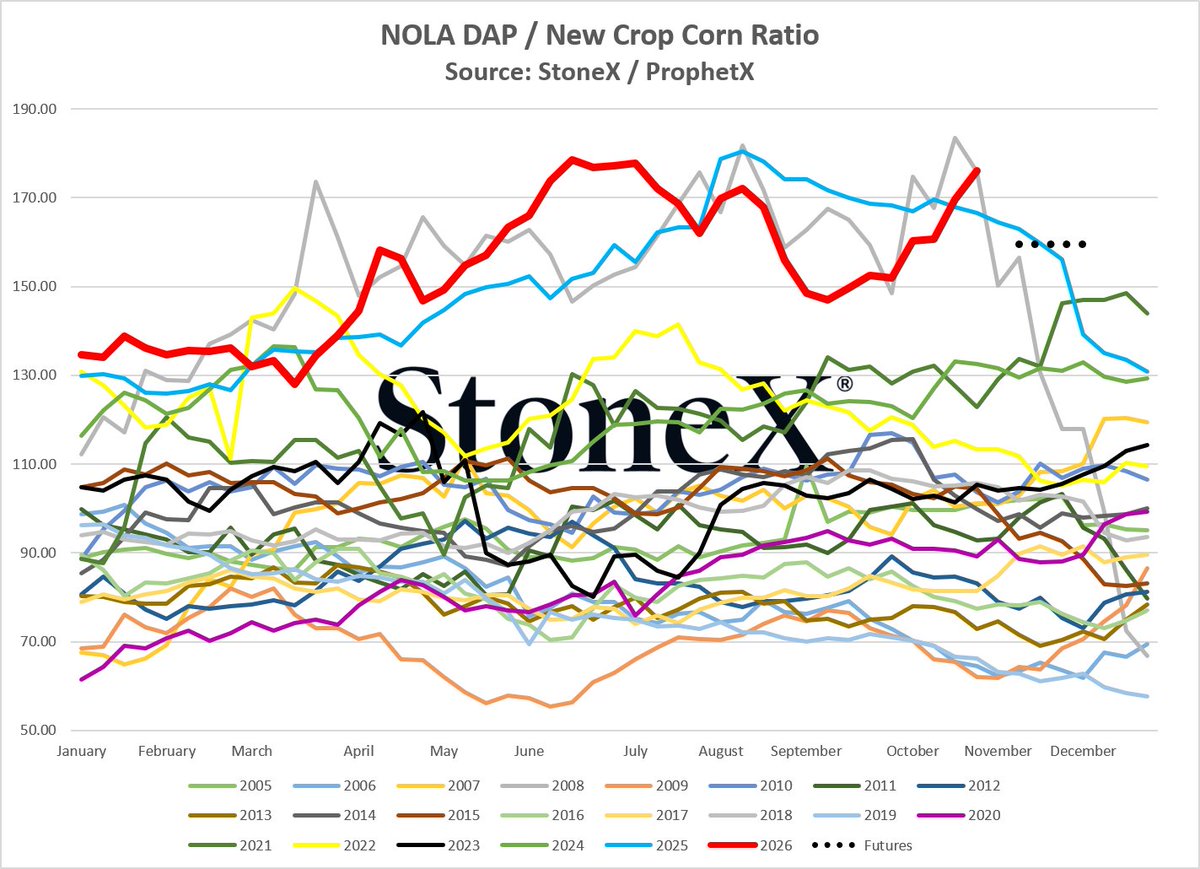
Assuming corn and DAP prices do not change substantially, the ratio between them will set all-time high's for November and December...and it will not be a close 2nd.
Still hard to see phosphate dropping in price substantially.
Hoping corn improves/moves higher.
What's the most actual N you've ever applied to irrigated barley? Looking at early soil tests on pivots with NO N left in soil. With respectable yield targets, we're talking 160'ish lbs/ac N...
This is why AI will have a hard time replacing experience in real world agronomy.
There’s no other way to cut it - N makes yield. Testing in the spring is exponentially less money than a critical nitrogen application and in season nitrogen on Irrigation allows some flexibility & risk mitigation.
Another career nutrient post ❤️
You can’t be green if you’re in the red - credit @HebertKristjan
We’ve embarked on a 6-year Phosphorus study comparing check, multiple different P sources by spend and by rate, vs Cadillac treatment.
I’ll bet lunch that check wins the $ race yr1&2.
Building soil P is expensive. The math and the field don’t agree.
Just jumped in the combine helping the family farm . Bean yields around here have been pretty good. Can’t speak for everybody, but overall solid. Quality’s a little off.
I was listening to a video saying phosphorus needs to be 50 ppm, preferably 100. We just finished a field that made over 60. Around here most APHs are 43 to 45. Mother Nature gets the credit. She did the work.
That field tested 3 to 10 ppm phosphorus. Do you really believe another 10, 12, 15 bushel was sitting there just because the soil test number was higher?
I ran the math with Grok on building this ground to 50. 11-52-0 at $1,152 a ton is $1.11 a pound of P₂O₅. University data (Iowa State, Minnesota, SDSU, Tri-State) says it takes about 16 to 20 pounds of P₂O₅ to move a Mehlich-3 test 1 ppm. From 5 ppm to 50, that’s roughly $900 an acre on paper. At pH 7.2, calcium ties a lot of that up. Figure 40 percent fixation and you’re closer to $1,500 an acre before you even count crop removal working against you every year.
Then ask how many bushels that takes to break even. Chasing that ppm, I’d go broke — or I’d be better off buying more land.
We foliar fed this field several times. No check strip, so I can’t prove it paid. I believe it did. Exudation drives phosphorus uptake, stimulation and plant health drives exudation. The more you stimulate the crop, the more phosphorus gets in the plant. - both are important soil P and Uptake. Can’t spend it all just to get it applied to the soil.
I’m not anti-phosphorus. I want P in the field. I’m anti-losing money chasing a magical ppm.
South Dakota cash beans are about $12.40 tonight. At that price, $1,200 an acre is 97 bushels. $2,000 is 161 bushels. Spread over five years, you need an extra 19 to 32 bushel every single year just to get your money back. Not once. Every year.
Phosphorus - career nutrient.
Most fertilizers should have a multi-year mentality. Most farmers could absolutely skip phosphorus & not have detrimental effect.
Lots of sales people not asking for soil tests, recommending small dose P.
Buyer beware.
@bscomet22@JBMcAdams Does anyone leave it or does the frost window / green stem issue / heavy crop force the hand to spray or swath?
I prefer swathing. Works every time and anchors nicely if cut high enough, but farmers seem to lean towards spraying as they can do way more ac/day.
@TimNeale1 I believe wholeheartedly that compaction is a yield limiting influence. I also believe that CTF would be the pinnacle of precision agriculture to benefit Soil biology and nutrient efficiency. In our 🇨🇦 geography, many people think a freeze/thaw cycle, cures it. I don’t think so.
After 10 days of garbage harvest weather, the difference in “Pod Shatter” genes is really showing up… some are WAY better than others.
In other news, all l Ethrel PGR comparisons are clear cut winners (again). I wish that product was easier to use and scale.
This has been a very long cycle over the past 10 years, especially. I’m hopeful that there are things we will discover that will help the productivity of our soils.
I am quite convinced that how we are farming today is not what we’re going to be able to do 40-50 years from now.
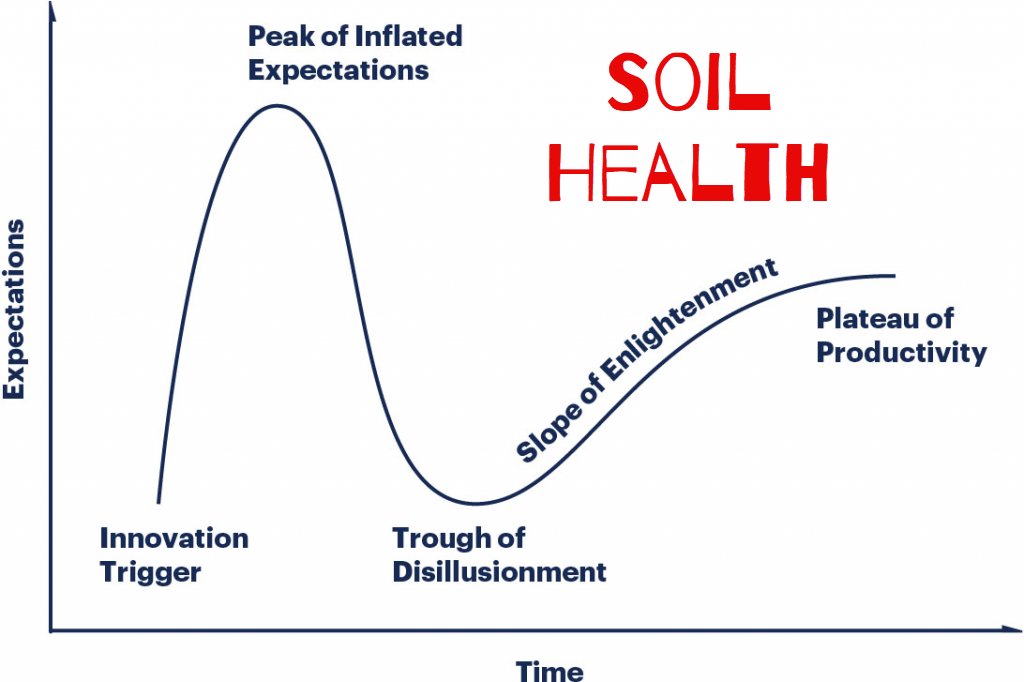
Since 2016, California’s Healthy Soils Program has spent $162 million to improve soil health and sequester carbon.
7 field trials of the program's impacts: "short-term impacts on soil health were limited."
Are we in the Trough of Disillusionment?
https://t.co/PueN9N57k5
What other good apps are out there for mileage tracking? I find this increase a bit steep in a world where software costs are going the other way? @MileIQ
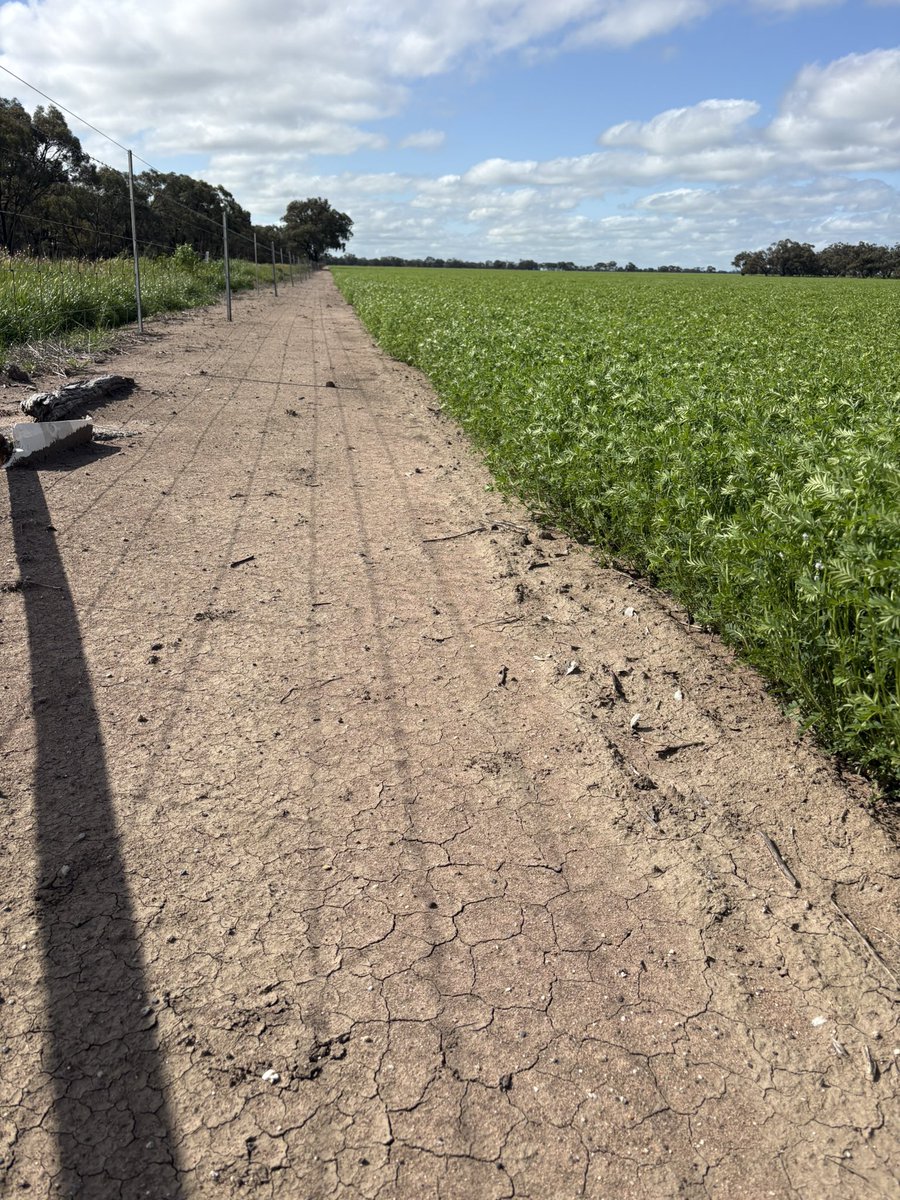
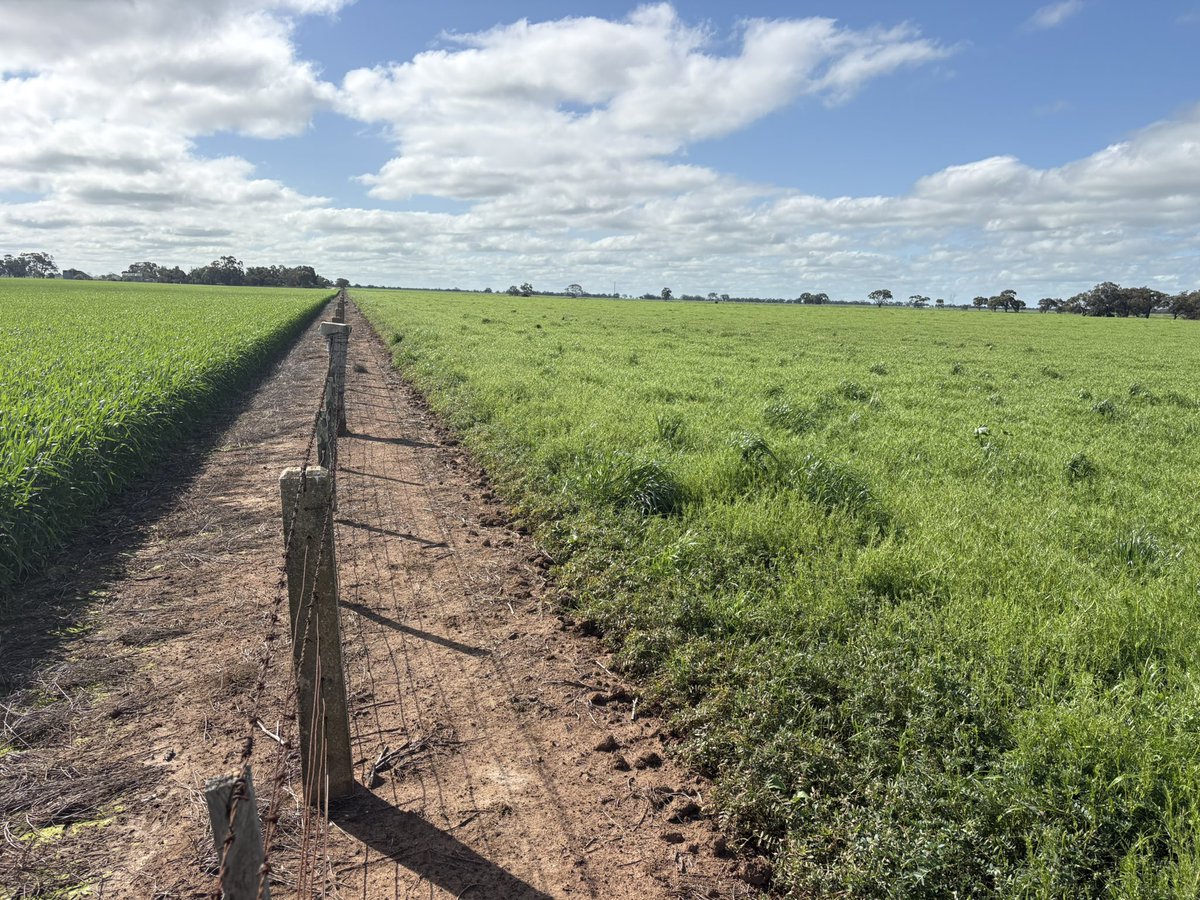
One common theme when I tour around Aussies - “Your farms are doing a great job, but your fence rows, not so much!”
Majority of our problems come from the field boundary. This is great management 👇🏻
Prevention the key with managing glyphosate resistant rye grass on fence-lines as one pass contact herbicide options struggle for a high % of control. Pre break of the season residuals doing an amazing job keeping fence lines spotless vs alternate post Em glufosinate options 🔥