🔴 Must Watch 🔴
“Foreign Algorithms Are Quietly Conditioning the Minds of India's Youth” - Mallika Bajaj
Mallika Bajaj is a digital transformation expert who studies how technology affects the way people learn, behave and think.
Digital transformation architect Mallika Bajaj argues that foreign social media algorithms are engaging in “cognitive warfare” by conditioning Indian youth through an Algorithmic Cognitive Reinforcement Loop (ACRL). Bajaj suggests these platforms prioritize “Four Vs” (Viciousness, Virality, Vulgarity, Violence) over truth, prompting a need for Indian cognitive neural sovereignty and indigenous technology development.
Credit : ANI Podcast With Smita Prakash Clips.
Well, when a child is conceived, the DNA split is 50/50 from both parents. Except for one small detail: mitochondrial DNA. It’s passed down only through the mother and never through sperm.
Which means something interesting: all living humans can trace their mitochondrial line back to one woman, not one man.
And every daughter born continues passing that same line forward.
Happy Mother’s day
A donkey skin sells in Kenya for $130. Boiled into a Chinese beauty product called ejiao, it becomes part of an $8 billion industry. Almost 6 million donkeys are killed every year to feed it. The finished products are sold on Amazon.
Ejiao is a kind of gelatin made by simmering donkey skin for hours. It's mixed into face creams, anti-aging pills, candies, and tonics. Even China's own health regulator has admitted ejiao is just boiled donkey skin. No clinical trials show that it works. But a hit Chinese TV drama called Empress in the Palace put it back in fashion around 2012. The country's growing middle class started taking it for anemia, fatigue, miscarriage, even premature aging.
Donkeys can't reproduce that fast. A female donkey is pregnant for 12 full months and has just one foal at a time. She doesn't start breeding until age two or three. So when Chinese demand exploded, China's own donkey population collapsed from 11 million in 1992 to under 2 million by 2020.
The hunt then went global. Africa has roughly 33 million donkeys, two-thirds of the world's supply. Botswana's donkey population has halved since 2016. In Kenya, government-approved slaughterhouses killed about half the country's donkeys in three years. According to The Donkey Sanctuary, 41% of African donkey owners surveyed had at least one animal stolen.
Donkeys are walked for weeks across borders, denied food and water, until they collapse. They're hit on the head with sledgehammers. Their throats are slit. Some are still breathing when they're skinned. A 2017 PETA investigation in China found foals as young as 5 months old killed this way. Up to one in five donkeys dies before reaching the slaughterhouse.
In February 2024, all 55 African Union countries voted to ban the trade for 15 years across the continent. China is Africa's biggest trading partner. The continent banned this trade anyway. The Donkey Sanctuary still projects demand will hit 6.8 million skins a year by 2027. Within weeks of the ban, donkey theft spiked across Africa. The trade went underground. Chinese companies are now in talks to set up donkey farms in Pakistan instead.
A donkey in rural Africa is often a family's only way to fetch water, carry goods to market, and send kids to school. When it gets stolen overnight, the women and children become the donkey. They walk further with heavier loads. The girls drop out of school first.
The donkey in this photo is leaning against a wall because it's exhausted. The industry on its back is worth $8 billion.
Let me explain what just happened today because it deserves so much recognition.
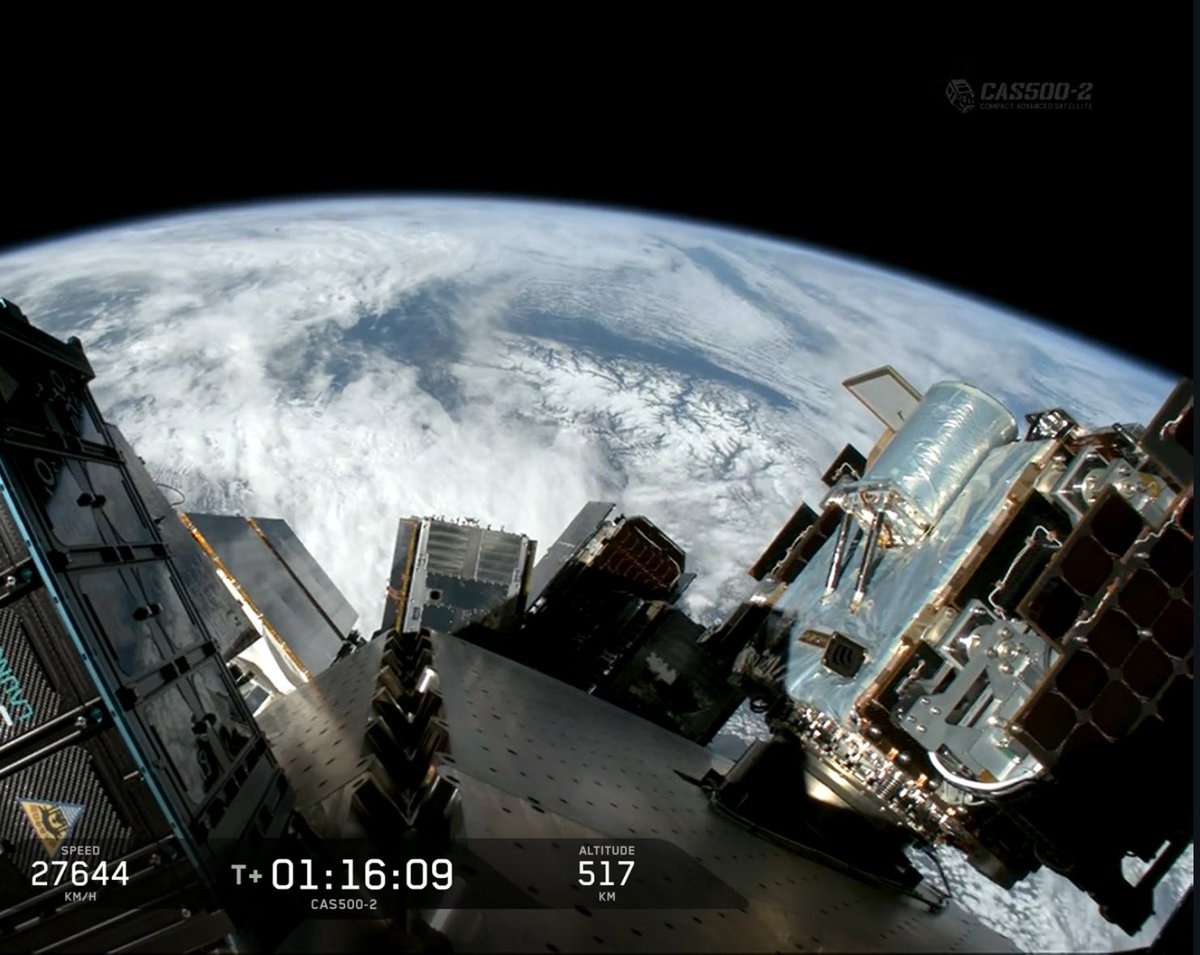
GalaxEye is a Bengaluru startup founded in 2021 by IIT Madras engineers. Today they launched Mission Drishti on a SpaceX Falcon 9. It is India's largest privately built satellite at 190 kg. And it carries a technology that no commercial satellite has ever carried before.
Normal satellites take photos of the Earth using optical cameras. Like your phone camera, but from 500 km up. The problem is obvious. Clouds. Night. Fog. Smoke. If any of these are in the way, the photo is useless. India has monsoon cover for 4 months a year. That is 4 months where optical satellites are partially or fully blind over large parts of the country.
The alternative is SAR. Synthetic Aperture Radar. Instead of taking photos with light, it sends radar waves down and reads what bounces back. Radar goes through clouds, through darkness, through smoke. A SAR satellite can image a flooded village at 2 AM during a cyclone when no optical satellite can see anything.
The problem with SAR is that the images look nothing like photos. They look like grainy black-and-white radar maps. A military analyst or a trained geospatial engineer can read them. A farmer, a disaster response team, or a city planner cannot.
Until today, if you wanted both optical and SAR data for the same location, you needed two different satellites, passing over at different times, at different angles. Then someone had to manually align and fuse the two datasets. Expensive, slow, and the data never perfectly matched because the satellites saw the same spot minutes or hours apart.
GalaxEye put both sensors on one satellite. Optical and SAR, fused into what they call OptoSAR. Three times more information than a single sensor. Processed onboard by an NVIDIA AI chip at 1.8 metre resolution.
Now in practice, during the next cyclone hitting Odisha, one satellite pass gives you a clear image of which villages are flooded, which roads are cut, and which buildings are standing. Day or night. Cloud or clear. In near real-time.
For defence, it means you can monitor a border area 24/7 regardless of weather. For agriculture, it means tracking crop health across an entire monsoon season without a single cloud gap. For infrastructure, it means monitoring construction progress on highways and bridges without waiting for a clear day.
GalaxEye tested their SAR tech on ISRO's POEM orbital platform. The satellite was tested at ISRO facilities. IN-SPACe provided regulatory clearance. NSIL, ISRO's commercial arm, will distribute the imagery globally. And it launched on SpaceX because ISRO's PSLV doesn't have the right orbit slot for this mission.
Yes, four IIT Madras graduates built a world-first satellite in 4 years in Bengaluru.
Take a bow!
@ceoaragon He's only weeping because his movies never made that kind of money. And he sold Dharma to Poonawala for a 1/4 of what the movie made. Losers, weepers. His men- skirt chasing, loose morales, limpy stammerers. Loyal to nothing.
"Every negative character is Hindu, every sexy woman is Christian and every funny character is Sikh. Muslims and Pakistan are good" - He destrοyed Bollywood's propaganda playbook 🔥
@nightchanges Do some research before you write. This is a rehash of an old movie with Dilip Kumar and Vyjayanti Mala, in dual role. The movie is called Madhumati. Kuch bhi bakwas.