70 Years of Women’s Power
President Cyril Ramaphosa calls on South Africans to honour the women of 1956 by delivering the future for which they marched during 2026 National Women’s Day Commemoration at the Union Buildings in Tshwane.
The President says the true measure of this 70th anniversary will be whether every woman and girl can grow up safe, healthy and confident in her future, with equal opportunity, equal rights and equal dignity.
#WomensDay
70 Years of Women’s Power
Reflecting on the courage of the women who stood here 70 years ago, President @CyrilRamaphosa called for the advancement of equality, safety, economic opportunity and quality healthcare for women and girls.
#WomensDay
70 Years of Women’s Power
Delivering the keynote address at the 2026 National Women’s Day Commemoration at the Union Buildings in Tshwane, President @CyrilRamaphosa reflects on the courage of the women of 1956, whose leadership and determination helped change the course of South Africa’s struggle for freedom.
Seventy years later, their example continues to remind us that women are not merely participants in building the nation, they are leaders, organisers and agents of change.
#WomensDay
70 Years of Women’s Power
President @CyrilRamaphosa calls on South Africans to honour the women of 1956 by delivering the future for which they marched during 2026 National Women’s Day Commemoration at the Union Buildings in Tshwane.
The President says the true measure of this 70th anniversary will be whether every woman and girl can grow up safe, healthy and confident in her future, with equal opportunity, equal rights and equal dignity.
#WomensDay
A woman who is healthy, educated, safe and economically independent is better able to determine the course of her own life.
By investing in women’s health, we invest in the health, productivity and future of our nation.
#WomensDay
https://t.co/YNki8gvBKo
Today, women live in fear of the gender-based violence that stalks them in the streets, even in their homes.
Violence against women and children is not confined to any one particular community.
It affects rich and poor, young and old, black and white.
That is why we classified gender-based violence and femicide as a national disaster.
We did so, so that we could harness all the resources and capabilities of the state to end these crimes.
#endGBVF
#WomensDay
https://t.co/8YbP71dpat
We are honoured to have with us here today Ms Malala Yousafzai, who paid a heavy price for her activism. A cruel ideology tried to silence you, but you rose to become one of the most strident voices for the emancipation of women in our world today.
Malala, thank you for being here today. We welcome you.
https://t.co/8YbP71dpat
As a country we have been consistent that there can be no human rights without women’s rights. There can be no progress in society without the empowerment of women.
We cannot achieve social justice without gender equality.
This conviction is rooted in our commitment to building a South Africa that is united, non-racial, non-sexist, democratic, prosperous and free.
https://t.co/8YbP71dpat
South Africa ranks highly on global indices for women’s empowerment, including for gender parity, educational outcomes, financial inclusion, and political representation and decision-making.
We are proud of how far we have come.
https://t.co/YNki8gvBKo
Today, women serve as Chief Justice, Speaker of the National Assembly, Chairperson of the National Council of Provinces, Public Protector and Auditor-General.
Women are ministers, mayors, judges, traditional leaders, diplomats, police officers, soldiers, entrepreneurs, farmers, scientists, engineers, academics, artists and athletes.
Women have made significant gains in higher education and continue to break barriers in fields once closed to them.
These gains matter. They were fought for. They must be defended.
https://t.co/8YbP71dpat
Today, women have the right to vote, to hold public office, to own property and land, to inherit, to choose whom to marry and to participate fully in every sphere of society.
Women lead institutions that are vital to our democracy.
#WomensDay https://t.co/YNki8gvBKo
70 Years of Women’s Power
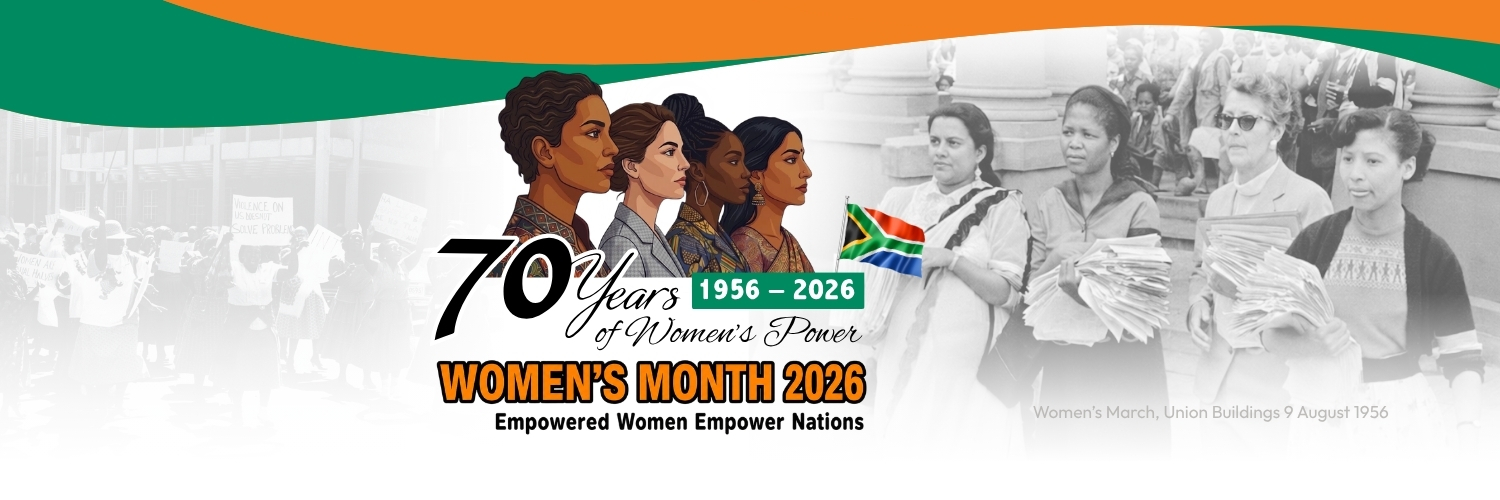
This occasion marks the 70th anniversary of the 1956 protest march to the Union Buildings by some 20 000 women. The march opposed the apartheid government's decision to extend urban pass laws to women, and was a precursor to major political changes over coming decades that led to the demise of the racist regime in South Africa.
#WomensDay
70 Years of Women’s Power
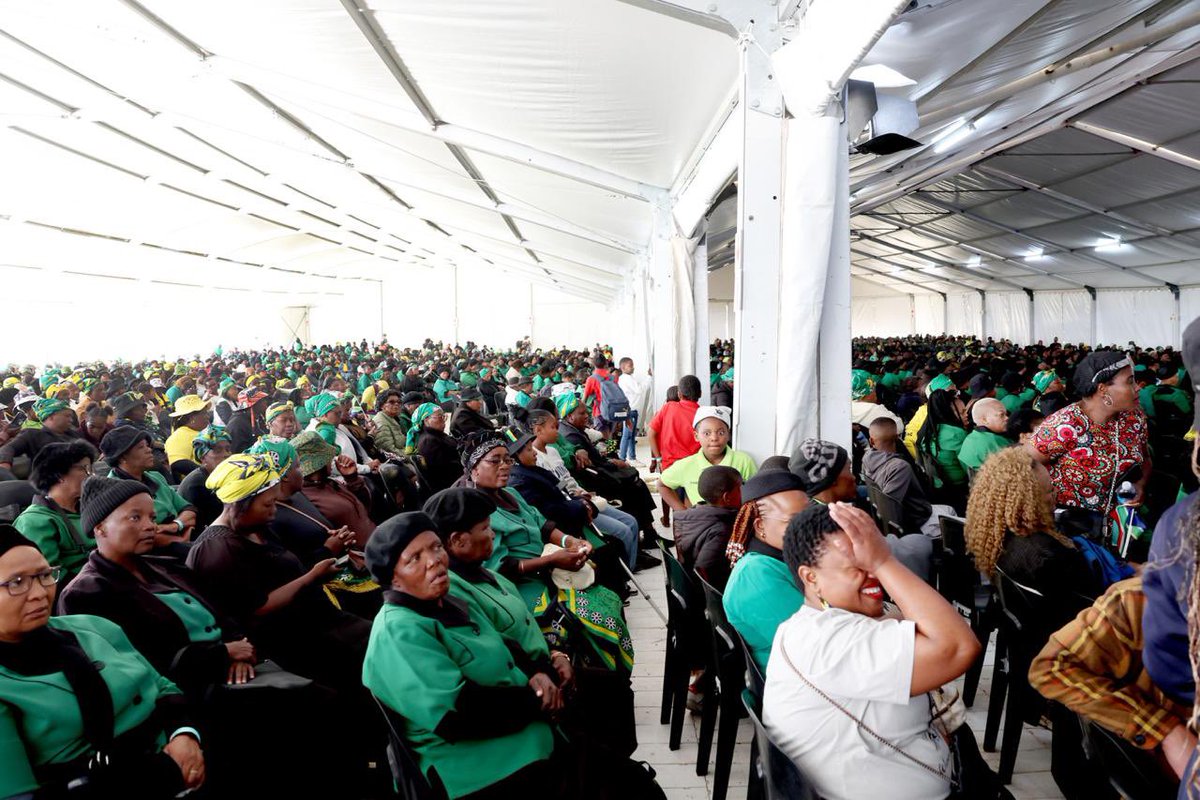
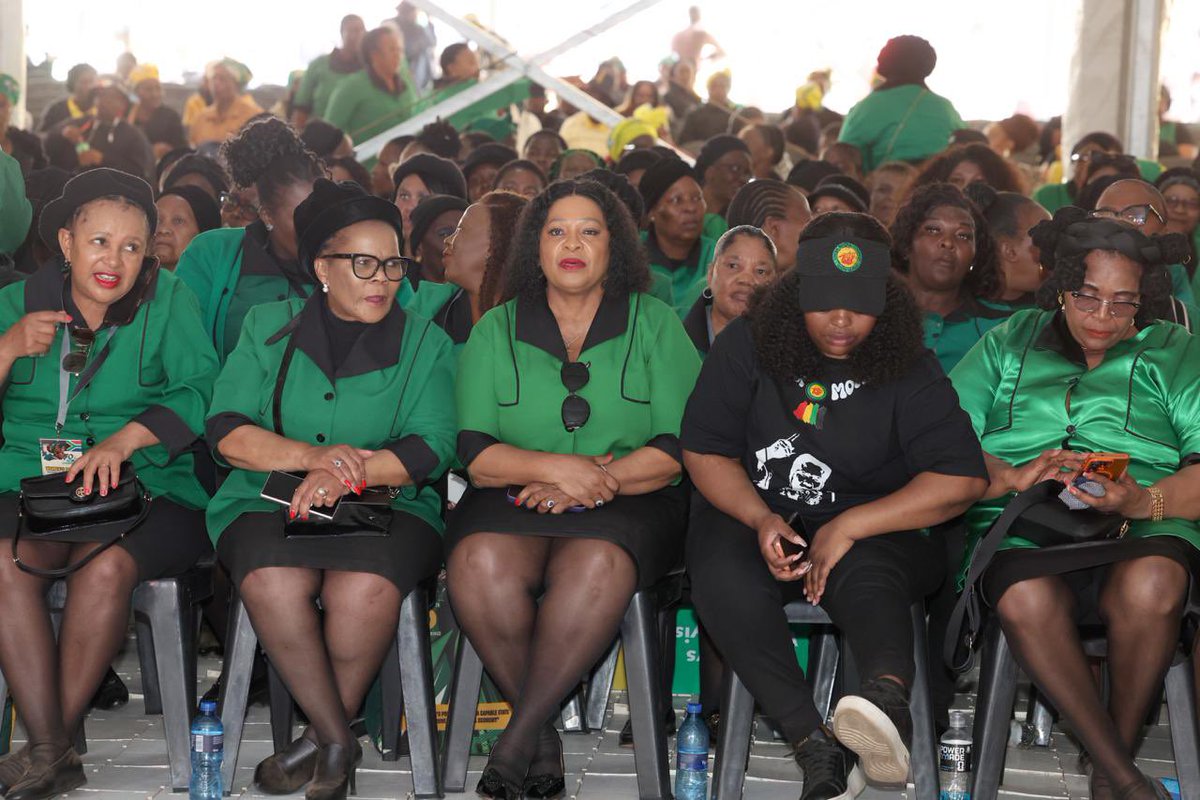
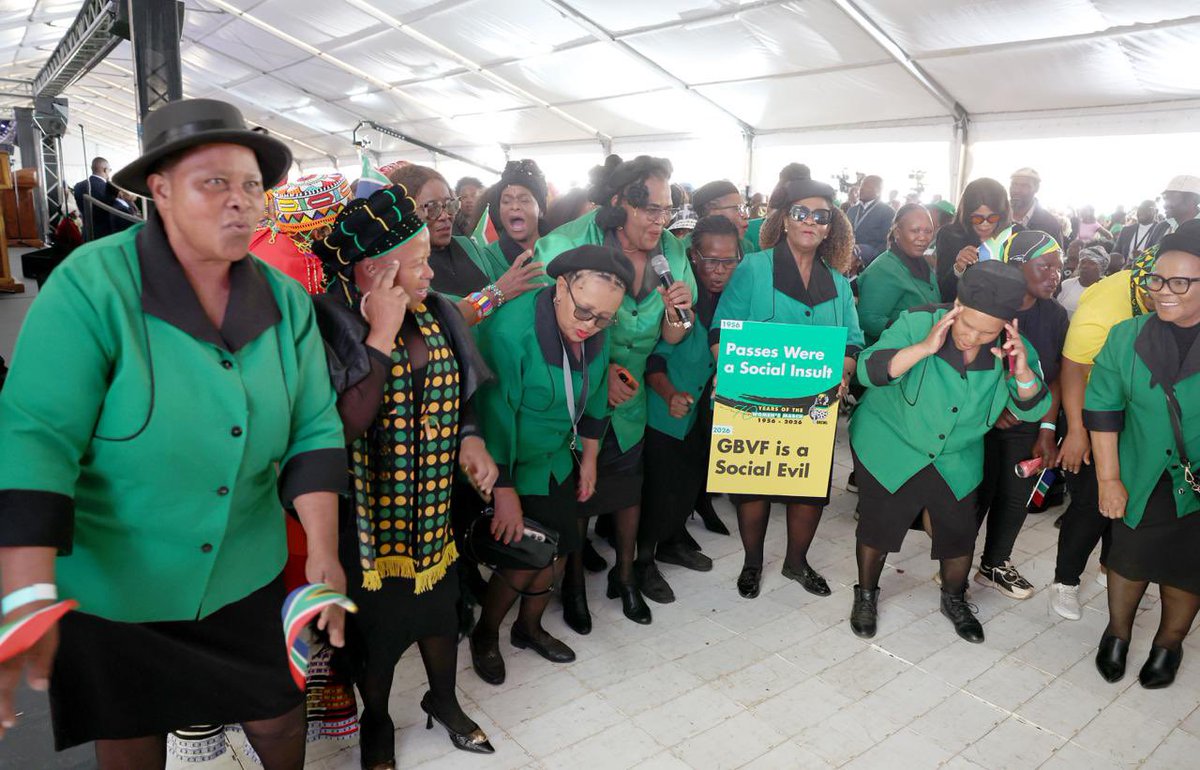
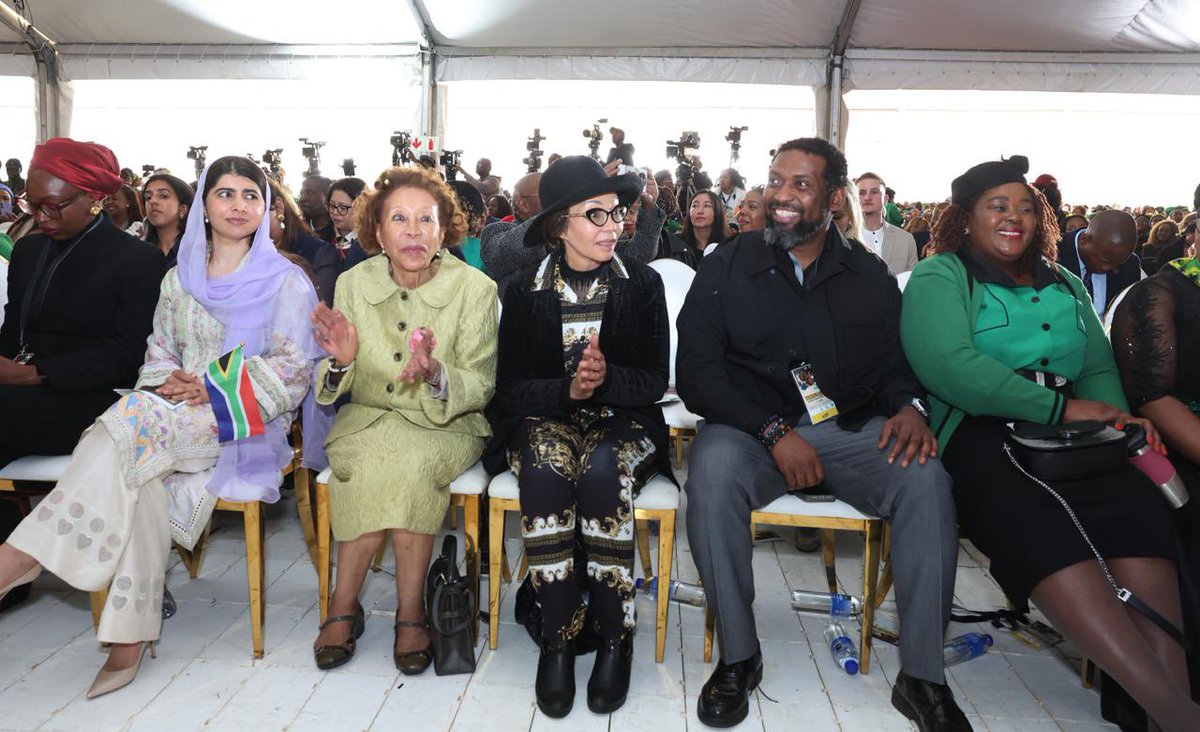
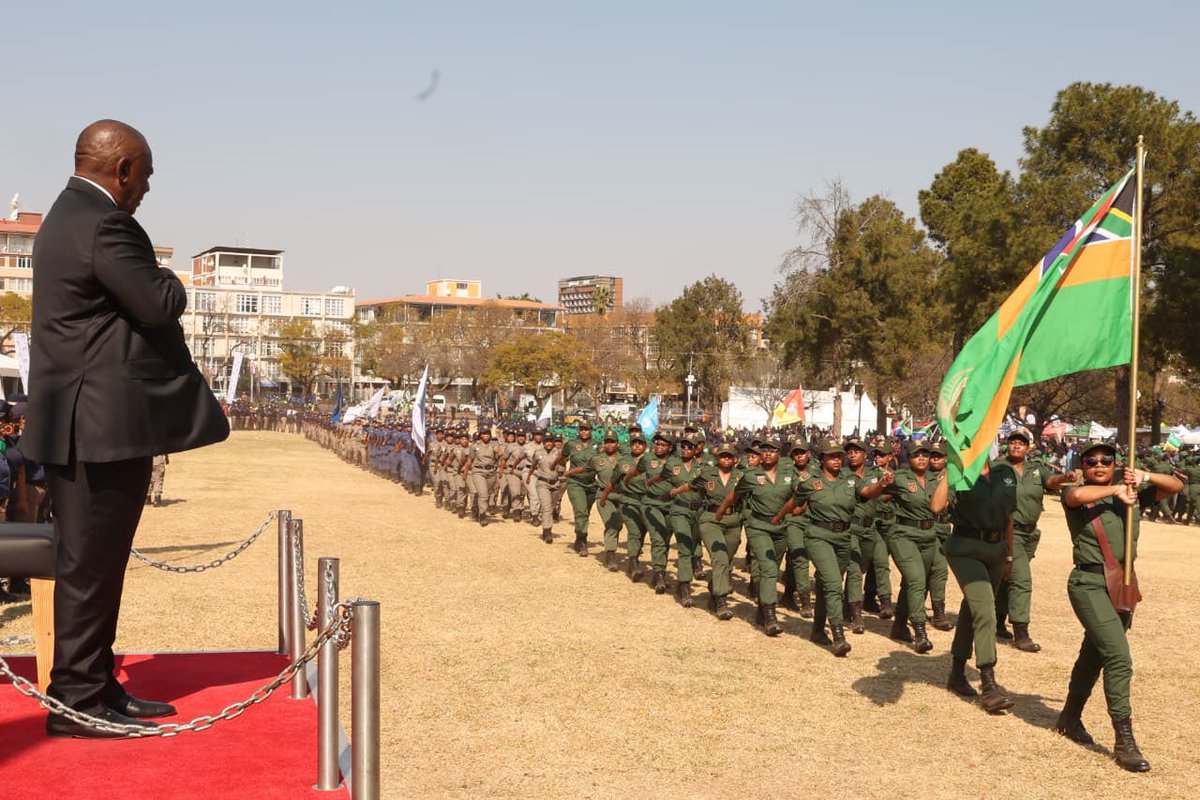
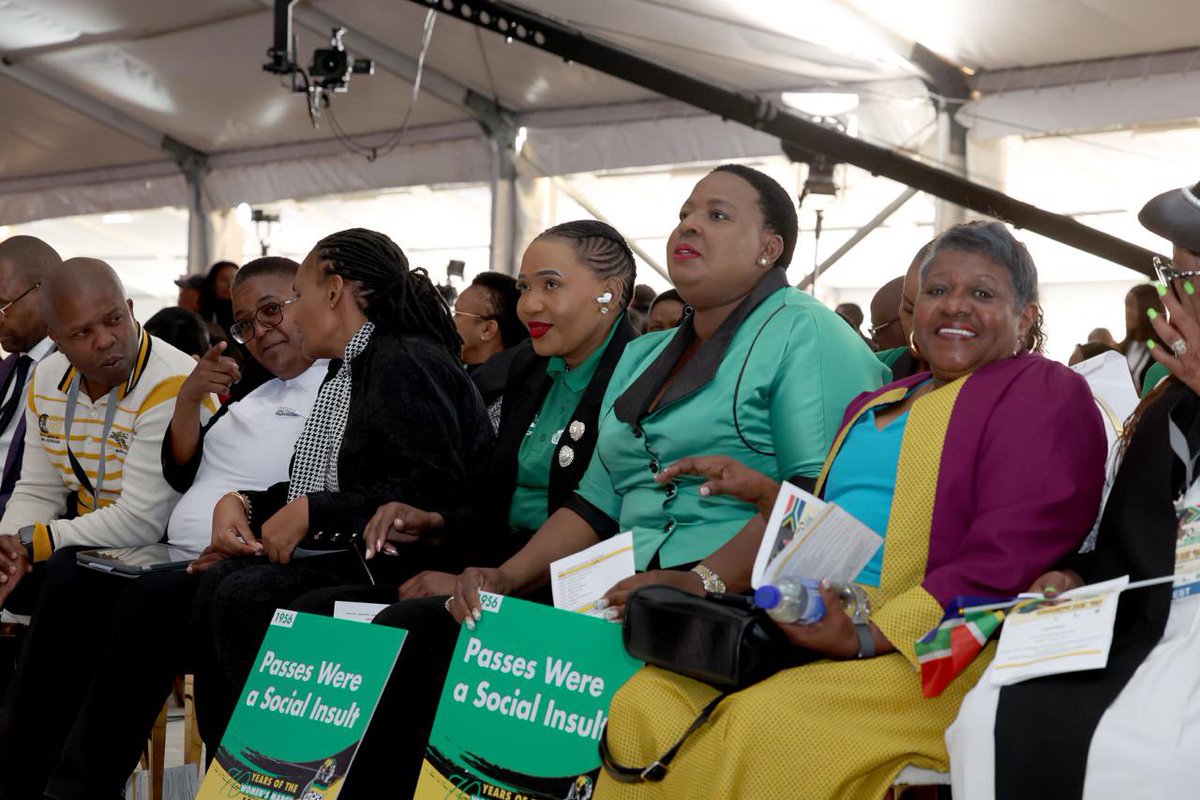
[IN PICS]: President @CyrilRamaphosa arrives at the Union Buildings in Tshwane for the 2026 National Women’s Day Commemoration, marking 70 years since the historic 1956 Women’s March.
The commemoration is held under the theme, “Empowered Women Empower Nations”, honouring the courage and sacrifice of the women of 1956 and their enduring contribution to South Africa’s journey towards equality and women’s empowerment.
#WomensDay
In 1954, the Federation of South African Women adopted the Women’s Charter. In 1955, women carried their demands into the Congress of the People at Kliptown.
They demanded the vote. They demanded equal pay for equal work and equal opportunity in employment.
They demanded equal rights in marriage, property and the guardianship of children.
They demanded education, childcare, housing, land, water, healthcare and social security.
They understood that freedom is not an abstract idea.
#WomensDay
https://t.co/8YbP71dpat
The march did not emerge from nowhere.
It was part of a long tradition of women’s resistance.
In 1913, women led by Charlotte Maxeke rose in Bloemfontein against the imposition of passes.
#WomensDay
https://t.co/YNki8gvBKo
The women of 1956 were protesting against passes, but their message reached far beyond the pass laws. They challenged the idea that women should be confined to the home, silent in public affairs and subordinate to men.
They challenged discrimination based on both race and gender.
They made clear that no nation can be free while its women are not free.
https://t.co/8YbP71dpat
We salute the four women who led the march: Mama Lilian Ngoyi, Mama Helen Joseph, Mama Rahima Moosa and Mama Sophie Williams-de Bruyn.
Mama Sophie, who was only eighteen years old at the time, we are deeply honoured by your presence today.
We thank you for your courage, your lifetime of service and your continuing witness to our history.
We honour every woman who marched with you.
https://t.co/8YbP71dpat
70 years ago, 20,000 women gathered on these grounds and stood in silence for thirty minutes. But theirs was not the silence of fear.
It was not the silence of submission.
It was the silence of courage gathering its strength.
It was the silence of women who knew that they carried the justice of their cause within them.
#WomensDay
https://t.co/8YbP71dpat
The Women’s March of 1956 was not a footnote in our struggle for freedom. It helped to change the course, the character and the leadership of that struggle.
It demonstrated that women were not merely supporters of the struggle. They were its leaders, its organisers and its authors.
#WomensDay
https://t.co/8YbP71dpat
Today is no ordinary commemoration.
It is one of the most important days on our national calendar.
National Women’s Day is a day on which we honour the women of South Africa. But it is also a day of profound significance for our entire country.
#WomensDay
https://t.co/8YbP71dpat







![PresidencyZA's tweet photo. 70 Years of Women’s Power
[IN PICS]: President @CyrilRamaphosa arrives at the Union Buildings in Tshwane for the 2026 National Women’s Day Commemoration, marking 70 years since the historic 1956 Women’s March.
The commemoration is held under the theme, “Empowered Women Empower Nations”, honouring the courage and sacrifice of the women of 1956 and their enduring contribution to South Africa’s journey towards equality and women’s empowerment.
#WomensDay](https://pbs.twimg.com/media/HPRwQGZXQAA154c.jpg)
![PresidencyZA's tweet photo. 70 Years of Women’s Power
[IN PICS]: President @CyrilRamaphosa arrives at the Union Buildings in Tshwane for the 2026 National Women’s Day Commemoration, marking 70 years since the historic 1956 Women’s March.
The commemoration is held under the theme, “Empowered Women Empower Nations”, honouring the courage and sacrifice of the women of 1956 and their enduring contribution to South Africa’s journey towards equality and women’s empowerment.
#WomensDay](https://pbs.twimg.com/media/HPRwOnKX0AAoYrs.jpg)
![PresidencyZA's tweet photo. 70 Years of Women’s Power
[IN PICS]: President @CyrilRamaphosa arrives at the Union Buildings in Tshwane for the 2026 National Women’s Day Commemoration, marking 70 years since the historic 1956 Women’s March.
The commemoration is held under the theme, “Empowered Women Empower Nations”, honouring the courage and sacrifice of the women of 1956 and their enduring contribution to South Africa’s journey towards equality and women’s empowerment.
#WomensDay](https://pbs.twimg.com/media/HPRwNQlXMAA0M1K.jpg)






![PresidencyZA's tweet photo. 70 Years of Women’s Power
[IN PICS]: President @CyrilRamaphosa arrives at the Union Buildings in Tshwane for the 2026 National Women’s Day Commemoration, marking 70 years since the historic 1956 Women’s March.
The commemoration is held under the theme, “Empowered Women Empower Nations”, honouring the courage and sacrifice of the women of 1956 and their enduring contribution to South Africa’s journey towards equality and women’s empowerment.
#WomensDay](https://pbs.twimg.com/media/HPRwR2_XcAEyhy2.jpg)


