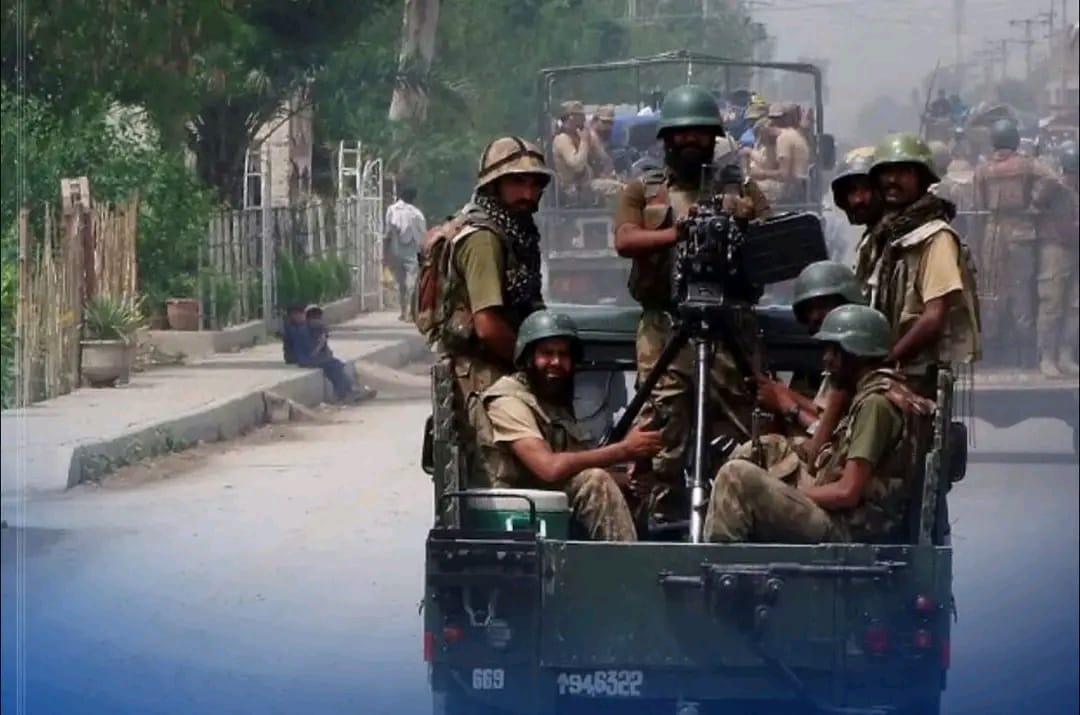
Following the Islamic Emirate's retaliatory air strikes on various facilities of the Pakistani military regime, the regime has fallen into severe panic. In major military camps, indiscriminate anti-aircraft firing has begun under the pretext of countering drones, causing fear and anxiety among local residents.
At the same time, the military regime has launched a propaganda campaign through the media, claiming that its anti-drone defense systems have been activated. The reality, however, is different: the Islamic Emirate’s drone strikes on the Pakistani military regime’s installations, carried out as part of the operation titled “Radd-ul-Zulm,” have been unprecedented and far greater than the regime had anticipated.
No matter how much the Pakistani military regime promotes the activation of its anti-drone systems, the Islamic Emirate possesses the capability to bypass all such defensive measures and successfully deliver its drones to their intended targets.
🔴 Reports indicate that stipends for certain former members of Afghanistan's previous republic-era security forces and other affiliated individuals residing in Pakistan have been delayed, leading to growing frustration among them.
According to these reports, Pakistan's intelligence services provided them with PKR 5,000 each in an effort to ease their dissatisfaction. However, some recipients reportedly viewed the amount as insufficient and considered it demeaning, saying it reflected a lack of appreciation for their perceived value. The reports further claim that the incident has increased concerns and mistrust toward Pakistan's intelligence services among those affected.
Verified Claim Alleges Plot Against Maulana Fazlur Rehman
Breaking: A source claiming to have knowledge of the matter has alleged that elements within Pakistan's military and intelligence services are planning to assassinate Maulana Fazlur Rehman, the leader of Jamiat Ulema-e-Islam (JUI).
According to the verified claim, the alleged plan involves carrying out the assassination and attributing it to ISIS-K. The source also alleges that similar incidents involving JUI members have occurred in the past.
The claim further states that Maulana Fazlur Rehman had recently criticized the military's policies on Afghanistan, the deteriorating security situation in Pakistan, and the disruption of economic ties with neighboring countries.
Reports Claim Advanced DJI Drone Downed in Swat
According to reports, a DJI Matrice 400 drone, delivered to Pakistani police and military forces four days ago, was shot down in Swat by the Tehrik-i-Taliban Pakistan (TTP).
The drone is reported to feature artificial intelligence capabilities and the ability to carry additional payloads.
Reports further state that the drone is valued at more than PKR 1.8 million.
Afghan Government Announces Tax Reductions
The Afghan Government (IEA) has announced a series of tax reductions under a new government decision.
According to the announcement, the Ministry of Finance has reduced the income tax on companies, hospitals, and healthcare centers from 20% to 10%. Individuals with an annual income of up to AFN 120,000 have also been exempted from income tax.
In addition, the property transfer tax has been reduced from 1% to 0.5%.
Reports Allege Heavy Weapons Used in Residential Areas of Pakistan-Administered Kashmir
According to reports, Pakistani security forces have used heavy weapons in residential areas of Pakistan-administered Kashmir, resulting in damage to civilian homes and property.
Local sources and eyewitnesses claim that the shelling and military operations have placed civilians at serious risk, forcing many families to flee their homes. The reports further allege that residential neighborhoods came under fire during the operations.
According to reports, Asim Munir says that the development of Balochistan is intolerable for Pakistan's enemies.
But judge for yourself how much Balochistan has actually developed. The small pickup truck you see here is being used to transport the bodies of eight slain soldiers. The government does not even have suitable vehicles to transport its own fallen troops.
Asim Munir has also claimed:
"No one has yet been born who can intimidate us or pose a threat to us."
However, today twenty-two soldiers were reportedly killed. In light of this, does that claim still hold true? Can it still be said that no one has emerged who can intimidate or threaten you?
Clarification
Some biased media outlets and individuals have distorted a video of the conference delivered by Afghanistan’s Minister of Agriculture, Irrigation and Livestock, Mawlawi Ataullah Omari, during his visit to India and are using it for misleading propaganda.
They have falsely claimed that Mawlawi Ataullah Omari said that Indians and Afghans share the same DNA.
In fact, no such statement was made during the conference. These false claims appear to be an attempt to undermine the minister’s visit to India and the achievements of the Ministry of Agriculture, Irrigation and Livestock.
According to reports, Asim Munir says that the development of Balochistan is intolerable for Pakistan's enemies.
But judge for yourself how much Balochistan has actually developed. The small pickup truck you see here is being used to transport the bodies of eight slain soldiers. The government does not even have suitable vehicles to transport its own fallen troops.
Asim Munir has also claimed:
"No one has yet been born who can intimidate us or pose a threat to us."
However, today twenty-two soldiers were reportedly killed. In light of this, does that claim still hold true? Can it still be said that no one has emerged who can intimidate or threaten you?
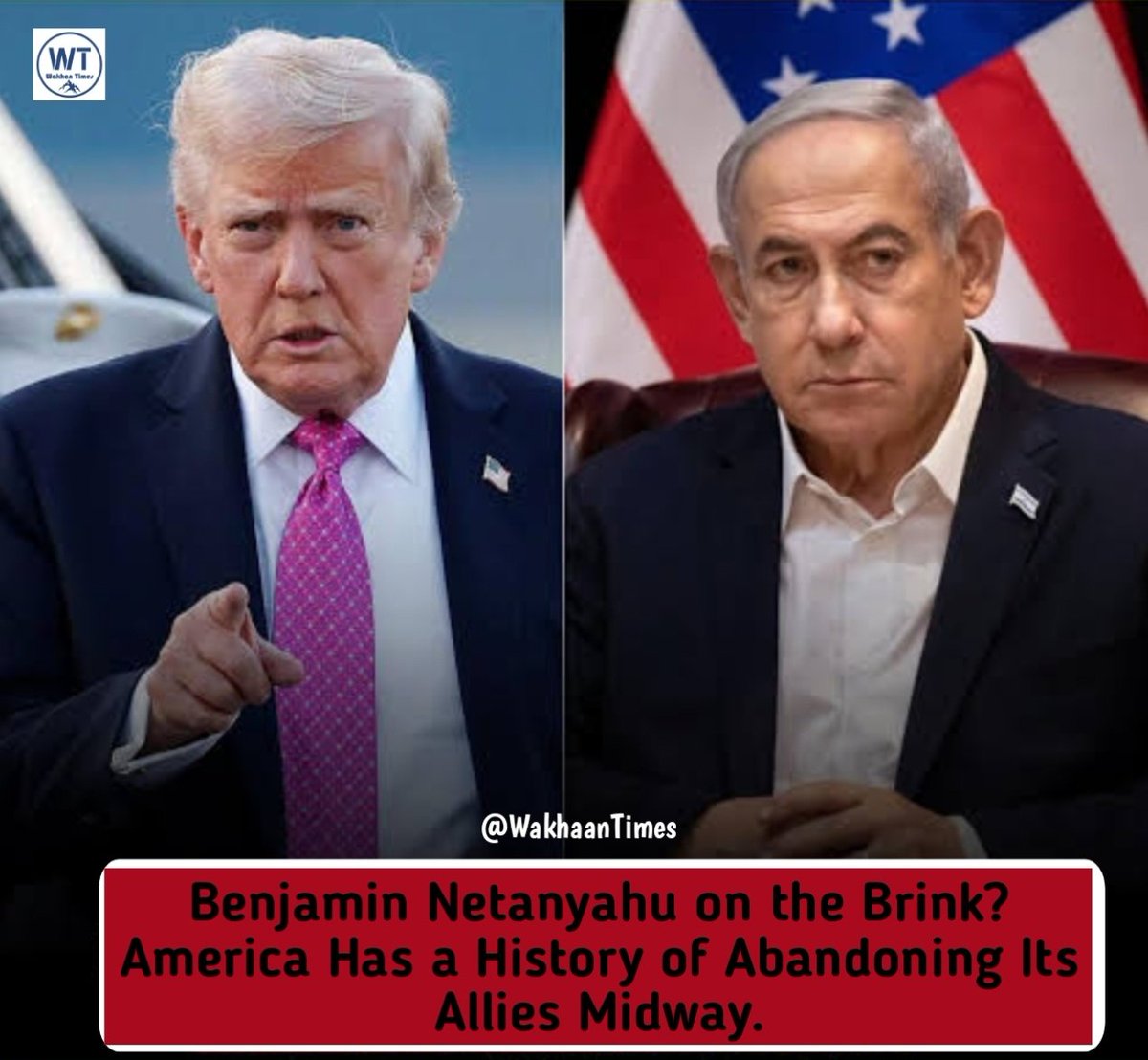
Benjamin Netanyahu on the Brink?
America Has a History of Abandoning Its Allies Midway
It appears that relations between the United States and Israel are cooling after decades of close cooperation. Some observers argue that Washington is gradually distancing itself from the very state it helped establish in Palestine alongside several major powers and has consistently supported ever since.
Analysts are divided over the current tensions. Some believe the long-standing strategic partnership between the two countries could face a lasting shift, while others view the disagreements as temporary and largely driven by personal differences between current leaders. According to this view, both domestic and international pressure on Israeli Prime Minister Benjamin Netanyahu is mounting, and many believe his political future is increasingly uncertain. If corruption cases against him result in convictions, he could face imprisonment. Public demand for new elections has also grown inside Israel, and many analysts believe Netanyahu's chances of returning to power are extremely slim.
Some Israelis also believe that U.S. President Donald Trump may reassess Washington's relationship with Israel. Tensions between Washington and Tel Aviv have intensified following the conflict with Iran and subsequent diplomatic developments. Trump has also faced criticism at home over U.S. involvement in support of Israel during the confrontation with Iran. Some analysts suggest that weakening Netanyahu politically would allow Trump to demonstrate that he remains firmly in control of U.S. foreign policy decisions.
One reported condition in discussions related to a potential agreement with Iran was the establishment of ceasefires across multiple fronts, including Lebanon. However, Israel reportedly continued strikes in Lebanon despite those expectations. Reports (never officially denied by the White House) suggested that Trump was eager to secure a peace agreement with Iran and was frustrated by Israel's continued military actions. According to those reports, Trump allegedly described Netanyahu as "crazy," accused him of ingratitude, and remarked that without U.S. support he would have been in prison long ago. He was also quoted as saying: "Everyone hates you now. Everyone hates Israel because of you."
In June, JD Vance stated during a press conference that Trump was currently the only world leader strongly sympathetic toward Israel. He also warned Israeli ministers criticizing a possible U.S.-Iran agreement, reminding them that nearly two-thirds of Israel's defensive capabilities are supplied by the United States and funded by American taxpayers.
Recent opinion polls indicate that public sentiment in the United States has become increasingly critical of Israel. Even within Trump's conservative "Make America Great Again" movement, some influential figures have expressed growing skepticism. One of the most prominent critics is former television host Tucker Carlson, who argued in late June that Trump had concluded Israel had become one of the greatest foreign policy challenges facing his administration. Carlson further claimed that Israel pressured Trump (through persuasion and political pressure) to strike Iran, creating conditions that could justify broader regional conflict.
An American university professor observed that although Trump and the Republican Party have traditionally been strong supporters of Israel, their current approach appears more cautious than before. Another former U.S. political analyst argued that while Republicans remain broadly supportive of Israel, Trump may eventually be compelled by his own supporters to adopt a firmer position toward Netanyahu
The United States has stood behind Israel in every major conflict, providing extensive financial and military assistance. Since Oct 7, 2023, Washington has approved more than $20 billion in aid related to the Gaza war, making it one of the largest military assistance packages between 1/2
Benjamin Netanyahu on the Brink?
America Has a History of Abandoning Its Allies Midway
It appears that relations between the United States and Israel are cooling after decades of close cooperation. Some observers argue that Washington is gradually distancing itself from the very state it helped establish in Palestine alongside several major powers and has consistently supported ever since.
Analysts are divided over the current tensions. Some believe the long-standing strategic partnership between the two countries could face a lasting shift, while others view the disagreements as temporary and largely driven by personal differences between current leaders. According to this view, both domestic and international pressure on Israeli Prime Minister Benjamin Netanyahu is mounting, and many believe his political future is increasingly uncertain. If corruption cases against him result in convictions, he could face imprisonment. Public demand for new elections has also grown inside Israel, and many analysts believe Netanyahu's chances of returning to power are extremely slim.
Some Israelis also believe that U.S. President Donald Trump may reassess Washington's relationship with Israel. Tensions between Washington and Tel Aviv have intensified following the conflict with Iran and subsequent diplomatic developments. Trump has also faced criticism at home over U.S. involvement in support of Israel during the confrontation with Iran. Some analysts suggest that weakening Netanyahu politically would allow Trump to demonstrate that he remains firmly in control of U.S. foreign policy decisions.
One reported condition in discussions related to a potential agreement with Iran was the establishment of ceasefires across multiple fronts, including Lebanon. However, Israel reportedly continued strikes in Lebanon despite those expectations. Reports (never officially denied by the White House) suggested that Trump was eager to secure a peace agreement with Iran and was frustrated by Israel's continued military actions. According to those reports, Trump allegedly described Netanyahu as "crazy," accused him of ingratitude, and remarked that without U.S. support he would have been in prison long ago. He was also quoted as saying: "Everyone hates you now. Everyone hates Israel because of you."
In June, JD Vance stated during a press conference that Trump was currently the only world leader strongly sympathetic toward Israel. He also warned Israeli ministers criticizing a possible U.S.-Iran agreement, reminding them that nearly two-thirds of Israel's defensive capabilities are supplied by the United States and funded by American taxpayers.
Recent opinion polls indicate that public sentiment in the United States has become increasingly critical of Israel. Even within Trump's conservative "Make America Great Again" movement, some influential figures have expressed growing skepticism. One of the most prominent critics is former television host Tucker Carlson, who argued in late June that Trump had concluded Israel had become one of the greatest foreign policy challenges facing his administration. Carlson further claimed that Israel pressured Trump (through persuasion and political pressure) to strike Iran, creating conditions that could justify broader regional conflict.
An American university professor observed that although Trump and the Republican Party have traditionally been strong supporters of Israel, their current approach appears more cautious than before. Another former U.S. political analyst argued that while Republicans remain broadly supportive of Israel, Trump may eventually be compelled by his own supporters to adopt a firmer position toward Netanyahu
The United States has stood behind Israel in every major conflict, providing extensive financial and military assistance. Since Oct 7, 2023, Washington has approved more than $20 billion in aid related to the Gaza war, making it one of the largest military assistance packages between 1/2
Nooruddin Azizi, Minister of Industry and Commerce, met with exporters of Afghan products to the Eurasian markets.
The Ministry of Industry and Commerce said the two sides discussed the establishment of export processing centers in Kabul and across the country’s regional zones. Mr. Azizi noted that the completion of these centers will provide greater facilities and improved services for exporters.
The ministry added that member states of the Eurasian Economic Union, including Russia, Kazakhstan, Belarus, Armenia, and Kyrgyzstan, have granted preferential tariff treatment to Afghanistan’s export products.
🚨
The Ababils are ready to take flight, carrying the stones of Sijjil in their beaks and claws.
The army's vanguard has saddled its horses and stands on full alert.
Pakistan should first reassess its own policies to address its security challenges, recognize its internal security shortcomings, and make decisions based on facts rather than assumptions. Pointing the finger at others is easy, but the consequences and the price can be very heavy.
Afghan Government Statement:
We does not support any individual or group. If anyone uses such a pretext to carry out actions inside Afghanistan, they will face a reciprocal response.
We are closely monitoring all developments.
Reports Claim 35 Pakistani Police Officers Kidnapped in Balochistan
According to reports, 35 Pakistani police officers have been kidnapped by unidentified armed men in Balochistan.
It remains unclear whether those responsible are Baloch separatist groups or another armed organization.
Pakistani security officials have not yet issued an official statement regarding the incident, while concerns over the security situation in Balochistan continue to grow.
Afghan Defense Minister Visits Northeastern Border Areas
The Acting Minister of Defense of the Islamic Emirate of Afghanistan (IEA), Mawlawi Mohammad Yaqoob Mujahid, visited border forces and military outposts in Afghanistan's northeastern frontier.
During his tour, he visited the Kuran wa Munjan, Zebak, Wakhan, and Pamir districts of Badakhshan Province, where he inspected border positions and met with security personnel.
Pakistani Farmer Destroys Tomatoes as Prices Collapse
A Pakistani farmer was seen destroying his harvested tomatoes after a sharp drop in market prices.
According to the farmer, buyers are unwilling to purchase the tomatoes even for 5 Pakistani rupees, making it uneconomical to transport and sell the produce.