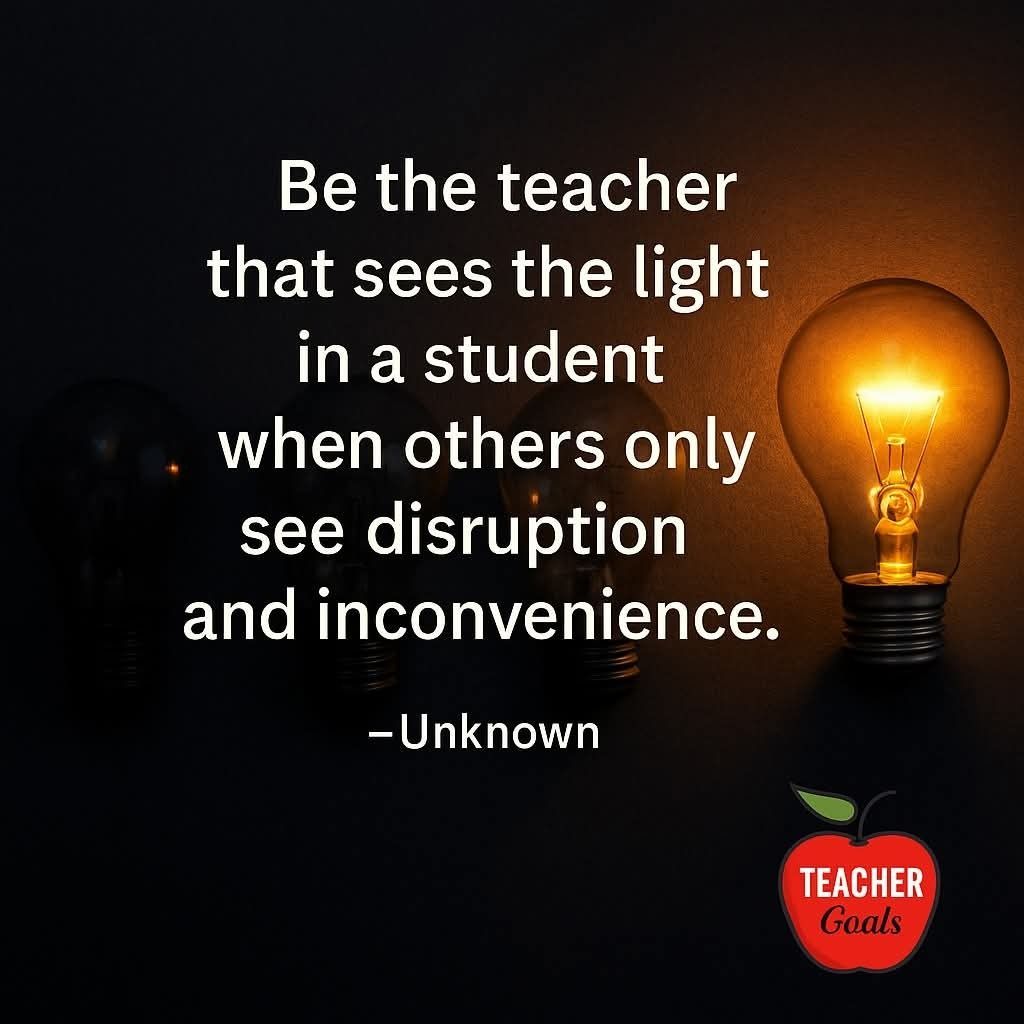
Nobody talks about the student who came ready to learn, sat through the disruption, said nothing, and fell further behind while every adult in the building focused on the one who made the most noise. She is still waiting for someone to notice she was there, too.
A school system can improve rapidly and still leave most children behind. Should schools be judged by how many students are proficient, or by how much students improve each year? @jillbarshay@hechingerreport
https://t.co/qpkCh2I6Pf
If you want to improve reading scores, you have to get students to read.
It is that simple.
All the other systems, methods, and protocols are fluff.
Gotta get students to put down their phones, and pick up books.
Students need to learn how to sit, think, and write for extended periods.
No phones. No computer.
Just their thoughts, the struggle to organize them, and the clarity that comes from deep focus.
Negativity bias is why one criticism can outweigh ten compliments
Your brain is not broken. It was wired to scan for danger and problems to help you survive
The problem is that now the “danger” is often stress, anxiety, rejection, conflict, pressure, and social media
You can retrain the brain:
• Catch cognitive distortions
• Stop doom-scrolling
• Practice gratitude
• Notice small wins
• Focus on progress, not perfection
• Remember: both hard things AND good things can exist at the same time
Healing is teaching your brain that not everything is danger
There is still good here too
#mentalhealth #anxiety #healing #selfcare #therapy #mindset #stress #growth
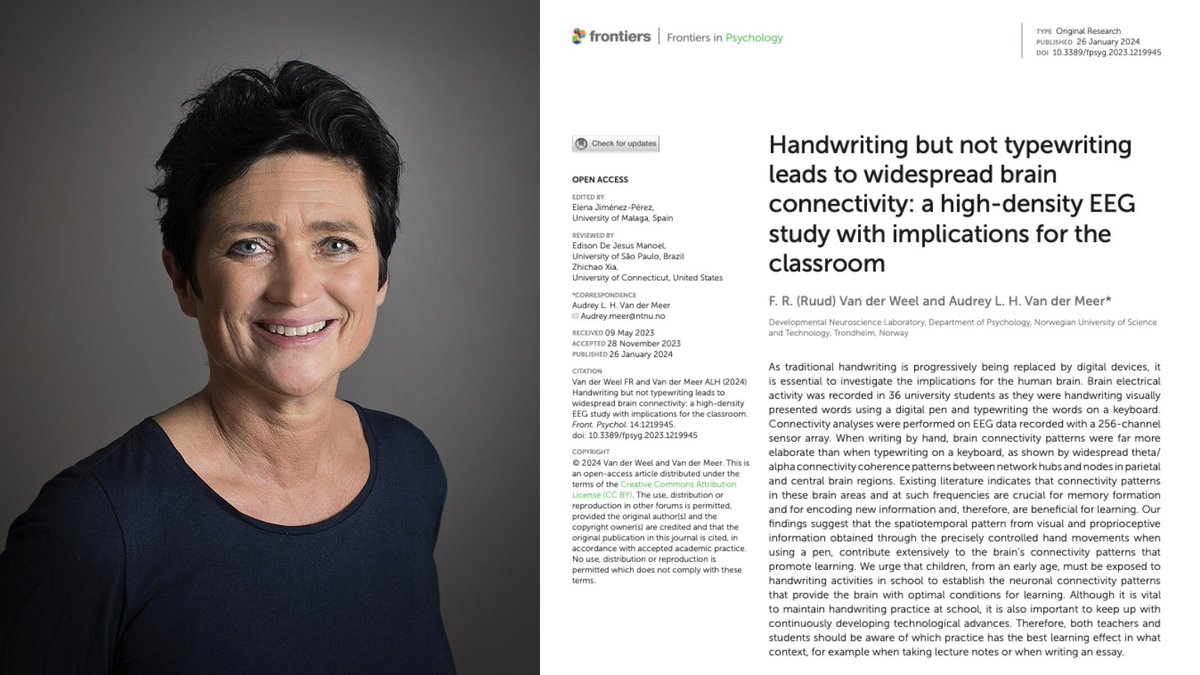
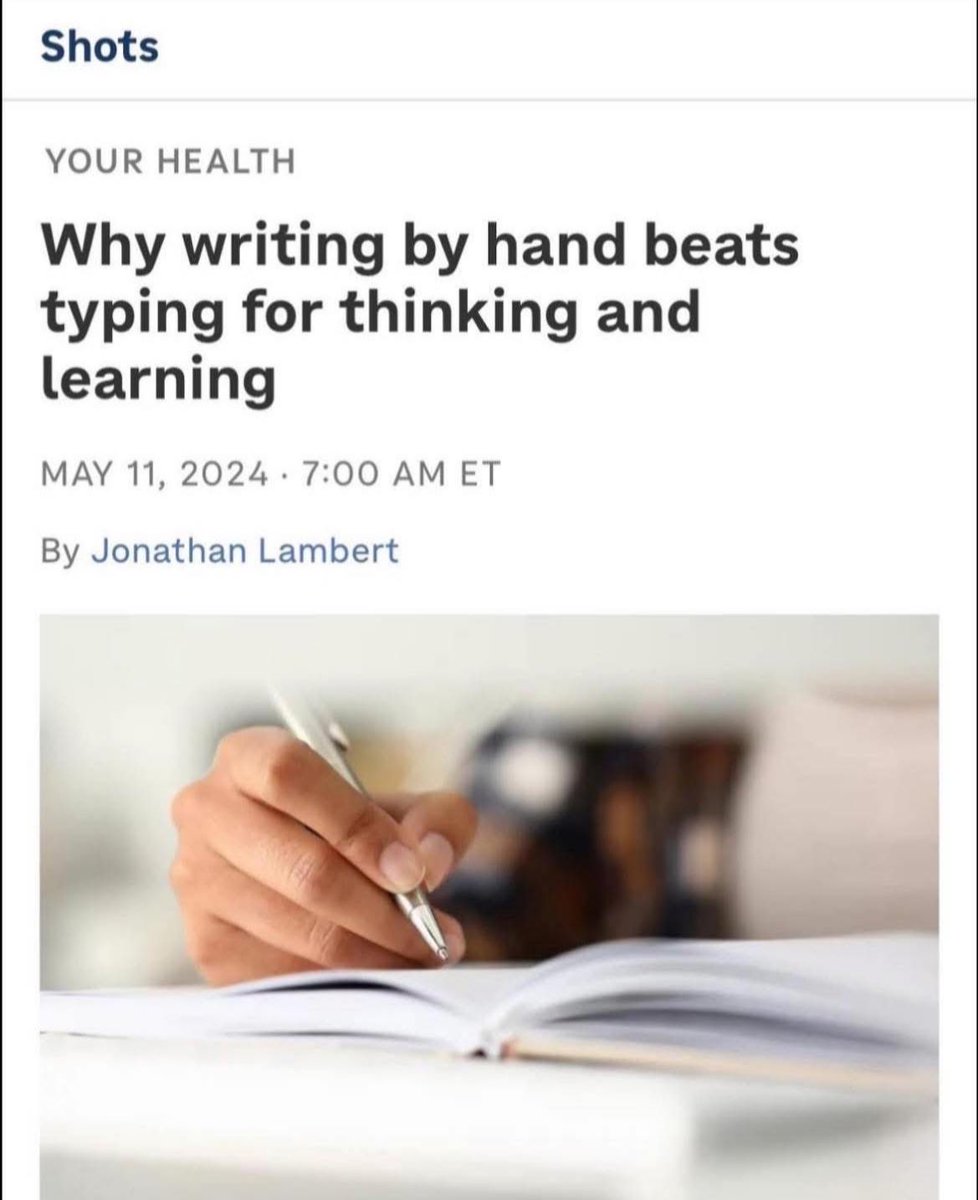
A Norwegian neuroscientist spent 20 years proving that the act of writing by hand changes the human brain in ways typing physically cannot, and almost nobody outside her field has read the paper.
Her name is Audrey van der Meer.
She runs a brain research lab in Trondheim, and the paper that closed the argument was published in 2024 in a journal called Frontiers in Psychology. The finding is brutal enough that it should have changed every classroom on Earth.
The experiment was simple. She recruited 36 university students and put each one in a cap with 256 sensors pressed against their scalp to record brain activity. Words flashed on a screen one at a time.
Sometimes the students wrote the word by hand on a touchscreen using a digital pen, and sometimes they typed the same word on a keyboard. Every neural response was recorded for the full five seconds the word stayed on screen.
Then her team looked at the part of the data most researchers had ignored for years, which is how different parts of the brain were communicating with each other during the task.
When the students wrote by hand, the brain lit up everywhere at once.
The regions responsible for memory, sensory integration, and the encoding of new information were all firing together in a coordinated pattern that spread across the entire cortex. The whole network was awake and connected.
When the same students typed the same word, that pattern collapsed almost completely.
Most of the brain went quiet, and the connections between regions that had been alive seconds earlier were nowhere to be found on the EEG.
Same word, same brain, same person, and two completely different neurological events.
The reason turned out to be something nobody had really paid attention to before her work. Writing by hand is not one motion but a sequence of thousands of tiny micro-movements coordinated with your eyes in real time, where each letter is a different shape that requires the brain to solve a slightly different spatial problem.
Your fingers, wrist, vision, and the parts of your brain that track position in space are all working together to produce one letter, then the next, then the next.
Typing throws all of that away. Every key on a keyboard requires the exact same finger motion regardless of which letter you are pressing, which means the brain has almost nothing to integrate and almost no problem to solve.
Van der Meer said it plainly in her interviews.
Pressing the same key with the same finger over and over does not stimulate the brain in any meaningful way, and she pointed out something that should scare every parent who handed their kid an iPad.
Children who learn to read and write on tablets often cannot tell letters like b and d apart, because they have never physically felt with their bodies what it takes to actually produce those letters on a page.
A decade before her, two researchers at Princeton ran the same fight using a completely different method and ended up at the same answer. Pam Mueller and Daniel Oppenheimer tested 327 students across three experiments, where half took notes on laptops with the internet disabled and half took notes by hand, before testing everyone on what they actually understood from the lectures they had watched.
The handwriting group won by a wide margin on every question that required real understanding rather than surface recall.
The reason was hiding in the transcripts of what the two groups had actually written down.
The laptop students typed almost word for word, capturing more total content but processing almost none of it as they went, while the handwriting students physically could not write fast enough to transcribe a lecture in real time, which forced them to listen carefully, decide what actually mattered, and put it in their own words on the page.
That single act of choosing what to keep was the learning itself, and the keyboard had quietly skipped the choosing and skipped the learning along with it.
Two studies. Two countries. Same answer.
Handwriting makes the brain work. Typing lets it coast.
Every note you have ever typed instead of written went into your brain through a thinner pipe. Every meeting, every book highlight, every idea you captured on your phone instead of on paper was processed at half depth.
You did not forget those things because your memory is bad. You forgot them because typing never woke the part of the brain that would have made them stick.
The fix is the thing your grandmother already knew.
Pick up a pen. Write the thing down. The slower road is the faster one.
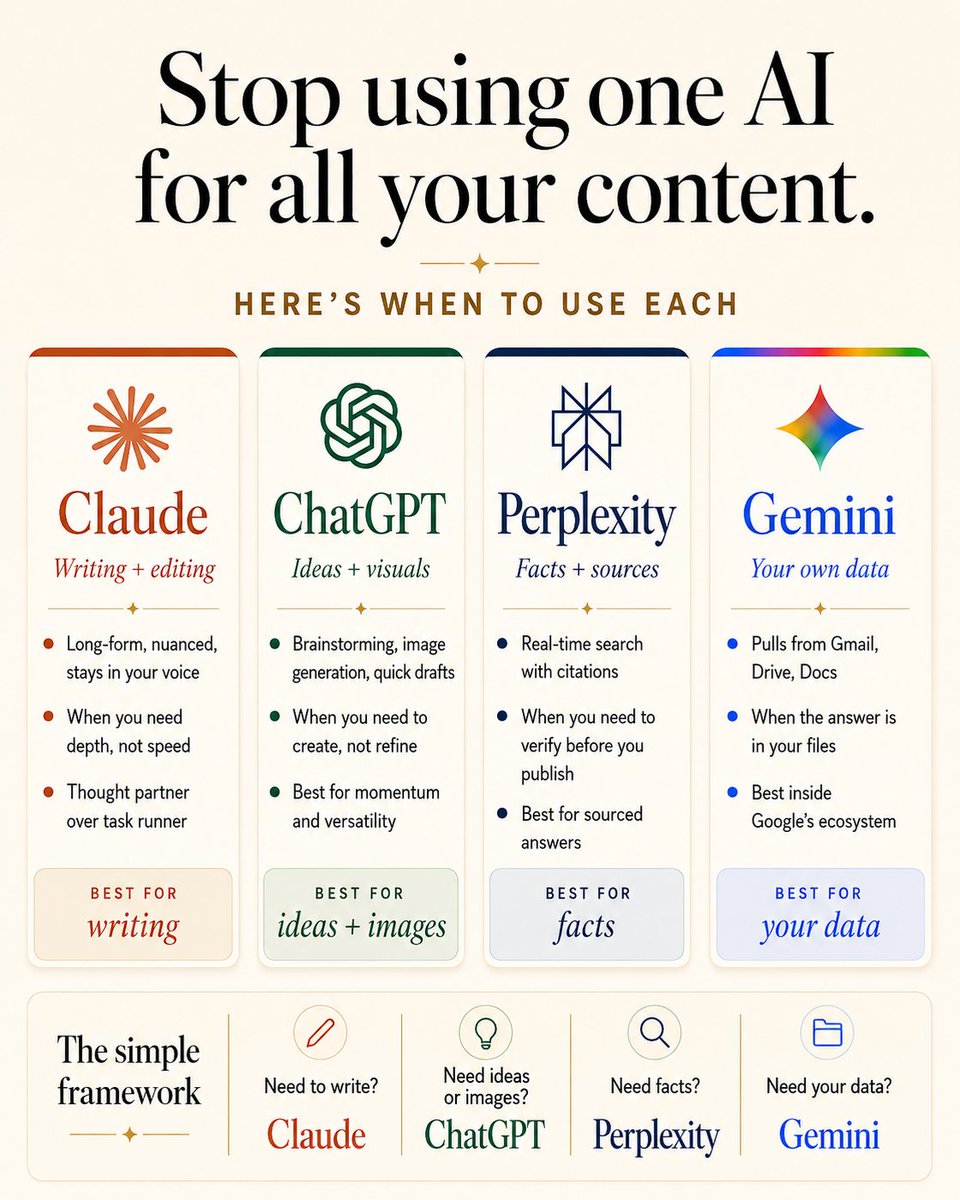
Stop using one AI for all your content.
Here's when to use each:
CLAUDE
↳ Best for: writing and editing
↳ Long-form, nuanced, stays in your voice
↳ When you need depth, not speed
CHATGPT
↳ Best for: ideas and visuals
↳ Brainstorming, image generation, quick drafts
↳ When you need to create, not refine
PERPLEXITY
↳ Best for: facts and sources
↳ Real-time search with citations
↳ When you need to verify before you publish
GEMINI
↳ Best for: your own data
↳ Pulls from Gmail, Drive, Docs
↳ When the answer is in your files
THE SIMPLE FRAMEWORK:
→ Need to write? Claude
→ Need ideas or images? ChatGPT
→ Need facts? Perplexity
→ Need your data? Gemini
Power users don't use one tool.
They use the right one.
Ever end a long day thinking…
Where did all my time go?
➭You answered messages.
➭You jumped on calls.
➭You checked things off.
But the important work?
That's still waiting.
Use these top systems to win your time.
Time doesn’t magically appear,
but clarity creates it.
And when you protect your time,
you start winning your days back.
🎁 Want PDFs of my top infographics + growth tools?
👉 Go Here: https://t.co/QLV2I0XGXV
Please repost to help others out there! ♻️
If choosing the right statsistical test gives you anxiety..
Save & Share this quick reference guide of common statistical tests ⤵
[descriptive stats set the stage but aren't a test]
✅ Z-Test: Large samples with known population variance
✅ T-Test: Comparing means, typically for smaller samples
✅ ANOVA: Juggling 3+ groups? This is your go-to
✅ Pearson's Correlation: Linear relationships between continuous variables
✅ Mann-Whitney U: Non-parametric alternative when normality is violated
To pick a test, understand WHY it fits your data and research question!
💬 𝐖𝐡𝐢𝐜𝐡 𝐬𝐭𝐚𝐭𝐢𝐬𝐭𝐢𝐜𝐚𝐥 𝐭𝐞𝐬𝐭 𝐰𝐨𝐮𝐥𝐝 𝐲𝐨𝐮 𝐚𝐝𝐝?
𝐏𝐒. 𝘓𝘦𝘮𝘮𝘦 𝘬𝘯𝘰𝘸 𝘪𝘧 𝘺𝘰𝘶'𝘥 𝘭𝘪𝘬𝘦 𝘢 𝘗𝘋𝘍 𝘰𝘧 𝘵𝘩𝘪𝘴 𝘨𝘶𝘪𝘥𝘦!
------------------------------------------------------
Useful find? Pass it on!
🔄 𝐑𝐞𝐩𝐨𝐬𝐭
Receive exclusive FREE tips on using AI in research ⤵️
🔗 in bio
& Click @RaziaAliani + follow + 🔔
I test AI tools to simplify your research & analysis
(& 𝘤𝘰𝘯𝘥𝘶𝘤𝘵 𝘵𝘳𝘢𝘪𝘯𝘪𝘯𝘨𝘴 𝘰𝘯 𝘵𝘩𝘦𝘮)










![RaziaAliani's tweet photo. If choosing the right statsistical test gives you anxiety..
Save & Share this quick reference guide of common statistical tests ⤵
[descriptive stats set the stage but aren't a test]
✅ Z-Test: Large samples with known population variance
✅ T-Test: Comparing means, typically for smaller samples
✅ ANOVA: Juggling 3+ groups? This is your go-to
✅ Pearson's Correlation: Linear relationships between continuous variables
✅ Mann-Whitney U: Non-parametric alternative when normality is violated
To pick a test, understand WHY it fits your data and research question!
💬 𝐖𝐡𝐢𝐜𝐡 𝐬𝐭𝐚𝐭𝐢𝐬𝐭𝐢𝐜𝐚𝐥 𝐭𝐞𝐬𝐭 𝐰𝐨𝐮𝐥𝐝 𝐲𝐨𝐮 𝐚𝐝𝐝?
𝐏𝐒. 𝘓𝘦𝘮𝘮𝘦 𝘬𝘯𝘰𝘸 𝘪𝘧 𝘺𝘰𝘶'𝘥 𝘭𝘪𝘬𝘦 𝘢 𝘗𝘋𝘍 𝘰𝘧 𝘵𝘩𝘪𝘴 𝘨𝘶𝘪𝘥𝘦!
------------------------------------------------------
Useful find? Pass it on!
🔄 𝐑𝐞𝐩𝐨𝐬𝐭
Receive exclusive FREE tips on using AI in research ⤵️
🔗 in bio
& Click @RaziaAliani + follow + 🔔
I test AI tools to simplify your research & analysis
(& 𝘤𝘰𝘯𝘥𝘶𝘤𝘵 𝘵𝘳𝘢𝘪𝘯𝘪𝘯𝘨𝘴 𝘰𝘯 𝘵𝘩𝘦𝘮)](https://pbs.twimg.com/media/HDWRnBLaAAAAKxv.jpg)


