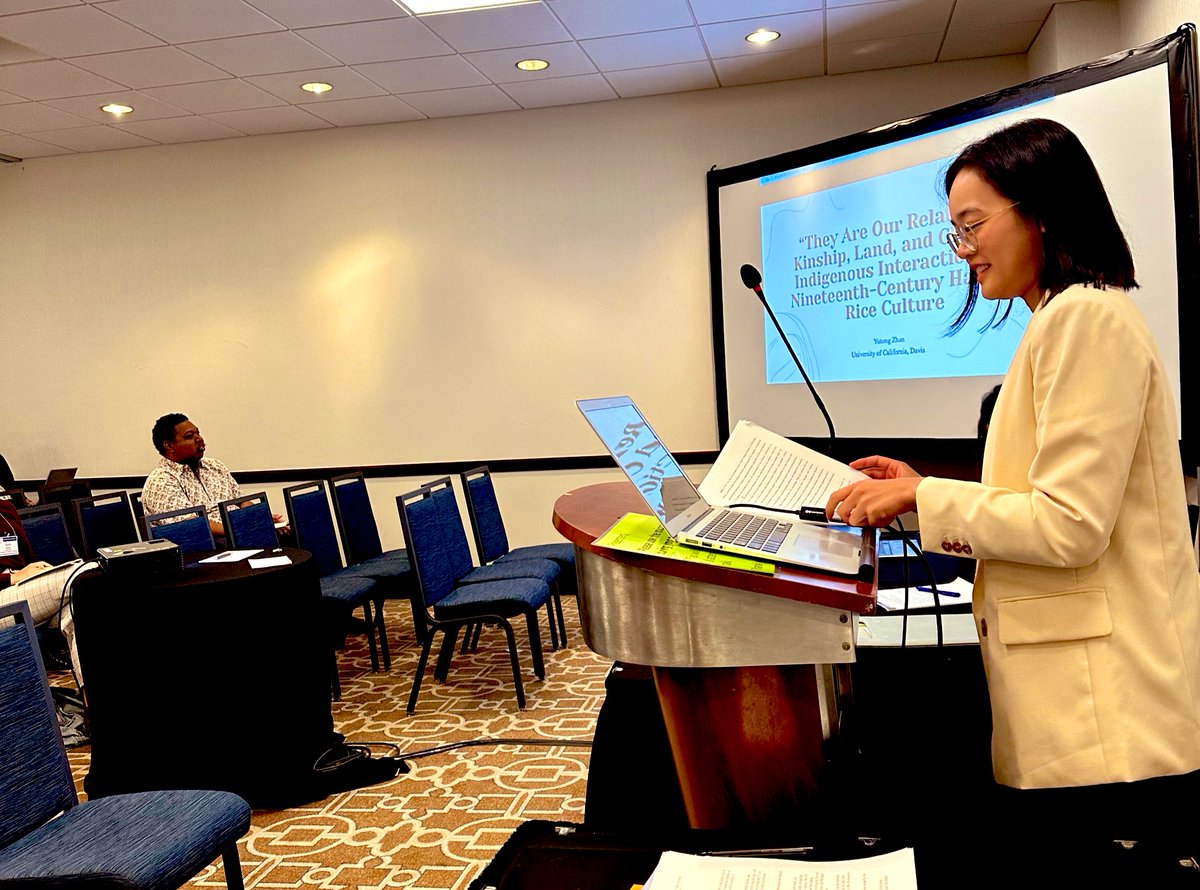
Yutong Zhan brings us home as she centers Chinese and Indigenous relationships that built the rice industry in Hawaii against the backdrop of settler colonial ambitions throughout the 19th century @WhaHistory#WHA2024 Benton B
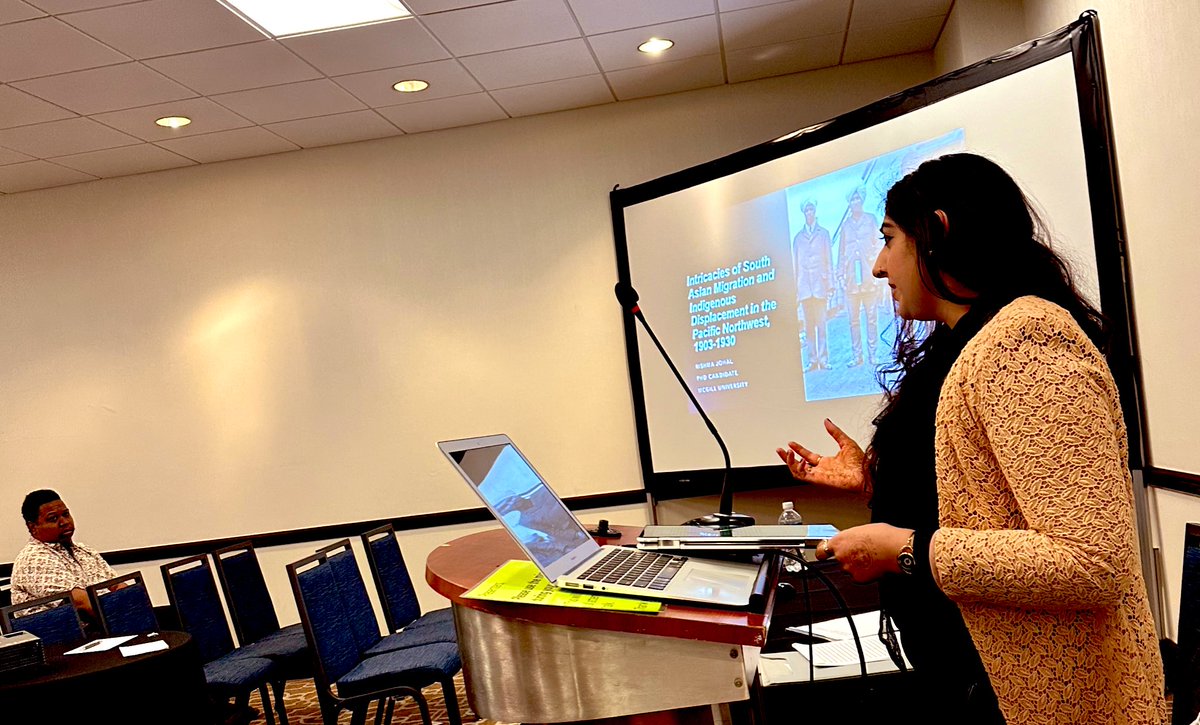
We are still going strong in Benton B as Rishna Johal shows how South Asians became implicated in Washington’s settler colonial project & intentionally used in the subjugation of Indigenous communities as South Asian undercut Indigenous labor power. @WhaHistory#WHA2024
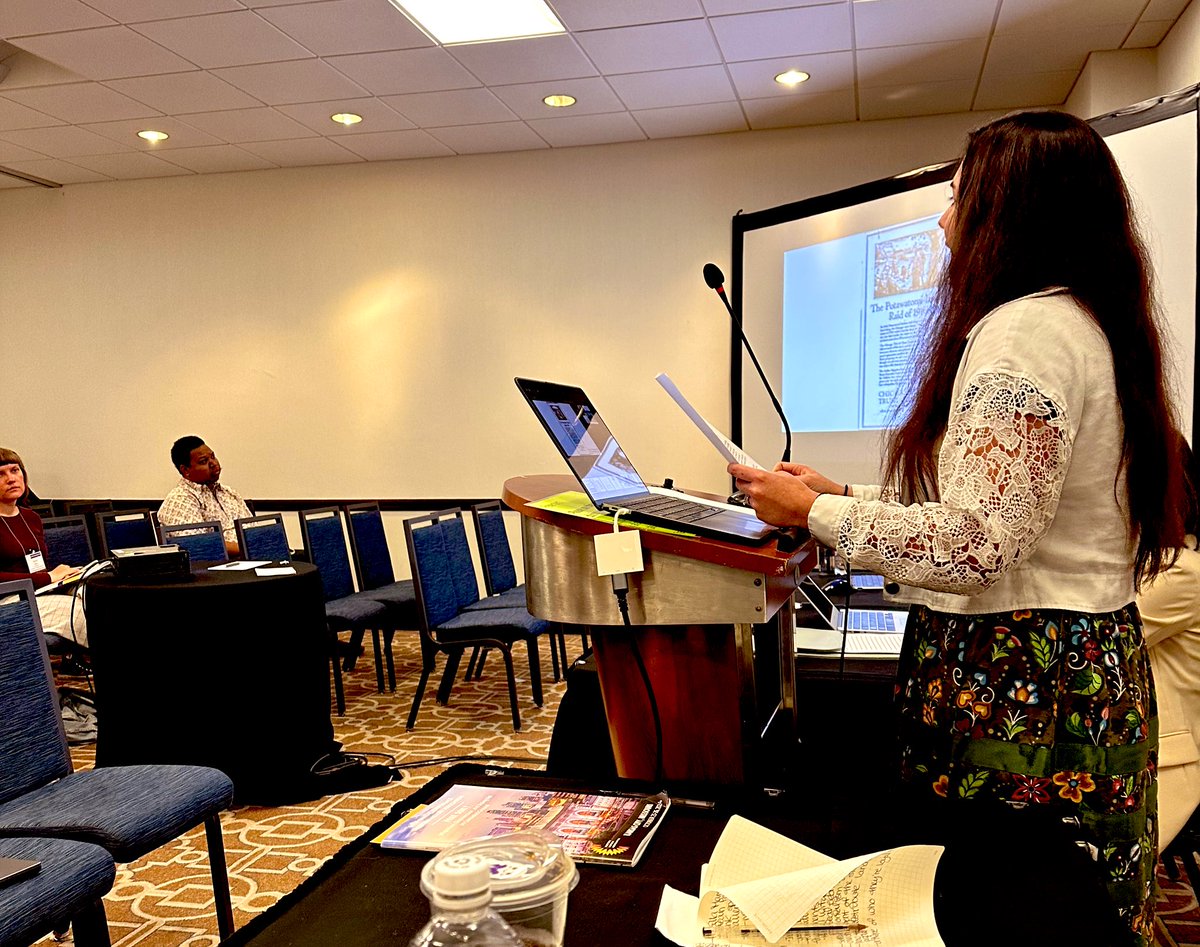
Zara Ballew (University of Wisconsin-Madison) continues our discussion by sharing the Pokagon Band of the Potawatomi’s entrenched legal and sovereignty battle over Chicago’s lakefront in the early 19th century @WhaHistory#WHA2024 Benton B
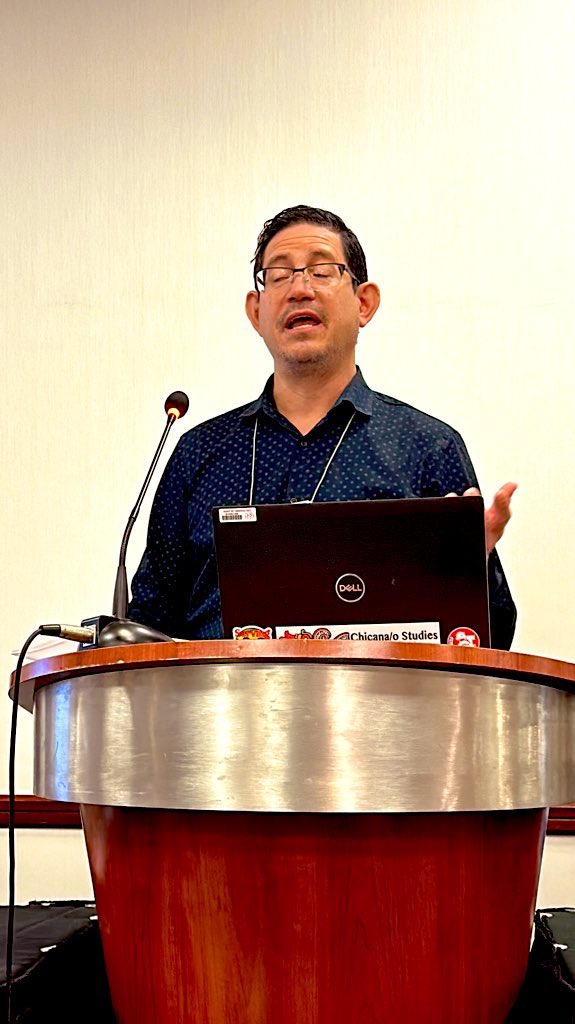
Hey @WhaHistory come join me in Benton B to learn about Indigenous land and water rights in the North American west. Today I presented a look at the settler colonial origins in early 19th century Sonora & the targeting of Indigenous lifeways and water power #WHA2024
Without a greater historical context , modern immigration policy might seem like a matter of happenstance or a “luck of the draw” but we cannot and must not let that happen. 9/9 @WhaHistory#WHA2024
KLH reiterates how despite the 1965 IRA opened up free and lawful immigration for many migrants from Latin America and other non-White global communities, it did reinforce the critical pillars of the Whites-Only Immigration Regime 7/
The Visa Waiver system of the 1980s allowed entry from certain countries w/o documentation. By the early 2010s, 36 of the 41 countries eligible this waiver are primarily white settler countries, a visible reminder of the persistence of a modern whites-only immigration regime 8/
KLH shares how the 1952 IRA also expanded the punishments for unlawful entry that while it reduced the punishment from 1 year to 6 month, while the shorter sentence did away w/ the requirement of a jury trial making it easier, faster, & cheaper to target Mexicans w/o a jury. 6/
Kelly Lytle Hernandez takes the stage to talk about immigration regulations, control, & migration in the late 19th & 20th centuries that makes the American West inseparable from discussions of immigration in the US & North America writ large @WhaHistory#WHA2024 1/
KLH talks about the “devil is in the details” with the 1952 IRA capped Asian immigration to 2000 persons per year, 100 for Black majority British colonies, it was also designed to punish Mexican migrants who crossed without inspection @WhaHistory#WHA2024 5/
KLH highlights late 19th legal precedent that sanctioned immigration control with complete federal power with no regard for constitutional protections @WhaHistory#WHA2024 4/
“Immigration historians why have we never asked why there was such limited immigration from Haiti, the Dominican Republic, [etc despite US occupation of these spaces in the early 20th century?]” @WhaHistory#WHA2024 3/
KLH continues to add to the discourse to with an emphasis on strict restrictions based on Black immigrants in 1924 particularly from the Caribbean @WhaHistory#WHA2024 2/
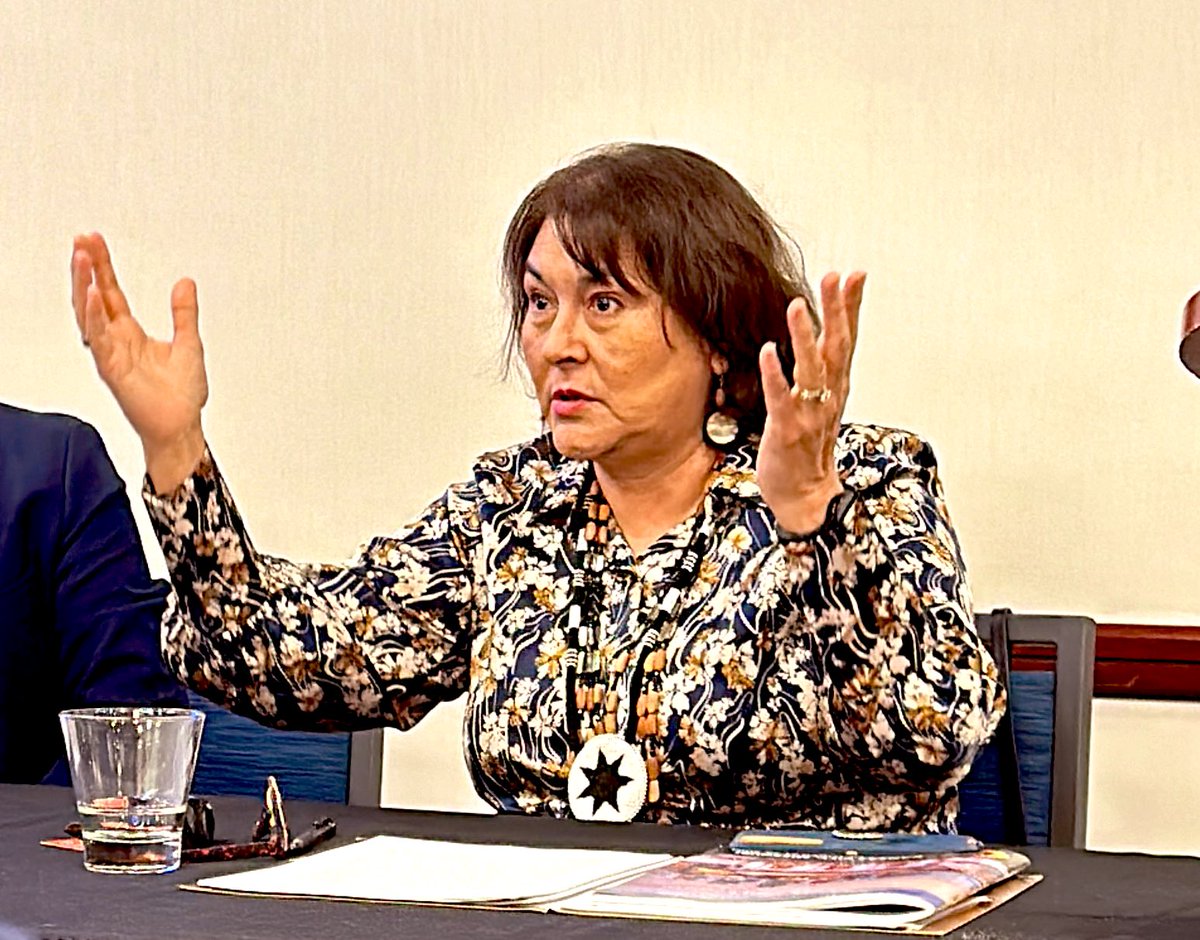
Heather Ponchetti Daly shares how Native communities in Southern California still await promised water access & storage guarantees made by the US federal government that are still “in process” even 100 years after they were made. @WhaHistory#WHA2024
Benny Andres Jr. shares how he front loads historical contexts in conversations with journalists who increasingly seek his comments on increased environmental crisis in the Imperial and Mexicali Valley. @WhaHistory#WHA2024
Good morning @WhaHistory, come join me in Benton B for the "Murky Water" panel to talk about water rights in the US-Mexico Borderlands. Benny Andres Jr. talks about how complex cycles Salton Sea flooding & evaporation shaped community land claims & federal oversight. #WHA2024
Eric Biome problematizes the idea of western wilderness and the false dichotomy of humans & their environment. He also highlights how environmental groups target abs erase Native cultural lifeways in the Rio Colorado Delta @WhaHistory#WHA2024 Benton B
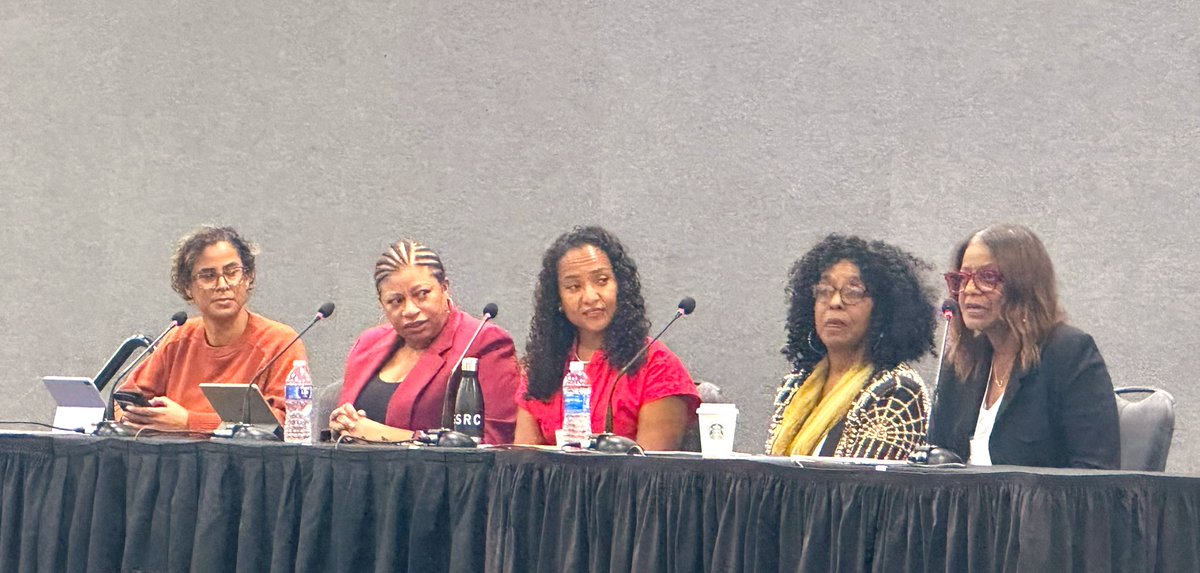
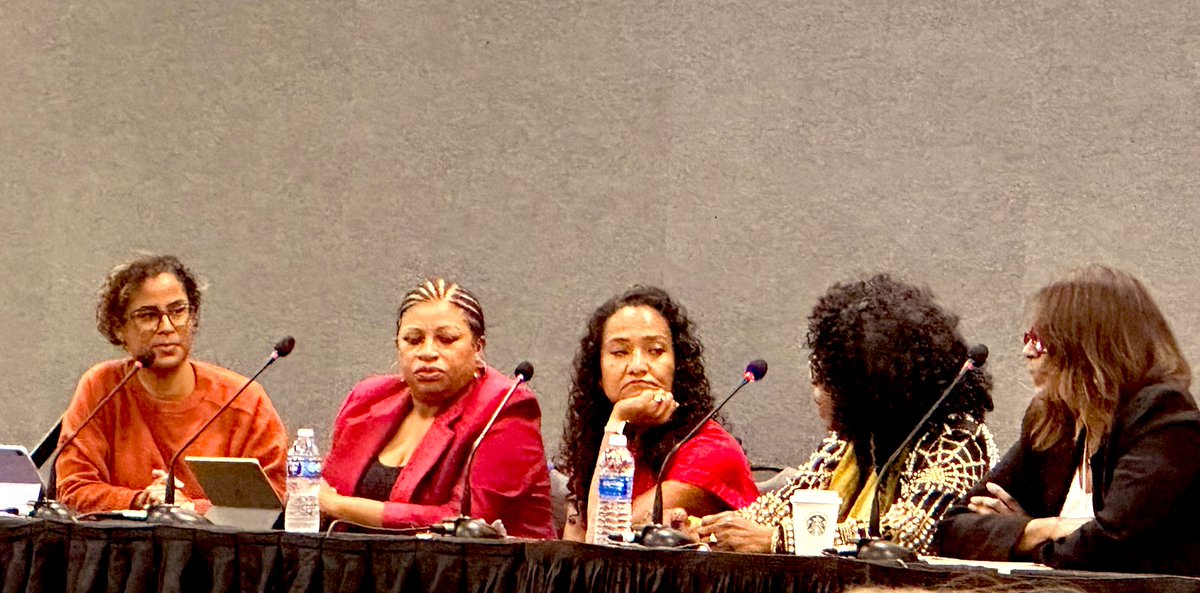
Panelists discuss how the American South & West as both places & processes can’t be separated & should not be separated. Panelists push attendants to rethink of the West as not just a space of escape but as a landscape of bondage, labor, creation, & promise @WhaHistory#WHA2024
@WhaHistory if you are still in the area, come to Ballroom B (exhibit level) for the Presidential Plenary on “The Black West”. In the opening question, the panel is asked what the sub field of the Black West was like when they entered the field #WHA2024
@WhaHistory if you are still in the area, come to Ballroom B (exhibit level) for the Presidential Plenary on “The Black West”. In the opening question, the panel is asked what the sub field of the Black West was like when they entered the field #WHA2024