Tesla Cybercab is not interesting simply because a gold two-seater can drive around Austin without a steering wheel.
It is interesting because it could change what a car is.
For a century, automakers sold machines that spend most of their lives parked. A mature robotaxi network sells useful miles. The vehicle becomes a productive node, while software handles dispatch, routing, payments and the feedback loop that improves the service.
That creates a powerful flywheel:
More rides �� more real-world experience → better service → lower cost per mile → more demand → more cars.
The owner-and-fleet model could make that loop even faster. Tesla would not need to finance every vehicle itself. Individuals and operators could eventually add supply, while Tesla provides the factory, autonomy stack, charging network, app and service layer.
Think less “another Uber competitor” and more “an operating system for road transportation.”
Austin is still the seed, not the finished forest. A 45-car launch does not prove global scale. The real scoreboard is safety, uptime, cleaning, charging, repositioning, unit economics and regulatory trust.
But those are execution gates—not a reason to miss the direction of travel.
The breakthrough is not simply removing the driver. It is turning transportation from a product you buy into capacity a network can continuously produce.
If Tesla gets that flywheel right, Cybercab may be remembered as the moment the car business began evolving into a physical-AI utility.
“It will only get better” is a short sentence. The system behind it could become very large.
#Tesla #Cybercab #Robotaxi #Autonomy
I just ordered a Tesla Model Y Long Range RWD - 821 km CLTC - and delivery is next week.
Here are my 10 reasons for saying yes:
1. Range that changes the way you think.
821 km CLTC is not just a number. It means fewer charging calculations, more spontaneous weekends, and a much bigger comfort zone.
2. The efficiency sweet spot.
Rear-wheel drive, long-range battery, and an aerodynamic body: this is the version for people who want maximum distance without turning the car into something slow or sleepy.
3. It is still properly quick.
Around 5.6 seconds from 0-100 km/h is more than enough to make every highway merge feel effortless - and every green light a little more fun.
4. Home becomes the gas station.
Plug in at night. Wake up ready. No detours, no fumes, no standing beside a pump. That small change may be one of the biggest luxuries of EV ownership.
5. Road trips come with an ecosystem.
Tesla's Supercharger network, route planning, battery preconditioning, and live charging information work together. The car does not merely show the road; it helps plan the energy.
6. SUV practicality without SUV heaviness.
Five seats, a huge rear cargo area, underfloor storage, and a front trunk. Groceries, luggage, cameras, camping gear - the Model Y is ready before I am.
7. The car can improve after delivery.
Most cars are at their smartest on day one. A Tesla can gain refinements, features, and fixes through OTA software updates while sitting in the driveway.
8. The phone is genuinely part of the car.
Lock, unlock, pre-cool, pre-heat, monitor charging, find the car, schedule service. The app turns a lot of tiny ownership chores into taps.
9. Electric driving is calm and addictive.
Instant torque, quiet acceleration, one-pedal rhythm, and no gear hunting. Fast when you ask; peaceful when you do not.
10. It gives time back.
Less routine maintenance, less time at fuel stations, fewer moving parts to worry about, and more mornings when the car is simply ready.
There are faster cars, softer cars, cheaper cars, and flashier cars.
But the Model Y may be the rare one that combines range, speed, space, software, charging, and everyday ease in a single clean package.
I did not order it because it is perfect.
I ordered it because it makes the future feel practical.
Next week, the waiting ends.
#Tesla #ModelY #ElectricVehicle #DeliveryDay
If your child can explain how they think - not just repeat what they know - Astra Nova may be worth a serious look.
Born inside SpaceX as Ad Astra, Astra Nova is now an independent, nonprofit, WASC-accredited online school for students ages 11-18 worldwide. Classes are live, in English, usually with 6-16 students.
The next application deadline is October 15, 2026, for classes beginning January 4, 2027.
Here is the application playbook I would use:
1. Start with fit, not the SpaceX story.
Ask whether your child enjoys open-ended problems, can explain a decision, listens when someone disagrees, and is comfortable speaking in live English classes. Also map the Pacific Time schedule into your own time zone before applying. A fascinating course at 3 a.m. is not a practical course.
2. Let the child choose one Conundrum.
Applicants pick one of six prompts and submit a 30-second to 2-minute video or audio response; video is preferred. This is not a trivia test. They want to hear the child reason.
A strong 60-90 second answer can follow this structure:
- My choice
- The two criteria I used
- The tradeoff I am accepting
- The strongest argument against my choice
- The new fact that could change my mind
Do not turn it into a miniature TED Talk. No cinematic editing. No adult vocabulary pasted into a child's mouth. A pause, a correction, or an honest "I'm not sure" can reveal more intelligence than a perfectly memorized script.
3. Write the parent letter like a real email.
The limit is one page. Skip the trophy inventory. Tell one specific story showing how your child learns, explain what is missing in the current environment, why Astra Nova fits, and how your family will handle the schedule, independence, and workload.
4. Upload the basic information, Conundrum response, and parent letter.
The school application is free. Astra Nova says roughly half of applicants typically move to the next round.
5. Prepare for the group interview, not a performance.
The official site does not publish a scoring rubric, but the school's philosophy gives a strong clue: the best applicant may not be the loudest child. Practice listening, summarizing another person's idea fairly, disagreeing with a reason, inviting quieter people in, and changing position when the evidence changes.
Current timeline:
- Oct 15: application deadline
- Nov 1: group interviews
- Dec 15: final decisions
- Jan 4: classes begin
One more reality check: published annual tuition ranges from $4,800 to $36,000 depending on weekly hours. Astra Nova says it meets 100% of demonstrated financial need for families, including international families. Because this intake begins in January, confirm the exact billing directly with the school.
The biggest mistake is trying to manufacture an "Astra Nova child."
The strongest application will feel unmistakably like one real child: curious, thoughtful, willing to work, and able to make a group smarter - not merely eager to look smart.
Official information and application:
https://t.co/sh33P0YUsc
#AstraNova #FutureOfEducation #Parenting #OnlineSchool
Want to stay gorgeous for the rest of your life?
Then stop treating beauty like an emergency and start treating it like a lifestyle.
Here are 16 slightly unhinged, surprisingly effective glow-up rules:
1. Never go completely idle.
Beauty likes motion. Do the skincare. Book the haircut. Try the outfit. Take the walk. Looking polished is not effortless; it is the result of repeated attention.
2. Train your back.
A strong upper back opens your posture, gives your clothes structure and changes how you enter a room. It is one of the cheapest glow-ups on earth.
3. Protect a healthy, steady body.
Eat real meals, drink water, move every day and let treats remain treats. Skip the crash diets. Energy looks better than exhaustion ever will.
4. Look up.
Your phone should not own your neck. Lift your head, relax your jaw and look at the sky sometimes.
5. Posture beats expensive clothes.
Stand tall. Shoulders relaxed. Chest open. A simple outfit on confident posture will outshine designer clothes on a defeated frame.
6. Make sun protection part of getting dressed.
Use broad-spectrum SPF, hats and shade. Enjoy daylight; just do not make your skin pay for it later.
7. Sleep like it is part of your beauty routine.
Because it is. Consistent sleep does more for your face, mood and appetite than another miracle serum.
8. Put light back into your eyes.
When someone speaks, stay present. Hold your gaze instead of letting it run around the room apologizing for you.
9. Wash your face gently.
Your face is skin, not a dirty frying pan. Cleanse it; do not punish it.
10. Practice your smile.
If smiling feels awkward, use the mirror. Find the version that feels warm and unmistakably yours.
11. Let yourself be seen.
Take photos. Learn your angles. Wear the outfit. Post the picture. Confidence grows when you stop hiding from the camera.
12. Smell clean and intentional.
Fresh breath, clean clothes, body lotion, healthy hair and a little fragrance can leave a stronger memory than a perfect outfit.
13. Keep getting dressed for your own life.
Do not wait for a wedding, a date or a vacation. Ordinary Tuesday deserves your good version too.
14. Take care of your hair.
Hair frames everything. Condition it, handle it gently, use a little oil on damp ends and learn the style that makes you feel finished.
15. Quit the habits that pull you out of balance.
Switch the shoulder carrying your bag. Change positions. Move often. Small habits quietly become posture.
16. Become your own loudest fan.
Look in the mirror and say something kind before the world gets a vote. Self-respect changes the face. Joy changes the way you walk into a room.
The truth is, lifelong beauty is not one expensive treatment.
It is hundreds of tiny votes cast for yourself every day.
Move. Care. Sleep. Dress. Smile. Repeat.
That is how the glow stays.
#GlowUp #SelfCare #Confidence
The future rarely arrives with a keynote.
Sometimes it pulls up outside your hotel and takes you to breakfast.
This 28-second Cybercab clip captures something bigger than an autonomous car: the industrialization of a VIP experience.
For most of history, premium transportation meant paying another person to absorb the friction: find the route, bring the vehicle, open the door, wait, drive and park.
Cybercab turns much of that choreography into software.
You request the ride. The car finds you. Its light bar helps you identify the right vehicle. Your phone identifies you. The door opens. Your climate and media preferences can follow your passenger profile.
No wheel. No pedals. No cockpit asking you to take responsibility for the machine.
Just a private space that arrives when you need it.
That is a profound shift in the meaning of luxury.
Old luxury was scarcity: a chauffeur, a private car and special treatment reserved for a few.
Autonomous luxury can be abundance: the same calm, clean, door-to-door experience repeated all day, potentially lowering the cost while raising the standard for everyone.
People talk about robotaxis as a cheaper Uber. That undersells the idea.
The real product is not the car. It is a dependable slice of time.
Ten quiet minutes before a meeting. A calmer ride home late at night. An easier trip for an older passenger. A stress-free airport transfer for someone who does not know the city.
The most futuristic detail in this video is not the golden body or the butterfly doors.
It is how quickly something extraordinary becomes ordinary: a robot arrives, you get in, and you go to breakfast.
Technology wins when it stops feeling like a demo and starts feeling like a habit.
Cybercab is not trying to make everyone feel like they own a chauffeur.
It is trying to make every passenger feel like the car came just for them.
#Cybercab #Tesla #Robotaxi
The most important thing Tesla removed from Cybercab is not the steering wheel.
It is the assumption that transportation has to consume your attention.
Watch this raw, uncut ride. No stage trick. No cinematic edit. Just a gold two-seater moving through Austin while the passengers sit inside what feels less like a car and more like a private room on wheels.
For 100 years, cars gave us freedom by handing us control.
Cybercab flips that idea: the machine handles the road, and your time comes back.
A commute becomes time to work. An airport run becomes time to call your family. A late-night ride becomes a quiet place to breathe. The large screen, automatic doors and open cabin are not gimmicks; they are what happens when a vehicle is designed around the passenger instead of the driver.
And for all can mean more than a lower fare. The Tesla rider guide includes wheelchair-height bench seating, space for assistive devices and service animals, Braille on the doors and overhead buttons, and a trunk built for real life.
The deeper story is the stack.
Tesla is not just building a vehicle. It is connecting the car, AI, app, batteries, manufacturing, charging, service and fleet operations into one system. If that system scales, transportation stops behaving like a product you buy and leave parked most of the day. It starts behaving like an always-available utility.
This is why Cybercab matters. It may be the first Tesla product whose real luxury is not speed or styling.
It is reclaiming the minutes and hours that traffic has been taking from us all our lives.
Cars changed where humans could go.
Autonomy may change what humans can do while getting there.
Tesla did not just delete the steering wheel.
It may have redesigned the value of a mile.
#Tesla #Cybercab #Robotaxi
A lot of people watched this and had the same reaction:
Elon looks unusually tired.
I saw it too - but context matters.
This was not a polished Tesla launch with professional lighting, makeup, multiple cameras and carefully selected angles. It was a raw video call. Hard lighting deepens every shadow. Compression drains color from the face. A serious expression can make anyone look ten years older.
Maybe he was simply tired that day. That is human - not a diagnosis.
Now listen past the lighting.
For more than 13 minutes, he spoke clearly about AI, robotics, autonomous vehicles, global productivity and the coming demand for electricity. The appearance looked tired; the thinking did not.
People who spend decades trying to move civilization forward will not look 30 forever. Time leaves marks on everyone - especially on people carrying unusually large ambitions.
To me, he does not look defeated.
He looks unfiltered: older, more human, and still completely focused on the future.
#ElonMusk #G20 #AI
Elon Musk’s full G20 address today.
New source with clean audio and video, subtitles and timestamps.
0:00 Introduction
1:14 Why regulation slows innovation
3:06 Accelerating technology adoption
3:38 AI, self-driving, robotics and global growth
6:38 How quickly physical AI will arrive
7:18 The rise of humanoid robots
9:21 AI data centers, compute and electricity
10:13 The looming AI power shortage
13:17 Closing remarks
The best kind of love?
He’s completely gone for her—and she has a good heart.
He’s the one who doesn’t play it cool. He checks in. Makes plans. Stays patient. Learns her moods. Chooses softness during arguments. He isn’t afraid to let her know she’s his favorite person.
And she never mistakes his devotion for weakness.
She appreciates it, protects it, and gives him a safe place to love without feeling foolish. She doesn’t make him beg for the bare minimum or punish him for caring too much.
That’s the real balance:
He makes her feel deeply chosen.
She makes him feel safe for choosing her so deeply.
No games. No scorekeeping. No strategic distance. Just one man happily obsessed with one woman—and one woman with enough heart to treasure it.
That’s the kind of relationship that has you smiling at your phone at 2 a.m., too happy to sleep, already missing someone you just said goodnight to.
Love should feel like excitement and peace at the same time.
#Love #RelationshipGoals #HealthyLove
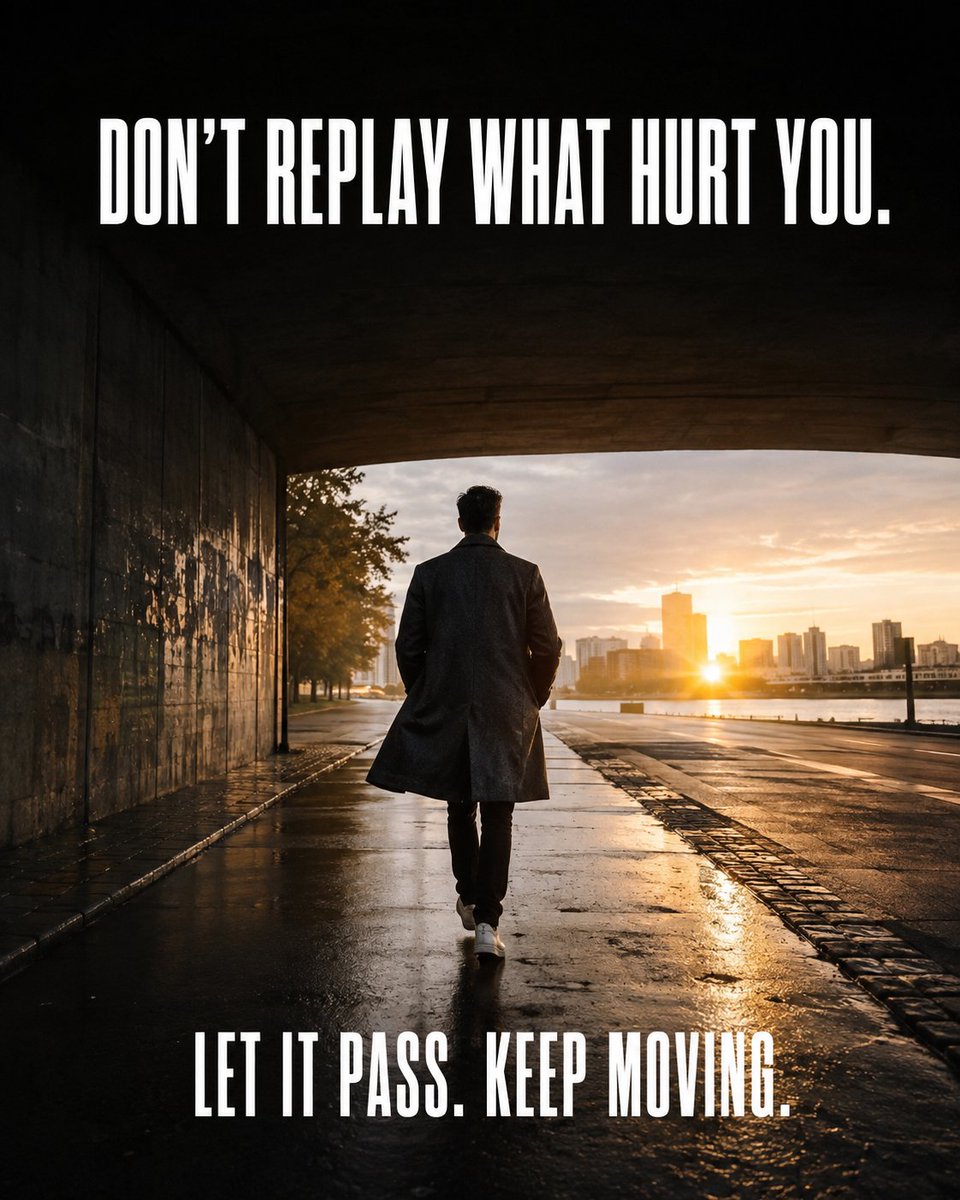
Stop chewing on what already hurt you.
Some moments are bitter. Swallow them once. Don’t drag them back to the table every night and call it “processing.”
There’s no nutrition in replaying disrespect. No wisdom in reopening the same wound. The more you revisit it, the more space it takes up in your life—rent-free.
Not everything needs closure. Not every person deserves one more conversation. Sometimes peace is simply deciding: this ends here.
What happened, happened.
Learn the lesson. Drop the weight. Keep your dignity. Keep moving.
You don’t heal by staring backward. You heal when the past can no longer control the direction of your next step.
Let it pass.
Let them go.
Choose yourself.
Walk toward what feels lighter.
#SelfRespect #LetGo #KeepMoving
One of the most fun Tesla features is hiding inside Toybox: Boombox.
It turns the car’s external Pedestrian Warning System speaker into a megaphone—or lets it play your current music outside.
Here’s the practical setup:
First, put the car in Park.
1. Tap the App Launcher—the dots at the bottom of the touchscreen.
2. Open Toybox.
3. Select Boombox.
4. Choose one of these options:
🎙️ Megaphone
Speak normally inside the car and your Tesla projects a modulated version of your voice through the external speaker.
Useful for calling friends across a campsite, helping someone find you in a large parking lot, or giving directions on private property.
Please don’t use it to yell at other drivers or distract traffic.
🎵 Play Current Media
Start a song or podcast in the normal media player, return to Boombox, then select “Play Current Media.” The audio will play through the vehicle’s external speaker.
This is great when the car is parked at a campsite, car wash, tailgate, or private driveway. Keep the volume reasonable—everyone nearby did not choose your playlist. 😄
Bonus tip: According to Tesla’s manual, if Camp Mode is active, you can leave the vehicle and control the volume from the Tesla app.
Can’t find Boombox? It is only available on vehicles equipped with the Pedestrian Warning System, and availability or menu wording can vary by model, software version, and region.
Always use it while parked, and check local noise laws before using it in a public place.
Save this for your next road trip.
#TeslaTips #Tesla #Boombox #EV
The most expensive thing you own isn’t your house, your car, or your phone.
It’s your attention.
Stop handing it out for free.
You do not owe every person a reaction. Not every message deserves a reply. Not every opinion deserves a courtroom inside your head. And if you cannot control the outcome, stop letting it rent space in your mind.
My ideal order for life is surprisingly simple:
1. Sleep
2. Eat well
3. Move your body
4. Do the work that moves your life forward
Everything else has to earn a place.
“Good morning.” “Good night.” “Did you eat?” Those words can be sweet—but words are not the same as care, consistency, or peace. Don’t confuse attention with devotion, being pursued with being loved, or someone’s opinion of you with your actual worth.
Be warm. Be polite. But don’t make yourself endlessly available for arguments. “I hear you” does not mean “I will live by your opinion.” A boundary does not need a press conference.
Real self-respect often looks wonderfully boring:
Go to bed on time. Read actual books, not just hot takes. Take notes. Learn something. Exercise. Practice your craft. Make money. Care for your skin and hair. Wear clothes that make you feel like yourself. Go outside. Play. Repeat.
Treat yourself like your favorite long-term investment.
And let go of hatred. Hate is an expensive subscription: you keep paying, while the other person lives in your head for free. Forgive if it gives you peace—but remember, forgiveness is not a return ticket. You can release the anger without inviting the same chaos back into your life.
When you feel stuck, move. Take a walk. Swim. Change rooms. Change the view. Sometimes your mind doesn’t need another answer; your body just needs proof that life is still moving.
Be your own biggest fan. Speak to yourself like someone you’re responsible for protecting. Improve a little every day and a lot every year.
Some problems need a solution. Others only need you to stop feeding them.
A peaceful life isn’t a life with no problems. It’s a life where you finally know which problems are yours.
#SelfRespect #Boundaries #SelfCare #PersonalGrowth
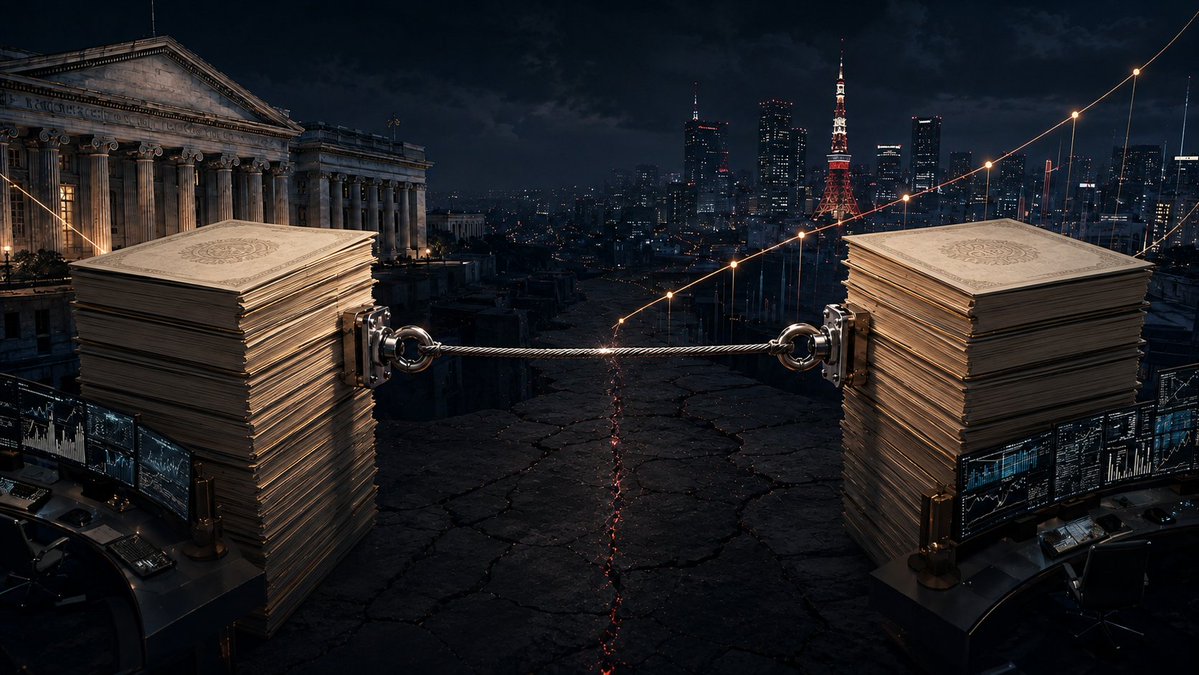
Everyone at the G20 kept talking about growth.
But I couldn’t stop hearing another word underneath it:
Debt.
Put Kevin Warsh’s message next to Scott Bessent’s and the choreography becomes hard to ignore.
Warsh’s argument is that the US economy is stronger than many people think. AI investment is booming, businesses are spending, and the old world of “secular stagnation” and permanently cheap money may be over.
His new story is secular growth.
If growth is strong and inflation remains sticky, the Fed has room to stay hawkish—and possibly raise rates again.
Then Bessent arrives with “Back to Basics.”
His message is simple: the world drowned itself in debt after the pandemic, and the only sustainable way out is growth. That is why growth sits at the top of the G20 agenda.
Sounds reassuring, right?
Maybe. But here is what I think the market is really being asked to believe:
The US can grow fast enough to carry a much larger debt load, so investors should keep buying Treasuries even if yields stay high.
Now look at Japan.
The yen has been under enormous pressure. Japan spent nearly $100 billion supporting it in one month, yet much of the relief quickly faded.
To defend the yen, Tokyo needs dollars. Selling US Treasuries is one way to get them—but large Treasury sales would push US yields even higher, exactly when Washington is already wrestling with rising borrowing costs.
So when Bessent leans on Japan to normalize policy, I don’t think this is simply about “saving the yen.”
It is also about reducing the risk that Japan—the largest foreign holder of US government debt—has to keep liquidating Treasuries to fund currency intervention.
But the Bank of Japan is trapped.
Raise rates too slowly, and the yen remains vulnerable.
Raise them too quickly, and Japan’s own debt-servicing costs rise, ultra-long JGB yields climb further, the bond market weakens, and the global yen carry trade starts repricing.
That creates a dangerous chain reaction:
Weak yen → intervention → reserve pressure → possible Treasury sales → higher US yields → tighter global financial conditions.
Or:
BOJ hikes → higher Japanese funding costs → JGB stress → carry-trade unwinding → volatility across global assets.
This does not mean a financial tsunami must arrive tomorrow.
But it does mean the US and Japan are trying to manage two enormous debt systems that are increasingly connected through currencies, interest rates and investor confidence.
Growth can improve the math over time.
It cannot magically erase today’s refinancing bill.
My read is that policymakers are buying time: use the growth narrative to keep investors confident, coordinate policy to prevent disorderly selling, and hope nominal growth outruns the interest expense.
That is a narrow path.
With uncertainty running from the Middle East and oil to US Treasuries, the yen, AI and global trade, this is not the moment to be a hero.
Control position size. Keep liquidity. Diversify. Hedge the risks you cannot afford to take.
You do not need to predict the exact moment the wave hits.
You need to make sure you are still standing if it does.
#USDebt #Japan #FederalReserve #BondMarket #Yen #Macro #Investing
Most people still describe SpaceX as a rocket company.
After rewatching @SpaceX's posts from the last eight weeks, that description feels way too small.
33 Raptors firing under Super Heavy. Flight 13 deploying Starlink V3 test satellites, relighting a Raptor in space, and coming back through reentry. A Falcon 9 booster landing for the 37th time. Falcon Heavy sending Roman on its way. Starlink cameras watching Starship from orbit. Another full-duration static fire. A new Louisiana site built for much higher cadence.
The impressive part isn't any single clip. It's the loop:
Launch -> observe -> learn -> return -> repeat.
Spaceflight changes when this stops looking like a chain of heroic one-offs and starts looking like an operation--reliable, reusable, and eventually routine.
I cut two months of official SpaceX footage into this short film. Sound on.
#SpaceX #Starship #Falcon9
Homer had a lyre. Today, one person with Grok Imagine can build the world, characters, motion, dialogue and atmosphere of an entire cinematic scene.
That is why this challenge feels bigger than a contest.
It asks creators to turn The Odyssey into a coherent 3–5 minute film—not just another beautiful AI clip.
To make that work, Grok Imagine has to become more than a generator. It becomes a creative partner: establishing characters, preserving a visual world, directing motion, generating voices and helping a story hold together from the first frame to the last.
The $100K, $50K and $25K prizes will attract attention. But the format is the real signal.
Image 2.0 can build consistent characters, locations and props. Video 1.5 brings stronger motion, physics, dialogue and synchronized audio. Put those pieces together, and the distance between “I have an idea” and “I made a film” suddenly becomes much shorter.
Grok Imagine is opening cinematic storytelling to people who never had a studio-sized team or budget.
The next great AI filmmaker may already be typing the first prompt.
#GrokImagine #AIFilm #GenerativeAI #FutureOfCreativity
Homer had a lyre. You have Grok Imagine.
Create a compelling scene from Homer’s The Odyssey that shows what Grok @Imagine’s video and voice capabilities can do. We’re awarding $100K, $50K, and $25K to the top three videos submitted by quoting this post. 🧵
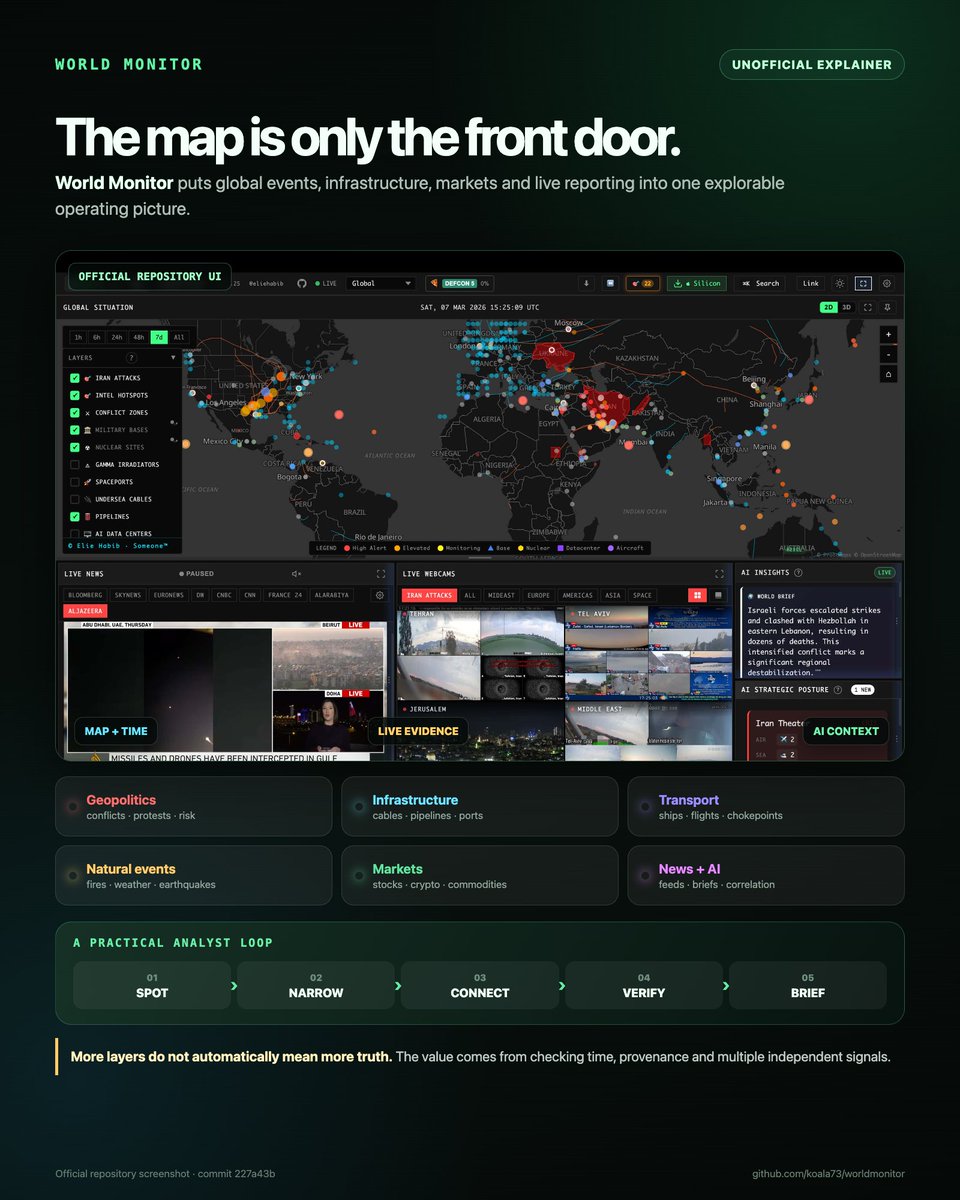
World Monitor feels like someone put a live crisis map, an OSINT desk, a market terminal and an AI analyst into one browser tab.
I opened it expecting another dashboard full of blinking dots.
Five minutes later I was moving between conflict zones, undersea cables, pipelines, GPS jamming, fires, flights, market stress, live news, webcams and AI briefs.
That is the interesting part of koala73/worldmonitor: the map is only the front door.
The useful workflow is surprisingly human:
1. Notice an event.
2. Narrow the map to the last 6 or 24 hours.
3. Add the infrastructure that could be affected.
4. Compare several news and operational sources.
5. Let the AI compress the mess into a brief—then open the original evidence yourself.
Instead of asking only “What happened?”, you can start asking better questions:
Is this isolated or part of a wider pattern?
Which ports, cables, pipelines or trade routes sit nearby?
Are markets, flights or internet outages reacting too?
What changed since yesterday?
Under the hood, this is much more than a pretty map. The same TypeScript codebase powers world, tech, finance, commodity, energy and positive-news variants, plus a Tauri desktop app. It has browser-side ML, optional Groq/OpenRouter support, local AI through Ollama-compatible endpoints, and machine access through REST, MCP, CLI, Python, Ruby and Go SDKs.
You can clone it, run the base app with npm, or build a fuller Docker stack with Redis, seeders and your own data-provider keys.
But keep the hype switch off.
“Real time” depends on each provider’s refresh rate and geographic coverage. Terrestrial ship tracking has blind spots. AI summaries can inherit bad reporting. Country-risk scores are models, not facts. Some datasets need credentials or paid access, and serious self-hosting needs real operational care.
Used properly, World Monitor is not a truth machine.
It is a context machine.
The internet gives you thousands of separate signals. World Monitor tries to put them back together by place, time and dependency—so you can see the shape of a story before the story is obvious.
GitHub: https://t.co/09XUybcrGd
#WorldMonitor #OSINT #Geopolitics #OpenSource #AIAgents