An intricate bronze high-relief main entrance door of the Neo-Romanesque Church of Saints Simon and Helena (the Red Church) in Minsk, Belarus, featuring a central Tree of Life motif sculpted by Zygmunt Otto.
This is one of the greatest medieval castles in England.
Originally constructed by William the Conqueror in 1068 and later rebuilt in stone, Warwick Castle has been standing for nearly a thousand years. It’s older than the Aztec Empire.
I’m making a show about buildings.
The concept is simple: do for the man-made world what Planet Earth did for the natural world.
But, when I pitched the idea, the answer was that nobody would watch it.
So I released a pilot episode on YouTube. It’s got 5.4 million views, 379k likes, and 23k comments.
People are interested, and now it’s time to make the full show.
Six episodes, filming in the UK, France, Belgium, Germany, Italy, and the USA, and releasing on a streaming service like HBO, Netflix, or Prime.
Why does this show matter?
First: we’re surrounded by buildings all the time. Look around yourself, right now… what do you see? Buildings are the logical conclusion of everything a society believes in. That’s the real focus of this show: not the buildings themselves, but what they say about us.
Second: there’s global dissatisfaction with modern architecture. This feeling gets written about online, but nobody’s given a voice to it on film or TV. That’s what this show will be. But this isn’t just about criticising modernity. That’s easy. This is about learning from the past in order to understand and improve the present, for everybody.
Third: there’s a drought of high-quality culture shows. When I spoke to film executives they said that only documentaries about sports, music, or true crime get funded. That’s a colossal missed opportunity. Galleries are always full, content about architecture goes viral online all the time, and people spend their precious holidays visiting beautiful cities.
Why no shows about architecture, then?
Tourists flock in their millions to see (for example) the buildings of Antoni Gaudí in Barcelona. But, if you asked those same people if they’re interested in “architecture”, they’d probably say no.
To put that another way: not many people want to watch “a show about architecture”, but lots of people want to watch a show that illuminates the real world they’re living in, each and every day.
What will the show be like?
Six episodes, going chronologically through history and arriving at the present, each focussing on the architecture and design of a specific period:
1. Middle Ages
2. Renaissance
3. Enlightenment
4. The Nineteenth Century
5. Art Nouveau & Art Deco
6. Present Day
But, in each case, the point isn’t just to learn about that era; the point is to learn about our modern world through those eras and what they’ve left behind. If you watch the pilot episode (included below) you’ll see what I mean.
So the show’s not really “about” the past; it’s about the twenty-first century.
That’s why it’s called The Modern World.
When you think of a typical history show there are loads of interviews, stock footage, archive photos, historical recreations, and graphics. We’re doing none of that. Everything will be filmed on location, because we’re telling our story only through the real world that exists right now. And, rather than going to the most obvious places, we’ll focus on buildings that aren’t well-known but should be more famous.
But that’s all big picture; what will it be like on screen?
Buildings used to look different in every country, and now they look the same. Why? Because the weather is different everywhere, and buildings were always a way of dealing with that weather, using local materials. Now we have air conditioning and we ship concrete around the world, so we don’t need to design our buildings with regard to local weather or rely on local materials.
Look at really old clocks and you’ll notice something: they don’t have a second hand… because it was only invented 300 years ago! Then you look at the present and you realise we’re surrounded by timers, by seconds ticking down and ticking up relentlessly. If we’re looking for a cause of our anxiety-inducing culture, that might be it.
When you spend time with the sun-softened bricks and time-warped timbers of old cities you notice that synthetic materials like plastic have taken over. When we’re surrounded by things that feel temporary, how do you think it makes us feel?
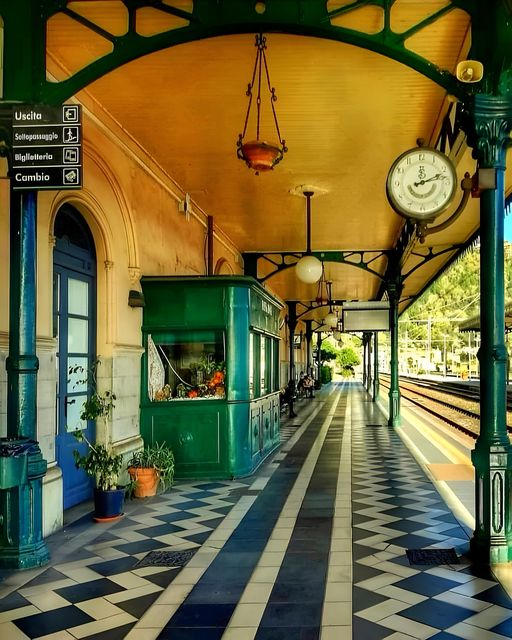
It’s only by seeing 19th century train stations, designed like cathedrals, that you realise tradition and technology aren’t enemies. New things don’t have to look boring: if the Victorians had designed AI data centres, they’d look like Medieval castles.
In the 1920s, at the zenith of Art Deco, people believed technology would uplift humanity. That’s why they decorated their buildings with statues inspired by electricity. Only by seeing their enthusiasm can we realise our own cynicism, and perhaps begin to fix it.
All of that… and much, much more.
But, above all else, this show is about a way of seeing. If you want to understand any society then you need to look at what it creates, not what it says about itself.
There’s a worldview in every single object; our skyscrapers are designed the same way as our phones. Learn to look at this world, to notice its details, and everything else starts to make sense.
What now?
I’ve been quiet online recently because I’ve been researching and working on scripts for six full-length episodes. Production begins when we’ve raised the funding.
The Modern World is coming.
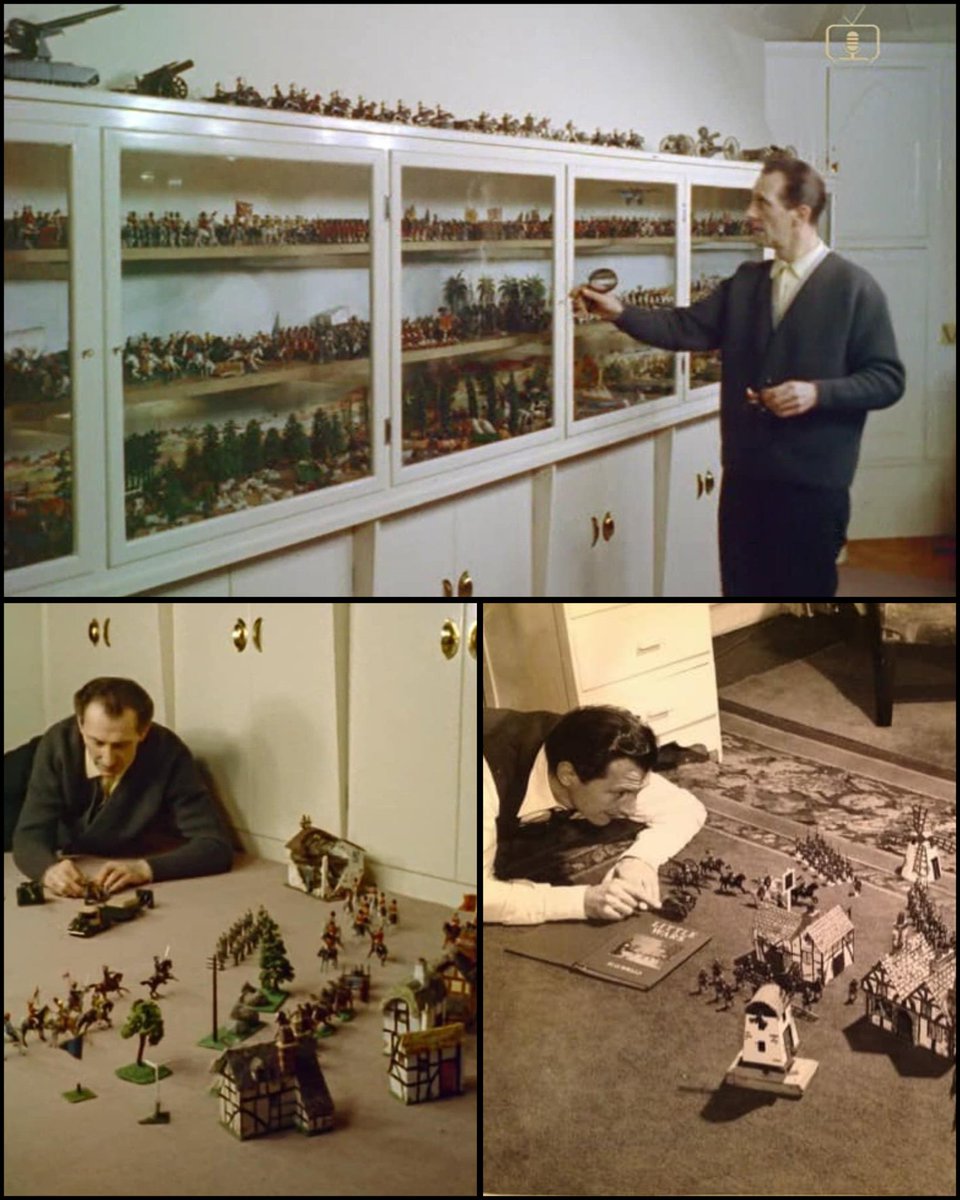
Peter Cushing Trivia
He was an avid collector, painter, and wargamer who owned over 5,000 hand-painted figures.
Cushing particularly enjoyed historical wargaming, specifically focusing on the Napoleonic era.
My husband just finished this paint job and he made me promise to share it because the people he showed it to ignored him or brushed it off.
Here's why this matters. Seven years of severe depression where I watched the man I married disappear completely. Couldn't get out of bed most days, lost his job, stopped talking to our kids. Last year his therapist said find something to work with your hands, so he bought this beat up 1967 Beetle with money his dad left him and I thought he'd wasted it on junk.
But he started working on it every single day in our garage. Some days all he did was sand one panel, but he kept showing up. And slowly he started coming back to us. Started smiling again. This paint job took three months. He learned from videos and people in online car groups who actually encouraged him, bought his custom paint from a maker online who spent an hour teaching him technique over the phone.
When he showed his friends and family, they left him on read. Just didn't respond at all. So he asked me to post it here because maybe strangers would understand what this actually means better than people who've known him forever.
This car saved my husband's life. It's proof that broken things can be beautiful again if you just keep working. And the man I married is finally back.
@HarmeetKDhillon I am intensely pro-capitalist and believe in market forces and hands off government wrt business. But decency needs to be involved somewhere. Buying something at the airport seems like robbery with a dose of surliness and the absence of customer service.
To all the men taking women to court because we don't believe you are women - you are still men.
No court on earth can change that fact.
Laws that defy nature simply reveal how corrupt the system is.
You. Are. Still. Men.
We will still say NO to you in our sports, spaces and services.
The Iliad and the Odyssey are not mere stories or action movie material; they are part of a millenia-old codex for the Greek ethos, that shaped the West.
Ancient Greek culture was not built on sacred scriptures or rigid commandments but on a vibrant pantheon of anthropomorphic gods who mirrored human strengths, flaws, passions, and aspirations.
Worship—through sacrifices, festivals, oracles, and myths—reinforced core societal values: reciprocity, order, excellence, moderation, and pragmatic wisdom.
These deities embodied the ethos of a fragmented, competitive world of city-states and kingdoms, united as a nation by their language, culture, religion and moral system.
It’s this moral system that the Western world was built upon and this piece might help you trace back some of the beliefs you were brought up with millennia later.
Read my article on SS to get the whole story; i have also posted on X for my Subscribers. I will be posting pieces of it for the whole X community in the coming days; it's important for all of us to know the roots of our ethos!
Substack link: https://t.co/dTqscC3G6O
X Article link: https://t.co/KB1MZ7eoZk