My new book is 'Media and the Power of Knowledge'. It is partly based on lectures I've given over the last 15 years. It updates McLuhan for the age of @X: https://t.co/xtKx0LNltd
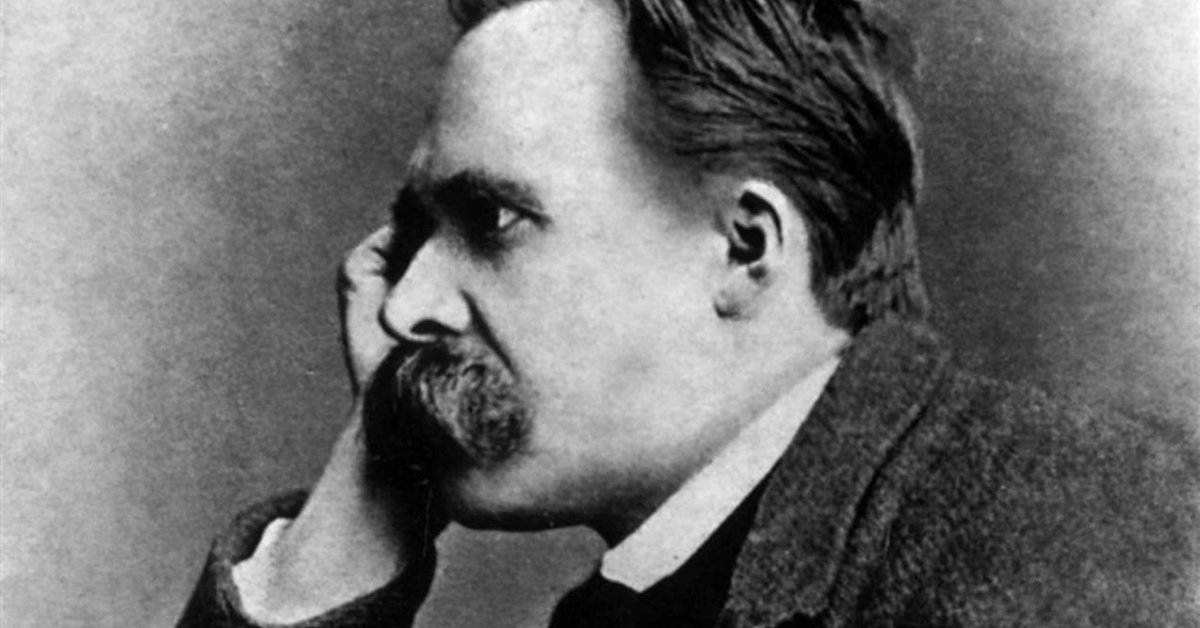
“Philosophers […] have trusted in concepts as completely as they have mistrusted the senses […]. What is needed above all is an absolute skepticism toward all inherited concepts.”
—Friedrich Nietzsche, The Will to Power, §409
As people learn how many times great buildings have had to be repaired due to damage of all sorts, it becomes easier to attack them. One of the unintended consequences of knowledge: less idolatry.
@chrisfcarroll More like the empirical consequences of too many Scholastic distinctions were unclear. This is a criticism one already finds amongst the Nominalist Scholastics.
The ultimate reason that Medieval Scholasticism failed was its failure to show that conceptual distinctions made a material difference. William James' Pragmatism is based on this insight. This is how Pragmatism remains powerful for me, and why Popper took it seriously.
A fully securitized democracy is a chimera. Any 'democratic education' should place risk intelligence front and centre. I recommend this introduction: https://t.co/78YkkeUbiU
The most obnoxious thing about people who interrupt you by saying 'you must be busy' is that they think that I'm already dealing with requests like theirs. No, I'm simply doing my own thing.
The greatest success of British Imperialism as a universalist project is that so many people from the former colonies have thrived in the UK political arena and shaped policy. Perhaps they're repaying a debt, but still some native English people don't get it.
@Meta_Myself Yes, as Woodrow Wilson has always been. It's interesting how a 'divide and conquer' approach has been taken by revisionists to US Progressivism.
'Lack of integration' is definitely the problem, but what that means varies significantly, especially when the legitimacy of the nation-state itself is no longer taken for granted.
It is funny that as Baroness Fox patiently set out a case for the dangers of poorly-socialised young people in Western society, the BBC had an oversized child sat by her to roll its eyes, sigh and interrupt every few seconds.
Since moral ambiguity is a universal feature of lived human experience, one should interpret strong moral statements as simply risky attempts to influence the future. As someone who co-authored a book called 'The Proactionary Imperative', I'm all for such risky attempts.
Here's my annual rant against letters of recommendation: They're fake, and the universities who think they need them - especially in this information-saturated world - shouldn't be hiring in the first place. They just paper over whatever decision is taken on whatever basis.
@exposiure How would the recommender know? It's all about risk management. You either take the risk or you don't. You can always interview the candidate.
I once had a colleague who routinely set up lavish festivities after a successful PhD viva, something that I'd never do. She asked why. I said because the PhD is its own reward. It may not be much else, but it's something worth having for its own sake.