Together with RDW, we have officially completed the final vehicle testing phase for Full Self-Driving (Supervised) and have submitted all documentation required for the UN R-171 approval + Article 39 exemptions. The RDW team is now reviewing the documentation and test results package internally. They have communicated the expected approval for Netherlands date of 4/10, shifting from 3/20 previously and we look forward to successful completion of this cooperation.
Following the Netherlands’ approval, European countries will be able to recognize this approval nationally. We are anticipating a possible EU-wide approval during the summer.
Over the past 18 months, this approval has involved a series of intense documentation, development, testing, research & audits. Including but certainly not limited to:
– 1,600,000+ km of FSD (Supervised) testing on EU roads
– 13,000+ customer sales ride-alongs
– 4,500+ track test scenario executions
– Thousands of pages of written documentation for 400+ compliance requirements
– Dozens of research studies into safety performance/results
We're extremely proud of the work conducted with the RDW team up until this point.
We very much look forward to the approval in April, and sharing FSD (Supervised) with our patient EU customers!
How has @Tesla FSD saved your life?
Be honest here… bc I feel the only thing mainstream media reports on are Tesla crashes, which are still materially less than regular cars, but they still do it bc it gets the clicks.
@Alandbru@elonmusk I am concerned that if, and it is a big if for the short / medium term, the availability of a version of FSD for HW3, that it isn't compliant enough for the European Union agencies to certify for a autonomous vehicle compared with HW4, or future versions
$TSLA 🇨🇳 Do you know why Tesla’s S3XY still stick with the 400V architecture? 👀
TL;DR answer: Efficiency over Specs 👍
In a rapidly evolving EV landscape, Chinese competitors are racing toward 800V architectures to achieve lightning-fast charging. Tesla’s decision to retain the 400V standard for its mass-market Model 3 and Model Y might seem counterintuitive.
However, this choice is not a sign of stagnation. It is a reflection of a distinct "efficiency first" philosophy.
While others focus on brute-forcing faster charging speeds through higher voltage, Tesla focuses on reducing the energy required to move the car.
By perfecting aerodynamics and battery management, Tesla achieves industry-leading energy consumption—as low as 11.9 kWh/100km on the Model Y. Because the car is so efficient, it operates well with smaller battery packs.
Consequently, the need for extreme 800V charging speeds is diminished simply because there is less energy to replenish to get you back on the road.
Furthermore, Tesla’s adherence to 400V is underpinned by its massive, exclusive infrastructure moat: the Supercharger network. With over 50,000 V3 and V4 stalls globally, Tesla has optimized its existing system to deliver a user experience that already rivals gasoline refueling.
A Model 3 can add 250 kilometers of range in just 15 minutes. This creates a closed-loop ecosystem where the marginal utility of upgrading to 800V—which might save only a few minutes per session—does not justify the massive disruption and cost required to overhaul this mature network.
Financially, the decision is a masterclass in cost control and manufacturing scalability. Transitioning a mass-market platform to 800V requires a complete reconstruction of the vehicle's electrical system, including switching from silicon-based inverters to expensive Silicon Carbide (SiC) modules.
As Elon Musk has noted, the bill-of-materials increase and the billions required to retrofit production lines far outweigh the incremental benefits for an average commuter car.
Tesla instead reserves high-voltage architectures strictly for vehicles that physically demand it, such as the Cybertruck. This creates a clear strategic divergence: 400V remains the standard for cost-effective mass transit, while 800V is deployed only for high-performance utility.
NEWS: NVIDIA just announced Alpamayo, what CEO Jensen Huang calls the world’s first thinking, reasoning autonomous vehicle AI, launching on U.S. roads later this year, starting with the Mercedes CLA.
Jensen: "It's trained end-to-end. Literally from camera in to actuation out; It reasons what action it is about to take, the reason by which is came about that action, and the trajectory."
Alpamayo introduces Vision-Language-Action (VLA) models, which enable self-driving systems to interpret what they see, reason about complex driving scenarios, and generate driving actions. The platform includes large reasoning models, simulation tools for testing rare and edge-case scenarios, and open datasets for training and validation.
NVIDIA says the approach improves transparency, safety, and robustness in autonomous systems, particularly in complex real-world environments, and supports progress toward higher levels of vehicle autonomy:
"With a 10-billion-parameter architecture, Alpamayo 1 uses video input to generate trajectories alongside reasoning traces, showing the logic behind each decision. Developers can adapt Alpamayo 1 into smaller runtime models for vehicle development, or use it as a foundation for AV development tools such as reasoning-based evaluators and auto-labeling systems. Alpamayo 1 provides open model weights and open-source inferencing scripts. Future models in the family will feature larger parameter counts, more detailed reasoning capabilities, more input and output flexibility, and options for commercial usage."
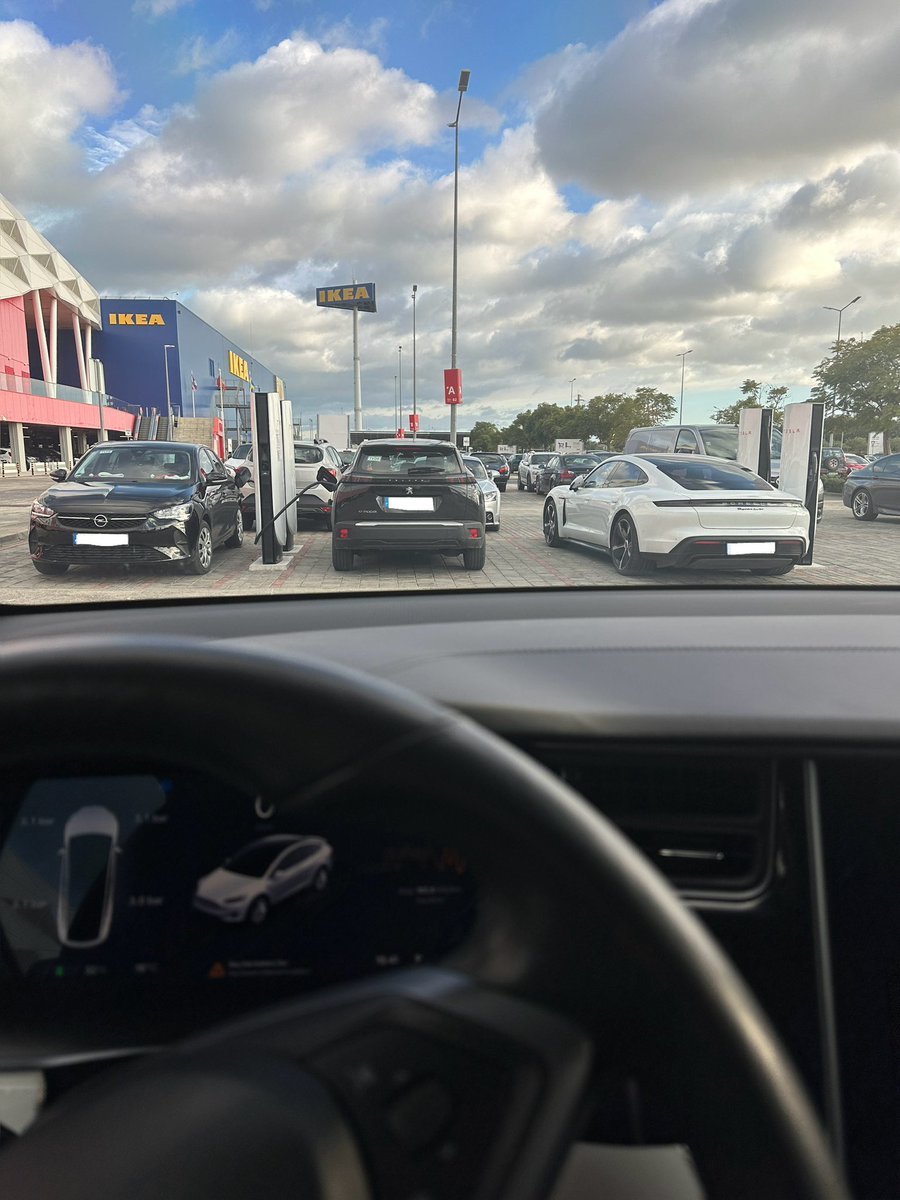
Well, @TeslaCharging is killing 🚀
Many non Tesla cars charging @ Supercharger while the others right next to them are vacant…
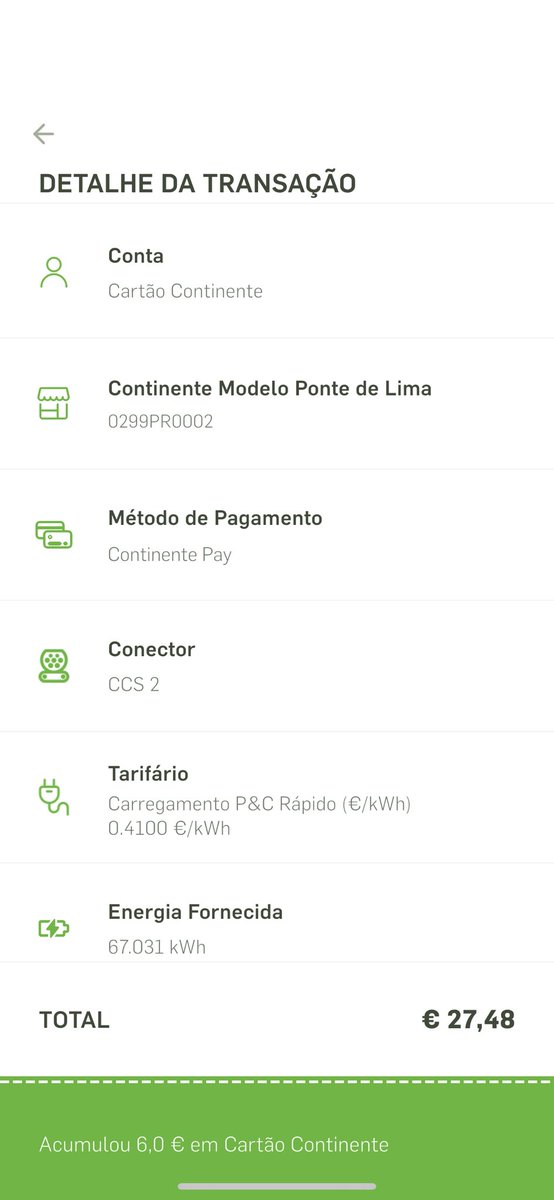
Price and understanding how much you will pay for your session easily opens a big gap to others.
Legislation is now in place and soon will put even more pressure on those who charge almost the double, like this #BP @iberdrola HUB, good location, 10 chargers, HPC power but the price ☠️
Portugal was in the dark age since they ruled @Tesla out of the EV mobility! Thankfully this @govpt managed to get the sustainable transportation back on track!
2026 will be an amazing year for EV mobility
📍 Loulé, Marshopping Portugal 🇵🇹
Supercharger Castelo Branco JÁ ABERT0 ao público!
Muito obrigada @TeslaCharging e @Tesla! Mais um presente para nós❤️
A primeira localização depois de 5 anos… o primeiro de muitos! Obrigada comunidade por continuarem a lutar e a acreditar . Aqui está !
Mal podemos esperar para ver as vossas Teslas (e não só!) a carregar. Tirem fotografias, filmem, marquem-nos! Vamos encher isto de energia! 🚗
@teslaeurope shared some very exciting news yesterday about the timeline for making #FSDEurope a reality through the infamous Article 39 exception procedure via the @RDWnl. Here's the explanation of what it all means to bring FSD to other countries https://t.co/2hNqTS621n