Happy Birthday to a dogged soldier in faith, Anthony Cardinal Okogie.
Today, I joyfully join the Catholic community in Nigeria, in particular the Archdiocese of Lagos and the entire nation, in celebrating a true soldier of Christ and an exemplary leader, His Eminence, Anthony Cardinal Okogie, Emeritus Archbishop of Lagos, on his Triple Milestones.
We give immense thanks to God as His Eminence marks his 90th Birthday Anniversary, 60th Priestly Ordination Anniversary, and 55th Episcopal Ordination Anniversary today, June 16, 2026.
Cardinal Okogie’s life has been a remarkable testament to inimitable faith, courage, and deep commitment to justice and the welfare of the common man. His fearless voice in defence of truth and good governance continues to inspire generations.
May the Almighty God grant him continued good health, peace, and abundant blessings as he continues to guide us with his wisdom.
Happy Birthday, Your Eminence! -PO
A MAN'S SPERM DECIDES MORE THAN THE BABY
Nobody teaches this in church.
Nobody says it during traditional marriage.
They just bless two people, dance, and eat rice.
But here’s the hard truth: a man’s sperm doesn’t only decide the baby.
It decides the mother’s future health too.
Every sperm cell a man releases is a biological signature — a full-blown chemical report of his lifestyle, his diet, his addictions, his stress, his peace, his sickness.
If he eats garbage, drinks every night, never sleeps, smokes, watches nonsense, and calls it “enjoyment,” guess what happens?
He’s writing poison into his DNA.
And when that DNA enters a woman, her body reads it.
You think the sperm just goes there to fertilize an egg?
No.
The woman’s immune system must first “approve” it.
Her womb must “trust” it.
If it doesn’t, there’s war inside her body — inflammation, miscarriage, hormonal storms.
Science calls it microchimerism.
When a woman gets pregnant, some of that man’s cells actually live inside her — in her blood, her brain, her tissues, sometimes forever.
So yes, she can carry traces of every man she ever conceived with, even if she never gave birth.
Imagine that.
So when you ask, “Can a man’s sperm affect the mother?”
The answer is completely.
Her body remembers him.
His biochemistry becomes part of her story.
A sick man doesn’t just make a sick child.
He can leave a signature of sickness inside the woman he loves.
Now you understand why some women suddenly begin to battle fatigue, thyroid imbalance, depression, acne, infertility long after childbirth.
It’s not only “postpartum.” Sometimes, it’s biochemical inheritance.
If the man was inflamed, insulin-resistant, nutrient-deficient, or toxic, she carries part of that code.
That’s why I keep shouting:
A man must eat clean, live clean, and think clean not just for himself, but for his woman.
Because a healthy sperm is not about virility. It’s about legacy.
Men, your sperm carries the story your children will live and the body your woman will survive in.
Women, stop letting every man deposit his confusion in your biology.
Sperm is not just pleasure.
It’s a lifetime contract signed in protein, zinc, and mitochondria.
If you want to protect the mother, start with the father’s nutrition.
If you want to protect the child, start with the father’s discipline.
Because no supplement or IVF can fix what irresponsibility keeps breaking.
Don’t forget to reach out for a well-structured meal plan. Share and tag your friends.
I have made it a duty to share this every year, until the need to share it no longer exists.
My ancestors' death will never be in vain.
Rest in Peace Heroes! 🙏 💪🏽
#BIAFRARmemorial#BiafraRememberance
Education Challenge: Not Funding but failure of leadership and Accountability.
The recent comments made by the Minister of Education are quite alarming. Despite receiving nearly 80% of educational donor funding over the last ten years, the North-West and North-East regions still show the lowest literacy and numeracy rates in Nigeria.
This issue goes beyond just a lack of funding; it highlights failures in leadership, accountability, and governance. Financial resources alone do not guarantee proper education. What truly makes a difference in education is the responsible and transparent management of these funds, aimed at achieving tangible results and a genuine commitment to developing human capital.
We cannot continue to commend government budgets, donor contributions, and various intervention programs while millions of children in Nigeria still lack basic reading and writing skills, which are essential for thriving in today's world. The real tragedy lies not just in the numbers, but in the lost potential of countless children whose futures are being compromised by systemic inefficiency and corruption.
Nigeria’s most valuable asset is not its oil, politics, or propaganda. It resides in the human capital of our youth. A country that overlooks education is essentially setting itself up for cycles of poverty, insecurity, unemployment, and instability in the future.
The Minister’s statement should prompt a national dialogue on how public funds and donor contributions are utilised. Every kobo spent on education must lead to clear improvements in literacy rates, school enrollment, teacher performance, and overall learning outcomes. Anything less is unacceptable.
Countries that have developed successfully, or are on the fast track to development, have made substantial investments in education. Nations like China, India, Indonesia, Vietnam, and Bangladesh have recognised the invaluable impact of education on progress and growth.
Now, Nigeria must transition from mere discussions about education to achieving real outcomes. We need to construct schools, train teachers, modernise educational systems, enhance monitoring processes, and ensure every intervention directly benefits the children it is meant to serve, rather than being siphoned off by political intermediaries and bureaucratic systems.
A nation’s progress is closely linked to the quality of its education system.
A brighter future for Nigeria is achievable! -PO
A Nation Losing Its HUMANITY.
Some events shatter a society so deeply that words are no longer enough to express the shock; the brutal killing of a teacher and the horrific rape and murder of an elderly woman are among such tragedies. These are not isolated incidents but signs of deeper moral and social decay.
How did we get here? How did we reach a point where teachers are hunted and killed, and the elderly—custodians of memory and wisdom—suffer such dehumanising violence?
This is more than a security crisis; it is a failure of collective humanity. We have become desensitised, consuming tragedy briefly and moving on, allowing indifference to normalise the unacceptable.
To the families affected, I share in your grief. But grief alone is not enough.
We must demand accountability and urgent systemic change. If such atrocities no longer move us to action, then we risk losing our shared humanity. -PO
State visits by Leaders are not tourism, and diplomacy is not a fashion parade. Every foreign trip undertaken by a government must deliver measurable benefits to the people, including investments, technology transfer, trade agreements, factory expansion, industrial partnerships, and job creation.
During President Trump’s recent visit to China, the American delegation reportedly included a few top government officials, and many of the biggest figures in global business and technology:
Consequently, huge trade deals worth several billion dollars including about 200 Boeing orders were achieved.
The list of the entourage included
1. Donald J. Trump – President of the United States
2. Marco Rubio – Secretary of State
3. Pete Hegseth – Secretary of Defence
4. Elon Musk – CEO, Tesla & SpaceX
5. Jensen Huang – CEO, Nvidia
6. Tim Cook – CEO, Apple
7. Larry Fink – CEO, BlackRock
8. Stephen Schwarzman – CEO, Blackstone
9. Kelly Ortberg – CEO, Boeing
10. Brian Sikes – CEO, Cargill
11. Jane Fraser – CEO, Citigroup
12. Larry Culp – CEO, General Electric
13. David Solomon – CEO, Goldman Sachs
14. Sanjay Mehrotra – CEO, Micron Technology
15.Cristiano Amon – CEO, Qualcomm
16. Dina P. McCormick – President of Meta
17. Ryan McInerney – CEO, Visa
18. Michael Miebach – President, Mastercard
19. Jim Anderson – CEO, Coherent
20. Jacob Thaysen – CEO, Illumina
That is how serious nations approach diplomacy, by aligning foreign policy with economic expansion, industrial growth, innovation, and national productivity.
I hope that lessons can be learned from these recent visits comparing them with the President of Nigeria’s recent state visit to the United Kingdom.
A large entourage of politicians, aides, and government officials travelled, yet Nigerians are still asking a simple question: what exactly did Nigeria bring home?
Which factories are coming to Nigeria?
What power, technology, manufacturing, agricultural, or industrial agreements were secured?
How many direct jobs will this visit create for Nigerian youths?
What investments were attracted?
What measurable economic outcomes can the ordinary Nigerian point to?
The delegation reportedly included:
1. President Bola Tinubu
2. Senator (Mrs) Tinubu
3.12 governors
4.9 ministers
5.7 members of the National Assembly
6. Over 20 senior State House staff
7. Over 30 security personnel
8. Over 10 domestic staff
9. Several supporters and associates
It is not enough to ride horses, wear matching uniforms, attend royal banquets, and release glossy photographs. Symbolism without substance cannot feed hungry citizens.
Today, Nigeria is in decline, battling serious insecurity, food insecurity, unemployment, a weakened naira, declining industrial productivity, and worsening poverty.
At a time when millions of Nigerians struggle daily to afford food and survive economic hardship, every kobo spent on foreign trips must produce tangible national value: investments, factories, jobs, exports, infrastructure, and economic opportunities.
Nigeria needs leadership that is focused less on optics and more on productivity; less on ceremony and more on measurable economic results.
A New Nigeria is POssible. -PO
There’s always something deeply refreshing about marital advice from older women. It carries the weight of experience, sacrifice, mistakes, endurance, and wisdom most people only speak about in theory.
Rebuilding Brotherhood Trust Across African Borders
I have been observing with deep concern the alarming rise of xenophobic attacks in South Africa. I strongly condemn these acts. My thoughts are with all those affected—especially our Nigerian brothers and sisters, whose lives, businesses, and dignity are once again under threat. No African should feel unsafe on African soil, or anywhere else.
I commend the Minister of Foreign Affairs Mrs Bianca Ojukwu and her Ministry for their swift response to this issue.
I recall my visit to our compatriots during a similar crisis. It was a painful experience that revealed both the suffering and resilience of our people. It also highlighted a fundamental truth: beyond borders, we share a common identity and destiny as Africans. Such experiences should have inspired lasting solutions, not recurring tragedy.
In this regard, I urge the authorities in South Africa to act decisively - to protect lives and property, bring perpetrators to justice, and restore public confidence. Leadership must rise to the occasion, making it clear that violence and intolerance have no place in our societies. -PO
This morning, in Lagos, I met with the U.S. Consul General, Mr Rick Swart, where we discussed strengthening the bilateral relationship. We focused on promoting credible elections in Nigeria, ensuring they are free from interference, and fostering a space where all political parties, especially opposition parties can thrive, and contribute.
We also discussed trade and business opportunities between our countries. Accompanying me to the meeting was Dr Adefolaseye Adebomi Adebayo.
The discussion was very productive, and we are hopeful that, moving forward, Nigeria’s elections will be even more credible and transparent. -PO
Fellow Nigerians, good morning.
I woke up this morning after my church service with a deeply reflective heart, and despite every constraint, I felt compelled to share these thoughts with you.
Many people do not truly understand the silent pains some of us carry daily—the private struggles, emotional burdens, and quiet battles we face while trying to survive and serve sincerely in difficult circumstances.
We now live in an environment that has become increasingly toxic, where the very system that should protect and create opportunities for decent living often works against the people—a society where intimidation, insecurity, endless scrutiny, and discouragement have become normal.
More painful is when some of those you associate with, believing you would find understanding and solidarity among them, become part of the pressure you face. Some who publicly identify with you privately distance themselves or join in unfair criticism.
We live in a society where humility is mistaken for weakness, respect is seen as a lack of courage, and compassion is treated as foolishness—a system where treating people equally is questioned simply because you refuse to worship status, tribe, class, or power.
Personally, I have never looked down on anyone except to uplift them. I have never used privilege, position, or resources to oppress others, intimidate the weak, or make people feel small. To me, leadership has always been about service, sacrifice, and helping others rise.
Let me state clearly: my decision to leave the ADC is not because our highly respected Chairman, Senator David Mark, treated me badly, nor because my leader and elder brother, Alhaji Atiku Abubakar, or any other respected leaders did anything personally wrong to me. I will continue to respect them.
However, the same Nigerian state and its agents that created unnecessary crises and hostility within the Labour Party that forced me to leave now appear to be finding their way into the ADC, with endless court cases, internal battles, suspicion, and division, instead of focusing on deeper national problems and playing politics built more on control and exclusion than on service and nation-building.
Even within spaces where one labours sincerely, one is sometimes treated like an outsider in one’s own home. You and your team become easy targets for every failure, frustration, or misunderstanding, as though honest contribution has become a favour being tolerated rather than appreciated.
And when you choose to leave so that those you are leaving can have peace, and you step out into the cold, you are still maligned and your character is questioned. Despite all your efforts to continue working for a better Nigeria and engaging people with sincerity and goodwill, those who do not wish you well continue to attack your character and question your intentions.
There are moments I ask God in prayer: Why is doing the right thing often misconstrued as wrongdoing in our country? Why is integrity not valued? Why is the prudent management of resources, especially when invested in critical areas like education and healthcare, wrongly labelled as stinginess? Why are humility and obedience to the rule of law often taken to be weakness rather than discipline?
Let me assure all that I am not desperate to be President, Vice President, or Senate President. I am desperate to see a society that can console a mother whose child has been kidnapped or killed while going to school or work. I am desperate to see a Nigeria where people will not live in IDP camps but in their homes. I am desperate for a country where Nigerian citizens do not go to bed hungry, not knowing where their next meal will come from.
Yet, despite everything, I remain resolute. I firmly believe that Nigeria can still become a country with competent leadership based on justice, compassion, and equal opportunity for all.
A new Nigeria is POssible. -PO
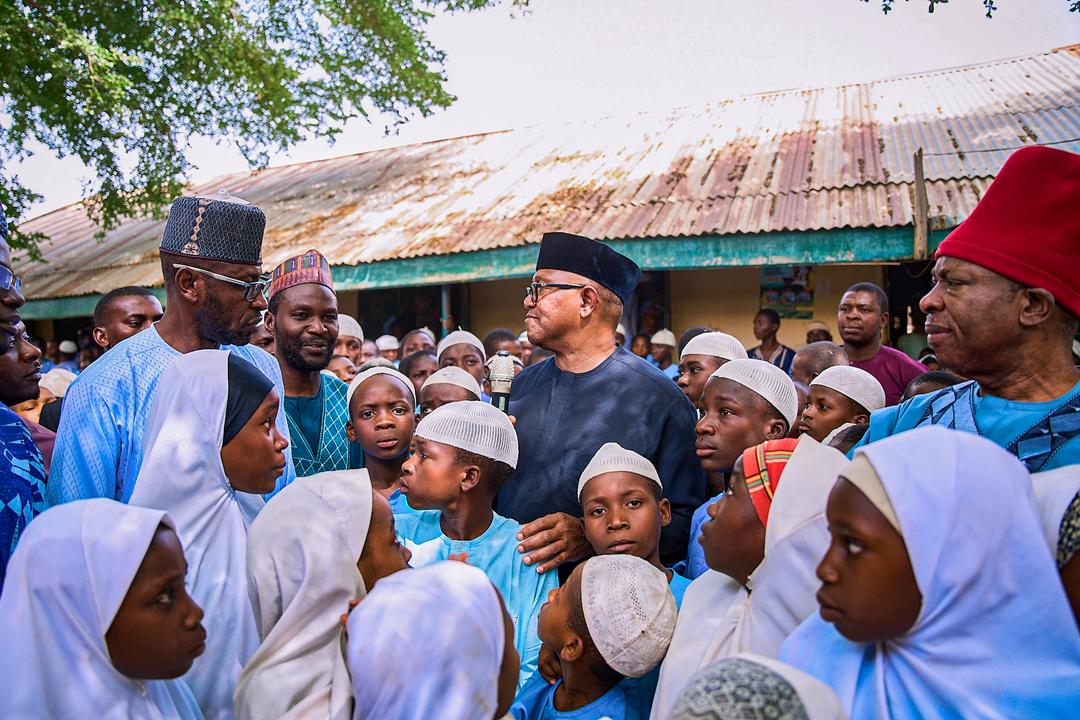
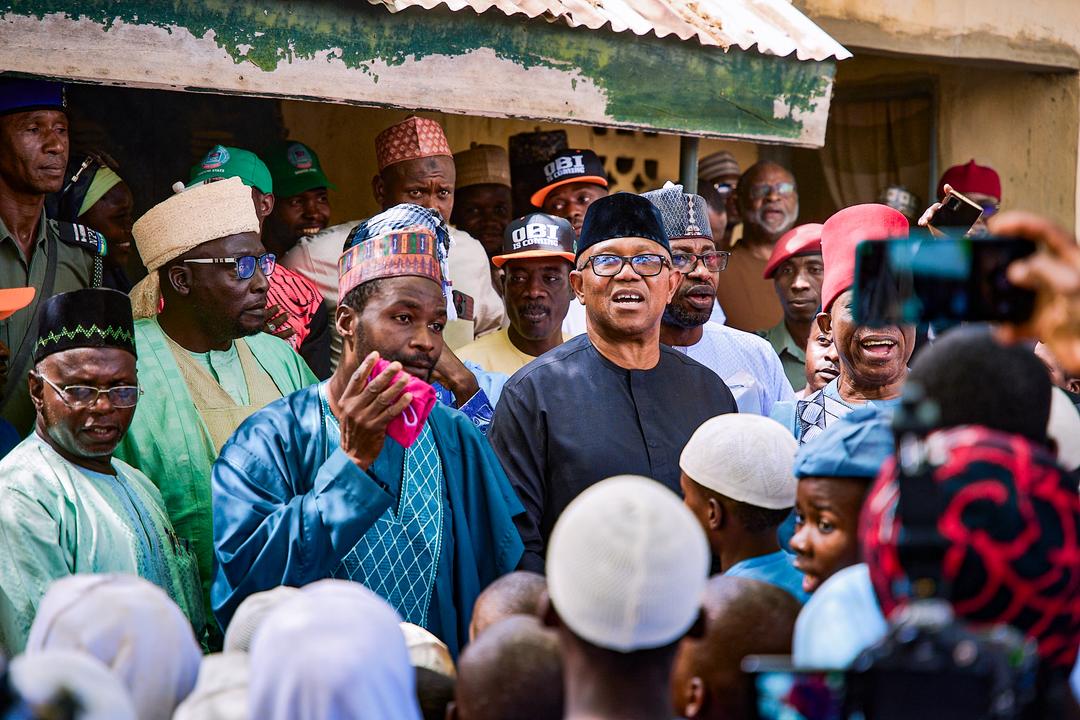
Yesterday, Thursday 23rd May, after meeting with His Excellency the Governor Bala of Bauchi State, I proceeded to Madarasatu Intisharu Islam Qismu in Bauchi, where I had visited in the past and supported them with the sum of 5million naira to provide chairs and other items for the school.
On visiting yesterday, and seeing improvements that have been achieved and how enthusiastic the children are, I was glad and gave them another sum of 5million to support the scholarship of indigent students.
We must invest in the lives of these children for our own future and for the progress of the country.
A new Nigeria is POssible.-PO
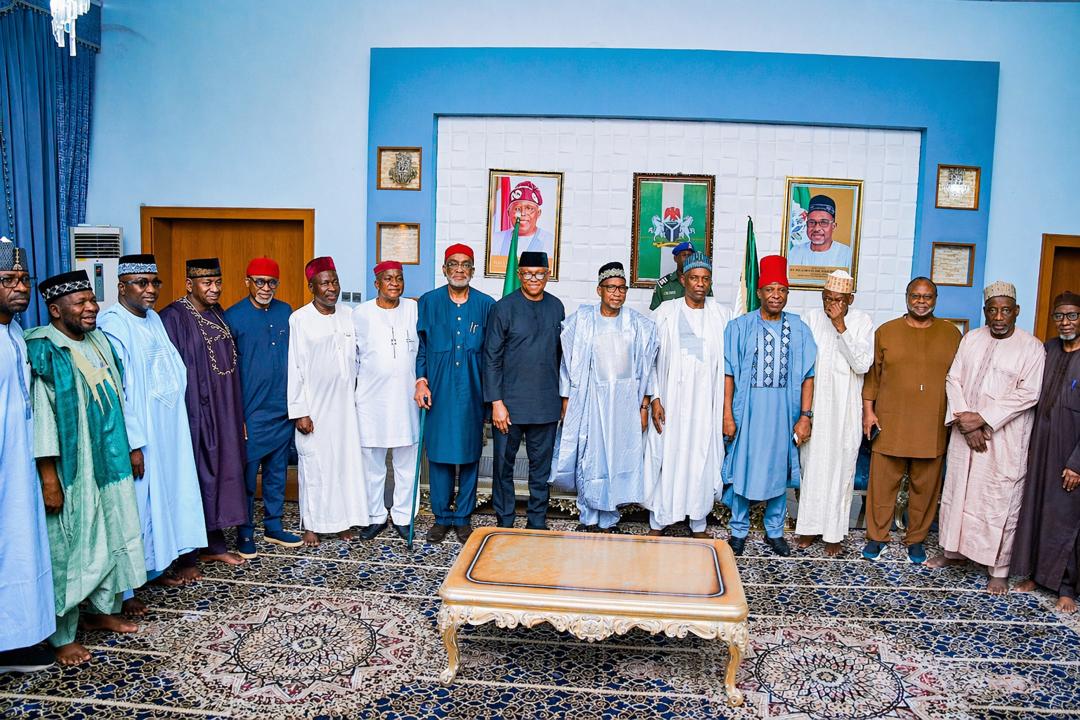
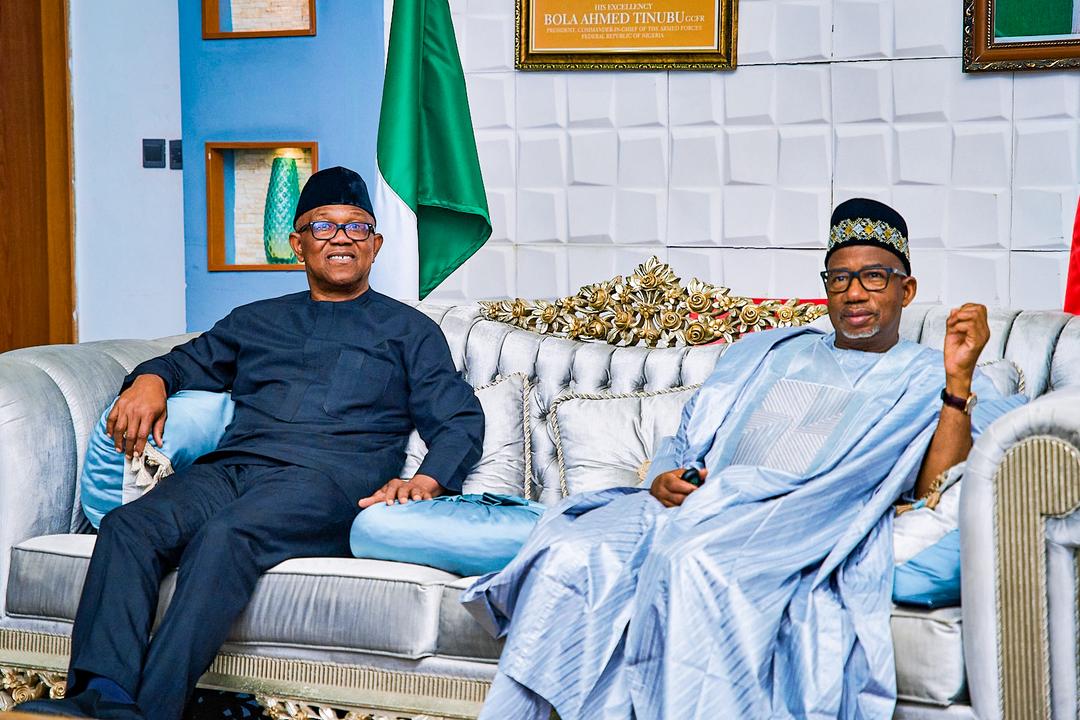
Today, in continuation of our consultations and collaboration efforts, I was in Bauchi state with some notable Igbo Leaders where we had a very insightful discussion with Governor Bala Mohammed. The mission is aimed at a United, Secured, productive and progressive Nigeria that cares for all, especially the less privileged.
A new Nigeria is POssible. -PO
Nigeria Is Bleeding From Within
It is deeply troubling to read recent World Bank reports indicating that, while Nigeria’s Federation Revenue surged to ₦84 trillion in just three years, a staggering 41% —amounting to ₦34.44 trillion —never reached the Federation Account. This sum exceeds the combined ₦34 trillion earmarked for capital projects in the 2024 and 2025 Appropriation Bills, a comparison that underscores the gravity of the situation and signals that something is fundamentally wrong.
This is not a mere oversight; it points to institutionalised corruption on a massive scale. In 1994, when the Okigbo Panel reported about $12.4 billion from the Gulf War oil windfall as unaccounted for, Nigerians were outraged and the nation shook with indignation. Today, an even more troubling situation appears to be unfolding, yet it is met with a disquietening silence.
We are trapped in a lethal paradox: Earning more as a nation, yet having less to invest in healthcare, education, and infrastructure. From 2025, systemic “deductions” have allowed agencies to capture more resources than entire states and even critical ministries.
These leakages explain why countries with fewer resources are out-performing us across key development indices. With such a broken system, how can we fix power, strengthen our schools, build resilient healthcare, or develop critical infrastructure?
Nigeria has no business being poor. We must stop these leakages through disciplined, transparent leadership driven by character. It is time to redirect our hijacked resources back to the people and move Nigeria into the league of developed nations.
With our collective resolve to change this corruption-infested system, a New Nigeria is POssible. -PO