Just released in paperback, my prize-winning history of the US industrial mobilization for #WWII. As @billmckibben suggested a couple of years ago, it's a history worth knowing, for those interested in @MobilizeClimate & prospects for a #GreenNewDeal: https://t.co/hTdVsnXMeu
Just published, this edited volume has eighteen papers plus discussions from a conference held in January 2023. My essay in it surveys the history of US defense budget reform since the 1940s. https://t.co/I10YTsLk1A
DESTRUCTIVE CREATION by @ProfMarkWilson—which explores the relationship between government and business during WWII military mobilization—is one of dozens of great paperbacks you can get for 50% off during our Back to School Sale! Browse the collection: https://t.co/ba2x48o7Nc
THE MILITARY AND THE MARKET by @MittelstadtJen & @ProfMarkWilson provides "an excellent analysis of how the United Statea defense establishment shapes, and is shaped by, external economic trends," according to a new review from @Strategy_Bridge. Read more: https://t.co/ZIhpwEYL61
A strange take by Tooze. True, US & UK didn’t do as much “dirty work” of land warfare. But instead they developed and fielded incredible new tech, along with massive output of needed items from government financed, privately operated new plant…
Despite fond liberal imaginings, WWII was not won by New Deal or FDR's bomber program. At home USA barely broke sweat. Work of crushing Nazis done by Stalinist SU. If we are "declaring war on climate change", will it be China carrying fight this time?
https://t.co/gyvcK6hLk4
At high levels of unionization and low levels of income and wealth inequality. The US-UK WWII model is a better one for present day challenges than Tooze suggests…
@CalumDouglas1@HarksenNiels I agree that there should be more work on the history of machine tools, but check out relevant articles by top historians such as Risticcia & Tooze, Phil Scranton, Hermione Giffard, Ross Thomson, David Noble.
How can we improve conversations between political scientists and historians? See this new H-Diplo roundtable @rosellacappella and I curated, w/ contributions from @secolbourn, @JimGoldgeier, and @JordanMBecker, @BeatriceHeuser, Jeffrey Reynolds, and the late Bear Braumoeller.
For security studies scholars it's imperative historians & political scientists talk w/each other. The job market, needs of APSIA & PME schools, being a part of the policy process all demand it. @ProfMarkWilson & I got the best of the best together to talk about how to do it
What exactly is meant here by “1950s era contracting system”? Let’s please remember that that system created Silicon Valley in the first place, as it developed and fielded hyper-advanced new weapons, such as Polaris, in just a few years. 1/2
The Pentagon, in our story from today, is struggling to figure out how to rapidly acquire these new warfighting & surveillance tools. It's stuck with a 1950s era contracting system-built around giant prime contractors that generally don't innovate as fast as Silicon Valley types
@varma_ashwin97@EricLiptonNYT I'm working on a book about this. One of the most notable changes is the rise of Congressional micromanagement of the defense budget. Also, if you are thinking about long-run shifts in sensibilities, deference to commercial solutions has increased over the decades.
@varma_ashwin97@david_alman@arpitrage Are you in touch with Charles K. Hyde? He was able to get special access to Chrysler records, and generally knows the terrain.
Congratulations to the co-winners of the Hagley Book Prize Hannah Farber and
Alejandro Gómez del Moral
#bizhis#BHC2023@UnivNebPress@UNC_Press
https://t.co/XcFYE7a2Lg
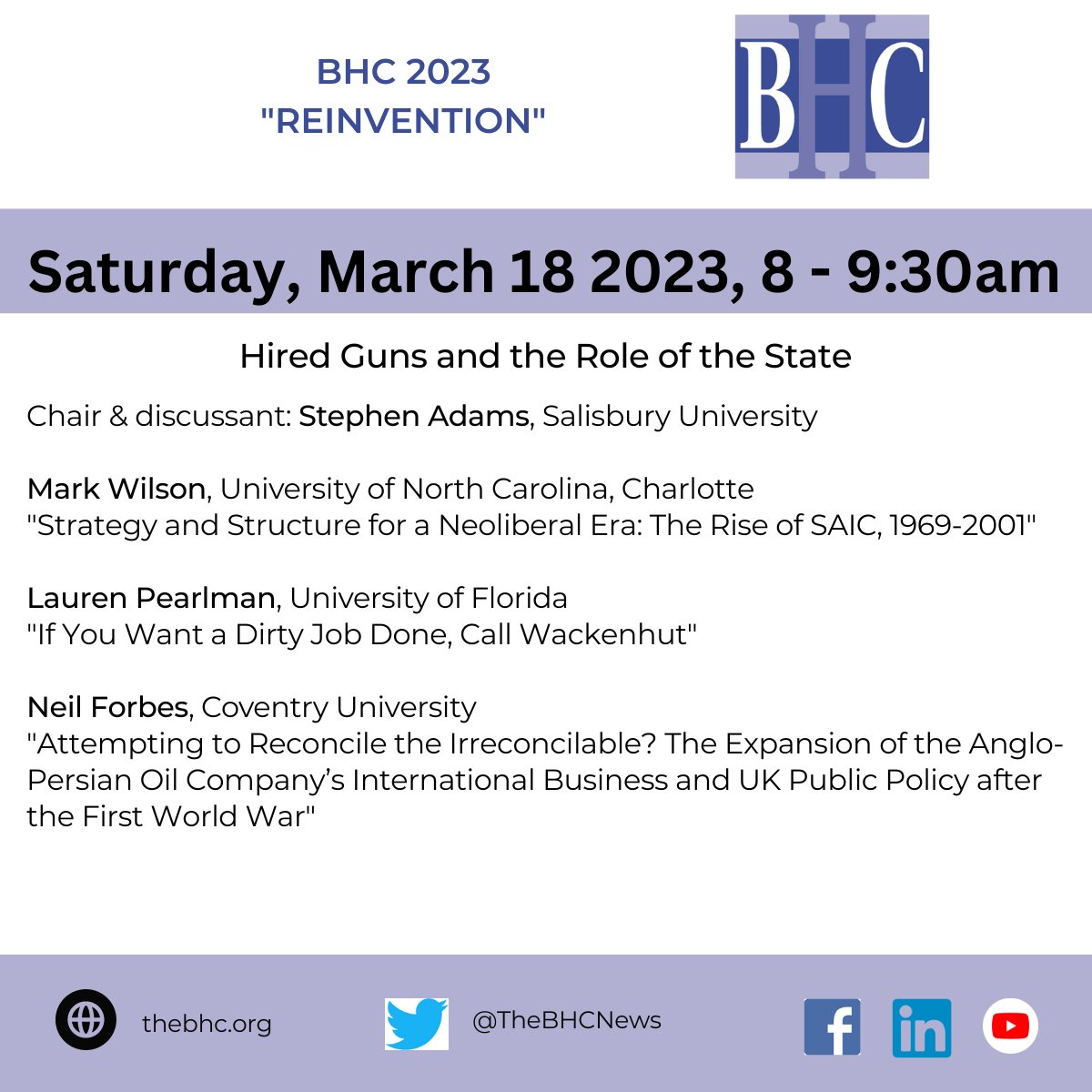
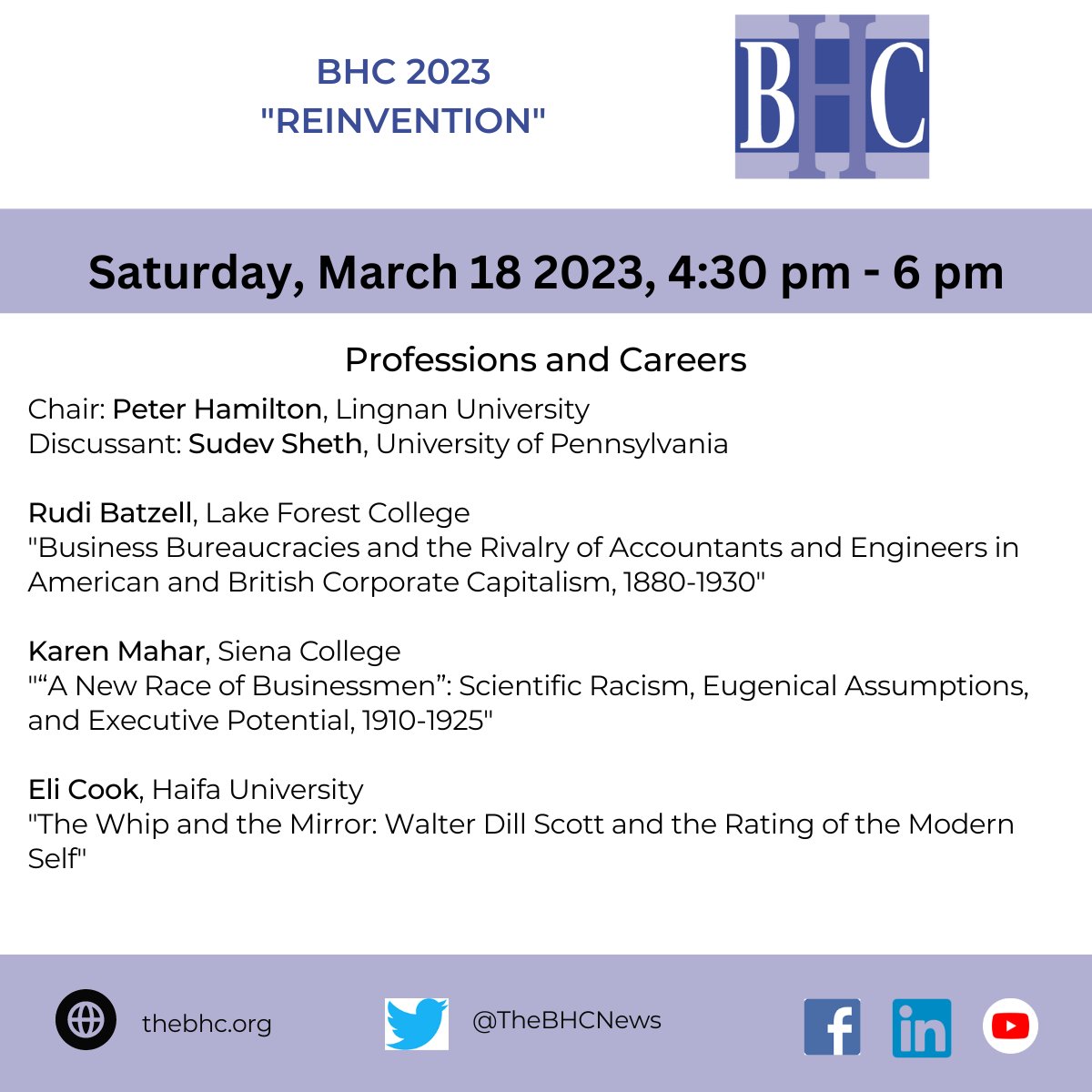
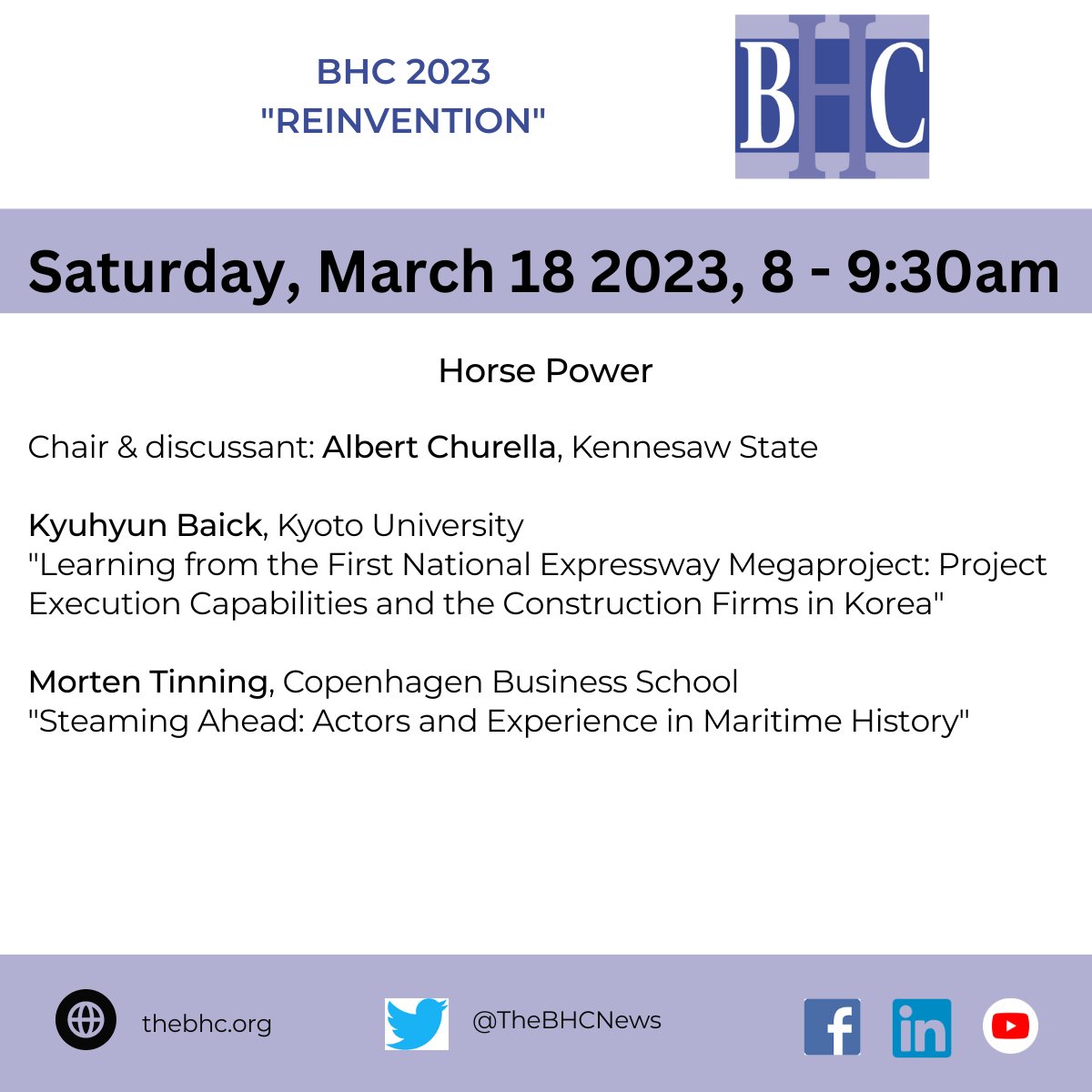
Last #BHC2023 sessions on #bizhis#war#professions#clusters and more starts at 🕛 4:30 pm on 📅 Saturday 18. RT if you see your name here, and post your thoughts if you attend any of these sessions. We would love to hear from you!