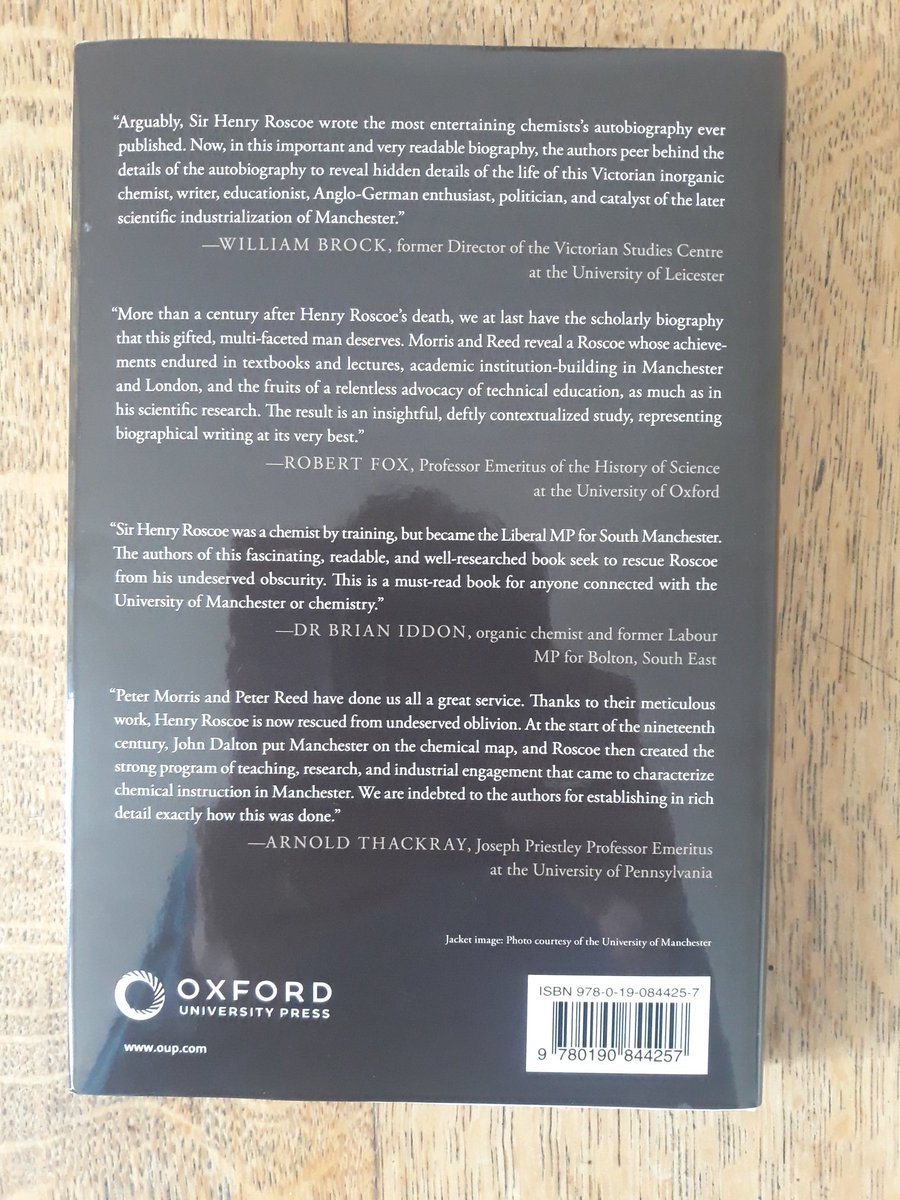
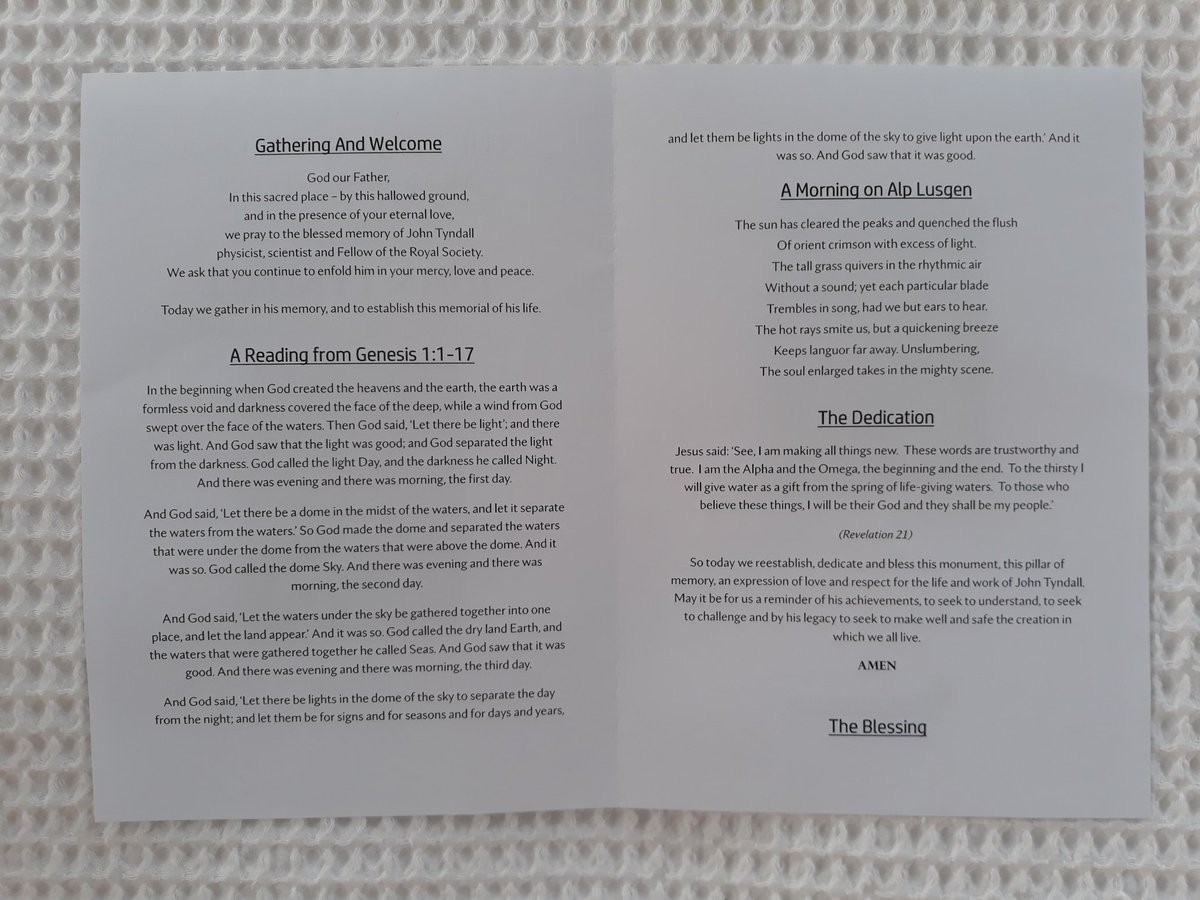
Transcription help: letter from Stanley to Tyndall (1880): "I suppose that the Telegraphic m[ee]t[in]g will take up the ev[en]ing—otherwise the Professor c[ou]ld be spared for an hour. [Please] do not take [pains] to answer, [as I shall] [???] that the [???] is [???]."
#histsci
I see that my good friend Thomas Carlyle has been 'cancelled' by @TheLondonLib by having his bust removed, and the discounted Carlyle membership appears to have gone. I'm hoping my books won't be banned there.
I wrote a short piece for @ConversationUK on @ProfTyndall's infamous Belfast Address, delivered 150 years ago this coming Monday. A different angle perhaps: https://t.co/z8Q1DTCsPA
Delighted to be involved in this @HeritageWeek event. I'll be talking about @ProfTyndall 's Belfast lecture, exactly 150 years since it was delivered... Unlike Tyndall's 2 hour talk, mine will be short. The rest of time will be filled with drama and music inspired by Tyndall.
Well, I'd never claim I discovered the greenhouse effect, as I made clear in my 1861 paper that Fourier and others have precedence. But I did provide experimental evidence for its physical mechanism. (Also I was probably born c.1822 rather than 1820).
The greenhouse effect is the phenomenon that traps our Sun's heat in our atmosphere. It was first discovered by John Tyndall FRS (born #OnThisDay in 1820), and the intrepid Raghav heads into our archive to find out more about some portraits of John & his wife Louisa:
@lapogus1@royalsociety@tomshula I wouldn't worry too much. It does effectively trap heat, making the atmosphere warmer than it would otherwise be, (because of slowing down heat loss). But the greenhouse analogy is indeed misleading, and the term wasn't used in my day anyway.
@kakape @philipcball Well, to be fair, I did say it was particles with a size 'but a very small fraction of the length of a wave of violet light' so I'm not sure that would include dust.
This #WomensHistoryMonth, learn the story of the once-forgotten climate scientist, activist, and inventor, Eunice Foote, with help from the #InitialConditions podcast and Sir @Roland_Jackson.
🎧 Listen here: https://t.co/vUwVPq98HX
The Darwin Correspondence Project has ended, but
https://t.co/hS3STMj6I0 continues to host not only the Darwin correspondence, but to put it next to that of Wallace, Faraday, Herschel, and Henslow, now with added letters by Mary Somerville!




![darwinsbulldog's tweet photo. Transcription help: letter from Stanley to Tyndall (1880): "I suppose that the Telegraphic m[ee]t[in]g will take up the ev[en]ing—otherwise the Professor c[ou]ld be spared for an hour. [Please] do not take [pains] to answer, [as I shall] [???] that the [???] is [???]."
#histsci https://t.co/suyJRHEz1O](https://pbs.twimg.com/media/GjmMILjaIAIvDw_.jpg)