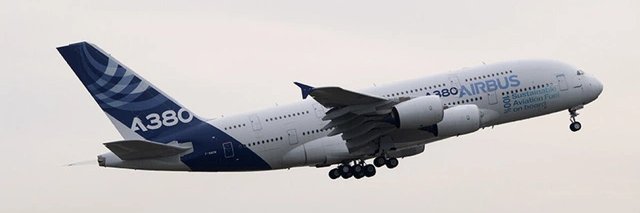
Aviation planes have always fascinated me. The way they effortlessly glide through the sky, defying gravity, is nothing short of a marvel. As a child, I would gaze up at the planes flying overhead, dreaming of the day when I could experience the thrill of being up there myself.
It wasn't until I turned 18 that I finally got the chance to step foot inside an aviation plane. My heart raced with excitement as I boarded the aircraft, ready for my first flying experience. The moment the plane took off, I felt a rush of adrenaline like never before. The view from up above was breathtaking; the world seemed so small, yet so vivid.
Since that day, my love for aviation planes has only grown stronger. I find myself constantly researching different aircraft models, learning about their unique features and capabilities. From the classic models like the Boeing 747 to the cutting-edge designs of modern jets, each plane has its own story to tell.
One particular aircraft that has caught my attention is the Concorde. This supersonic plane represented the epitome of luxury air travel during its time. Its sleek design and revolutionary technology allowed it to reach speeds of over Mach 2, making it the fastest commercial passenger plane ever built. Sadly, the Concorde's era came to an end in 2003, but its legacy lives on as a symbol of innovation and elegance in aviation history.
As technology continues to advance, aviation planes are constantly evolving. Whether it's the development of more efficient engines, the incorporation of advanced navigation systems, or the rise of electric aircraft, the future of aviation looks promising. I can't help but feel excited about the possibilities this holds for both air travel and the overall reduction of carbon emissions.
For me, aviation planes represent more than just a mode of transportation. They symbolize human ingenuity, creativity, and the relentless pursuit of pushing boundaries. Each flight I take, whether it's a short domestic trip or a long-haul international journey, reminds me of the incredible progress we've made as a species.
So next time you find yourself sitting on an airplane, take a moment to appreciate the marvel of aviation. Look out the window and marvel at the beauty of the world from above. Remember the countless hours of research, engineering, and innovation that went into making that flight possible.
Aviation planes not only connect us to different parts of the world, but they also connect us to the endless possibilities that lie ahead. Let's continue to embrace the wonder of aviation and soar higher than ever before.
Aviation changes have revolutionized the way we travel, connecting people from all corners of the globe in a matter of hours. It's incredible to think about how far we've come since the advent of aviation. From the Wright brothers' first powered flight to supersonic jets, each innovation has transformed the industry and shaped our world.
One major change in aviation is the introduction of commercial airlines. In the early days, flying was a luxury reserved for the wealthy few. But with the establishment of commercial airlines, air travel became accessible to the masses. This democratization of aviation has opened up opportunities for business, leisure, and exploration like never before. Countless families have been reunited, new markets have been discovered, and cultures have been shared, all thanks to this change.
Another significant development is the continual advancement in aircraft technology. With each passing year, planes become faster, more efficient, and safer. The incorporation of computer systems, improved engines, and better aerodynamics have made flying a smooth and enjoyable experience. As a result, air travel has become one of the safest modes of transportation, with accident rates significantly reduced. These advancements have also made long-haul flights more feasible, allowing travelers to reach far-flung destinations faster, opening up a world of possibilities.
Furthermore, to meet the environmental challenges, aviation changes have focused on reducing the industry's carbon footprint. Airlines and manufacturers are investing heavily in research and development to create more fuel-efficient aircraft. The use of sustainable aviation fuels, improved air traffic management, and the development of electric planes all aim to make aviation more eco-friendly. As climate change becomes a pressing concern, these changes are crucial to ensure a sustainable future for air travel.
Additionally, the digital revolution has transformed the aviation industry. From online booking to in-flight entertainment systems, technology has streamlined many aspects of flying. Passengers can now check in online, track their baggage, and access a wide variety of entertainment options during their journey. These changes have made flying more convenient and enjoyable, enhancing the overall flying experience.
In conclusion, aviation changes have drastically shaped the way we travel. The democratization of air travel, technological advancements, sustainability efforts, and digital innovations have all contributed to making aviation faster, safer, and more accessible. As we continue to push the boundaries of what is possible, it is exciting to think about the future of aviation and the incredible transformations it will bring.
Aviation, the fascinating realm where human dreams take flight, soaring through the vast open skies. It is not merely an industry; it is a testament to mankind's boundless imagination and relentless pursuit of the impossible.
From the moment we first witnessed the Wright brothers defy gravity in 1903, humanity has been mesmerized by the wonders of aviation. Countless innovations and pioneering minds have contributed to the evolution of this field, transforming it from a distant dream to a vital aspect of global connectivity.
Aviation has transcended borders, bringing people from all corners of the world closer together. Our world, at once expansive, has become compact, thanks to the magnificent birds that grace our skies. Whether it is for leisure, business, or exploration, aviation has become an indispensable part of our lives.
But beyond its practicality lies an inherent beauty that calls to the souls of those who dare to explore. The serenity of ascending into the heavens, leaving behind the chaos of the earth, is a feeling that cannot be replicated. The ethereal cloud formations, the fiery hues of sunrise, and the twinkling stars in the night sky become intimate companions to those who traverse the skies.
Innovation continues to drive the aviation industry forward, promising a future where our limits will know no bounds. Electric aircraft, supersonic travel, and even space tourism are among the possibilities that loom on the horizon. It is a thrill to envision a world where these dreams become a reality, where the skies become our second home.
Yet, as we revel in the excitement of aviation, we must also reflect upon the challenges it presents. The environmental impact of air travel calls for sustainable solutions to minimize its carbon footprint. Balance must be struck between progress and Earth's well-being, ensuring that future generations can also witness the magic of flight.
Aviation, a true testament to the indomitable spirit of human ingenuity, holds within its wings the power to unite, inspire, and delight. It remains a symbol of our relentless pursuit of the extraordinary and pushes the boundaries of what we thought was possible. Whether as pilots, passengers, or mere spectators, let us marvel at the wonders of aviation and celebrate the dreams that carry us to new heights.
Once upon a time, in a small village nestled amongst verdant hills, lived a young boy named Oliver. From a very tender age, Oliver had developed an insatiable fascination for aviation. He would spend hours gazing at the sky, imagining himself soaring amongst the clouds like a free bird.
Oliver's passion for aviation was fostered by his grandfather, a retired pilot. Gramps would regale him with thrilling tales of his adventures high up in the sky, which only served to fuel the boy's dreams even more. One day, Gramps presented Oliver with a precious gift – a small model airplane, complete with intricate details and realistic wiring.
With his newfound treasure, Oliver began experimenting with his model airplane diligently. Tirelessly, he would tweak the design, making minor adjustments, until it eventually proved capable of soaring across the living room. Oliver's relentless pursuit of perfection did not go unnoticed, and his village soon became aware of his talents.
One fateful day, word reached the village of an aviation competition, with the prize being an opportunity to visit a world-renowned aviation academy. Oliver's heart raced at the thought of pursuing his dreams, and his mind was filled with vivid images of soaring through the clouds in a real aircraft. He decided to enter the competition, determined to prove himself.
The day of the competition arrived, and Oliver clenched his model airplane tightly as he approached the judges. A hush fell over the crowd as Oliver released his beloved aircraft. To their astonishment, it effortlessly glided through the air, performing stunning acrobatic maneuvers. The judges were left in awe.
Impressed by his abilities, the judges awarded Oliver first place, granting him the opportunity to visit the aviation academy he had longed for. Overwhelmed with joy, he embarked on a journey that would change his life forever.
At the academy, Oliver's passion for aviation grew even stronger. He soaked up knowledge like a sponge and excelled in all aspects of aeronautics. Years passed, and as Oliver's skills sharpened, his name became synonymous with aviation excellence. Eventually, he graduated as a top-flight pilot, ready to take on the world.
Oliver's incredible journey did not just inspire his small village but also countless others who looked up to him. He would visit schools, sharing his story and encouraging young minds to chase their dreams fearlessly.
From that day forward, Oliver vowed to dedicate his life to aviation, instilling hope and inspiration in others. As he soared through the skies in his majestic aircraft, Oliver reflected on how a simple boy from a small village had defied odds and made his dreams come true. Indeed, his story became a testament to the power of passion, perseverance, and the never-ending desire to touch the sky.
Once upon a time, in a small town nestled amongst rolling green hills, a young boy named Ethan dreamt of the skies. While his friends played football and video games, he spent countless hours constructing model airplanes and daydreaming of soaring high above the world like a bird.
Ethan's fascination with aviation grew. He would spend his weekends at the local library, devouring books on aerospace engineering and piloting. His bedroom walls were adorned with posters of famous aviators and iconic aircraft, inspiring him to chase his dreams.
As Ethan grew older, his devotion to aviation intensified. His family didn't have the means to send him to flight school, but he remained undeterred. Determined to pursue his passion, he got a part-time job at a local airfield, sweeping hangar floors and cleaning aircraft.
It was at the airfield where Ethan's fortunes began to change. One afternoon, as he swept the floor of a hangar, a renowned aviation engineer, Mr. Jenkins, strode in. Intrigued by Ethan's enthusiasm, Mr. Jenkins struck up a conversation and was impressed with the young boy's knowledge.
Recognizing Ethan's potential, Mr. Jenkins became his mentor. He taught him the ins and outs of aircraft mechanics, aerodynamics, and even introduced him to seasoned pilots. Under Mr. Jenkins' guidance, Ethan blossomed into a promising aviation prodigy.
Years flew by, and Ethan's reputation grew. He became known for his inventiveness and ability to solve complex aviation problems. His inventive mind gave birth to revolutionary concepts like solar-powered aircraft and supersonic drones. News of his genius spread like wildfire, capturing the attention of major aerospace companies.
One fateful day, Ethan received a call from AirEx, a renowned aviation corporation. They offered him the opportunity of a lifetime – to design and build an aircraft that could revolutionize commercial air travel. Excited and nervous, Ethan accepted the challenge.
For months, he toiled day and night, pouring his heart and soul into his aeronautical masterpiece. Finally, the day of the grand unveiling arrived. Thousands of aviation enthusiasts gathered to witness the birth of a new era in flight.
As the curtains opened, Ethan's creation, the "Eagle Wing" stood majestic on the runway. Unlike any aircraft the world had seen, it boasted futuristic design, unmatched fuel efficiency, and unparalleled passenger comfort.
Thrilled with his creation, Ethan addressed the crowd, his voice trembling with pride and passion. He spoke of the countless hours spent dreaming, the countless setbacks endured, and the unwavering belief in the power of aviation to transform lives.
The moment the engines roared to life, a hush fell over the crowd. Ethan taxied down the runway, feeling the thrill of being part of something far greater than himself. With a gentle pull of the controls, the Eagle Wing left the earth, gliding gracefully into the blue expanse above, marking the beginning of a new chapter in aviation history.
From that day forward, Ethan's name became synonymous with innovation and revolution in aviation. He channeled his successes into philanthropy, funding scholarships for aspiring pilots and engineers who, like him, had once dreamt of the skies.
And so, as the pages of history turned, Ethan's story became an enduring symbol of perseverance, passion, and the power of dreams. A simple boy from a small town became an icon, leaving an indelible imprint on aviation and inspiring generations to reach for the heavens.
Once upon a time, in a little town nestled amidst rolling green hills, there lived a young boy named Oliver who was absolutely fascinated by aviation. From the day he saw a magnificent airplane soar high in the sky, he dreamt of becoming a pilot one day.
Oliver's family was financially struggling, and the thought of pursuing his aviation dreams seemed like a distant fantasy. Undeterred, he began devouring every book he could find on the subject, immersing himself in the world of aviation. He spent countless hours sketching airplanes, designing his dream aircraft in intricate detail.
One day, as luck would have it, the local aviation school, the prestigious Wings Academy, decided to host a talent competition for aspiring aviators. Oliver couldn't believe his luck, as he had the perfect opportunity to showcase his passion and talent.
He tirelessly worked on his entry, building a small wooden model that mimicked the physics of an actual aircraft. Oliver spent sleepless nights perfecting every detail and testing various designs, driven by his relentless determination.
The day of the competition finally arrived, and the auditorium filled with families and fellow aviation enthusiasts. Each participant showcased their unique talents and skills, but as the anticipation built, all eyes were fixed on a modest display at the back of the room.
Oliver unveiled his masterpiece, an exceptional creation that bore his heart and soul. The crowd gasped in awe and disbelief, realizing that they were witnessing an extraordinary talent. News of Oliver's creation spread like a wildfire, and people from far and wide flocked to the little town, wanting to meet this prodigious young aviator.
His talent caught the attention of the legendary pilot, Captain Roberts, who was known for his path-breaking contributions to the field of aviation. Captain Roberts saw Oliver's potential and took him under his wing, teaching him the skills and imparting invaluable wisdom about flying.
Months turned into years as Oliver honed his skills, working tirelessly to turn his childhood dream into reality. Finally, after years of training and perseverance, Oliver stood before the iconic Wings Academy, ready to prove his capabilities.
The examination room was filled with intense silence as Oliver showcased his expertise in aviation theory, navigation, and aircraft mechanics. The examiners were astounded by his remarkable knowledge and passion as he answered each question effortlessly.
A wave of applause filled the room as Oliver passed with flying colors, earning himself a well-deserved scholarship at the prestigious academy. An outpouring of pride and joy filled his heart, knowing that all his hard work had paid off.
For the next few years, Oliver immersed himself in the meticulous study of aviation, mastering everything from aerodynamics to meteorology. Finally, the day of his first solo flight arrived, and as his aircraft soared gracefully into the sky, Oliver realized he had unequivocally fulfilled his dreams.
He continued to push boundaries and became a pilot who revolutionized aviation. Oliver's name became synonymous with innovation, and his contributions to the field were unparalleled. From designing the world's fastest aircraft to developing pioneering safety mechanisms, Oliver's legend in aviation grew and inspired countless aspiring aviators.
His story reminds us all that no dream is too distant if we are determined enough to pursue it. Oliver's journey from a small town to the heights of aviation serves as an eternal testimony to the power of passion, hard work, and unyielding belief in oneself - a testament to the magic that can take flight when we dare to dream.
An aviation propeller, a seemingly simple yet incredibly crucial component of an aircraft, deserves our utmost admiration. With its ability to convert engine power into thrust, propellers are responsible for propelling aircraft forward, defying gravity and allowing us to soar through the skies. Designed with intricate engineering and precision, these marvels of aviation technology have come a long way since their inception. Let us delve into the fascinating world of aviation propellers and explore their evolution and significance.
The roots of aviation propellers can be traced back to the early days of flight, when visionary aviation pioneers sought to conquer the skies. In the early 1900s, wooden propellers were crafted painstakingly by hand, and they played a pivotal role in propelling the first fixed-wing aircraft off the ground. These early propellers were crafted with precision and skill, and their size and shape were carefully chosen to maximize efficiency and performance.
As aviation progressed, propeller design too evolved with the advent of new materials such as aluminum and composite materials. These advancements allowed for lighter and stronger propellers, resulting in improved performance, efficiency, and reliability. Modern-day propellers are often made from a combination of materials, carefully balanced and designed for optimal aerodynamic performance.
A fundamental concept behind propeller engineering is the understanding of airflow and its interaction with the blades. The shape, angle, and distribution of the propeller blades are meticulously adjusted to ensure maximum thrust, minimum vibration, and minimal noise. Engineers use complex mathematical equations and computational fluid dynamics simulations to refine propeller designs, pushing the boundaries of efficiency and performance.
One of the most significant advancements in aviation propeller technology is the introduction of variable pitch or controllable pitch propellers. These propellers enable pilots to adjust the blade angle during flight, allowing for better control over engine power and aircraft performance. With this innovation, aircraft can operate more efficiently across a wider range of flight conditions, enhancing safety and flexibility.
Furthermore, constant-speed propellers have revolutionized aircraft performance by automatically adjusting blade pitch to maintain a constant rotational speed. This feature prevents the engine from overspeeding and optimizes power output, resulting in improved fuel efficiency and overall performance. Constant-speed propellers have become a standard feature in modern aircraft, further highlighting the importance of propeller technology in aviation.
In recent years, electric propulsion systems have emerged as a promising avenue for the future of aviation. Electric aircraft often utilize innovative electrically powered propellers, which offer numerous advantages, such as reduced noise, lower emissions, and increased efficiency. Although electric propulsion is still rapidly evolving, it promises to transform the aviation industry, with propeller technology playing a vital role in this transition.
As we reflect on the evolution of aviation propellers, it becomes evident that these unassuming yet vital components have been instrumental in enabling humanity's conquest of the skies. From wooden handcrafted propellers to sophisticated variable pitch and electrically powered ones, each iteration represents a milestone in aviation history.
So, the next time you find yourself gazing at an aircraft's propeller, take a moment to appreciate the engineering marvel that it represents. Behind its elegant form lies a testament to human ingenuity, propelling us to greater heights and connecting the world through air travel.
The aviation industry has always been fascinating to me, particularly when it comes to the incredible engineering behind every aspect of flight. One aspect that deserves special attention is the aviation propeller, an essential component that has played a vital role in the development of aircraft.
The aviation propeller is an ingenious device that converts the rotary motion of an engine into thrust. Its design, although seemingly simple, involves a complex interplay of aerodynamics, materials, and precision engineering. Over the years, propellers have evolved significantly, adapting to different aircraft types, sizes, and purposes.
One of the earliest propellers can be traced back to the Wright brothers and their historic flight in 1903. Their prototype featured a wooden, two-bladed propeller, which remains a common design even today. However, modern propellers have seen substantial advancements, such as the use of cutting-edge composite materials, refined blade shapes, and sophisticated manufacturing techniques.
One crucial factor in the performance of a propeller is its pitch, which refers to the distance the propeller would travel forward in one revolution if it were moving through a soft, solid material. By adjusting the pitch, pilots can optimize the propeller's performance depending on the desired speed, climb rate, and engine power.
Furthermore, the number of blades plays a significant role in propeller design. Two-blade propellers are known for their efficiency and smooth operation, while three-blade and four-blade propellers offer increased thrust and better performance at low speeds. The choice of blade count is often dependent on the aircraft's characteristics and the preferences of the manufacturer.
To ensure optimum performance, propellers must be precisely balanced. Any imbalance can lead to vibrations that not only affect the comfort of passengers and crew but can also have detrimental effects on the aircraft's structure. Balancing propellers requires meticulous attention to detail and the use of specialized equipment, ensuring that weight distribution of each blade is precisely symmetrical.
One extraordinary development in recent years is the electric propeller. With the increased focus on electric aircraft and the advancements in battery technology, electric propellers have emerged as an efficient and sustainable alternative to traditional combustion engine-driven propellers. Electric propellers offer numerous advantages, including reduced noise, improved efficiency, and decreased maintenance requirements.
Moreover, advances in computational fluid dynamics (CFD) have greatly contributed to the design of aviation propellers. CFD enables engineers to simulate the propeller's behavior under different flight conditions, allowing for greater efficiency and performance optimization. With the help of CFD, propellers can be fine-tuned before the manufacturing and testing stages, leading to significant time and cost savings.
In conclusion, the aviation propeller is a vital component in the world of flight. Its evolution, from simple wooden designs to cutting-edge composite materials, showcases the remarkable progress in aircraft engineering. The pitch, blade count, and balance all contribute to the propeller's effectiveness and overall aircraft performance. With the emergence of electric propulsion and the utilization of CFD, aviation propellers will continue to evolve, making air travel safer, more efficient, and more sustainable. The ongoing advancements in this field serve as a testament to human ingenuity and our never-ending quest to conquer the skies.
Aviation, the art of soaring through the skies, has fascinated humanity for centuries. From the earliest myths of Icarus to the groundbreaking achievements of the Wright Brothers, flight has captivated our imaginations and pushed the limits of what we thought was possible.
The history of aviation is a rich tapestry of triumphs and tragedies, of pioneering individuals who dared to dream and take to the skies. The Wright Brothers, Orville and Wilbur, are often credited with inventing the first successful airplane, a monumental achievement that forever changed the world. Their determination and sheer willpower paved the way for modern aviation as we know it today.
But it wasn't just the Wright Brothers who propelled aviation forward. Countless other inventors and aviators played vital roles in the development of this incredible industry. Names like Charles Lindbergh, Amelia Earhart, and Howard Hughes became synonymous with the spirit of adventure and exploration that flight embodies.
Aviation has come a long way since those early flights at Kitty Hawk. Today, millions of people travel by air every day, effortlessly crisscrossing the globe in a matter of hours. The aviation industry has become an essential part of modern life, connecting people, cultures, and economies like never before.
However, the impact of aviation goes beyond just commercial travel. It plays a crucial role in various sectors, including military defense, emergency medical services, and scientific research. Aircraft have become sophisticated machines capable of delivering aid to disaster-stricken areas, exploring unreachable parts of the Earth, and even journeying into space.
Moreover, aviation has had a profound impact on our understanding of the world and our place within it. It has broadened our horizons, enabling us to witness the breathtaking beauty of the Earth from above, reminding us of its fragility and our collective responsibility to protect it.
But as aviation continues to advance, it faces challenges and concerns. The environmental impact of air travel, such as carbon emissions, is a pressing issue that requires innovative solutions. Sustainability and efficiency must be at the forefront of future developments, ensuring that aviation can coexist harmoniously with our planet.
Despite these challenges, it is impossible to deny the immense achievements and ongoing potential of aviation. It has given us the gift of freedom and the ability to explore the world in ways previous generations could only dream of.
So the next time you board an airplane or catch a glimpse of a plane soaring majestically through the sky, take a moment to appreciate the marvel that is aviation. Reflect on the countless hours of hard work, dedication, and vision that have brought us to this point. Let yourself be inspired by the wonders of flight and the infinite possibilities it holds for the future.
Aviation, the incredible blend of science and human ingenuity, never ceases to astound me. From the graceful soaring of a majestic eagle to the awe-inspiring power of a jumbo jet taking flight, the world of aviation has gifted us the ability to conquer the skies. In a matter of hours, we can transport ourselves to far-flung corners of the globe, immersing ourselves in different cultures, new adventures, and unforgettable experiences. Yet, while I marvel at the technological advancements that enable such seamless travel, I can't help but ponder the intangible magic that takes place up there. Among the fluffy clouds and endless horizons, dreams take flight and perspectives shift, reminding us that the sky is not just a destination but a boundless canvas for our imagination. As our fascination with aviation continues to soar, may we always remember the pioneers who dared to defy gravity and invent the unimaginable. Let's hold on to the wonderment that aviation brings, for it allows us to touch the heavens while firmly grounded on Earth.