They raped a man.
They gang-raped him.
They raped him so brutally that he had to be hospitalized.
Doctors documented the injuries.
The video of the assault was leaked.
Now the rapists are free.
This is not just unlawful and immoral. It is sick!
#ThisIsIsrael
The same week that @RupertLowe10 put out his bullshit ‘rape gang report’ falsely claiming Muslims raped 250,000 white girls & same week @elonmusk amplified it on here, this happens. Is anyone surprised?
They’re inciting violence against Muslims and emboldening extremists.
Last year, the government blocked my Bill demanding an independent inquiry into its complicity in genocide.
Today, I've tabled it again. My question to any potential Prime Minister is: will you support an urgent inquiry, or will you block our efforts to expose the truth?
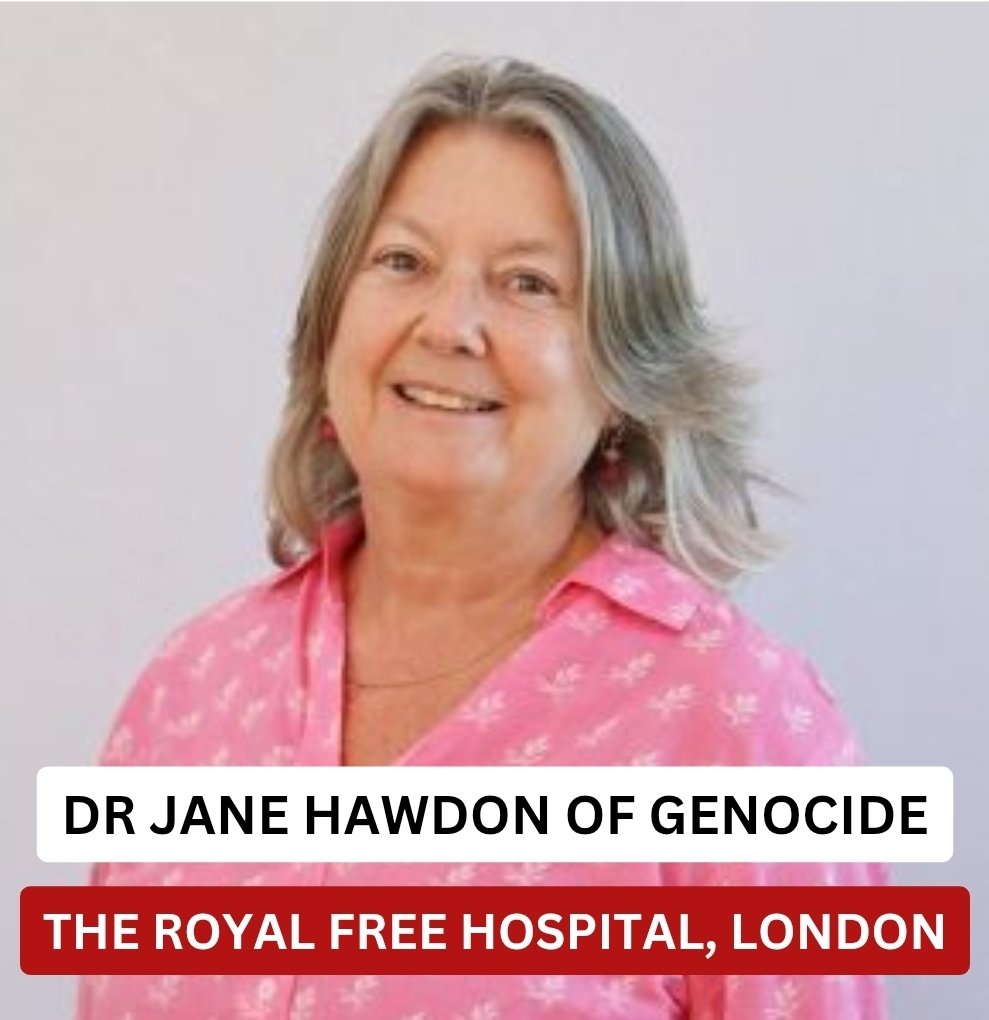
Dr Jane Hawdon suspended Dr @NadimHCr just 63 minutes after an anonymous complaint over his social media posts on the genocide in Gaza.
Hawdon is the same doctor known for her Lucy Letby review. She also personally filed a complaint against me to the GMC.
When Hawdon suspended Nadeem in August 2024, she provided no specific details of the complaint. No evidence.
She sent him home mid-shift and did not even tell him why.
Nadeem was left in uncertainty overnight— he was so worried he might have harmed a patient.
Hawdon then ambushed him in a meeting and pressured him: delete your posts or face a full investigation.
Nadeem is suing the Royal Free Trust and suing Hawdon personally for discrimination and harassment.
She took the stand today in his employment tribunal. She seemed worried, as though she never expected to be held responsible for her disgraceful behaviour.
Hawdon treated Nadeem as guilty until proven innocent. Not because of clinical issues or patient harm. But because of his words expressing outrage over 'israel's' terrorism and the mass murder of Palestinians.
Nadeem is a Christian Jordanian who has borne witness to the Palestinian struggle his entire life.
Hawdon had no right to stop him caring for the British public because of his righteous and moral views.
She had no right to cause him that level of harm and force him to delete his posts just to keep his job and livelihood.
Genocide apologists working as doctors in Britain must be exposed so the British public can make informed decisions regarding their care.
Eternal shame on Jane Hawdon.
Really surprised to see Katie Hopkins being kicked out of a London pub. It's almost as though the real world bears no relation to the bots and Russian shills of Twitter and ordinary people don't like hideous hate-filled divisive grifting twats.
“What’re you in for mate?”
“Cleaning a river without a permit. What about you?”
@EnvAgency is really plumbing new depths of malevolent uselessness here.
Westminster may finally be about to have the argument it has spent 40 years avoiding.
If Andy Burnham returns to Parliament, the political class will know how to cover it. A leadership drama. Who is up, who is down, whether Keir Starmer can survive, whether Labour is once again turning inward. The familiar machinery of Westminster psychodrama will whirr into life.
That framing misses the larger point. Burnham’s possible return matters not because of what it says about Labour’s leadership, but because of what it reveals about the British state: what it can still do, what it has forgotten how to do, and what kind of country it must become if it is serious about resilience.
Britain is finally having a more serious conversation about national security. The Strategic Defence Review, the pivot back towards Europe, the recognition that hybrid warfare turns citizens, infrastructure and civic institutions into part of the front line: all of it marks a real shift in how the state thinks about its own survival.
But at the centre of that conversation lies a question that the defence establishment, and most of Westminster, still does not want to answer. What kind of society do you need to be before resilience is possible?
Finland is now the model everyone cites. Comprehensive security. Whole-of-society defence. Civilian preparedness woven into military planning. British strategists admire the Finnish system and ask how it might be copied. But the admiration stops short of the uncomfortable question: why does it work there?
The answer is not geography or history or some mysterious quality of Finnish national character. It is structural. Nearly 80% of Finns say they would defend their country if attacked. In Britain, the figure is closer to 33%. That gap is not an accident. It exists because Finland has spent decades building a society in which people have a genuine stake in what they are being asked to defend. Energy is affordable. Housing is available. Public services function. Institutions command trust. The Nordic welfare state is not a sentimental add-on to Finnish security policy. It is the foundation of it. You cannot ask people to defend a country that does not work for them.
Britain has spent 40 years building the opposite. The privatisation of essentials – energy, water, transport, housing – transferred wealth upwards from households to shareholders while making the basics of everyday life more expensive. The state, stripped of the tools to control costs at source, has been reduced to compensating after the fact.
Out of every pound the Government spends on housing, 88p goes to subsidising private rents. Just 12p goes to building homes. When energy prices spiked in 2022, the Government spent £40bn in a single winter cushioning the blow, not because it had a resilient energy system but because it lacked one. Debt interest now consumes more than £100bn a year. Britain has the highest debt servicing costs in the G7: the compounding price of financing failure rather than eliminating it at source.
This is what bond market dependency actually looks like. It is not an abstract fiscal condition. It is the consequence of a state that has been stripped of the supply-side tools that would let it cure the problems it now pays, indefinitely, to manage. And here is the paradox the Treasury refuses to confront. The countries that borrow most cheaply are often those that have retained the public investment model Britain abandoned. The spread between UK and Dutch borrowing costs has widened sharply not because markets fear public investment, but because they have lost confidence in a model that borrows to subsidise private failure while never addressing its causes.
This is the connection Britain’s defence debate is missing. The familiar framing, that social spending is what must be sacrificed to meet the NATO target, is not merely politically toxic. It is strategically illiterate. Cutting the foundations of social cohesion to fund the hardware of national defence is self-defeating. You end up with planes and no pilots, submarines and no crew, an army that cannot recruit because the society it is meant to protect has stopped believing in itself.
I think Burnham understands this. That is why his programme is more interesting than the leadership gossip suggests. What he has been building in Greater Manchester – public control of transport, expanded social housing, investment in the productive foundations of the city economy – is not a nostalgic rerun of postwar nationalisation. It is a proof of concept for a different kind of state.
The Bee Network is the most visible example, but the argument behind it travels. A state that can shape markets is not condemned to subsidise their failures. A state that produces affordable energy through public generation does not need to spend tens of billions cushioning every price shock. A state with a serious public housebuilding programme does not need housing benefit to rise endlessly in line with private rents. A state that builds institutions people can see, use and trust begins to restore the civic confidence on which resilience depends.
The real constraint on Britain is not money. It is capacity: the workers, institutions, supply chains and public purpose needed to turn national will into national renewal. Britain’s tragedy is not that it has run out of money. It is that after 40 years of hollowing out the state, it has made itself less able to act.
Burnham’s critics will reach for the familiar warning. Borrow more, spend more, spook the gilt markets, repeat the Truss disaster. But this misunderstands both the problem and the opportunity.
Bond markets do not have ideological preferences. They have functional ones. They prefer clarity, credible revenue streams, productive investment, and a state with a plan. What they punish is not public ambition but incoherence. A properly designed productive state programme would not be a leap into fiscal fantasy. It would be an attempt to end the much costlier fantasy that Britain can keep borrowing to compensate for broken markets while refusing to repair them.
The defence conversation and the economic conversation need to become the same conversation. Finland did not build national resilience by choosing between welfare and security. It built resilience by understanding that they are inseparable: that a country in which the basics work, where people trust one another and the institutions around them, is one that can face danger with something more than anxiety.
That is the deeper argument Burnham represents. Westminster will be tempted to treat him as a leadership story. It should resist the temptation. The question is not whether Burnham can return to parliament. It is whether Britain can return to the idea that the state should make life work. Because a country that cannot command the confidence of its people cannot truly defend itself.
A leaked document reveals Palantir staff are being granted “unlimited access” to identifiable patient data.
Join us demanding this spy-tech firm gets out of our NHS 👇
https://t.co/JGcobrFyzb
A former paint maker who lost his 12-year career due to the Windrush scandal & lost his home as a result says after half a decade of fighting for compensation he has been awarded £1,147 for loss of employment by the Home Office scheme.
My reaction to Keir Starmer's last ditch press conference - an unsurprising reaction but possibly a helpful one (at least to those who, like me, consider him an abysmal PM).
Like many, I approached Keir Starmer's prime ministership with deep-seated pessimism, my expectations already set at rock bottom. Yet, I confess: I failed to foresee the clinical precision with which he and his inner cabal would sabotage their own administration and scar Britain.
The crux of their debacle lay, first, in a distinctly dictatorial, authoritarian reflex. And second—crucially—in a seething contempt for those who lent them their votes, while simultaneously performing a grotesque pantomime of flattery toward those who never would, and never will, support them.
Having exorcised from the Labour Party its most authentic voices—people of unimpeachable integrity, such as Ken Loach and Jeremy Corbyn, a purge that eluded even Tony Blair’s repertoire—Starmer embarked on a rampage:
He slashed disability benefits; armed and fed intelligence to the Israeli government as it executed genocide in Gaza; channeled his own inner Farage, perhaps his inner Enoch Powell, to vilify migrants and treat refugees as vermin; gutted international aid to masquerade as a defender of defence spending; bulldozed wildlife and their habitats; unveiled a new lexicon of draconian anti-protest laws; left trans people suspended in legal limbo; clung with religious fervour to absurd, socially ruinous fiscal rules; allowed Rachel Reeves to squander £100 billion covering the Bank of England’s outrageous and wholly unnecessary Quantitative Tightening losses—a gift that keeps giving to the City’s banks—while imposing yet another round of austerity on government departments and public services.
Once the great hope of the downtrodden, Starmer’s Labour has become the villain - the genuinely nasty party.
Once a human rights lawyer, he has single-handedly plunged Britain into a shoddy, incompetent authoritarianism.
https://t.co/wIjnc9NfmJ
The Prime Minister says his government has got "the big political decisions right". Let's go through them.
The government chose to cut welfare so it could spend even more on weapons and war.
The government chose to demonise the sick and disabled.
The government chose to keep children in poverty until it was dragged kicking and screaming to finally scrap the two-child benefit cap.
The government chose not to bring water into public ownership, not to tax wealth and not to implement rent controls.
The government chose to arm Israel and participate in genocide.
The government chose to let the US use British air bases for its war crimes in Iran.
The government chose to let Palantir get its hands on our NHS.
The government chose to scapegoat migrants and refugees for its own failures.
Poverty, inequality and genocide. Those are the government's big decisions. And that is how this government will be remembered.
This is a brilliant investigative piece on Farage, the dark millions behind him and the double standards of so much British journalism. Read and retweet! Nigel Farage pocketing £5m from a donor shows he’s unfit for power https://t.co/zHuVfDV8dh
The only party led by a Jewish leader, who’s faced Nazi salutes and antisemitic abuse on our streets this month, wasn’t invited.
Reform's leader, with a track record of antisemitism, is invited.
I know, like every party, we’ve got work to do on tackling antisemitism. But tackling hate requires cross-party solidarity, not ideological gatekeeping.
https://t.co/BVQ5CyPgOK
Misan Harriman is a highly respected and influential
Black man.
He is being attacked by the Telegraph with smears.
His crime is to point out that the Golders Green attacker also attacked a Muslim man.
I stand with Misan.
Chelsea Perkins murdered the man who raped her.
She pled guilty and took full responsibility.
She was given 22.5 years in prison.
Jesse Mack Butler raped and strangled two children. One sustained such severe neck injuries she almost died.
He got community service.