We're making links more prominent when ChatGPT browses the internet. This gives more context to its responses and makes it easier for users to discover content from publishers and creators. Browse is available in ChatGPT Plus, Team and Enterprise.
Here's my conversation with Mark Zuckerberg, his 3rd time on the podcast, but this time we talked in the Metaverse as photorealistic avatars. This was one of the most incredible experiences of my life. It really felt like we were talking in-person, but we were miles apart 🤯 It's hard to put into words how awesome this was for someone like me who values the intimacy of in-person conversation. It gave me a glimpse of an exciting future with many new possibilities and fascinating questions about the nature of reality and human connection ❤
Timestamps:
0:00 - Introduction
0:52 - Metaverse
15:27 - Quest 3
30:16 - Nature of reality
34:54 - AI in the Metaverse
51:51 - Large language models
57:49 - Future of humanity
Insider haben dem @handelsblatt mehr als 100 GB Daten zugespielt, die von @tesla stammen sollen. Sie nähren u.a. Zweifel an @elonmusk größtem Versprechen: dem Autopiloten. $TSLA spricht von Datendiebstahl, Behörden sind alarmiert. Story jetzt online: https://t.co/1EBmGjTfW0
With improved math, logic and reasoning skills, Bard can now help generate, explain and debug code in 20+ programming languages — and coding has quickly become one of the most popular things people are doing with Bard. #GoogleIO
Why AI Won't Cause Unemployment
"In retrospect, I wish I had known more about the hazards and difficulties of [running] a business." -- George McGovern
Fears about new technology replacing human labor and causing overall unemployment have raged across industrialized societies for hundreds of years, despite a nearly continual rise in both jobs and wages in capitalist economies. The job apocalypse is always right around the corner; just ask the Luddites.
We had two such anti-technology jobs moral panics in the last 20 years — “outsourcing” enabled by the Internet in the 2000’s, and “robots” in the 2010’s. The result was the best national and global economy in human history in pre-COVID 2019, with the most jobs at the highest wages ever.
Now we’re heading into the third such panic of the new century with AI, coupled with a continuous drumbeat of demand for Communist-inspired Universal Basic Income. “This time is different; AI is different,” they say, but is it?
Normally I would make the standard arguments against technologically-driven unemployment. And I will come back and make those arguments soon. But I don’t even think the standand arguments are needed, since another problem will block the progress of AI across most of the economy first.
Which is: AI is already illegal for most of the economy, and will be for virtually all of the economy.
How do I know that? Because technology is already illegal in most of the economy, and that is becoming steadily more true over time.
How do I know that? Because, see the chart.
This chart shows price changes, adjusted for inflation, across a dozen major sectors of the economy.
As you can see, we actually live in two different economies.
The lines in blue are the sectors where technological innovation is allowed to push down prices while increasing quality. The lines in red are the sectors where technological innovation is not permitted to push down prices; in fact, the prices of education, health care, and housing as well as anything provided or controlled by the government are going to the moon, even as those sectors are technologically stagnant.
We are heading into a world where a flat screen TV that covers your entire wall costs $100, and a four year college degree costs $1 million, and nobody has anything even resembling a proposal on how to fix this.
Why? The sectors in red are heavily regulated and controlled and bottlenecked by the government and by those industries themselves. Those industries are monopolies, oligopolies, and cartels, with extensive formal government regulation as well as regulatory capture, price fixing, Soviet style price setting, occupational licensing, and every other barrier to improvement and change you can possibly imagine. Technological innovation in those sectors is virtually forbidden now.
Whereas the sectors in blue are less regulated, technology whips through them, pushing down prices and raising quality every year.
Note the emotional loading of the interplay of production and consumption here. What do we get mad about? With our consumer hat on, we get mad about price increases — the red sectors. With our producer hat on, we get mad about technological disruption — the blue sectors. Well, pick one; as this chart shows, you can’t have your cake and eat it too.
Now think about what happens over time. The prices of regulated, non-technological products rise; the prices of less regulated, technologically-powered products fall. Which eats the economy? The regulated sectors continuously grow as a percentage of GDP; the less regulated sectors shrink. At the limit, 99% of the economy will be the regulated, non-technological sectors, which is precisely where we are headed.
Therefore AI cannot cause overall unemployment to rise, even if the Luddite arguments are right this time. AI is simply already illegal across most of the economy, soon to be virtually all of the economy.
The information SEOs have been waiting for. And yep, Google's AI results currently don't provide sources/footnotes like the other search engines do. But this is an experimental period and Google says they still want to keep sending more traffic to websites 🤷♂️
Bard is an experimental conversational AI service, powered by LaMDA. Built using our large language models and drawing on information from the web, it’s a launchpad for curiosity and can help simplify complex topics → https://t.co/fSp531xKy3
Future of Theatre? Only with Immersive Tech!
This Immersive performance combines real actors and props and digital background, which allows them to create real-time scenes including cool VFX, rotating camera angles, and total immersion of the audience.
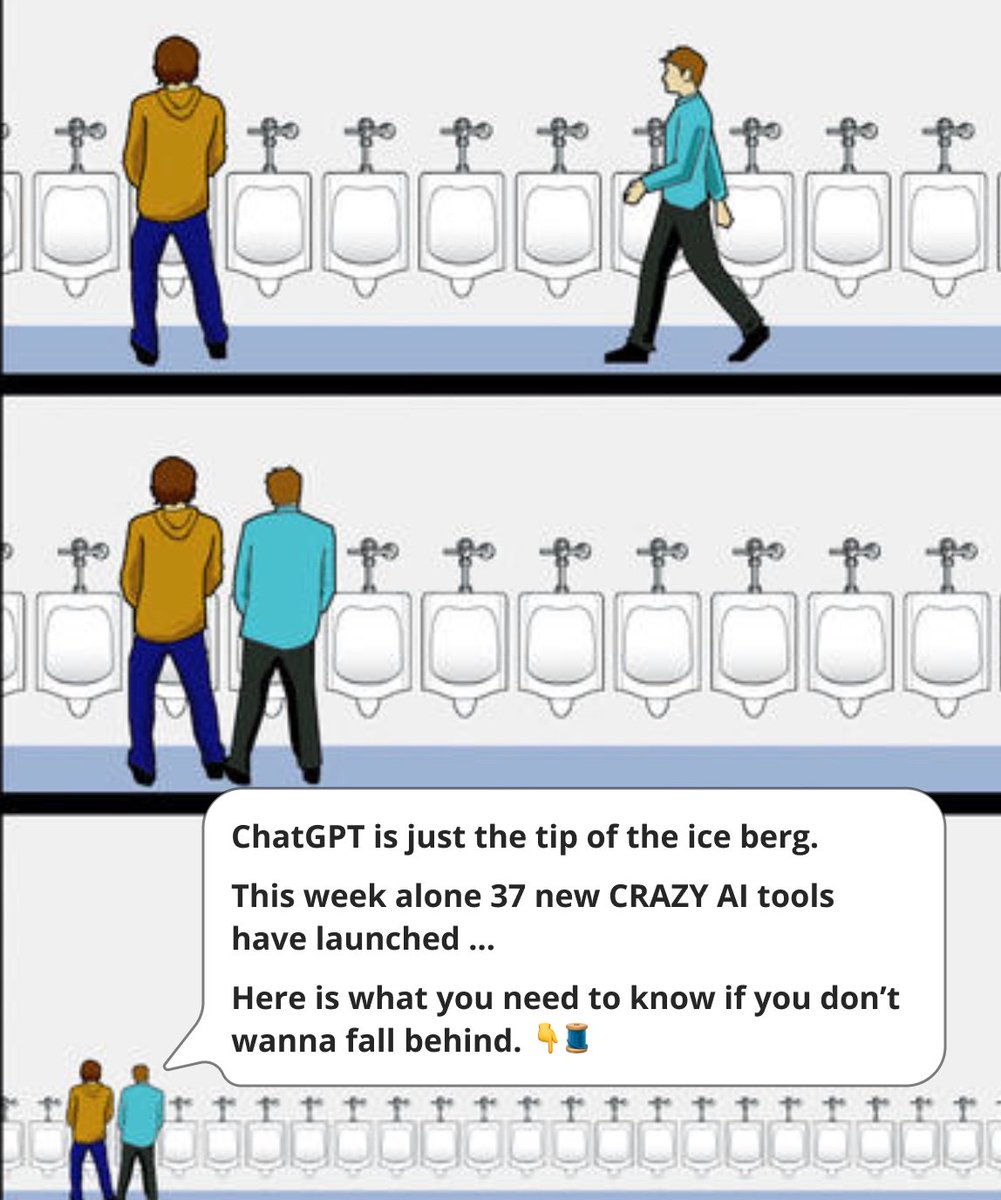
Many people mistakenly think that large language models that generate one word at a time is the end game.
Connecting LLMs with tools, e.g.: search engines, python interpreters, etc., is super exciting, and leverages tools' power, robustness & more!
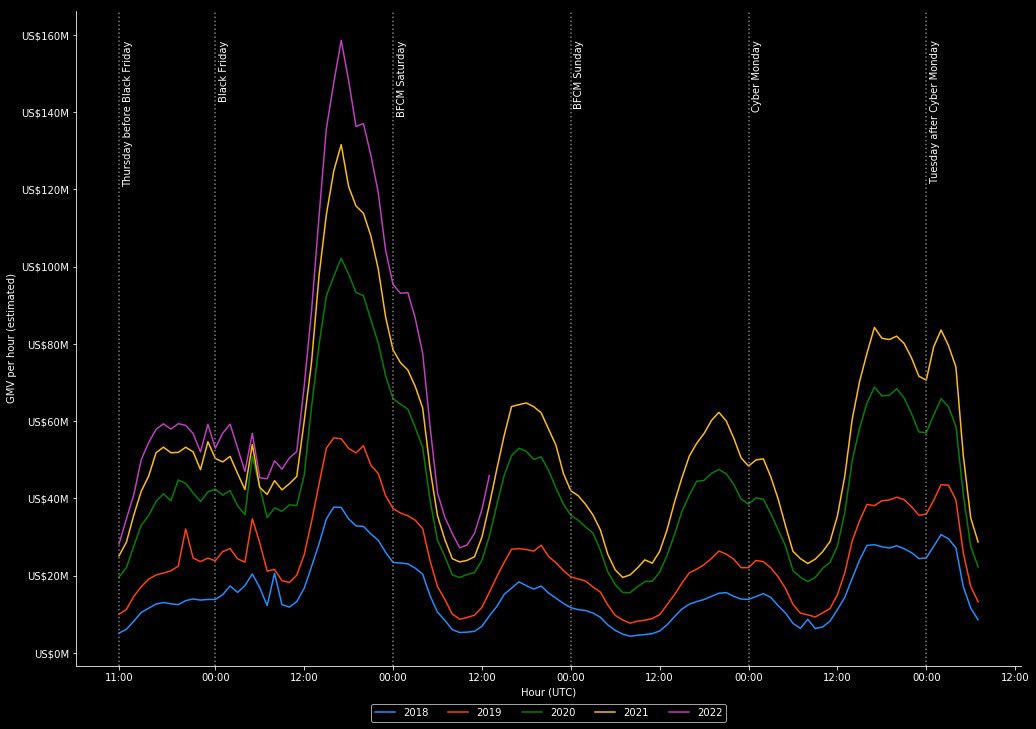
Some extra Shopify BFCM data:
Purple is this year’s GMV
Looking strong despite the macro economical pessimism. That’s great news for independent commerce!
Geschafft! Europaweiter Booster für Erneuerbare und mehr Solidarität in der Gaskrise. Soeben hat der Sonderenergierat den Inhalt von zwei Verordnungen beschlossen, die sehr schnell in Kraft treten sollen und unmittelbar europaweit anwendbar sind. Ein Thread.








![pmarca's tweet photo. Why AI Won't Cause Unemployment
"In retrospect, I wish I had known more about the hazards and difficulties of [running] a business." -- George McGovern
Fears about new technology replacing human labor and causing overall unemployment have raged across industrialized societies for hundreds of years, despite a nearly continual rise in both jobs and wages in capitalist economies. The job apocalypse is always right around the corner; just ask the Luddites.
We had two such anti-technology jobs moral panics in the last 20 years — “outsourcing” enabled by the Internet in the 2000’s, and “robots” in the 2010’s. The result was the best national and global economy in human history in pre-COVID 2019, with the most jobs at the highest wages ever.
Now we’re heading into the third such panic of the new century with AI, coupled with a continuous drumbeat of demand for Communist-inspired Universal Basic Income. “This time is different; AI is different,” they say, but is it?
Normally I would make the standard arguments against technologically-driven unemployment. And I will come back and make those arguments soon. But I don’t even think the standand arguments are needed, since another problem will block the progress of AI across most of the economy first.
Which is: AI is already illegal for most of the economy, and will be for virtually all of the economy.
How do I know that? Because technology is already illegal in most of the economy, and that is becoming steadily more true over time.
How do I know that? Because, see the chart.
This chart shows price changes, adjusted for inflation, across a dozen major sectors of the economy.
As you can see, we actually live in two different economies.
The lines in blue are the sectors where technological innovation is allowed to push down prices while increasing quality. The lines in red are the sectors where technological innovation is not permitted to push down prices; in fact, the prices of education, health care, and housing as well as anything provided or controlled by the government are going to the moon, even as those sectors are technologically stagnant.
We are heading into a world where a flat screen TV that covers your entire wall costs $100, and a four year college degree costs $1 million, and nobody has anything even resembling a proposal on how to fix this.
Why? The sectors in red are heavily regulated and controlled and bottlenecked by the government and by those industries themselves. Those industries are monopolies, oligopolies, and cartels, with extensive formal government regulation as well as regulatory capture, price fixing, Soviet style price setting, occupational licensing, and every other barrier to improvement and change you can possibly imagine. Technological innovation in those sectors is virtually forbidden now.
Whereas the sectors in blue are less regulated, technology whips through them, pushing down prices and raising quality every year.
Note the emotional loading of the interplay of production and consumption here. What do we get mad about? With our consumer hat on, we get mad about price increases — the red sectors. With our producer hat on, we get mad about technological disruption — the blue sectors. Well, pick one; as this chart shows, you can’t have your cake and eat it too.
Now think about what happens over time. The prices of regulated, non-technological products rise; the prices of less regulated, technologically-powered products fall. Which eats the economy? The regulated sectors continuously grow as a percentage of GDP; the less regulated sectors shrink. At the limit, 99% of the economy will be the regulated, non-technological sectors, which is precisely where we are headed.
Therefore AI cannot cause overall unemployment to rise, even if the Luddite arguments are right this time. AI is simply already illegal across most of the economy, soon to be virtually all of the economy.](https://pbs.twimg.com/media/Fqaf-7JaQAA-R1W.jpg)