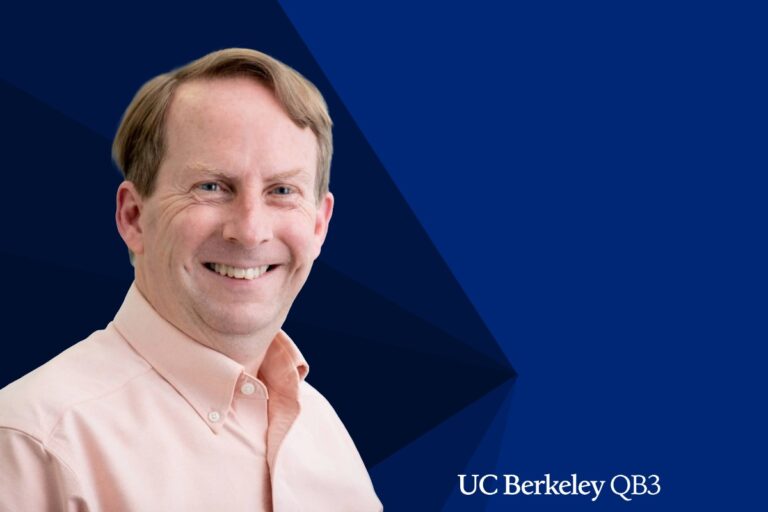
Check out the latest issue of Berkeley Engineer from @Cal_Engineer! The issue highlights new research from @BerkeleyBioE professor & QB3-Berkeley faculty affiliate Seung-Wuk Lee.
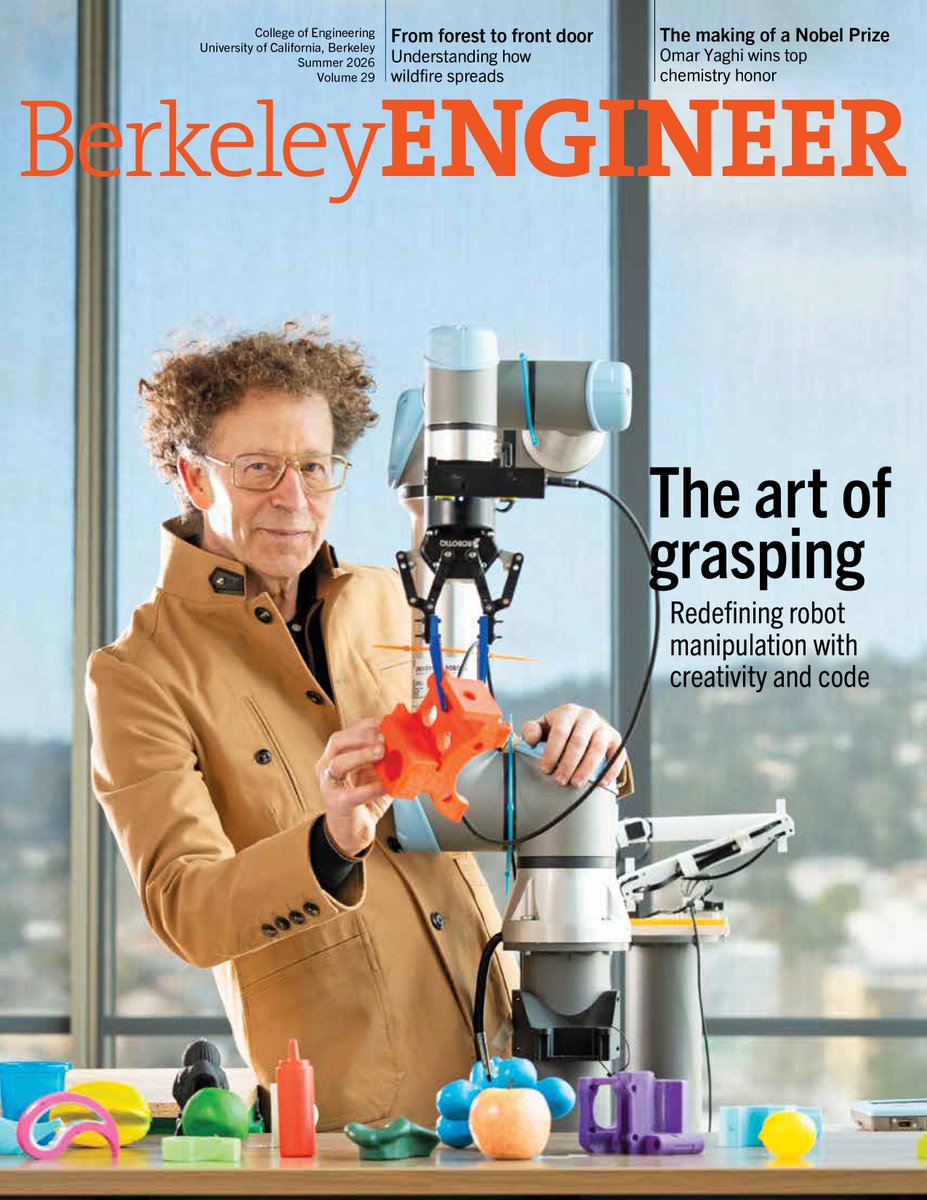
The Summer ’26 issue of Berkeley Engineer magazine is here!
Our cover story centers on how Professor @Ken_Goldberg is redefining robot manipulation with creativity and code.
Read the issue: https://t.co/gHAuv9Qn7v
Six UC Berkeley researchers have been elected to the National Academy of Sciences (@theNASciences), one of the most prestigious honors in American science.
https://t.co/0LugJO1s2k
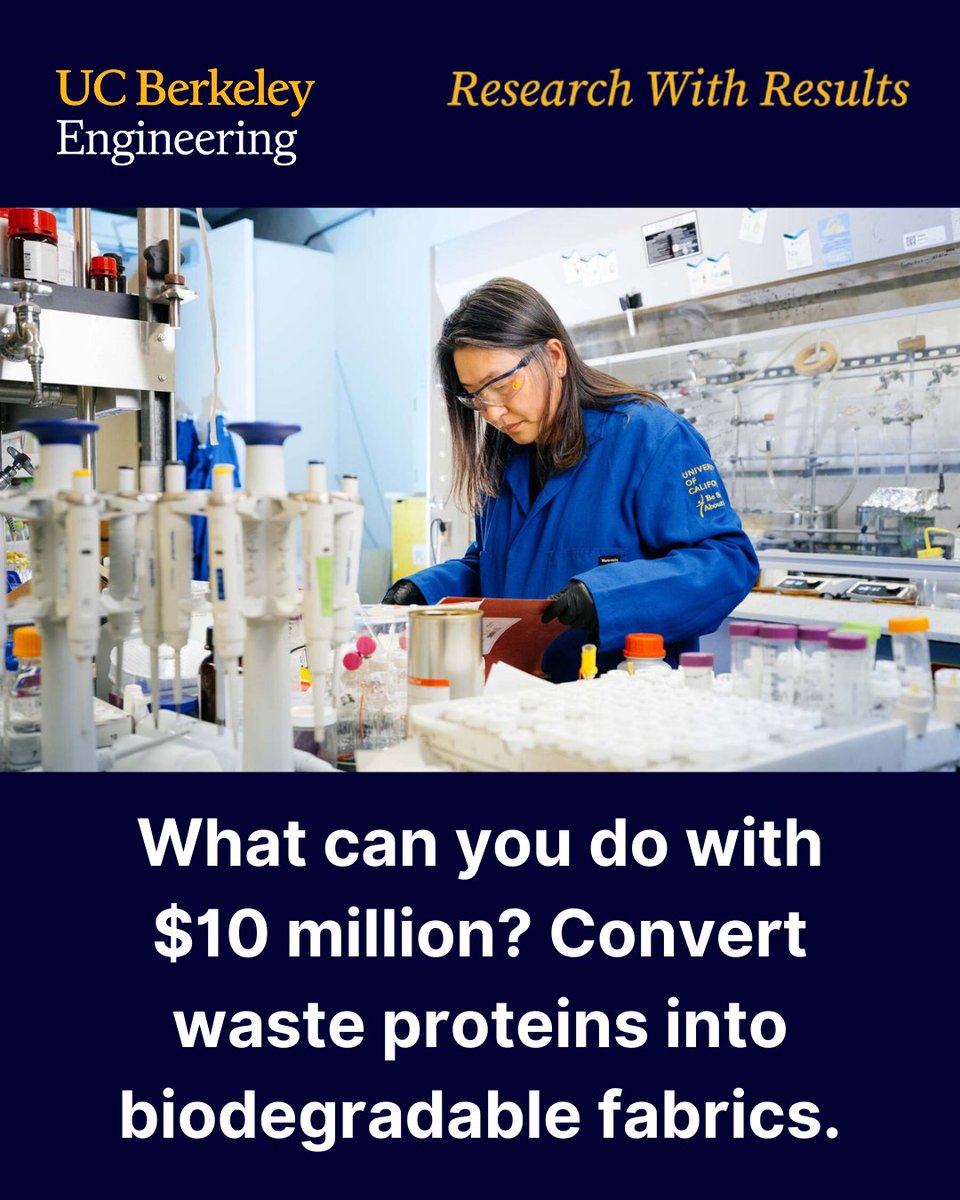
Ting Xu, professor of materials science and engineering and of chemistry, is working to convert proteins from waste materials into biodegradable fibers. It’s an effort that received $10 million in funding from the Bezos Earth Fund today.
Learn more: https://t.co/3SKt6m7q9F
Two historians, a biologist and a bioengineer from UC Berkeley have won illustrious Guggenheim Fellowships and will pursue independent work under “the freest possible conditions.” https://t.co/FfZXldTOZd
Ahmad Omar, a QB3-Berkeley affiliate and @BerkeleyMSE prof at @UCBerkeley, studies the "squishy" physics of soft matter like DNA and tissue.
Learn more about his lab and research in our latest Q&A: https://t.co/R5biRtjIxa
Eleven UC Berkeley faculty members were recently elected fellows of the American Association for the Advancement of Science (@AAAS), the world’s largest general scientific society and publisher of the Science family of journals. https://t.co/OSbl02xNri
In a first-of-its-kind study published today in @natBME, @UCBerkeley researchers detail how they can accelerate the biological age of stem-cell-derived fat and liver tissue by 40 years—all in as little as four days.
Learn more about their findings: https://t.co/hqqYTMQi12
Stiffer lymph nodes might be the key to better cancer-killing cells.
A @BerkeleyEngineering team led by @Derfogail found that "soft activation" of T cells could lead to more precise therapies with fewer side effects!
Read more: https://t.co/zZ8knBMZ1b
Congratulations to our 7 UC Berkeley faculty members named 2026 Sloan Fellows! The fellowships honor exceptional scholars whose creativity, innovation and research accomplishments make them stand out as the next generation of leaders. https://t.co/fkinJ0CSfC
.@UCBerkeley researchers led by QB3-Berkeley faculty affiliate Adam Arkin are engineering healthy lung microbes to outcompete deadly pathogens. The method aims to stop infections without antibiotics.
Read more: https://t.co/OZmJCUqqV9
How did 1980s lab experiments lead to the #QuantumComputing revolution of 2026?
Read how @NobelPrize laureate & QB3-Berkeley affiliate John Clarke pioneered the research that paved the way for modern superconducting qubits.
Read the @BerkeleyLab story: https://t.co/xvqeXRiz0V
UC Berkeley researchers have unlocked “design rules” that upend long-held views on polymers and could pave the way for eco-friendly plastics and other materials. https://t.co/ISfS3NUvQa
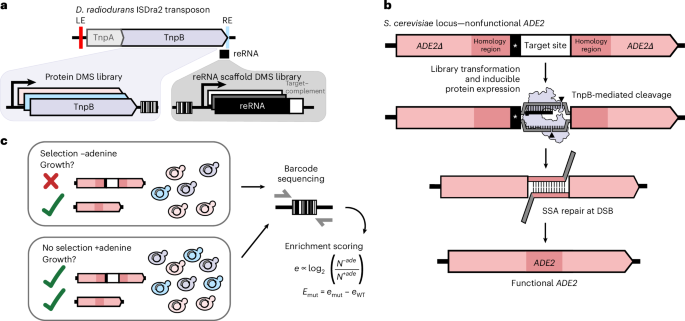
Addition Therapeutics, a spinout of QB3-Berkeley affiliate Kathleen Collins' lab, has emerged from stealth with $100M in funding from SR One, the Gates Foundation, and more. Its PRINT platform uses retrotransposon machinery to deliver precise gene therapy. https://t.co/82QsS7nojs
Which came first — the comb jelly or the sponge? The battle over the root of the animal tree of life rages on, with the latest research from QB3-Berkeley's Nicole King coming down on the side of the sponge. Read more from @UCBerkeley: https://t.co/WbjCYS2P8M
We are thrilled to welcome Bill Burkholder, science program director at #CZBiohubSF (@CZBiohub) as our professional in residence this week! Learn how curiosity shaped his career journey in this fantastic Q&A:
https://t.co/MMYekB0faT
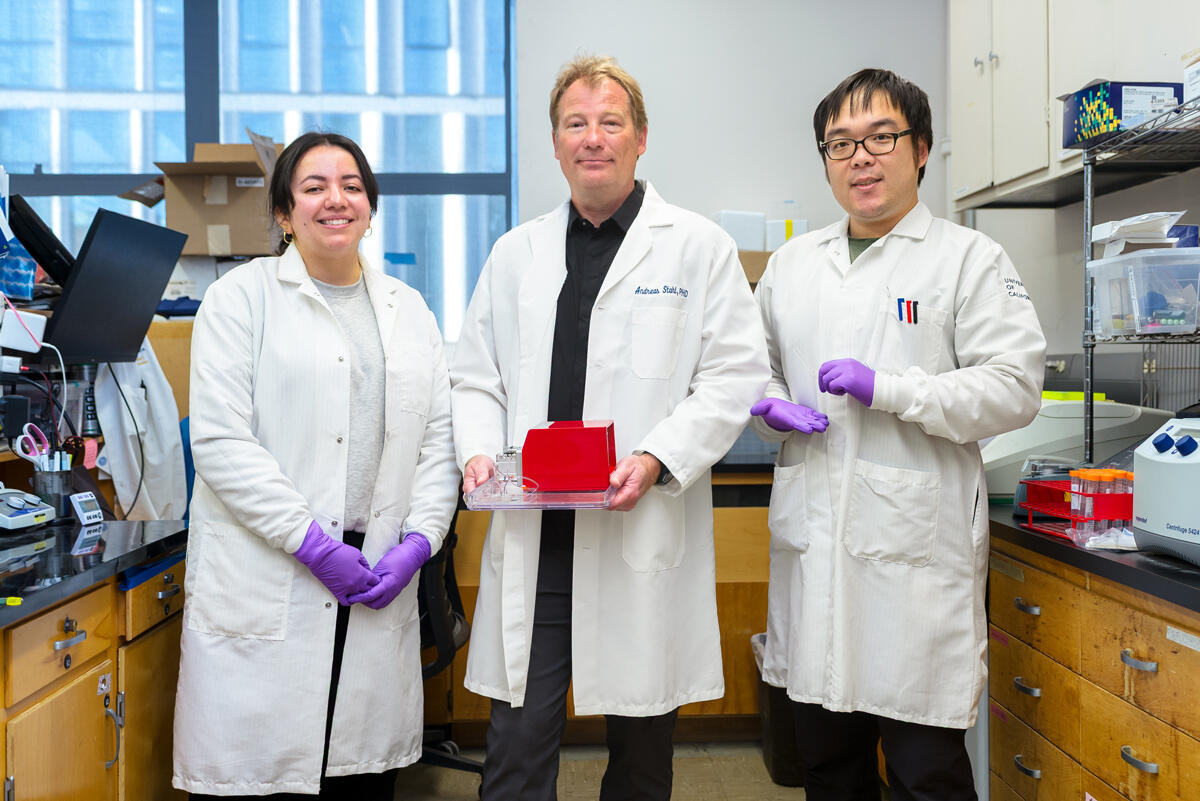
A team led by QB3-Berkeley affiliate Seung-Wuk Lee has engineered a harmless virus into a “smart sponge” to extract rare-earth elements from waste streams—no harsh chemicals, just biology. A huge win for cleaner tech and supply chains! 🔬🌱 https://t.co/NFy4SmJm2v
Nature has inspired many scientific breakthroughs—and for QB3-Berkeley's Phillip Messersmith, it’s a blueprint for healing. His team creates bio-inspired glues and regenerative materials. 🔬💚 Learn more about their efforts: https://t.co/Lh1CPGUBjb
From the latest issue of @Cal_Engineer Magazine: Research by QB3-Berkeley affiliate Amy Pickering (@seqh2o) shows that stored drinking water is a major source of E. coli transmission in developing countries. https://t.co/rS8l7PBuI2