I am a member of the Norwegian Nobel Committee.
There are five of us. Five people, appointed by a parliament most of the planet could not find on a map, who decide, once a year, which human being the world has agreed to call good.
I know. I know. I think about it on the tram.
We meet in a building on Henrik Ibsens gate, a street named after a man who wrote almost exclusively about people discovering they are frauds, which nobody on the committee finds funny except me. There is a room with a long table and the portraits of the dead laureates looking down, Mandela, the Dalai Lama, a great many earnest men in spectacles, and one portrait we do not discuss, which is Kissinger, 1973, awarded while the bombs were still falling, after which two of our predecessors resigned and the satirist Tom Lehrer said political satire was now obsolete. We keep him on the wall. A reminder. Every family has the uncle.
It is October in Oslo, which means the sun gives up around four in the afternoon like a civil servant, and it rains the particular Norwegian rain that isn’t quite falling, just hanging there, judging you. I arrive with wet shoes. I always arrive with wet shoes. There is coffee, because this is Norway and there is always coffee, we drink more of it per person than almost anyone alive, and someone’s wife has sent kanelboller, the cinnamon buns, and we sit, five Norwegians, damp, caffeinated, sugared, and we decide the moral standing of the entire species.
Let me tell you how it actually works, because the world imagines a cathedral and it is, I promise you, a book club with a mandate.
287 nominations this year. 208 people, 79 organizations. Anyone can nominate, that’s the secret nobody understands: a professor, a parliamentarian, a former laureate, so the “nominee” list is meaningless, it’s a suggestion box, and every autumn some congressman nominates his own golden retriever and the press writes “SHORTLISTED.” Nobody is shortlisted. There is no short list the public ever sees. There is us, and the coffee, and the rain, and the portraits, and a Norwegian stubbornness that is older than the prize itself.
We read reports. The institute’s advisers write them, thick dull documents, and we argue. Our chairman told the BBC once that in the final meeting “there is a high temperature.” High temperature, for a Norwegian, means someone slightly raised an eyebrow and then apologized for it. We don’t do high temperature. We do a long silence, and then Kristin says “well,” and everyone knows exactly what “well” meant, and it’s settled. That’s our shouting. “Well.” You’d have to be raised here to hear the violence in it.
Now. This year. I will not say the name, because we never say the name, but you know the name.
A certain head of state wanted this prize the way a child wants a thing in a shop window, which is to say loudly, and in public, and with the full belief that wanting it was itself the argument. He said he deserved it. He said he’d ended eight wars, a number that grew most times he said it, like a fish. He had other heads of state phone us. Israel’s prime minister posted it on the internet, “Give him the Nobel.” The leaders of Cambodia and Pakistan announced they’d nominated him, as though announcing it were part of it, as though we tally mentions. A man flew around the globe collecting endorsements for a Norwegian committee the way you’d collect signatures for a petition to the council about a noisy dog.
And here, uff da, is the detail I treasure, the one that makes me smile into my coffee. The nomination deadline is the 31st of January. He took office on the 20th. So for all the phone calls, all the posts, all the gilded lobbying, the only nominations that could possibly count for this year’s prize were filed in the first eleven days of his term, before he had, by his own arithmetic, ended a single one of the eight wars. He campaigned all year for a prize whose window had shut while he was still hanging up his coat. We didn’t have to reject him. The calendar did. We just watched. Norwegians are very good at watching. We have long winters.
People think we sit there weighing his deeds. We don’t. That’s the thing I can’t make the world understand. We’re not grading his homework. We don’t owe anyone the prize for a ceasefire, however real, however loud the announcement. “He made peace” is not a sentence that ends in a medal, the way he believes it does, the way he believes every good thing ends in his name on it. The will of a dead Swede says the prize goes to whoever did the most for fraternity between nations. A dead Swede, I should add, who made his entire fortune inventing dynamite and selling arms, and spent his last years horrified at his own obituary, which called him a merchant of death, and so bought his way to immortality as a man of peace. The whole prize is one guilty arms dealer’s attempt to launder his name. We are, all of us, administering a dead man’s public relations. I find this clarifying. It keeps me humble. It should keep everyone humble, and it keeps, by my count, no one humble at all.
So who did we give it to?
An eighty-five-year-old woman. A judge. Born in Durban, under apartheid, granddaughter of a Tamil man who came to South Africa as indentured labor, a bus driver’s daughter from the poor Indian quarter, who became the first non-white woman to run a law practice in her province, who defended Mandela’s people when defending them was dangerous, who sat on the Rwanda tribunal and the court at the Hague, and who, at eighty-five, is right now a judge weighing whether a genocide is a genocide. When we told the world, our chairman said the rule of law “underpins the system we have set up to ensure peace,” and that “peace requires justice.” She wasn’t even in Oslo. She was in Nuremberg. In courtroom 600. The actual room where they tried the Nazis. You cannot stage that. God staged that, and God, it turns out, is a better satirist than any of us.
She did not phone us. She did not post. No prime minister demanded it for her on the internet. She had, as far as our deliberations are concerned, the one qualification the loud man could never manufacture, which is that she wanted the work and not the medal. The medal finds those people. It flees the ones who chase it. This is not a rule we wrote. It’s just the only pattern the hundred-odd years of our mistakes has ever shown.
The reaction from across the ocean was immediate. His spokesman posted that we “place politics over peace.” Ja. Perhaps. We’re five damp pensioners in a rainy city; of course it’s political, it was always political, it was political when we gave it to a sitting American president nine months into his first term for the promise of things he had not yet done, and we have been quietly embarrassed about that one for fifteen years, so believe me, we had a particular reason this year to prefer a woman with fifty years of verdicts behind her over a man with eight wars in front of him and a deadline already behind him.
Here is what he will never understand, the thing I’d tell him on the tram if he ever took one. We are the one prize he cannot buy, cannot post his way to, cannot have a friendly dictator phone in for him. Not because we’re incorruptible, nei, we’re as vain and wrong and human as the portraits on our wall. But because the entire point of the thing, the only power a small cold country’s book club has ever held, is that it goes to the person not performing the wanting. The moment you demand it, you’ve proven you don’t understand what it’s for, and proving that is itself the disqualification. He ran the most expensive campaign in the history of the prize and the campaign was the reason. He was never losing to Navi Pillay. He was losing to the concept.
It’s dark now. Four o’clock dark. The buns are gone. Kristin said “well” an hour ago and we all went home. I’m on the tram with my wet shoes, and somewhere across the water a very powerful man is explaining to a camera that the prize is rigged, that we’re corrupt, that he’ll win it next year, and he genuinely might, we’re only five idiots and we’ve been wrong before, Kissinger is still on the wall.
But not this year. This year an old woman in Nuremberg, in the room where the law once stared down the exact kind of man who thinks wanting a thing loudly enough should make it his, got a phone call she didn’t ask for.
That’s the job. We don’t reward the man who ends the war and announces it.
We reward the woman who spent fifty years deciding what a war was.
He’ll never see the difference. That’s rather the whole point of him.
Takk for i dag. I have to change trams.
How do we wake up on a Sunday morning in South Africa to the news of 27 people shot dead in two seperate mass shootings - 17 in Johannesburg and 10 Cape Town - and just go about our day as per normal? Watching the Proteas and the Boks with a beer? This can’t be the new normal.
There was a serial killer in my street during my teen years in Atteridgeville, and he was targeting teenagers in the 1970s. The serial killer, John Kgabi, was arrested, convicted, sentenced to death and executed in 1980 for murdering six children. He was implicated in 8 other unresolved murders of children. The trauma of growing up knowing that the serial killer was right on your doorstep was immense. So, when I joined the police and became the provincial Head of the Hawks in Gauteng, I had a particular passion to resolve murders and to hunt down the killers - not just as a response to a childhood trauma but also because I had horned the skill to identify patterns through my studies. This became useful in the investigation of Cash in Transit robberies, drug trafficking, murders, etc. I completed MPhil in Social Science Methods at the University of Stellenbosch in 2010, and in my research I had refined a scale to measure attitude. Now, In the wake of the serial killings in Ekurhuleni, I would have taken over the dockets as the Hawks as provided for in the investigation policy on priority crimes, and would have engaged with all other agencies to work on the murder spree. I now offer my time to @SAPoliceService and @NPA_Prosecutes to assist in these investigations.
Hyenas on one side and Wild Dogs on the other side…What a sighting.
I https://t.co/tiREpRyhkJ Political what what on this one,I hope you guys are happy😁😁😁😁😁😁
#Myoffice
📍KNP
If you're someone who likes depth. You're more prone to attracting avoidants. They'll bring intellect & at first it'll feel like you're compatible. Until you realise you're engaging with a mind but the heart is in lockdown. Remember one sees you. The other just studies you.
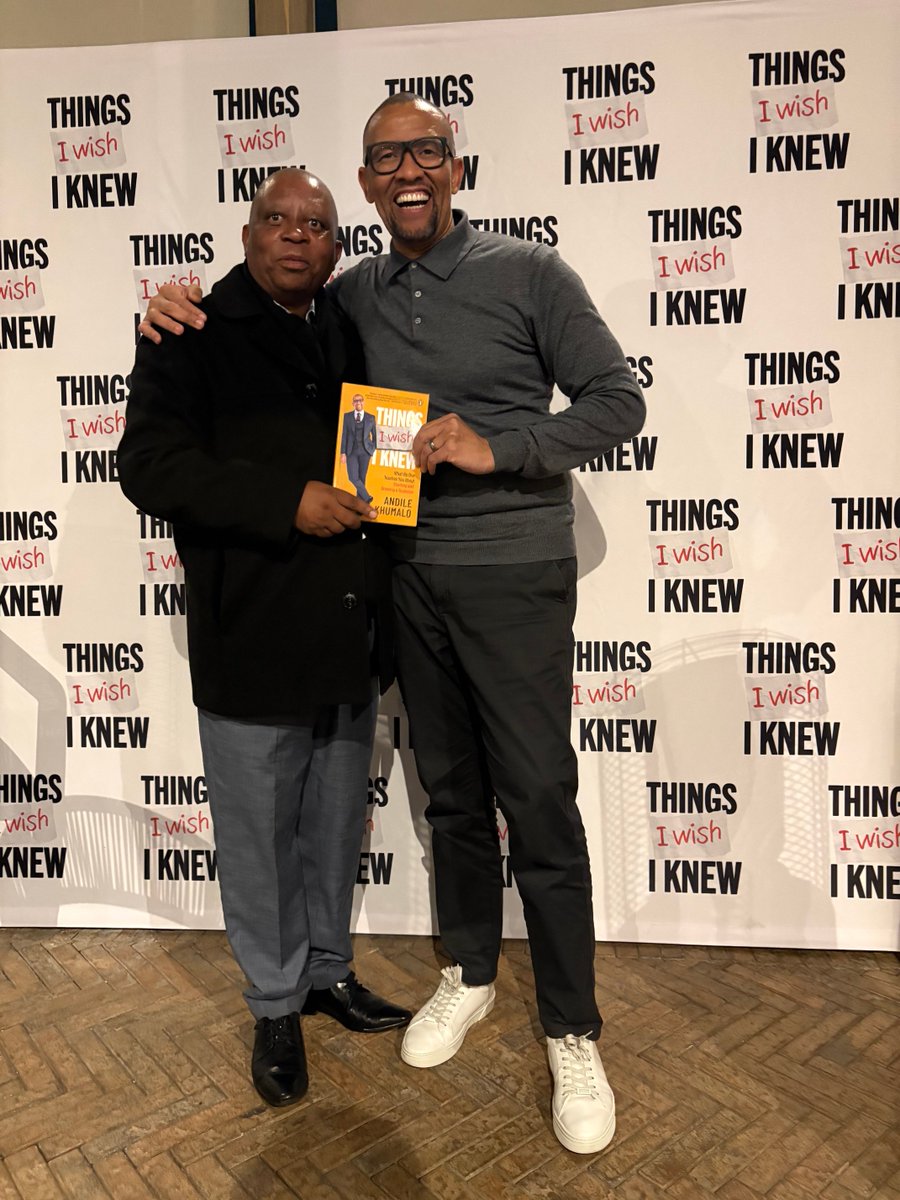
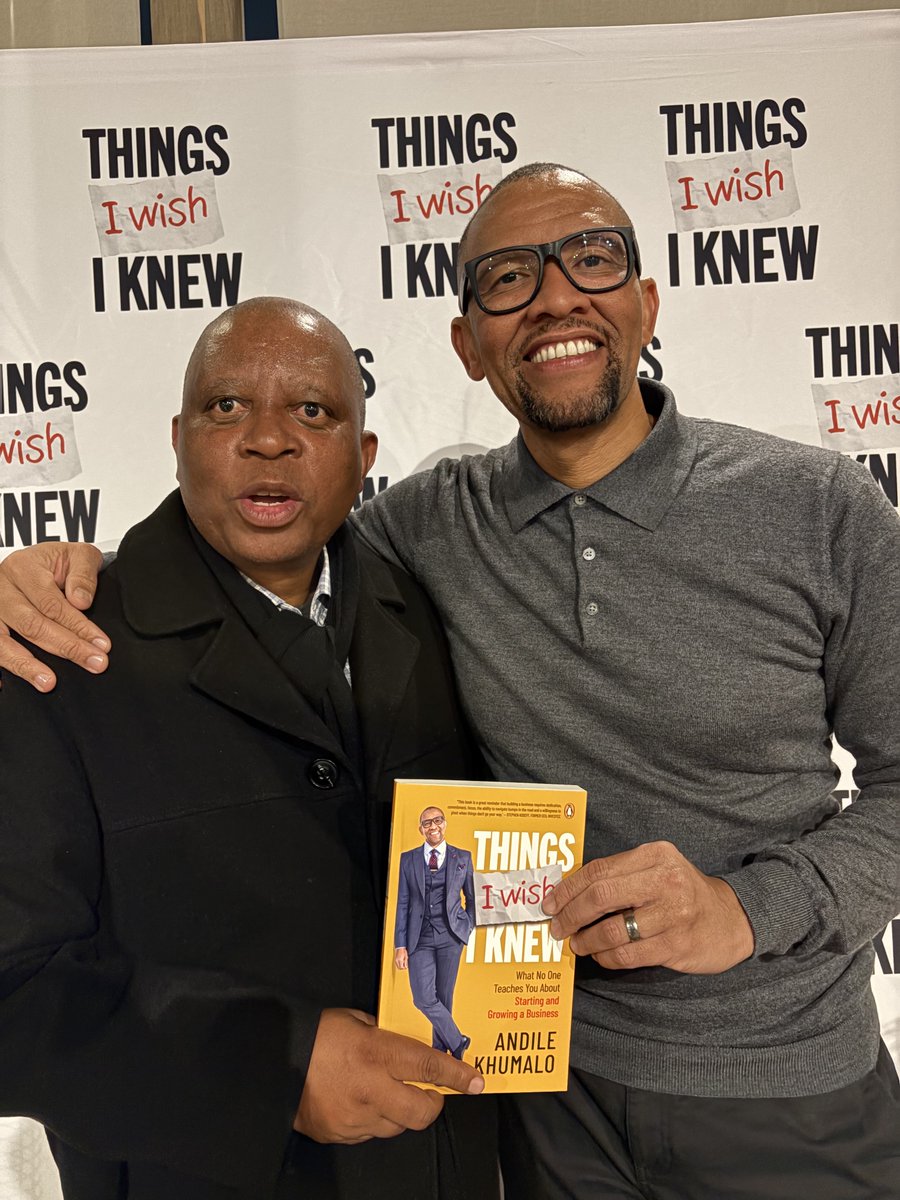
What a great book launch by one of South Africa’s entrepreneurs I so personally admire, Andile Khumalo. I am so looking forward to reading this book by this extraordinary South African.
Thank you for sharing your life and experiences with us.
Rooibos, meaning "red bush" in Afrikaans, grows exclusively in a 140,000 acre area in the Cederberg region of South Africa, around 155 miles north of Cape Town. Its needle-like leaves have long been used by the country's Indigenous communities to make a woody-flavored tea.
Now, it appeals to the tastebuds of tea-lovers globally. https://t.co/orFIg9e63H
Y’all. I still can’t stop thinking about the Spain vs Argentina game.
It was more than a match. It was a life lesson. Walk with me. Let’s turn a football lesson into one about human existence.
Spain dragged the defending champions all over the pitch like Raggedy Anns. Cute. Popular. But ultimately boneless. No cartilage. No osseous tissue. No structure. Just vibes. Brute force with little brawn.
So what happened?
Argentina’s gameplay leaned entirely on Messi. It revolved around him. He was the strategy. Everything funneled toward facilitating assists and his conversions. That’s why at one point he alone bore the burden of attack and closing.
But Spain made sure Messi barely touched the ball. And when he did, he didn’t hold it for more than a few seconds. Spain understood Argentina’s game.
Let me digress. Messi is also the team’s greatest weakness: a team reflects its leader. That applies across all teams and organizations. Messi is the world’s best, his talent unquestionable. He has reached a pinnacle few ever will. As a celebrity, doors open for him and rules bend. When things don’t go his way, there’s an expectation that something will adjust. That mindset trickles down, and trickle down it did. Spain understood this about Argentina’s game, played on it, leaving it discombobulated.
As a result? Substitution after substitution followed. In waves, betraying desperation and ultimately strengthening Spain. Spain understood that desperation was blood in the water. Spain understood Argentina’s game.
Argentina had had no plan to respond to Spain’s play. They assumed talent alone would carry them and deliver domination with no curveballs. They hadn’t taken time to understand Spain’s game or how to execute against it.
Spain’s execution, on the other hand? Precision. Surgical. Clean. Confident.
Their strength is also a brilliant coach who turns individual talent into a cohesive, disciplined unit. Every player knows their role. The system holds around a clearly planned strategy. Spain barely touched their starting XI because they didn’t need to. That kind of preparation is talent too. That’s coaching talent. That is LEADERSHIP.
So here’s the lesson we can all take.
Trust yourself. Do the work beforehand. Prepare relentlessly. Know your opponent. Anticipate their actions and psychology so well that when challenges come, you’re not scrambling. You are executing. You already knew every scenario.
Anticipate. Strategize. Move with intention. Keep your head down. Trust your instincts and the preparation you’ve put in. When pressure hits, it won’t shake you, you’ll already be ready.
That’s how you win 9/10 times.
Thank you for attending my TED Talk.
*Bow, hat tip.*
After five years, our Ambassador, His Excellency @AmbPeschke , is leaving 🇿🇦for his next posting. 🧳✈️
He wrote a fare well later to the country about his highlights our countries’ relations. 🇿🇦🤝🇩🇪
Read the article here: https://t.co/m1JH7s48fh
#GermanyMeetsMzansi
At some point we have to confront an uncomfortable truth that South Africa has a drinking problem, a drug problem and a gambling problem. The fact that international drug syndicates have found South Africa to be such a lucrative market should trouble us. Markets exist because there is demand. We cannot speak only about supply while refusing to confront consumption. The booming trade in counterfeit alcohol tells its own story. It exists because there are millions willing to buy it. The explosion of online gambling is no accident either. Almost every billboard, every sporting code, every social event seems to carry the branding of a betting company because they know they are advertising to a nation that gambles excessively so.
We spend far too much time blaming dealers and traffickers, while avoiding the harder conversation about ourselves. Why do we drink so much? Why have we taken to drugs so much? Why are we such unrepentant gamblers?
No industry pours billions into a market that isn’t addicted to its product. We are ADDICTS!
Until we are honest about the scale of our addiction to alcohol, drugs and gambling, we will continue treating symptoms while the disease thrives and mutates.