🔥✈️ Ukraine’s Unmanned Systems Forces destroyed a Russian Iskander missile launcher and two Tu-142 long-range maritime patrol aircraft during overnight strikes near Taganrog, Russia.
✈️🔥 Visual confirmation of the destruction of Su-57 and Su-34 aircraft at Shagol airfield in Chelyabinsk region, - Exilenova
1700 km from the state border of Ukraine.
I began my visit to Azerbaijan by meeting our expert team, which is sharing Ukraine’s experience in protecting the skies. Ukraine is always committed to cooperation that strengthens both our partners and us. We have unique security expertise that can benefit other nations. We are already working along three directions: the Middle East and the Gulf region, the European Union, and substantive work with Azerbaijan. In addition to security, we will work today to strengthen cooperation in energy, the economy, and the humanitarian track. Glory to Ukraine!
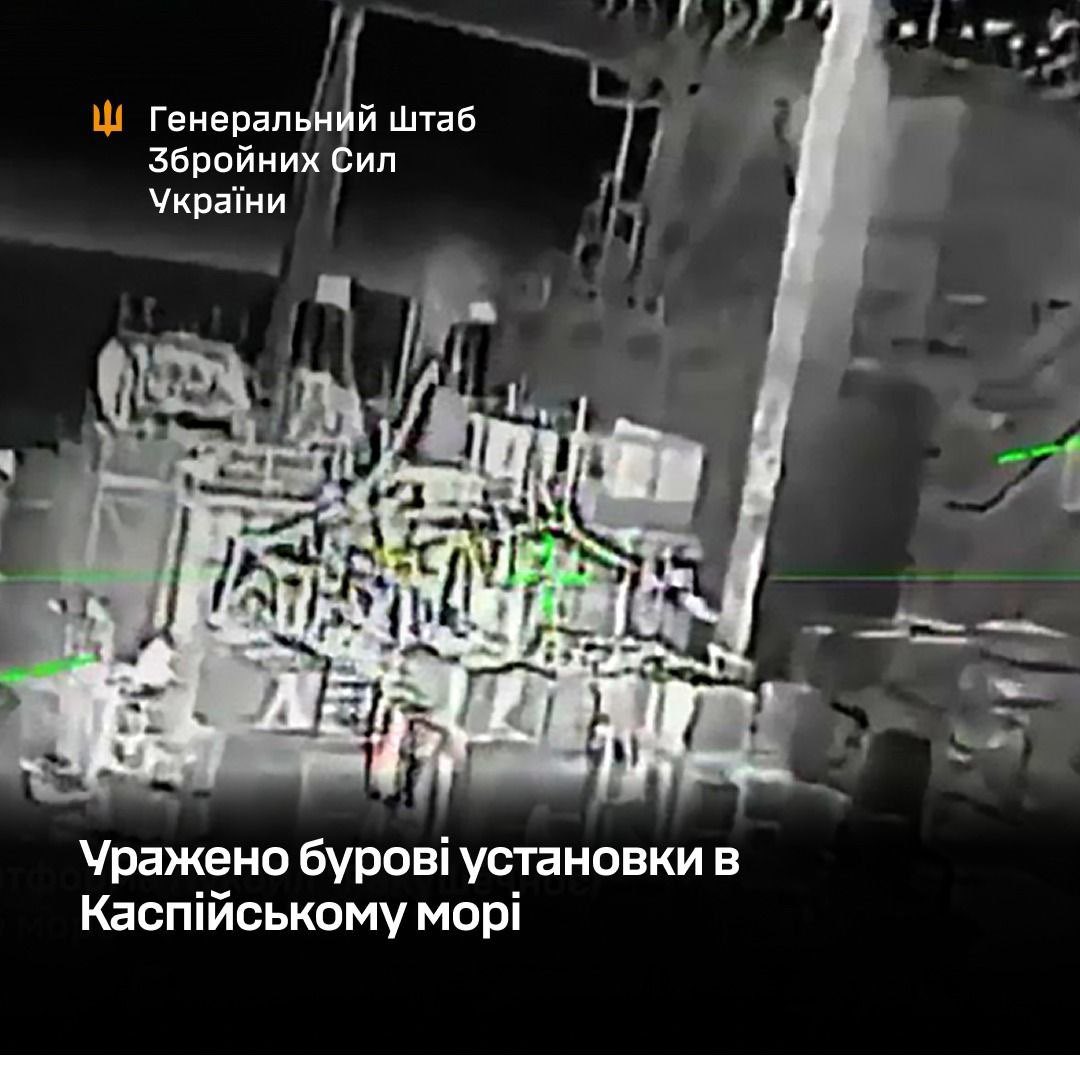
🔥🛢️Ukrainian Defense Forces struck two offshore drilling platforms in the Caspian Sea overnight on April 10.
LSP-2 at the V. Grayfer field and LSP-1 at the Yuri Korchagin field were hit, both located nearly 1,000 km from the frontline.
🔥🚢Ukrainian Unmanned Systems Forces drones struck the Russian Admiral Makarov (or Admiral Essen) frigate in the port of Novorossiysk overnight on April 6 with the FP-1/FP-2 guided strike drones!
Project 11356R frigate, is armed with up to 8 Kalibr cruise missiles and 24 Shtil-1 air defense missiles, making it a key strike asset of Russia’s Black Sea Fleet.
In a separate strike, the offshore drilling platform “Syvash” was hit by Ukrainian forces.
BREAKING:
Ukrainian suicide drones have struck and destroyed a Russian An-72P military transport aircraft in Crimea.
This is the 3rd plane the Russians have lost in 48 hours.
Exclusive: At least 40% of Russia's oil export capacity is at a halt following Ukrainian drone attacks, a disputed attack on a major pipeline and the seizure of tankers, according to Reuters calculations based on market data https://t.co/EnYFYixbBg
💥 Russia: Ukrainian drones struck the Port of Ust-Luga on the Baltic Sea, 1,000km from Ukraine.
Novatek gas condensate processing complex is on fire.
The port exports 650,000 barrels of oil and 150,000 barrels of gas condensate per day.
Ukrainian Starlink-guided drones hit and destroyed a Russian Bastion coastal missile launcher in Crimea, with a second hit triggering an explosion and missile detonation, highlighting weakened air defenses.
The K-300P Bastion is a Russian mobile coastal defense missile system designed to target ships and land targets from long range.
Missiles: P-800 Oniks (supersonic); can also use newer hypersonic Zircon.
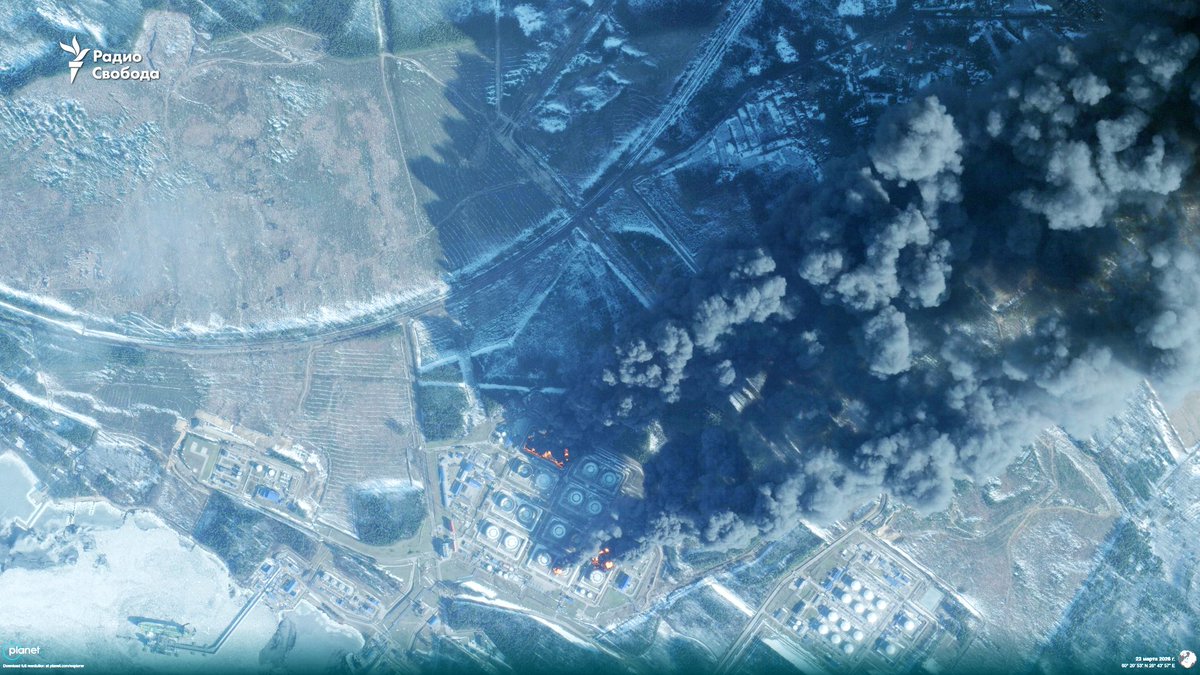
Aftermath of the Ukrainian drone strike on the oil depot in the port of Primorsk, Leningrad Oblast, Russia, as seen in the @planet high-resolution image taken today at 6:50 UTC.
Ukraine’s Military Intelligence @DI_Ukraine reveals foiled Russian assassination attempt to kill RDK commander Denis Kapustin
Russian intelligence services reportedly ordered the assassination of Denis Kapustin, the commander of the Russian Volunteer Corps (RDK), a group of Russian fighters fighting against the Kremlin on Ukraine’s side. Around $500,000 was allegedly allocated for the operation.
However, Ukraine’s military intelligence (GUR) uncovered the plan and ran a month-long counter-intelligence operation that:
•Saved Kapustin’s life
•Identified the Russian organizers and executors
•Intercepted the money meant for the assassination
•Redirected those funds to support Ukrainian intelligence units
The Main Directorate of Intelligence of Ukraine, uncovered the plan and conducted a counter-intelligence operation that lasted over a month. As a result, Kapustin’s life was saved, the people involved in organizing the assassination inside Russian special services were identified, and the money intended for the killing was seized and redirected to support Ukrainian intelligence units.
Kapustin is alive, currently in Ukraine, and preparing to continue carrying out combat and special missions as commander of the RDK.
SBU hit its third Russian oil platform in the Caspian Sea, with Alpha Center drones striking Lukoil's Rakushechnoye rig after earlier attacks on Filanovsky and Korchagin platforms halted production.
First Combat Use of Underwater Kamikaze Drones: Russian Kilo class Submarine Disabled in Novorossiysk
The Security Service of Ukraine (SSU) has carried out a special operation in the port of Novorossiysk, marking the first-ever combat use of underwater kamikaze drones.
During the operation, SBU-operated Sub Sea Baby underwater drones struck a Russian Navy Project 636.3 submarine (Varshavyanka class; NATO designation: Kilo). The explosion caused critical damage, effectively disabling the vessel.
The submarine was equipped with four Kalibr cruise missile launchers used by Russia for strikes against Ukrainian territory.
The operation was conducted jointly by the SBU’s 13th Main Directorate of Military Counterintelligence and the Ukrainian Navy.
A Varshavyanka-class submarine is estimated to cost around USD 400 million. Due to international sanctions, building a comparable submarine today could cost up to USD 500 million. This class is also known as the “Black Hole” because of its low acoustic signature and reduced sonar visibility.
The submarine had been stationed in Novorossiysk after earlier Sea Baby surface-drone operations forced Russian naval assets to leave Sevastopol Bay in temporarily occupied Crimea.
‼️‼️🇺🇦🇦🇿 Big news – In the skies of Ukraine, during a combat mission, a MiG-29 fighter jet of the Azerbaijani Air Force was spotted.
Reportedly, before the start of the full-scale war in Ukraine, three Azerbaijani MiG-29s were undergoing repairs there, and it now appears that Azerbaijan has allowed Ukraine to use these aircraft in combat missions.
See the latest updates with us: @visionergeo
🌉Ukraine’s Security Service Hits Crimean Bridge in Underwater Sabotage Operation
The Security Service of Ukraine (SBU) has carried out a new special operation targeting the Crimean Bridge—its third successful strike on the structure, this time using underwater explosives.
The operation, which had been in planning for several months, involved placing explosives on the underwater supports of the bridge. At 4:44 a.m., the first device was detonated. According to officials, the blast caused significant structural damage to the base of the bridge, using the equivalent of 1,100 kg of TNT. No civilian casualties were reported.
The bridge is now in a critical condition, according to preliminary assessments.
SBU chief Lieutenant General Vasyl Maliuk personally oversaw and coordinated the operation. He stated that the bridge remains a legitimate military target due to its use by Russian forces for logistical support.
"Crimea is Ukraine. Any symbol or tool of occupation will face consequences," Malyuk said.