Thats a wrap for #QUAPAL18 - we hope you enjoyed the tweets! A huge thanks to everyone who put in the effort to present and/or follow along - We hope to see you again next year!
5 #QUAPAL18 Modelling shows (so far!) that differences we found in taxa relationship to environmental variables could almost entirely be explained by the dispersal and reproductive traits.
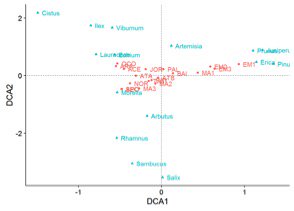
4 #QUAPAL18 We used a standard DCA plot with forest sites and taxa, and a site scores by island. We also calculated partial variance incorporating: pollen traits, local climate, habitat, basal area, etc. One example below.
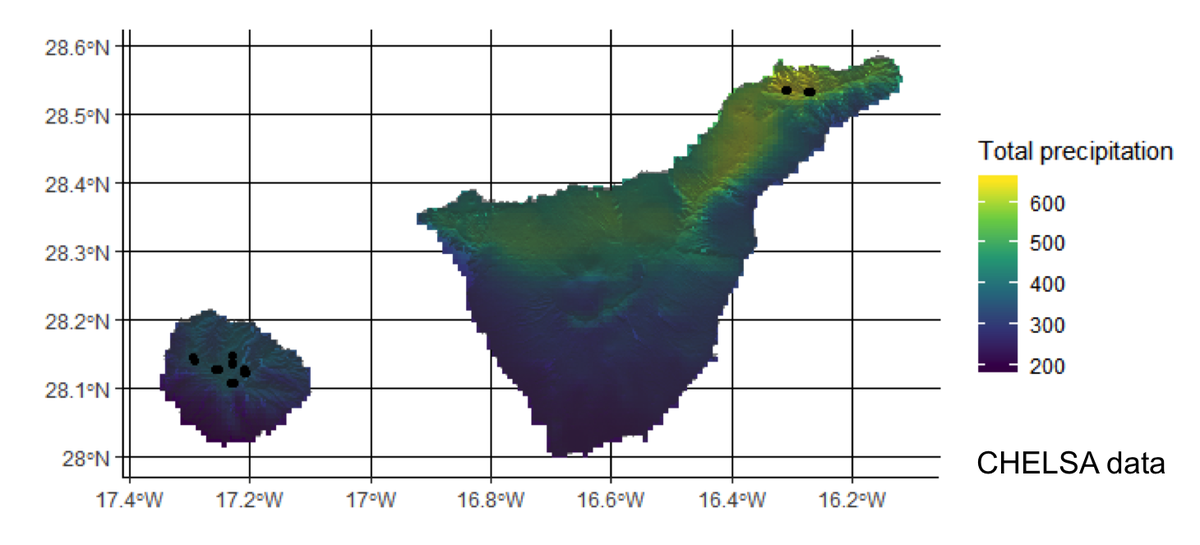
3 #QUAPAL18 We used artificial traps in 13 forest plots in La Gomera #Garajonay and 6 in Tenerife #Anaga from
https://t.co/nHLBpCsE6i
We also collected climatic data, aspect, and biological traits related to pollination and dispersal.
2 #QUAPAL18#pollen monitoring is a widely used tool in palaeoecology, dispersal ecology, and allergy research (see above!). There are several assumptions about pollen grains released by plants due to different reproductive and dispersal strategy, climate, etc.
Our final presentation is by Sandra Nogue @nogue_sandra on the "Comparative Ecology of the Laurel forest pollen rain from Tenerife and La Gomera", together with Lea de Nascimento @ISLANDPALECO , Laura Graham, Luís González, Kathy Willis, and José María Fernández Palacios
6 #QUAPAL18 Future: @OpenQuaternary is growing & has been accepted into @Scopus. This 3rd year of publishing is also our indexing year for ISI. While skeptical about the value of IF, this affects where researchers choose to publish. We look forward to your questions & submissions
5 #QUAPAL18 What has been hard? Convincing researchers to trust our potential and submit to @OpenQuaternary rather than legacy (big-profit) publishers. In addition to being new, we faced skepticism about #openaccess, but this seems to have become less of an issue over time!
4 #QUAPAL18 Achievements? Since 2015 @OpenQuaternary has published 25 papers in 4 issues & 2 special collections. On average, contributions are viewed 1800 times. @drhanneke soon joined as co-editor in chief, and we are about to announce >30 new editorial board members.
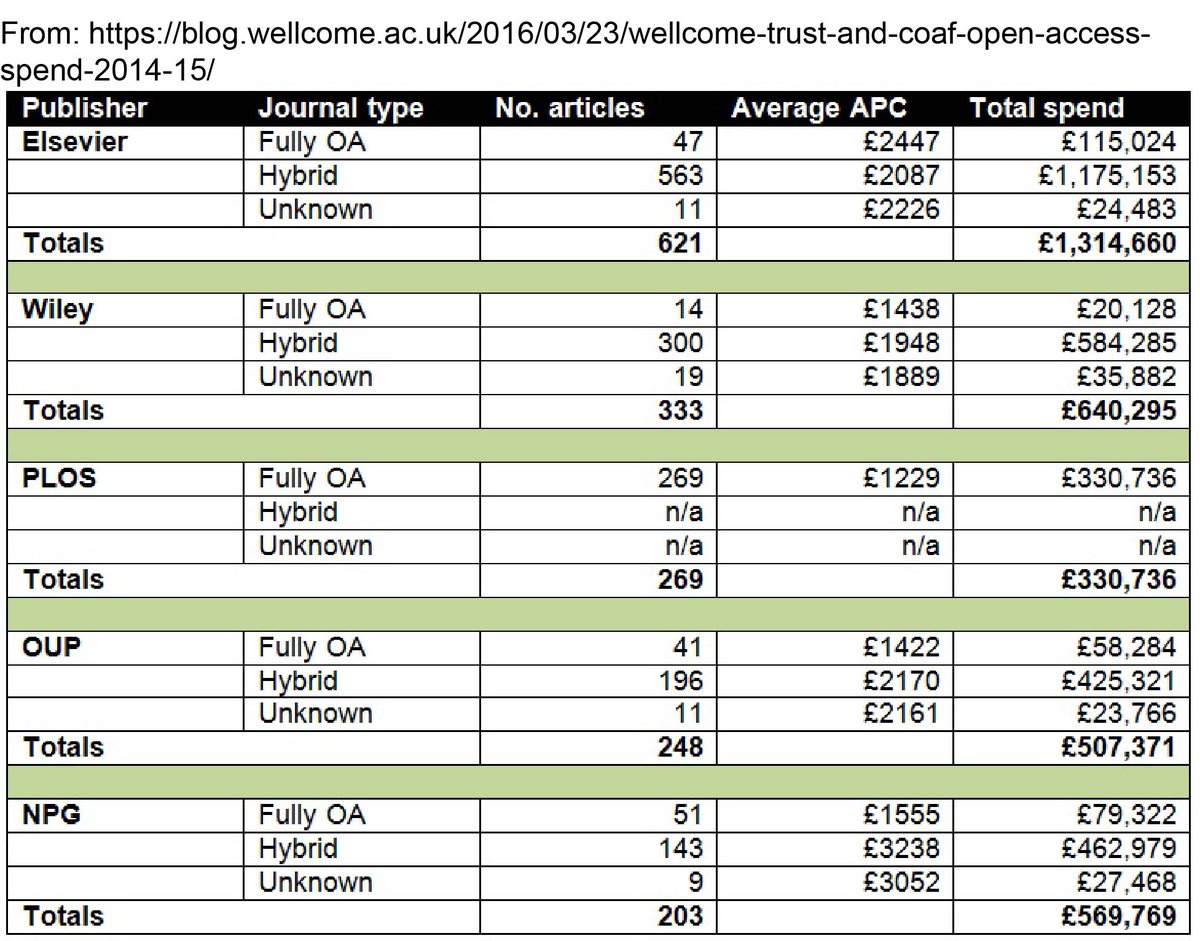
3 #QUAPAL18 Why OQ? There was a lack of affordable open-access journals in Quaternary science. Extant journals had OA options, but high processing charges. @OpenQuaternary provides low-cost (£400) OA on the principle that this supports greater global exchange of knowledge.
2 #QUAPAL18 What is OQ? @OpenQuaternary is a 100% open access, double-blind peer-reviewed journal, publishing contributions on all things #quaternary. It is published online continuous throughout the year. Average submission to publication times are currently around 4 months.
1 #QUAPAL18 Who are we? @OpenQuaternary was founded when @suzie_birch, @TorriHerridge & @m_law ‘met’ over @Twitter. It launched in 2015, published by @ubiquitypress. Today we present the reasoning behind the journal, discuss highs & lows since the start + answer your questions.
6 #QUAPAL18 – Data from #Gharyan are in accordance with reconstructions of the evolution of the Sahara and its major expansion before the LGM. This may have implications for the dispersal of #Homo along the shorelines of the Mediterranean. Thank you! @terpro¬_inqua #GEODUST IFG
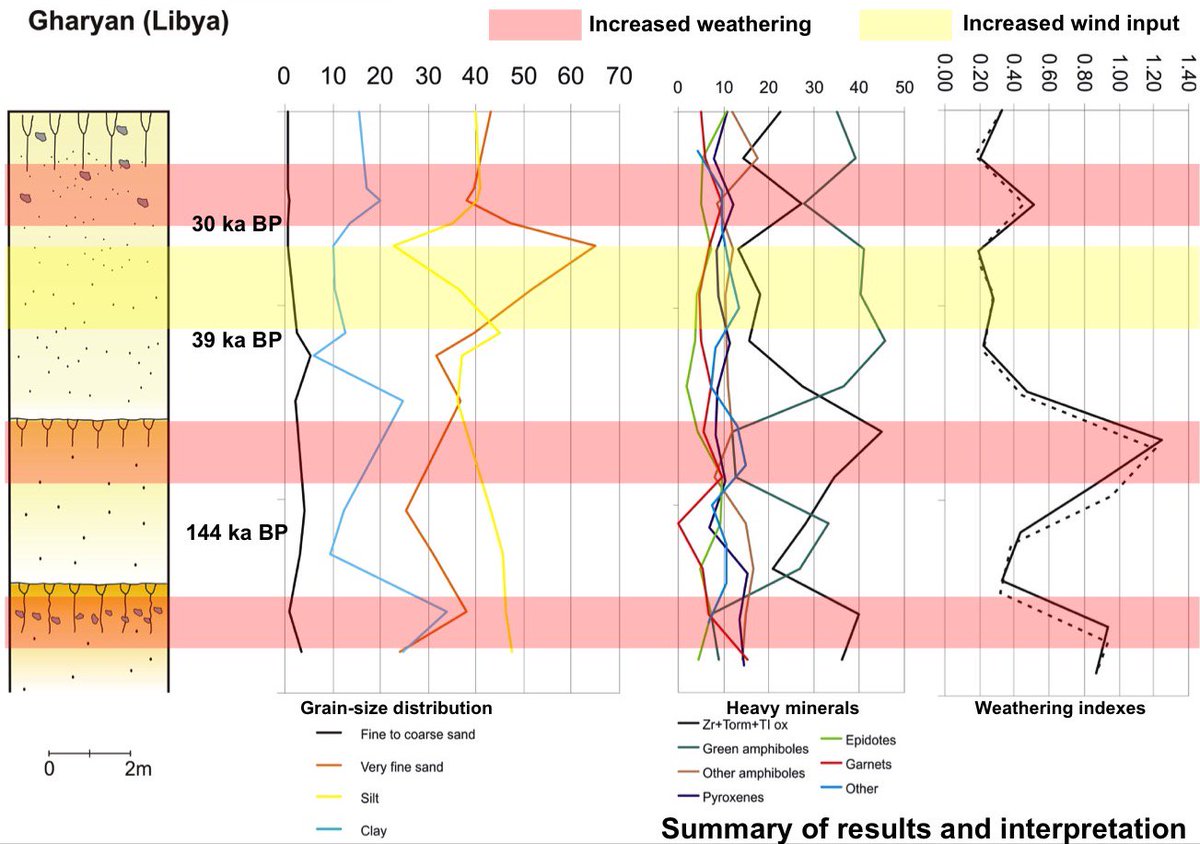
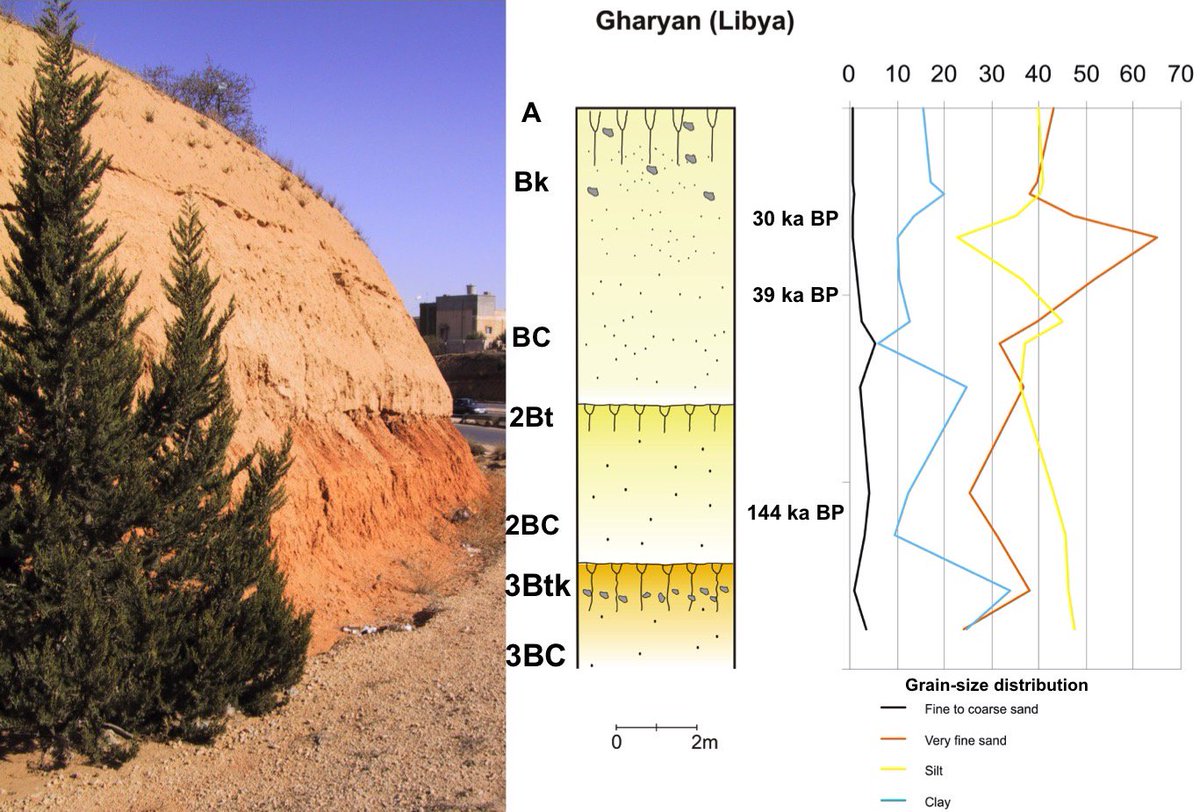
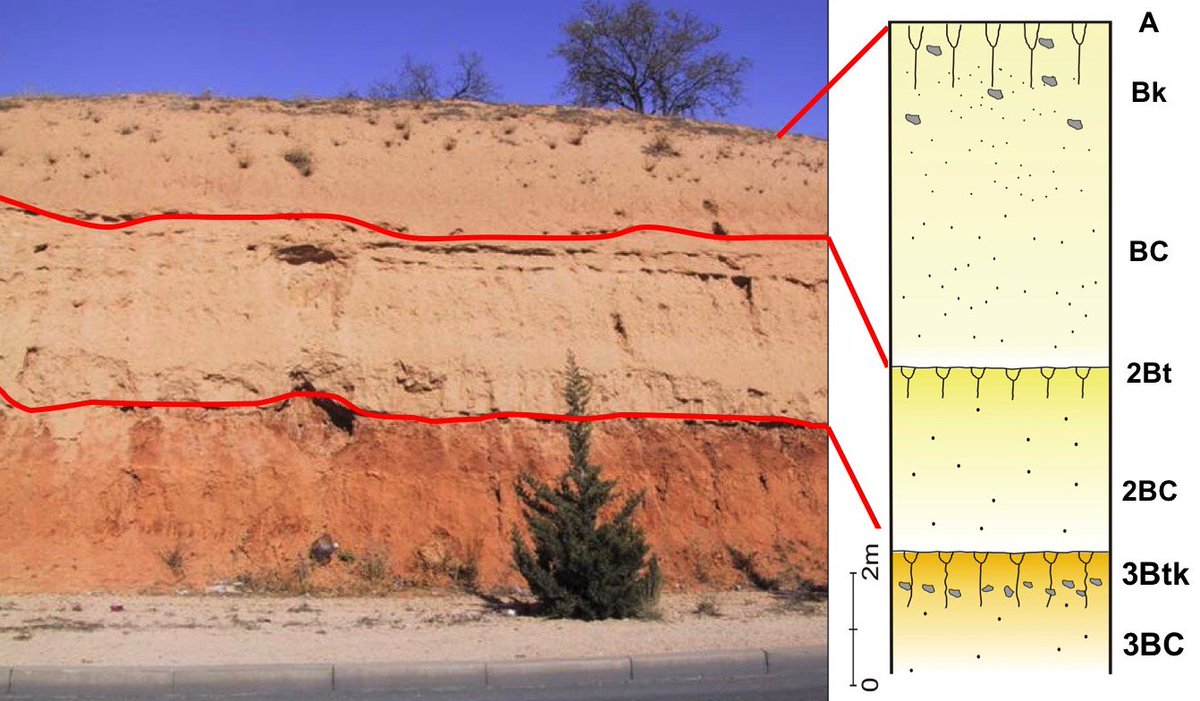
5 #QUAPAL18 – The oldest paleosoil interlayering #loess shows the highest amount of illuvial clay and accumulation of CaCO3. The highest wind strength is recorded during MIS3 (before the LGM); whereas, weathering indexes suggest the strongest weathering occurred during #MIS5e.
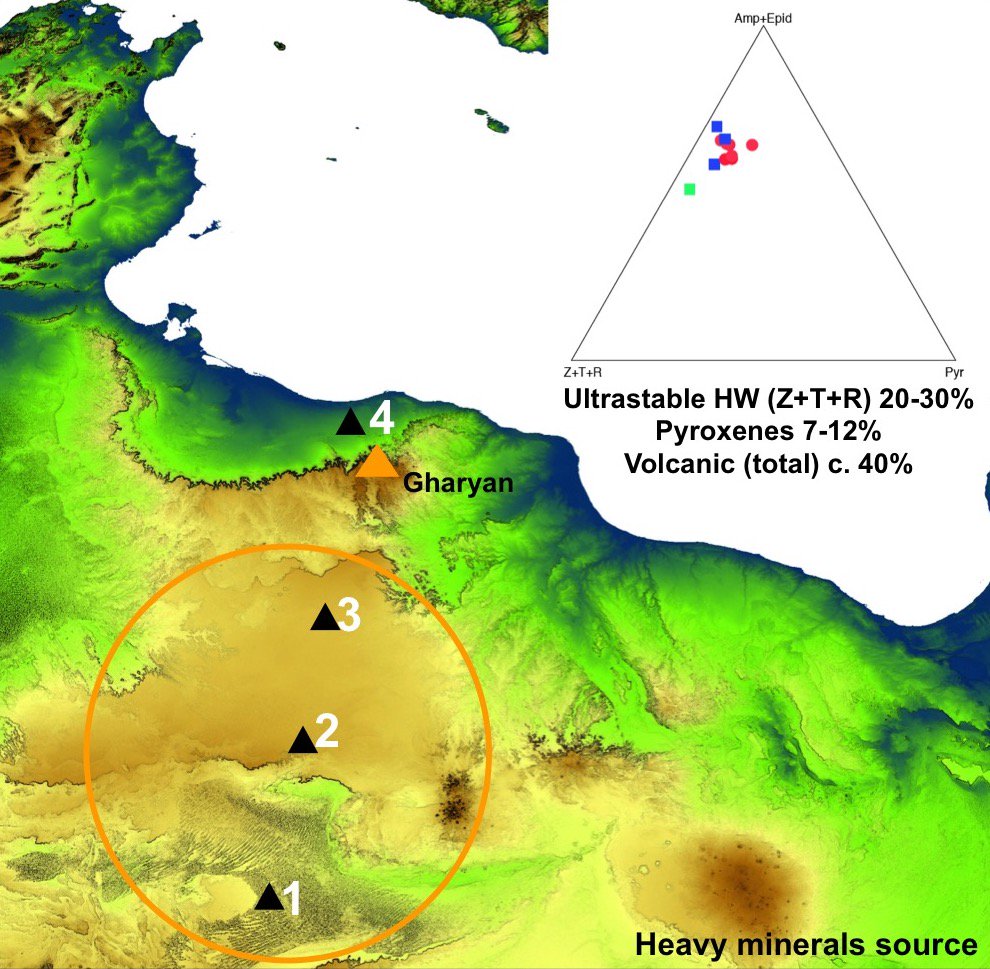
4 #QUAPAL18 – One of the main questions on Libyan #loess concerns the source area. Some authors proposed coastal dunes as a possible source; but our data on heavy minerals suggest that the source was the volcanic terrain at the northern margin of the Libyan #Sahara.
3 #QUAPAL18 - At #Gharyan, #loess is interlayered by deeply weathered #paleosoils. Pedosequences are up to 10m thick and dominated by silt and occasionally fine sand. Loess accumulated since the end of the Middle #Pleistocene, likely up to the beginning of the #LastGlacialMaximum
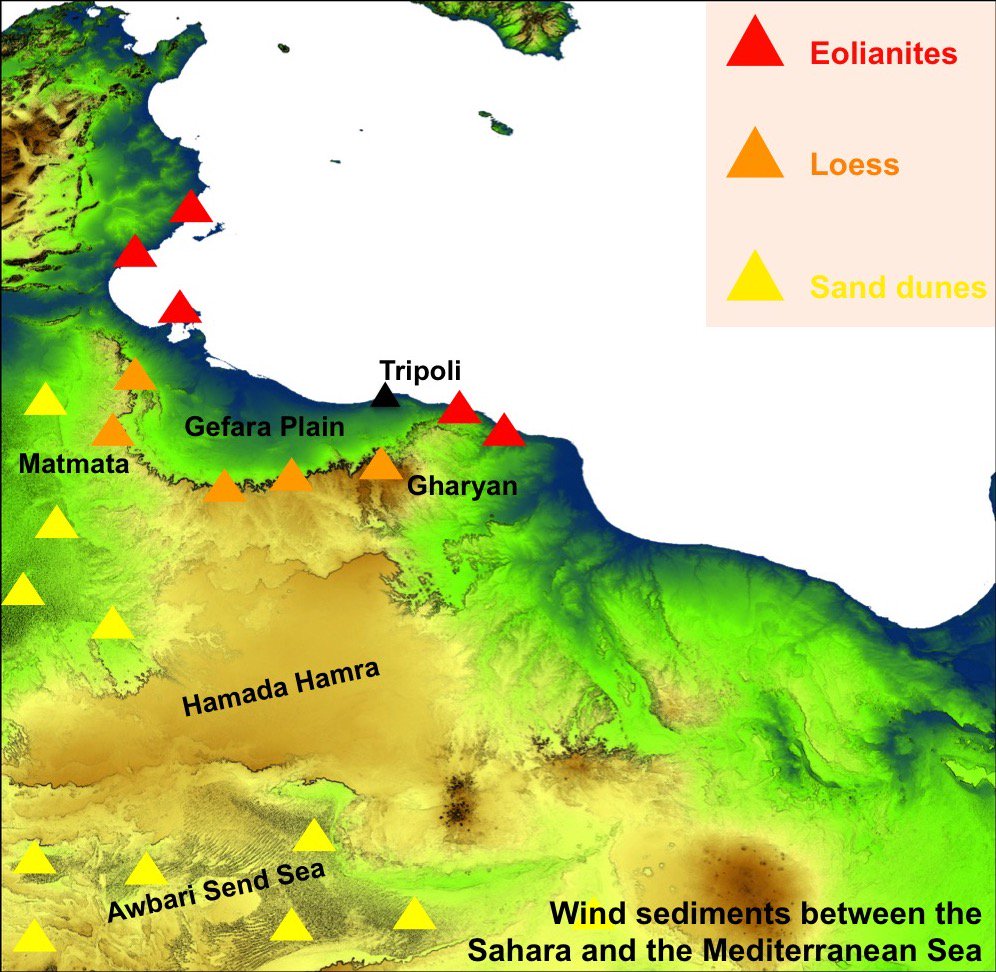
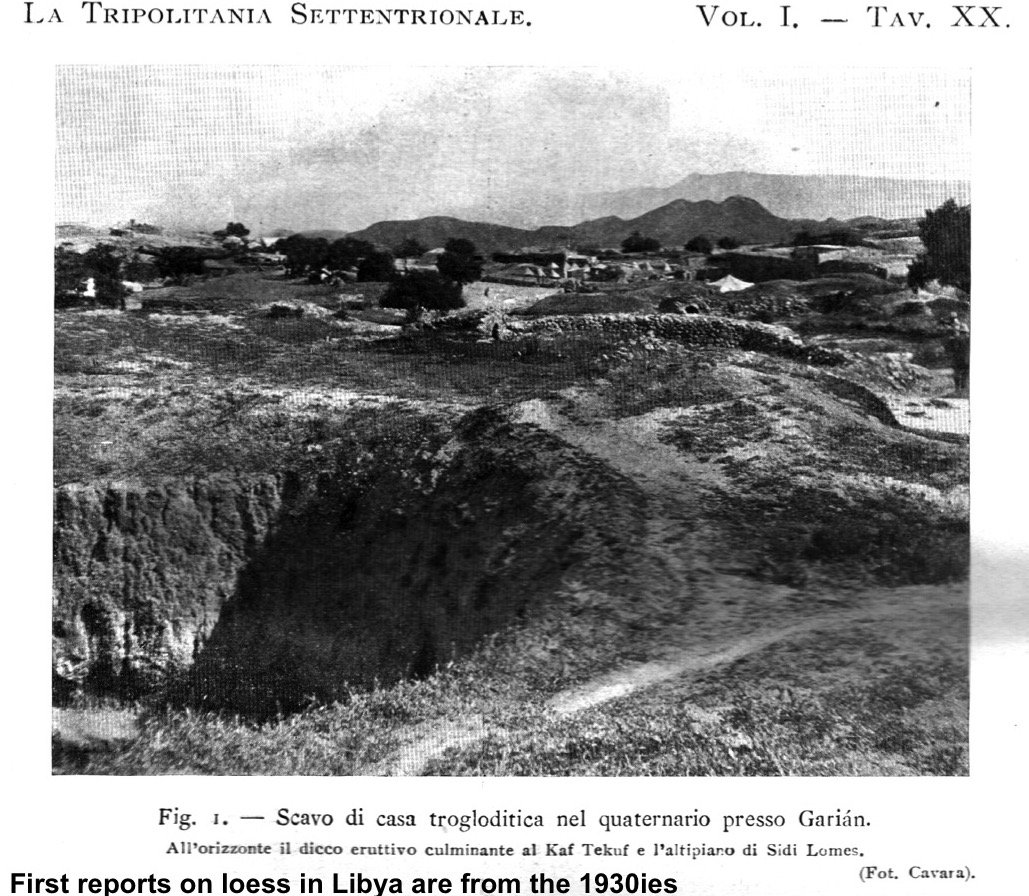
2 #QUAPAL18 – The North African #loess belt is located at the margin of the #Sahara. In Tunisia, loess has been largely investigated; other kinds of #windsediments also exist. We present the results of a palaeopedological study of loess at Gharyan in Northern #Libya.