Excited for @NVIDIARTXSpark, reinventing Windows PCs for the era of personal agents.
Designed for creating and gaming, RTX Spark brings together 30 years of NVIDIA innovation to slim Windows laptops and compact desktops.
Learn more: https://t.co/p55dTpFqeX
💯 Sibi George nailed it.
Highlight was when he said, we are 1/6th of the total population of the world, but not 1/6th of the problems of the world, this is beauty of India.
https://t.co/K6gyNbvmrX
As per the Julian calendar followed by the English then, on this day 287 years ago, Vasai was won from the Portuguese by the Marathas led by Chimaji Appa.
@Dig_raw21 No.
They should be brought back in the same way they were taken from us, by force.
The symbols of the evil looters of the british empire are still around. Nothing should be brought back until those symbols are completely destroyed. Even if it takes decades or centuries.
I recently visited the The Nelson-Atkins Museum of Art in Kansas City and noticed several idols of Indian gods and goddesses. Many such pieces are believed to have been stolen from temples and now sit in museums far from their cultural and spiritual context. Authorities, including @IndianEmbassyUS, should actively engage with institutions to facilitate their rightful return. These are invaluable parts of our heritage that deserve to be restored.
@MEAIndia@PMOIndia@HMOIndia@MinOfCultureGoI@ASIGoI@SanatanTalks@HinduAmericans
@MOSSADil@jerusalemcenter Please use the correct map of the Republic of India while illustrating the India-Middle East Economic Corridor (IMEC) and in general.
Pakistan illegally occupied Jammu-Kashmir Gilgit-Baltistan (PoJKGB) is an integral and inalienable part of the Republic of India.
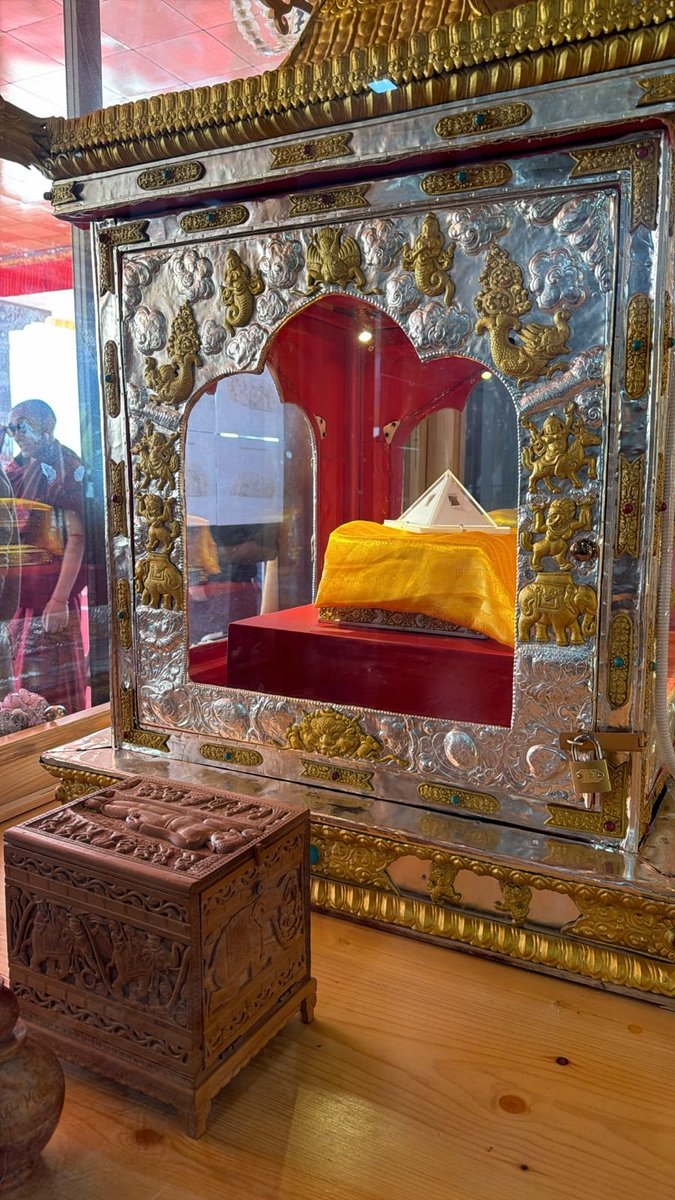
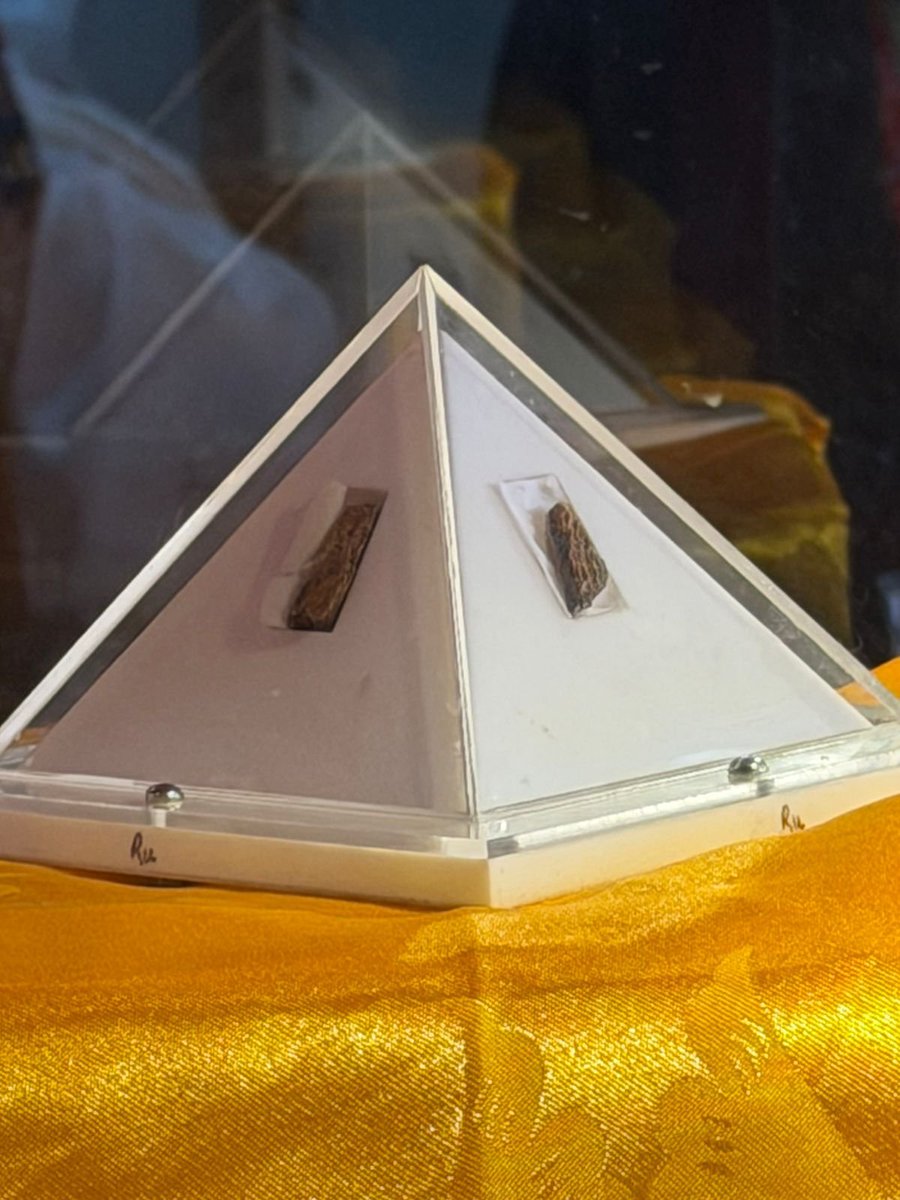
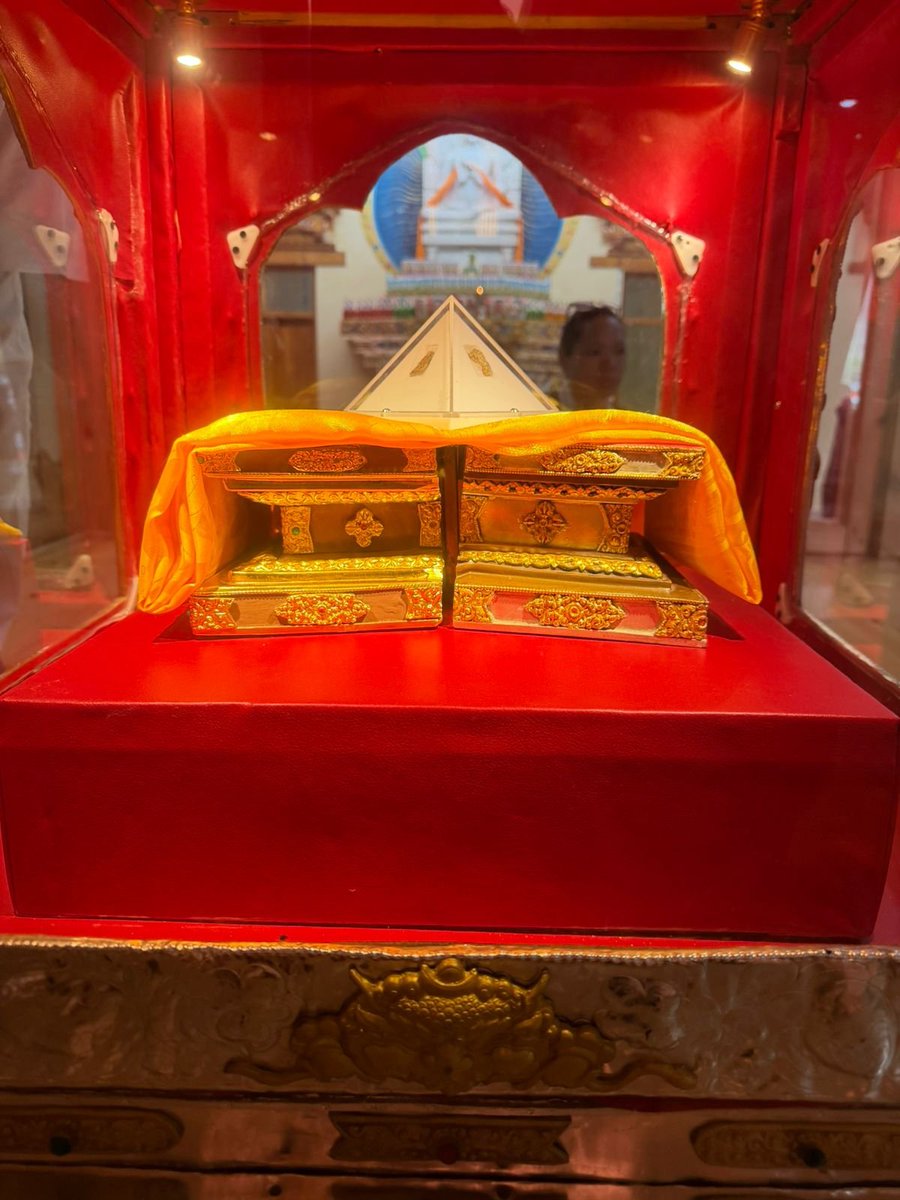
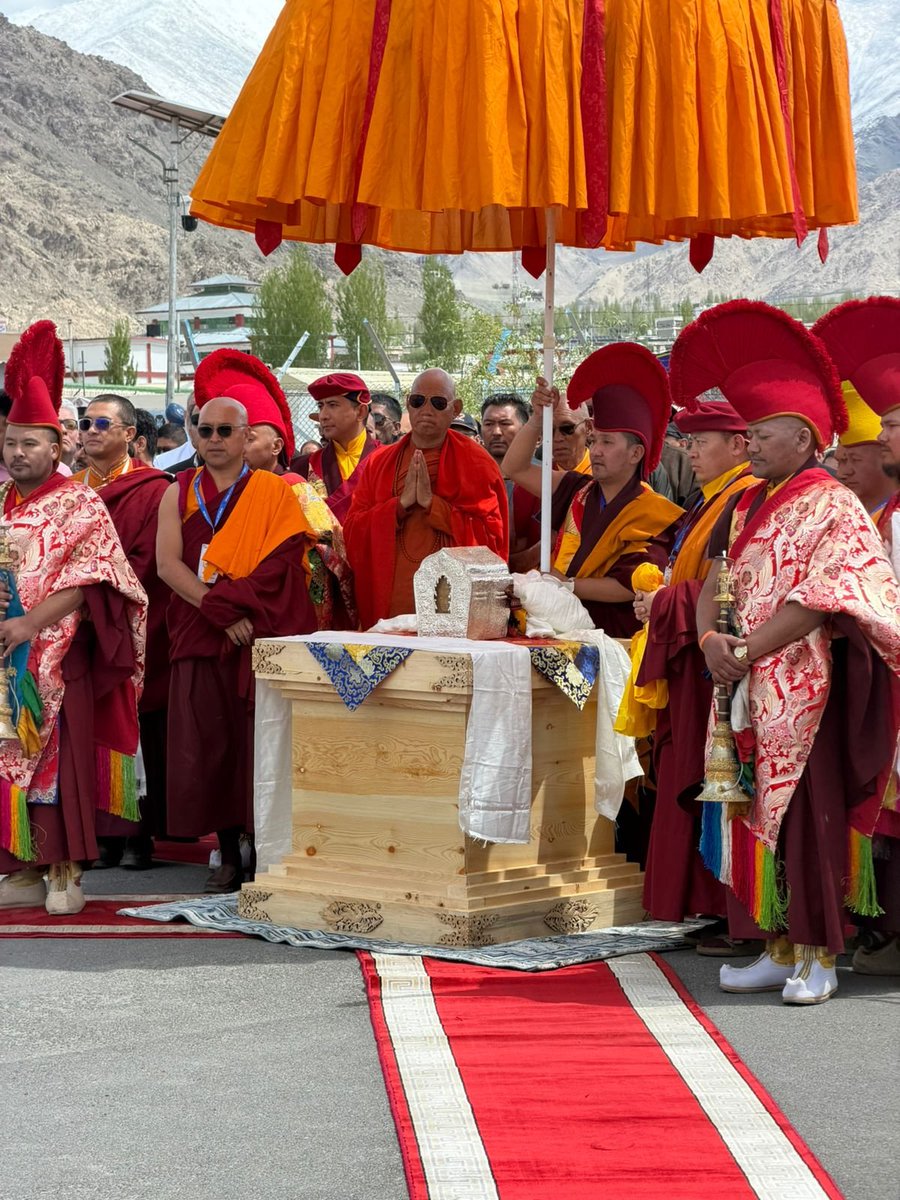
It is a matter of immense delight that yesterday, on the occasion of Buddha Purnima, the ‘Sacred Exposition of the Holy Relics of the Tathagata’ was inaugurated in Leh. These revered relics are linked to the Piprahwa Stupa in Kapilavastu and were excavated in the closing years of the nineteenth century. They embody the enduring teachings of Lord Buddha.
The exposition will continue until 14th May. In the coming days, it will also travel to Zanskar. It offers a valuable opportunity for people from across Ladakh to pay their respects. It will also boost spiritual and cultural tourism in Ladakh.
@RaviAhuja2022@prelimsai It is important to know the background story to understand the complex contemporary situations, without which administration is difficult.
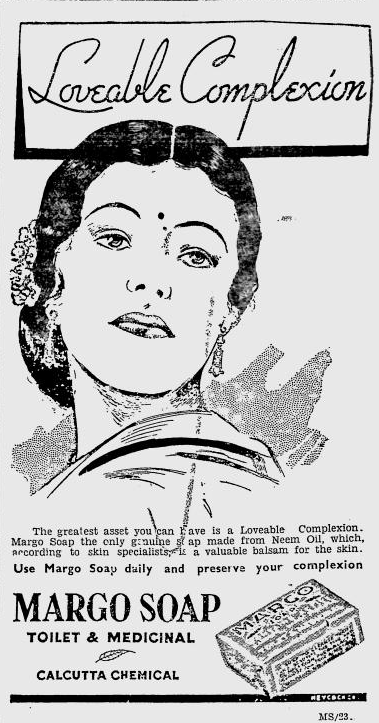
In 1920, the British soap giants (Lever Brothers) had a problem. They could make us smell like a rose, but they could not survive the Indian skin. The heat, the rashes, & the tropical infections were the enemies of the Empire. K.C. Das (I will write about him separately) & the scientists at Calcutta Chemical did not try to mask the heat; they weaponized it. They created Margo... a soap that did not just wash us; it immunized us.
The British scientists had tried for yrs to make a Neem soap. They failed. Because Neem oil is notoriously difficult to saponify (turn into soap) w/o losing its medicinal properties/smelling like rotting onions. The Indian chemists used a secret cold-process method. They managed to keep the azadirachtin (the active bug killer in Neem) alive in the bar.
When people used Margo, they were not just smelling herbal. They were coating their body in a biological shield. During the massive cholera & smallpox outbreaks in the early 20th century, the Margo smell became the scent of the survivor. It was the only soap the British doctors could not find a flaw in, they were forced to use it themselves.
The British had a habit of patenting Latin names. Neem’s scientific name is Azadirachta indica, but it was also called Margosa. K.C. Das shortened it to Margo to make it sound modern, crisp, & international, tricking the British-educated elite into buying a peasant's remedy disguised as a high-end luxury brand.
It was the 1st time an Indian brand sold Ugliness as Honesty. The green color became a silent code for Swadeshi (Made in India). If a British officer saw a Margo bar in our house, he knew he was in the home of some1 who trusted the soil more than the Crown's chemicals.
The British tried to replicate Margo by creating Neem-scented soaps back in Manchester. They could not get the bite. Margo used pure Neem oil extracted from trees in the Bengal heartland. The British eventually started buying Margo in bulk for their Army Canteens because the White Soaps were causing skin rot in the humid trenches of the North-East & Burma.
The British Empire which claimed to civilize India was literally being kept from rotting away by a green bar of soap made by the very subjects they were trying to rule. Every bar of Margo sold helped fund the Swadeshi spirit. The profits were used to train Indian chemists so that India would never have to depend on a British laboratory again.
Margo got into the most intimate parts of an Indian's life, their morning bath, & reminded them every single day through that sharp, bitter scent: "You belong to this land." Margo was the 1st brand to realize that "Bitter is Better." While the British were selling the dream of being European (the scent of roses), Margo was selling the reality of being Indian (the scent of Neem).
Today, we see Neem extracts in every global skincare brand from L'Oréal to Body Shop. They are all chasing a ghost created in a Calcutta lab in 1920. They are trying to sell us the Green Revolution, but Margo was the 1 that fought the War of the Skin when it actually mattered.
1950 letter from Einstein to Schrödinger is still one of the sharpest takedowns of the Copenhagen interpretation ever written.
Einstein calls the idea that the ψ-function gives a complete description of reality ‘absurd,’ uses Schrödinger’s own cat to prove it, insists on an observer-independent reality, says the statistical nature of QM is just a symptom of incompleteness, and argues we should abandon particles entirely in favor of a pure field description.
The old lion was still roaring at 71.
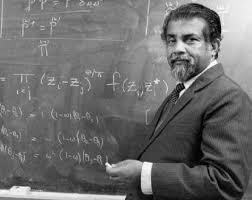
Next in who after the Bibha Series? He was the man who dared to break Einstein’s speed limit in his mind, yet his own country allowed his legacy to slow to a crawl. Ennackal Chandy George Sudarshan (1931-2018) was the Architect of the Quantum Mirror, a man who lived in the minus-space of physics, the fundamental gaps where the most important truths are hidden.
Today, his eqns are the silent pulse inside every fiber-optic cable & the logic behind every laser, yet in the bustling streets of India, he is a ghost. He is the man who was nominated for the Nobel Prize 9 times, only to watch from the shadows as others walked the red carpet for theories he had already perfected.
Born in 1931 in the lush quiet of Pallom, Kerala, George was a Mental Calculator of the cosmos. While his peers were studying the world as it appeared, George was obsessed with how it worked when no 1 was looking. After a stint at TIFR under Homi Bhabha, he realized that to catch the lightning of the New Physics, he had to move. He landed in Rochester, New York, in the 1950s, a young man in a thin coat with a brain that operated in higher dimensions.
At just 26, as a student, he discovered the Vector minus Axial law of weak interaction, the math that explains how subatomic particles decay. It is 1 of the 4 fundamental pillars of the universe. He was the 1st to mathematically prove that particles could exist faster than light. He called them Tachyons. He turned the impossible into a valid scientific conversation.
He created the Sudarshan-Glauber Representation. This is the bridge b/w classical light & quantum reality. W/o this, the high-speed internet we are using right now would not exist.
In 1979, the Nobel was given for the Weak Interaction (V-A Theory); Sudarshan was ignored. In 2005, the Nobel was given for Quantum Optics; George was ignored again.
The scientific world was stunned. He famously remarked that it was like giving a prize to the people who built the second floor of a house while forgetting the man who laid the foundation. He did not just lose a prize; he was erased from the Discovery Moment by a Western-centric academic machine.
Sudarshan returned to his roots. He headed the Institute of Mathematical Sciences (IMSc) in Madras, trying to breathe the fire of global excellence into Indian students. He was a Physicist-Philosopher, a man who converted to Hinduism because he found that the Upanishads spoke the same language as Quantum Mechanics.
He lived in the tension b/w the Austin high-tech labs & the spiritual silence of India. To his neighbors, he was a quiet, unassuming prof. They had no idea they were living next to a man who had looked into the heart of the Big Bang & come back with a formula.
E.C. George Sudarshan passed away in 2018. He left behind no statues, & his name is not whispered in the same breath as the household names of Bollywood/Cricket.
He remains the Invisible Infra of the Quantum Age. He is the ghost in our smartphone, the ghost in the medical laser, & the ghost in the stars. He proved that some things travel faster than light... perhaps, 1 day, his fame will finally catch up to his genius. #WhoAfterBibha
Key Work: https://t.co/52wyicCeA1
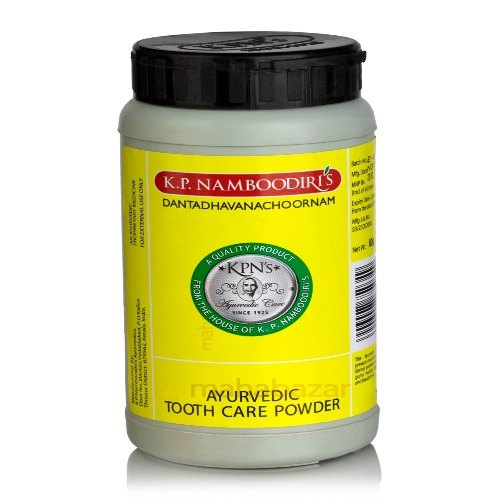
Today, global dental giants are sprinting to launch Activated Charcoal lines, charging a premium for the charcoal revolution. But in 1925, a physician in a small Kerala village was already selling it in paper pouches. The British mocked it as primitive ash, while secretly, their own officers used it to scrub away the stubborn stains that Imperial White paste could not touch. An indian invented Biological Magnetism 100 yrs before the West could put a marketing name on it.
K.P. Namboodiri, an Ayurvedic physician, realized that the British were fundamentally wrong about the science. When paddy husk is charred at a specific temperature, it creates a micro-porous structure almost identical to what we now call Activated Carbon.
Namboodiri infused the ash with Pepper, Clove, & Ginger. The black carbon acted as a magnet (adsorption) to pull toxins & stains out of the gums, while the spices provided the thermal healing. He was practicing Molecular Chemistry in a small Kerala village decades before Western brands understood that carbon is the most efficient way to detoxify the mouth.
The British tried to market their white powders as a symbol of The New India... the educated, clean, Westernized Indian. Namboodiri flipped the script. He made his Black Ash a symbol of Vedic Purity. In the 1920s & 30s, the most orthodox Brahmins & the most radical revolutionaries in the South both used the Black Powder.
It became a silent way to identify who had rejected the British lifestyle. If your gums were slightly tinted with the dark residue of charred husk in the morning, it was a badge of honor. It said: "My mouth is cleaned by the soil of my ancestors, not the chalk of the King."
British dental companies tried to run smear campaigns against Black Powders, claiming they were abrasive. Namboodiri’s powder was so fine that it actually had a lower RDA (Relative Dentin Abrasivity) than the British chalk-based powders. It was physically impossible for the British to prove it was harmful.
The Black Powder was so effective at removing the stubborn stains of Betel Leaf (Paan) & Tobacco that even British officers in the South reportedly bought it in secret. They could not get their Imperial White pastes to remove the deep stains of Indian life, so they relied on Namboodiri’s Ash behind closed doors.
For 90 yrs, global giants like Colgate & Pepsodent spent millions on advertising to tell Indians that Black is Bad & White is Bright. In the late 2010s, those same companies launched Charcoal toothpastes at a luxury price point. They are now using the exact same tech K.P. Namboodiri was selling for a few annas in 1925.
If we look at a modern, high-end Activated Charcoal tube today, we are looking at a 100 yr old apology to K.P. Namboodiri. He was not backward; he was a century ahead of the global dental industry. The British used Chalk (a sedimentary rock) because it was cheap & looked clean. Namboodiri used Paddy Husk (a life-giving grain) because it was biological & functional.
K.P. Namboodiri’s legacy is the story of a man who looked at the waste of a rice field & saw a diamond. He took the blackest substance he could find & used it to give India its brightest smile.
I wrote about all of this in my piece for @SwarajyaMag — what ignoring the Information War costs India, why we keep losing it, the doctrine still unwritten, and what Delhi can do about it.
The Information War Against India, And Why It Is Being Lost
https://t.co/9ZuimLnPtq
🚨 BREAKING: We’re now filming fusion plasma at 100 million °C in real time.
This isn’t CGI.
This is inside the ST40 fusion reactor.
At temperatures hotter than the core of the Sun,
matter becomes plasma a state where atoms are ripped apart.
And for the first time…
We can actually see it evolve.
This is the same process that powers stars.
If we can control it:
Unlimited clean energy
No carbon emissions
Virtually endless fuel
The future of energy isn’t theoretical anymore.
It’s glowing… right in front of us.
What do you think
Will fusion solve energy in our lifetime?
Follow me I break down the physics behind the biggest breakthroughs.
Amrutanjan went to Burma from Madras with the Tamil traders (who maintained a large community there for thousand years.) In Burma, some 30 years after Amrutanjan reached there, a Chinese trader copied it to create the Tiger Balm. Which Indians now import from South East Asia without knowing its true origins. Of course, the Chinese from SE Asia will never accept the blatant copy that Tiger Balm is. Because Camphor, Clove oil, and Menthol aren't used in their traditional medicine like Ayurveda and Amrutanjan. And Tiger Balm was first made in Rangoon where Amrutanjan was already popular, not in China or Malaya.