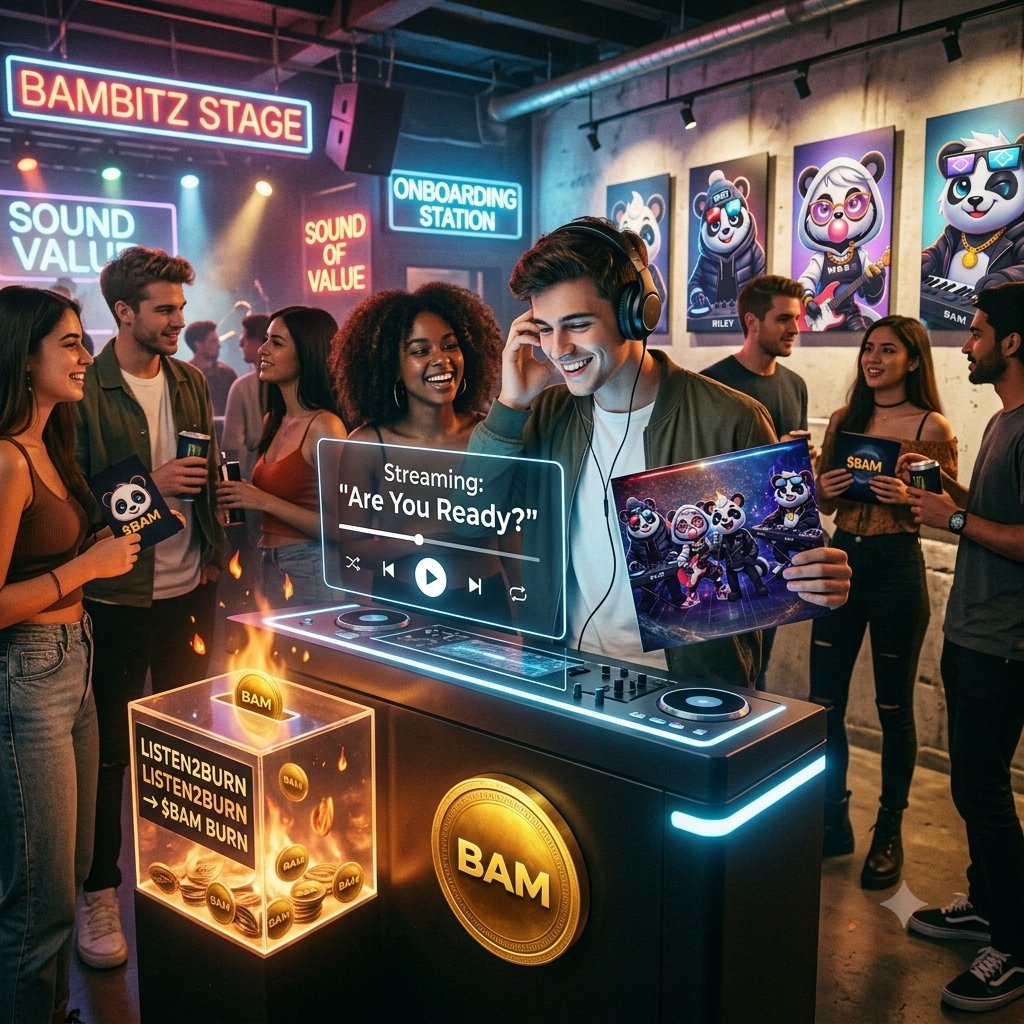
𝗡𝗲𝘄 𝗪𝗲𝗲𝗸. 𝗡𝗲𝘄 𝗘𝗻𝗲𝗿𝗴𝘆. 𝗡𝗲𝘄 𝗦𝗼𝘂𝗻𝗱𝘁𝗿𝗮𝗰𝗸.
Looking for a track that's worth adding to your playlist?
Press play on "ARE YOU READY?" by @BambitzRecords.
It's more than a great song - it's part of a Web3 music ecosystem where every stream has a purpose.
Most platforms measure success by plays and statistics.
#Bambitz takes it further.
Every stream generates real music revenue, and through #Listen2Burn, 50% of that revenue is used to buy back and permanently burn $BAM.
That means every listen does more than support the music.
It helps strengthen the ecosystem.
The cycle is simple:
🎧 More streams generate more revenue.
🔥 More revenue funds more $BAM buybacks and burns.
📉 More burns reduce the circulating supply.
It's a model where music doesn't just entertain - it creates lasting value.
Kick off the new week with "ARE YOU READY?" on repeat and be part of an ecosystem where every stream makes a difference.
Keep streaming endlessly 👇
https://t.co/rZgGtzOj5s
$BAM
#Bambitz #Listen2Burn #Solana #SoundOfValue
𝗠𝗼𝘀𝘁 𝗰𝗿𝘆𝗽𝘁𝗼 𝗽𝗿𝗼𝗷𝗲𝗰𝘁𝘀 𝘂𝘀𝗲 𝗲𝗻𝘁𝗲𝗿𝘁𝗮𝗶𝗻𝗺𝗲𝗻𝘁 𝘁𝗼 𝗮𝘁𝘁𝗿𝗮𝗰𝘁 𝗮𝘁𝘁𝗲𝗻𝘁𝗶𝗼𝗻.
But what happens when entertainment becomes part of how the ecosystem creates value?
That question came to mind while I was looking into the growing MusicFi space.
For years, blockchain projects have talked about bringing real-world utility to crypto. Yet many still depend heavily on speculation, trading volume, and market hype. When excitement fades, growth often slows with it.
#Music is different.
People listen to music every day regardless of what the market is doing. Streams continue, fans stay engaged, and content keeps reaching new audiences. That makes music one of the few industries capable of creating ongoing activity outside the crypto bubble.
That's why $BAM caught my attention.
Instead of treating music as a marketing tool, @BambitzRecords is building an ecosystem where entertainment and blockchain support each other.
At the heart of the project is the Virtual Panda Band - an original entertainment IP featuring animated characters, original songs, and storytelling. Rather than creating content simply to promote a token, the music is designed to become a valuable part of the ecosystem itself.
What makes the model especially interesting is the #𝗟𝗶𝘀𝘁𝗲𝗻𝟮𝗕𝘂𝗿𝗻 𝗺𝗲𝗰𝗵𝗮𝗻𝗶𝘀𝗺.
As the music generates revenue, 50% is allocated to buying back and burning $BAM tokens. This creates a direct connection between creative success and token utility. Every new listener has the potential to contribute to an ecosystem that is supported by real entertainment activity instead of relying only on speculation.
The idea is simple.
🔹More people discover the music.
🔹More streams generate revenue.
🔹Part of that revenue is used for buybacks and burns.
That creates a cycle where growth in the entertainment side of the project can also strengthen the token economy over time.
Another feature that stands out is the 𝗹𝗮𝘂𝗻𝗰𝗵 𝗺𝗼𝗱𝗲𝗹.
Many crypto projects begin with private sales or large venture capital allocations that give early investors a significant advantage.
$BAM chose a fair-launch approach, with no traditional VC allocation or private presale. The focus is on giving the broader community the opportunity to participate from the beginning, creating a stronger sense of shared ownership.
Of course, good tokenomics alone don't guarantee success.
🔹If the music isn't enjoyable, people won't keep listening.
🔹If the content stops evolving, audiences will lose interest.
🔹And without an active community, even innovative ideas can struggle to grow.
That's why the entertainment side matters just as much as the blockchain technology.
Building a recognizable entertainment brand takes time. It requires consistent music releases, engaging characters, and content that people genuinely want to come back to - not because of a token, but because they enjoy it.
If that foundation continues to grow, the blockchain utility becomes something that strengthens an already valuable product rather than trying to create value on its own.
As Web3 continues to mature, I believe we'll see greater demand for projects that connect blockchain with real products people use or enjoy every day.
Music naturally brings communities together.
Blockchain gives those communities new ways to participate in and benefit from the ecosystems they support.
Combining those two ideas in a meaningful and sustainable way is still uncommon.
That's what makes @BambitzRecords an interesting project to watch. It's exploring a model where real entertainment IP and blockchain utility grow together instead of existing as separate pieces.
If MusicFi is going to become more than a passing trend, this is the kind of approach that could help shape its future.
🎧 Start streaming: https://t.co/18gBm8kTUj
$BAM
#Bambitz #Listen2Burn #MusicFi #Solanamemes
𝗪𝗵𝘆 𝗘𝘃𝗲𝗿𝘆 𝗚𝗿𝗲𝗮𝘁 𝗗𝗔𝗢 𝗡𝗲𝗲𝗱𝘀 𝗮 𝗗𝗶𝘀𝗰𝘂𝘀𝘀𝗶𝗼𝗻 𝗦𝘁𝗮𝗴𝗲 𝗕𝗲𝗳𝗼𝗿𝗲 𝗩𝗼𝘁𝗶𝗻𝗴
Have you ever made a quick decision, only to realize later that you missed an important detail?
It happens all the time. You see an idea, think it sounds good, & immediately agree with it. Then someone points out a better solution or highlights a problem you never considered.
That simple experience is exactly why strong communities don't rush important decisions.
What Is the https://t.co/nCGUM8kMmN DAO Discussion Stage?
This is the idea behind the Discussion stage in the @ston_fi DAO.
Instead of sending every proposal straight to a vote, https://t.co/nCGUM8kMmN gives the community time to review, question, improve & refine ideas before they become official decisions.
It's a simple concept, but it can make a huge difference in how decentralized governance works.
How The Discussion Process Works
Think of it like building a house.
You wouldn't pour concrete before checking the blueprint. https://t.co/nCGUM8kMmN applies the same idea to governance.
1. Proposal Is Submitted
A community member publishes a proposal.
2. Seven-Day Discussion Begins
The proposal enters a 7-day discussion period.
3. Community Reviews
Members ask questions, share feedback, & suggest improvements.
4. Proposal Can Be Updated
The author can revise the proposal based on community input.
5. Timer Resets After Major Changes.
Significant edits restart the discussion period to ensure fair review.
6. Proposal Moves to Voting
After discussion ends, eligible holders vote on the proposal.
What Makes This Approach Different?
1. Discussion Comes Before Voting
Ideas are refined before decisions are made.
2. Community Collaboration
Everyone can contribute feedback & suggestions.
3. Better Decision-Making
Different perspectives help improve proposals.
4. Fewer Costly Mistakes
Potential issues are identified early.
5. Transparent Governance
The entire process happens openly.
6. Stronger Community Ownership
Users help shape the future of the protocol, not just vote on it.
Many people think decentralization simply means "everyone votes."
But real decentralization also means giving people the opportunity to challenge ideas, improve them, and build consensus before a vote ever happens.
That creates better proposals, reduces avoidable mistakes, and encourages thoughtful participation instead of emotional reactions.
Why It Matters for Everyday Users
The impact goes beyond developers or large token holders.
For everyday users, it means the protocol evolves through open conversations rather than closed-door decisions. Community members aren't limited to saying "yes" or "no" - they can actively shape ideas before those ideas become reality.
Builders gain a transparent path to present improvements, while the entire ecosystem benefits from governance that is visible, collaborative, & community-driven.
The Bigger Picture for Web3
As Web3 continues to grow, governance will become one of the biggest factors separating sustainable projects from short-lived ones. The strongest ecosystems won't simply be those with the fastest transactions or the lowest fees. They'll be the ones that consistently make smart decisions together.
That's why the Discussion stage matters.
It reminds us that good governance isn't just about counting votes. It's about listening first, learning from different perspectives, and making better decisions as a community.
My Take
The more I learn about Web3, the more I realize that technology alone doesn't make a project valuable, it's the people behind it.
Features can be upgraded, but a community that listens, discusses, and improves ideas together is much harder to build.
That's why I find the STONfi DAO discussion process meaningful. It reminds us that the best decisions come from open conversations, not rushed votes.
Web: https://t.co/uphDITineT
DAO: https://t.co/KFy1QrZLvH
#STONfi #TON #DeFi #DAO
𝗠𝘂𝘀𝗶𝗰 𝗢𝗻𝗯𝗼𝗮𝗿𝗱𝘀 𝗪𝗲𝗯𝟯 𝗨𝘀𝗲𝗿𝘀: 𝗪𝗵𝘆 𝗕𝗮𝗺𝗯𝗶𝘁𝘇 𝗜𝘀 𝗠𝗮𝗸𝗶𝗻𝗴 𝗖𝗿𝘆𝗽𝘁𝗼 𝗘𝗮𝘀𝗶𝗲𝗿 𝗧𝗵𝗿𝗼𝘂𝗴𝗵 𝗠𝘂𝘀𝗶𝗰
Most people don't avoid Web3 because they hate the technology. They avoid it because it feels complicated.
The first thing a newcomer hears is about wallets, seed phrases, gas fees, bridges, and token swaps. Before they even understand why Web3 matters, they're already trying to learn a completely new language. That complexity pushes many people away.
Music works differently. Nobody needs a tutorial to enjoy a song. You press play, connect with the artist, and share it with friends. That's it.
This is why I believe music could become one of Web3's strongest onboarding tools, and why @BambitzRecords is building around that idea.
Instead of asking people to understand blockchain first, #Bambitz starts with something almost everyone already enjoys: #MUSIC.
The technology stays in the background while the experience comes first. That approach matters because adoption has never been about having the most advanced technology. It's about making participation feel natural.
@BambitzRecords takes this one step further through its #Listen2Burn model. Every stream generates real music revenue, and 50% of that revenue is used to buy back and burn $BAM, creating a direct connection between listener activity and the token economy.
Instead of depending only on trading volume or speculation, the ecosystem is supported by real engagement with the music.
Think about how simple that is for someone new. You don't need to become a crypto expert on day one. You can discover a song, follow the band, join the community, and learn about the ecosystem over time.
Each small interaction builds curiosity instead of creating confusion. That's a much smoother introduction than asking someone to understand DeFi before they've even experienced Web3 culture.
Music also creates something many crypto projects struggle to build: #community.
People replay songs, share playlists, talk about new releases, and celebrate artists they enjoy. Those habits already exist outside Web3.
Bambitz simply connects those familiar behaviors with blockchain incentives, making the transition feel much more organic than forcing users into technical products from the start.
This is also why culture matters. Technology alone rarely creates lasting communities. Shared experiences do.
When people connect through music first, conversations naturally grow into discussions about digital ownership, community participation, and the broader Web3 ecosystem. The learning happens through curiosity rather than obligation.
In my opinion, the next wave of Web3 users won't arrive because everyone suddenly becomes interested in blockchain technology. They'll arrive because they first discover products they genuinely enjoy using.
Music has always brought people together. Bambitz is showing that it can also become a bridge that brings everyday listeners into Web3 - one stream at a time.
If Web3 wants mainstream adoption, perhaps the easiest onboarding flow isn't another tutorial. Maybe it's simply pressing play.
Stream "Are You Ready?", experience the #Listen2Burn model for yourself, and discover how music can become the easiest first step into Web3.
🎧: https://t.co/O20exiHGSJ
#Bambitz #Listen2Burn #Solana #SoundOfValue
𝗦𝘁𝗿𝗲𝗮𝗺𝗶𝗻𝗴 𝗜𝘀 𝗣𝗮𝗿𝘁𝗶𝗰𝗶𝗽𝗮𝘁𝗶𝗼𝗻: 𝗪𝗵𝘆 𝗘𝘃𝗲𝗿𝘆 𝗣𝗹𝗮𝘆 𝗠𝗮𝘁𝘁𝗲𝗿𝘀 𝗠𝗼𝗿𝗲 𝗧𝗵𝗮𝗻 𝗬𝗼𝘂 𝗧𝗵𝗶𝗻𝗸 🎧
Have you ever shared a song with a friend because it perfectly matched their mood?
Or added an artist to your playlist without thinking twice?
For most of us, those are small everyday actions. We stream music while working, driving, exercising, or relaxing. We recommend songs we enjoy, and then move on with our day.
It feels ordinary.
But what if those simple actions were helping build an entire ecosystem instead of just increasing an artist's play count?
That's the idea behind @BambitzRecords.
Unlike the traditional music industry, where streams mainly benefit streaming platforms and rights holders, Bambitz is building a model where music becomes the starting point of a much larger digital economy.
Instead of treating listeners as passive consumers, the ecosystem gives every stream a purpose.
Here's How It Works.
When people listen to Bambitz music on platforms like @Spotify, @AppleMusic, and other streaming services, those streams generate real music revenue.
Rather than existing in isolation, that revenue helps support Bambitz' #Listen2Burn model.
In simple terms:
• More listeners create more streams.
• More streams generate more revenue.
• Revenue supports token buybacks and burning.
• Reduced token supply strengthens the long-term sustainability of the ecosystem.
The music isn't separated from the blockchain.
It powers it.
Even something as simple as sharing a playlist has a bigger impact than most people realize.
🔹Every playlist share can introduce new listeners.
🔹New listeners become new streams.
🔹Those streams contribute additional revenue.
🔹That revenue feeds back into the ecosystem.
It's a cycle where participation keeps creating value.
Think of it like planting seeds.
• One person shares a playlist.
• Five new people discover the music.
• Some become regular listeners.
• Some tell their friends.
• Some join the community.
What started as one playlist share quietly becomes continuous growth.
That's why @BambitzRecords encourages community participation instead of focusing only on speculation.
Growth comes from real people enjoying real music.
Not just charts. Not just hype. Not just short-term price movements.
This is what makes the model different from many Web3 projects.
Many blockchain ecosystems depend heavily on trading activity to maintain momentum.
#Bambitz adds another layer.
The ecosystem is connected to something people already do every day: listening to music.
Nobody has to change their daily habits.
They simply press play.
The familiar experience of streaming music stays exactly the same, while the value created behind the scenes supports a broader blockchain ecosystem.
That's a powerful bridge between Web2 and Web3.
Instead of asking millions of music listeners to learn complicated blockchain concepts first, BambitzRecords starts with something everyone already understands.
Music.
From there, the ecosystem gradually connects culture, community, digital ownership, and token economics into one experience.
To me, that's one of the most interesting parts of the project.
It reminds us that participation doesn't always have to be loud.
Sometimes it looks like discovering a new artist.
Sometimes it's adding a song to your playlist.
Sometimes it's sharing music with someone who might enjoy it.
Small actions, repeated by thousands of people, can become the foundation of something much bigger.
And that's exactly why in the Bambitz ecosystem, every stream isn't just another number.
It's participation. It's contribution. It's growth.
👉 Keep streaming endlessly: https://t.co/WNI3Nt57YB
#Bambitz #AreYouReady #Listen2Burn #Web3Music
𝗪𝗛𝗬 𝗖𝗢𝗠𝗠𝗨𝗡𝗜𝗧𝗬 𝗢𝗪𝗡𝗘𝗥𝗦𝗛𝗜𝗣 𝗖𝗢𝗨𝗟𝗗 𝗕𝗘 𝗚𝗥𝗔𝗠𝗫'𝗦 𝗕𝗜𝗚𝗚𝗘𝗦𝗧 𝗔𝗗𝗩𝗔𝗡𝗧𝗔𝗚𝗘 𝗜𝗡 𝗧𝗛𝗘 𝗧𝗢𝗡 𝗘𝗖𝗢𝗦𝗬𝗦𝗧𝗘𝗠
Most successful communities don't start with technology. They start with people who genuinely feel like they're building something together.
That's why some projects continue growing even during slow markets, while others disappear once the hype fades. The difference isn't always the product. It's whether the community has a real reason to stay involved.
This is one of the strongest narratives behind @0xGramX.
Instead of building a token that people simply buy and hold, GRAMX is positioning itself as a community-owned ecosystem inspired by the original GRAM vision within the @ton_blockchain network. The focus is on rewarding participation, encouraging governance, and giving members a meaningful role in the project's future.
So why does community ownership matter so much?
1. PEOPLE BECOME BUILDERS, NOT JUST USERS
Traditional projects often have a small team making every important decision.
Community ownership changes that mindset.
When people know their contributions matter, they're more likely to create content, bring in new members, provide feedback, organize events, and help improve the ecosystem. Growth becomes a shared mission instead of a marketing campaign.
2. STRONGER NETWORK EFFECTS
Communities naturally expand through trust.
One active member can introduce friends, educate newcomers, answer questions, and create valuable discussions. As more people participate, the ecosystem becomes stronger without relying only on paid promotion.
This creates healthier and more sustainable growth.
3. DECENTRALIZATION BUILDS CONFIDENCE
Web3 was built around reducing dependence on centralized control.
Projects that encourage governance and community participation often align better with these core values. Members feel like stakeholders rather than customers, creating stronger long-term commitment.
4. BETTER IDEAS COME FROM MORE VOICES
No single team can predict every opportunity.
A diverse community brings different experiences, skills, and perspectives. Some members contribute technical ideas, others improve education, marketing, partnerships, or onboarding.
When everyone has an opportunity to contribute, innovation becomes continuous.
5. LONG-TERM COMMUNITIES OUTLAST SHORT-TERM HYPE
Market excitement always comes and goes.
Communities built only around price usually become quiet when the market slows down.
But communities built around participation, shared ownership, and a common vision tend to remain active because members are invested in building something bigger than short-term speculation.
That may become one of GRAMX's biggest strengths as the TON ecosystem continues to grow.
Projects can launch features.
Communities create ecosystems.
And in Web3, the projects that empower their communities often have the strongest foundation for long-term success.
If @0xGramX continues giving its community meaningful ways to participate, contribute, and grow together, community ownership could become much more than a narrative - it could become its biggest competitive advantage within TON.
What do you think matters more for a Web3 project's future: technology or community?
Join the GramX Whitelist Bot now: https://t.co/ujDFYkVfL0
#GRAMX #TON #Web3 #CommunityOwnership
𝗪𝗲𝗲𝗸𝗲𝗻𝗱 𝗽𝗹𝗮𝘆𝗹𝗶𝘀𝘁𝘀 𝗵𝗶𝘁 𝗱𝗶𝗳𝗳𝗲𝗿𝗲𝗻𝘁𝗹𝘆.
If you're looking for a track to keep on repeat, I'd recommend "ARE YOU READY?" from @BambitzRecords. It fits the weekend mood - but it also represents something much bigger than music.
A lot of projects talk about reinventing the music industry. @BambitzRecords is taking a different approach by building an ecosystem where every stream has a measurable impact.
Listening isn't just engagement.
It's participation.
When people stream music on Bambitz, it generates real revenue. Through #Listen2Burn, 50% of that revenue is used to buy back and permanently burn $BAM, creating a direct connection between music activity and the token economy.
That changes the conversation.
Instead of music simply being content to consume, it becomes part of an economic system where listeners help strengthen the ecosystem every time they press play.
It's a simple model with real utility:
• More listeners → More revenue
• More revenue → More $BAM buybacks
• More buybacks → Fewer tokens in circulation
That's what gives every stream a purpose beyond the play count.
So while you're relaxing this weekend, put "ARE YOU READY?" on your playlist.
You won't just be listening to a song - you'll be experiencing what #MusicFi can look like when music and utility move together.
⏯️ Hit play: https://t.co/ncbTB3ABwp
$BAM
#Bambitz #Listen2Burn #SoundOfValue
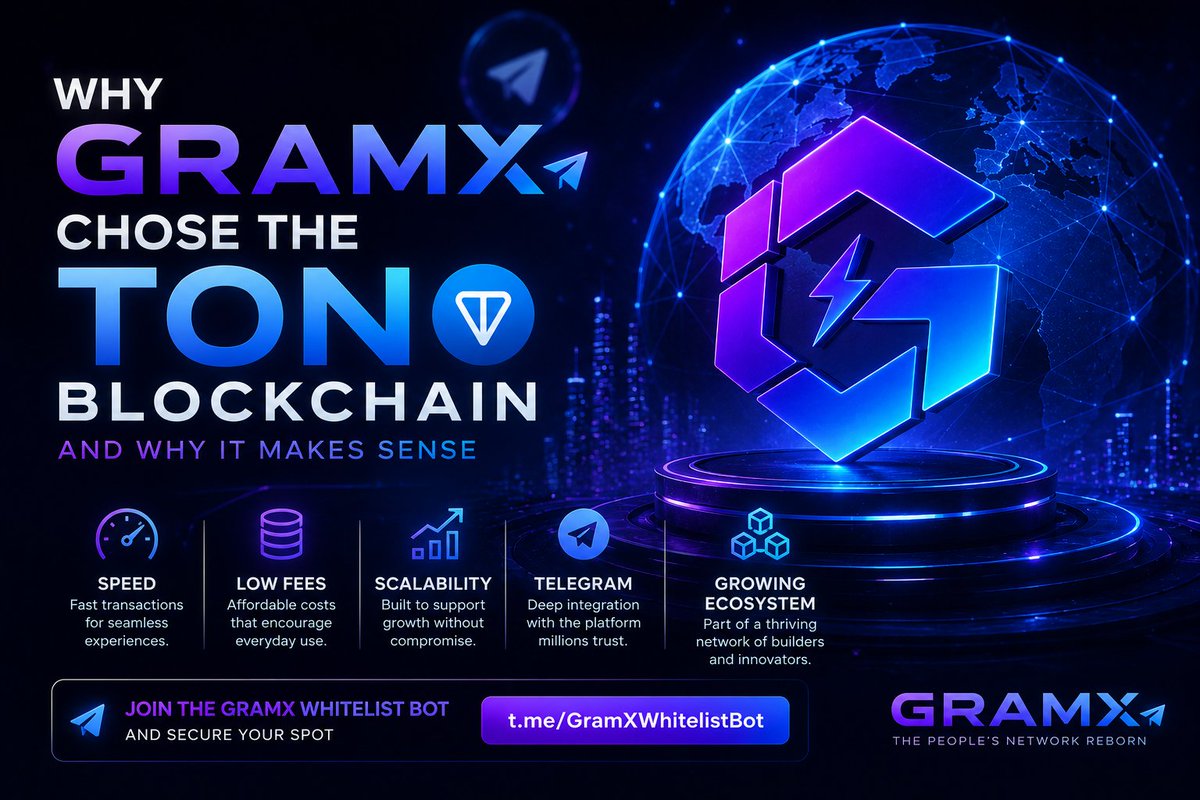
𝗪𝗛𝗬 𝗚𝗥𝗔𝗠𝗫 𝗖𝗛𝗢𝗦𝗘 𝗧𝗛𝗘 𝗧𝗢𝗡 𝗕𝗟𝗢𝗖𝗞𝗖𝗛𝗔𝗜𝗡 - 𝗔𝗡𝗗 𝗪𝗛𝗬 𝗜𝗧 𝗠𝗔𝗞𝗘𝗦 𝗦𝗘𝗡𝗦
When I started learning more about @0xGramX, one question kept coming to mind.
𝙒𝙃𝙔 𝘽𝙐𝙄𝙇𝘿 𝙊𝙉 𝙏𝙊𝙉?
With so many blockchains available today, every project has a choice to make. Some prioritize liquidity, others chase trends, while some choose the network that best fits what they're trying to build.
The more I looked into GRAMX, the more I felt that its choice wasn't random. It was a decision that aligns closely with the kind of ecosystem the project wants to create.
𝐈𝐓'𝐒 𝐍𝐎𝐓 𝐉𝐔𝐒𝐓 𝐀𝐁𝐎𝐔𝐓 𝐓𝐇𝐄 𝐁𝐋𝐎𝐂𝐊𝐂𝐇𝐀𝐈𝐍
People often compare blockchains by asking which one is the fastest or which has the lowest transaction fees.
Those things matter, but they're only part of the picture.
The better question is:
Which blockchain actually fits the project's vision?
For a project like GRAMX, which is built around Telegram and community participation, TON naturally stands out.
𝐒𝐏𝐄𝐄𝐃 𝐌𝐀𝐓𝐓𝐄𝐑𝐒 𝐅𝐎𝐑 𝐄𝐕𝐄𝐑𝐘𝐎𝐍𝐄 𝐔𝐒𝐄
No one enjoys waiting several minutes for a transaction to complete.
Whether you're sending digital assets, interacting with a decentralized application, or making payments, people expect the experience to feel smooth.
TON was designed with high throughput and fast transaction processing in mind, allowing users to interact with applications quickly and efficiently.
When technology works in the background without slowing people down, adoption becomes much easier.
𝐋𝐎𝐖 𝐅𝐄𝐄𝐒 𝐄𝐍𝐂𝐎𝐔𝐑𝐀𝐆𝐄 𝐌𝐎𝐑𝐄 𝐏𝐀𝐑𝐓𝐈𝐂𝐈𝐏𝐀𝐓𝐈𝐎𝐍
One challenge many blockchain users face is transaction costs.
If every interaction costs too much, people naturally become less active.
TON addresses this by keeping transaction fees relatively low, making it practical for everyday use instead of occasional use.
For a community-focused project like GRAMX, that matters.
The easier it is for people to participate, the more active and inclusive the ecosystem can become.
𝐒𝐂𝐀𝐋𝐀𝐁𝐈𝐋𝐈𝐓𝐘 𝐈𝐒𝐍'𝐓 𝐉𝐔𝐒𝐓 𝐀 𝐁𝐔𝐙𝐙𝐖𝐎𝐑𝐃
Every project hopes to grow.
But growth also brings new demands.
More users mean more transactions, more activity, and greater pressure on the network.
TON was designed to support large-scale adoption through its scalable architecture, making it suitable for ecosystems that aim to serve a growing user base over time.
Choosing infrastructure that can grow alongside the community is a long-term decision, not just a technical one.
𝐓𝐄𝐋𝐄𝐆𝐑𝐀𝐌 𝐈𝐒 𝐓𝐇𝐄 𝐌𝐄𝐒𝐒𝐈𝐍𝐆 𝐏𝐈𝐄𝐂𝐄
This is probably the part that makes the most sense to me.
GRAMX is a community-owned Telegram ecosystem token
So building on TON creates a natural connection between the blockchain and the platform where millions of people already communicate every day.
Instead of asking users to leave their familiar environment, the long-term opportunity is to bring blockchain experiences closer to where people already are.
That creates a smoother experience for both newcomers and experienced Web3 users.
𝐁𝐔𝐈𝐋𝐃𝐈𝐍𝐆 𝐖𝐇𝐄𝐑𝐄 𝐓𝐇𝐄 𝐄𝐂𝐎𝐒𝐘𝐒𝐓𝐄𝐌 𝐈𝐒 𝐆𝐑𝐎𝐖𝐈𝐍𝐆
TON has continued to expand with wallets, Mini Apps, decentralized applications, and a growing developer community.
That means projects launching on TON aren't building in isolation, they're becoming part of a broader ecosystem that continues to evolve.
For GRAMX, this creates opportunities to grow alongside the network instead of building everything from scratch.
𝐊𝐄𝐘 𝐓𝐀𝐊𝐄𝐀𝐖𝐀𝐘
The more I understand GRAMX, the more I see why it chose TON.
It isn't just about speed or low fees. It's about building on infrastructure that aligns with its community-first vision and connection to Telegram.
For me, TON provides a strong foundation for what @0xGramX is aiming to build.
Join the GRAMX Whitelist Bot and secure your spot:
https://t.co/bR98BISl9J
#GRAMX #TON #Telegram #CryptoCommunity
@DeFiFemmeX This is why I'm keeping an eye on $BAM. If Web3 is going mainstream, it will probably happen through experiences that already feel familiar.