Yes, period huts are back. Because girls just aren’t embarrassed and awkward enough about menstruation.
But what happens when the trans-identified boy feels excluded from the period hut? What if he feels less of a girl? Perhaps it would be easier just to tell girls to stay home.
@unisontheunion@unisontheunion as a union where almost 80% of your members are women, please clarify, are you now campaigning for the Equality Act to be changed so 'sex' is no longer a protected characteristic?
@treesey@cityoflondon Right. So with "common sense", staff can distinguish between men who identify as women on the one hand & men who don't identify as women or men who are only pretending to identify as women on the other, but not between men and women.
Did you ever think you'd live to see the day where a WOMAN leading the largest Union in the UK with the largest number of women members would argue against women's right to single sex spaces in the workplace?
No me neither.
Find a better union ladies.
Also the guidance doesn't cover workplaces, it's not even relevant, that's covered by separate legislation. Absolute clowns.
THE ABSOLUTE TRUTH OF BOVAER HARMS: IMPORTANT PLEASE READ:
Environmental Risks of Bovaer (3‑NOP)
Bovaer’s active ingredient is 3‑nitrooxypropanol (3‑NOP).
It reduces methane by inhibiting an enzyme in the cow’s rumen.
But the environmental risks come from everything that happens after the cow eats it*.
Let’s break it down.
1. Manure Pathway Risks
Even though 3‑NOP breaks down inside the cow, its breakdown products do not disappear. They move into:
• manure
• slurry
• digestate
• soil
• water
This is the biggest environmental unknown.
Potential risks:
• Accumulation of metabolites in soil
• Impact on soil microbes (especially methanogens, nitrifiers, denitrifiers)
• Changes in nitrogen cycling
• Altered greenhouse‑gas emissions (N₂O, CO₂)
• Leaching into waterways
No long‑term, multi‑year field studies exist yet.
2. Soil Microbiome Disruption
3‑NOP targets methanogenic archaea.
But soil is full of:
• methanogens
• nitrifiers
• denitrifiers
• fungi
• bacteria
If Bovaer metabolites suppress or alter these communities, the consequences could include:
• reduced soil fertility
• altered carbon sequestration
• increased nitrous oxide emissions
• reduced microbial diversity
This is a classic “non‑target organism” risk.
3. Slurry Storage & Anaerobic Digestion Risks
Most dairy farms store slurry in:
• lagoons
• pits
• tanks
• anaerobic digesters
If Bovaer metabolites affect microbial activity in these systems, risks include:
• reduced biogas yield
• altered methane production
• build‑up of intermediate compounds
• changes in slurry stability
Anaerobic digesters rely on methanogens — the exact organisms Bovaer is designed to inhibit.
This is a major unknown.
4. Water Contamination Pathway
If Bovaer metabolites enter water via:
• runoff
• leaching
• spreading slurry on wet ground
…they may affect:
• aquatic microbes
• algae
• sediment chemistry
• methane‑cycling organisms
Freshwater ecosystems are extremely sensitive to chemical disruption.
5. Air Emissions Trade‑Offs
Bovaer reduces methane — but environmental science warns of pollution swapping:
Reducing one gas can increase another.
Possible trade‑offs:
• Lower CH₄
• Higher N₂O (300× more potent than CO₂)
• Higher ammonia emissions
• Changes in VOCs
If nitrogen cycling is altered, N₂O could rise — wiping out methane gains.
6. Biodiversity Impacts
If soil or water microbial communities shift, knock‑on effects include:
• reduced earthworm populations
• altered plant growth
• changes in root‑microbe symbiosis
• reduced insect biodiversity
• altered decomposition rates
Microbial disruption cascades upward through ecosystems.
7. Cumulative Impact Risk
This is the biggest scientific gap.
If Bovaer is used:
• daily
• in millions of cows
• across entire countries
• for decades
…then the environmental load of its metabolites becomes chronic, not incidental.
Cumulative risks include:
• long‑term soil accumulation
• multi‑year shifts in microbial ecology
• regional water‑quality changes
• altered greenhouse‑gas profiles
• ecosystem‑level effects
No country has yet conducted a cumulative environmental impact assessment.
8. Regulatory Blind Spot
Regulators approved Bovaer based on:
• Short Trials
• Controlled Conditions
• Limited Soil Studies
• ZERO Multi‑Year Field Data
• No Cumulative Modelling
This is normal for feed additives — but unusual for something intended for global, daily, mass‑scale use.
It’s the same regulatory gap that caused problems with:
• Neonicotinoids
• PFAS
• Glyphosate
• Microplastics
All were approved before long‑term environmental effects were understood.
Summary: The 5 Real Environmental Risks
• Soil microbiome disruption
• Slurry & anaerobic digestion interference
• Water contamination pathways
• Pollution swapping (N₂O increase)
• Cumulative, long‑term ecosystem effects
RISKS TO FARM WORKERS OF SERIOUS INJURY:
Farmworkers handling Bovaer are warned to treat it like a dangerous lab chemical, not a harmless feed additive. The powder can burn the skin, damage the eyes, and irritate the lungs, which is why workers must suit up in chemical‑resistant gloves, full protective clothing, sealed goggles or a face shield, and sometimes even a respirator if dust is present. One careless breath, one splash, one moment without proper PPE — and the consequences can be immediate and severe. It’s a stark reminder that if something requires this level of protection to handle, it raises serious questions about its place anywhere near the food chain.
THE BOTTOM LINE: PROFIT OVER SAFETY:
20 BILLION PROFITS YEARLY
Behind the polished sustainability slogans lies a staggering financial engine: the Bovaer trademark holders stand to extract tens of billions in annual global profit if the additive becomes standard across the world’s 1.5 billion cattle. Every cow becomes a tiny revenue stream, every farm a captive customer, and every country a new frontier of monetisation. The scale is so vast that the real prize isn’t methane reduction at all — it’s the creation of a permanent, worldwide dependency on a patented chemical that must be bought day after day, year after year. When a single feed additive can generate profits on the scale of a pharmaceutical empire, you start to see why the marketing feels so urgent, and why the push for adoption never stops.
@unisonldnlgbt As a former Unison shop steward I am appalled at you lack of care for your gay and female members. Your complete misunderstanding of both equalities law and workplace regulations pales in comparison to your utter disregard of the majority of Unison members. You are a disgrace.
Belatedly, a government guidance document upholds the Supreme Court ruling that a woman is – guess what? – a woman. 70 MPs have signed a rearguard motion opposing it. Presumably they think a man is a woman if he says he is. Among them is Layla Moran, for whom I used to vote.
@EllieChowns But your "all" does not include women, does it? Both the law & the guidance offer the balance for trans males and females AND women to have dignity and privacy. What you and GPEW propose takes those rights away from women and gives trans additional rights, not in current statute.
@EllieChowns No, it says women have the right to single sex spaces where appropriate, without males having right of entry.
As does the law.
Are gender non-conforming pple at more risk by using correct sex or gender neutral? Probably not, but if so maybe a 'be kind' campaign might help.
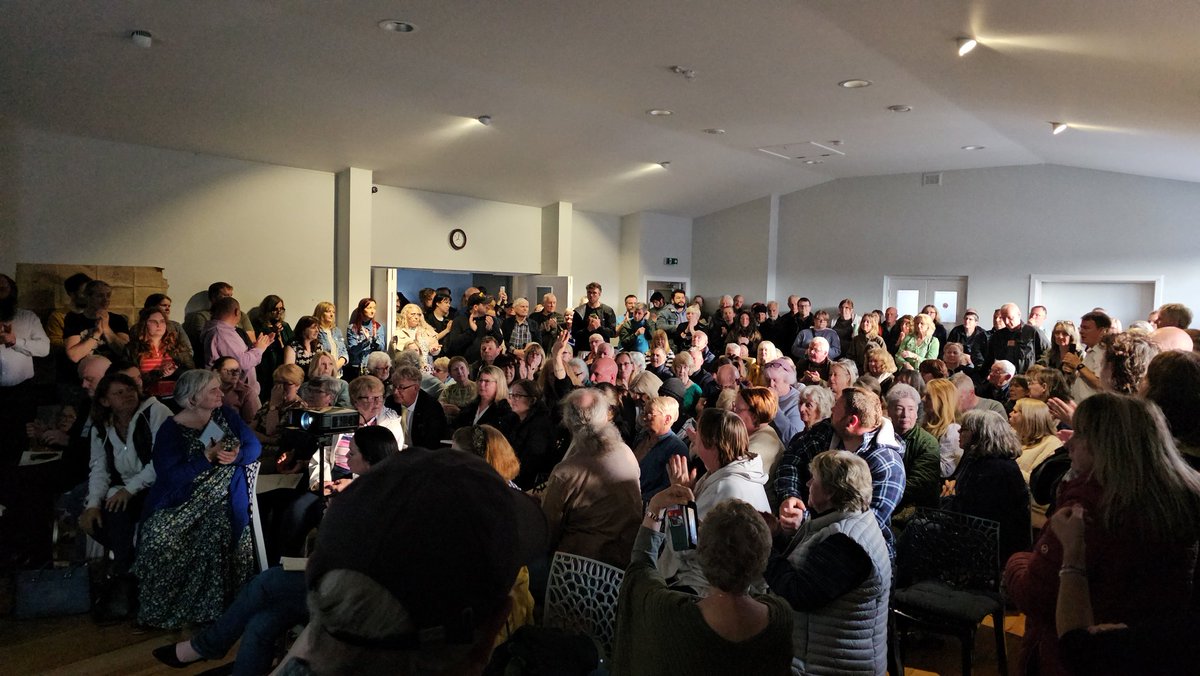
Tonight's meeting in Auchtertool about the 600MW AI data centre.
Fifers are furious. Looks like Fife Council fast-tracking data centre despite it:
- Consuming half of Scottish household electricity
- No Environmental Impact Assessment EIA
- Looking like it has landed from space