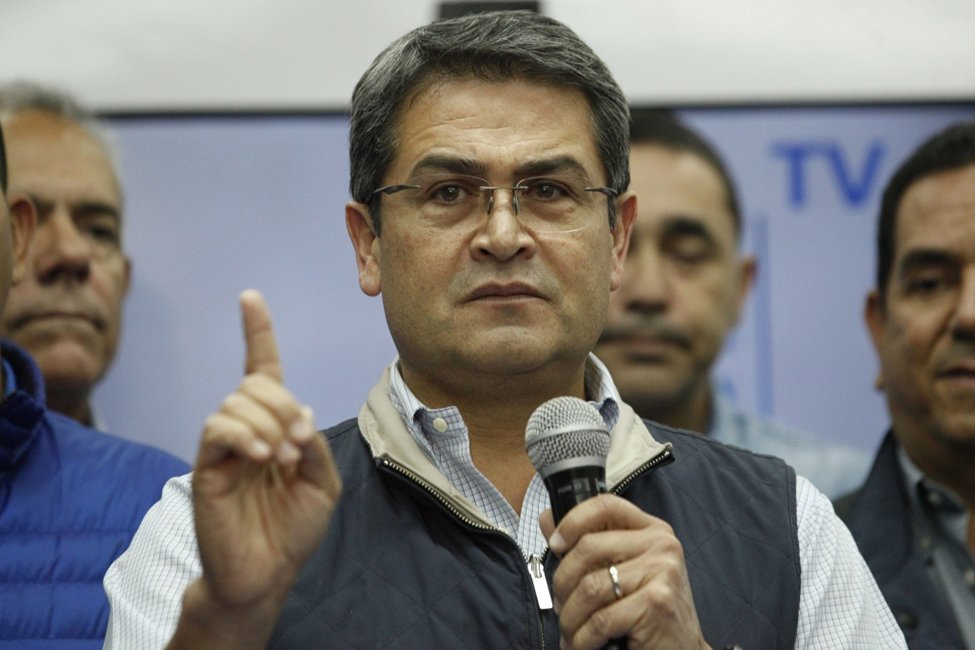
Juan Orlando's ultimate fall from grace was both shocking and ironic--a global poster boy for the War on Drugs was hauled off to the U.S. and convicted of...narcotrafficking! (10/10)
"The US State Department has estimated that the year before Juan Orlando took office, 87 percent of the cocaine that entered the United States traveled through Honduras first. Fast-forward to 2019, however, and that estimate had plummeted to just 4 percent. Juan Orlando, the guy who had supposedly pulled off that miracle, was therefore celebrated as a global poster boy for the War on Drugs.
The notion that he himself was in on the trade was first seriously introduced toward the beginning of the police purge, when Ramón Sabillón, one of the generals who was about to get axed, hinted, on television, that the president’s brother was a narco. At the time, this message didn’t pack that much punch because there were several reasons to doubt the messenger—the press had been accusing General Sabillón of suppressing the internal inspectorate’s report about the drug czar’s murder, and Juan Orlando had previously demoted him, so there was a chance he was just trying to exact revenge.
But then, eight months before the election, a narco who used to run a cartel called the Cachiros took the stand in New York City and claimed that Tony Hernández, the president’s brother, once solicited a bribe from him.
And as it turned out, there was really something there. In November 2018, a year after Juan Orlando won his second term, Tony was arrested in Miami and indicted in a Manhattan federal court. According to the DOJ, he was a narco who offered other traffickers a special type of deal: In exchange for them kicking up to him, his brother’s government would let them be. One of the prosecution’s witnesses was a narco who claimed to have been present when El Chapo handed Tony a million bucks.
Juan Orlando had sixteen siblings, so it was hard to imagine he was close with all of them, but the narcos singing in New York were sure making it sound like the president was involved in Tony’s dirty dealings. This indicated that, at some point in the future, the DOJ might use these same witnesses to go after the commander in chief.
When Tony was found guilty, three months before ASJ’s building inauguration, Juan Orlando tweeted, “What is there to say about a conviction based on the testimonies of confessed murderers?” He had a point. The Cachiro and that other narco who testified had cumulatively fessed up to 134 murders and were both obviously trying to earn themselves reduced sentences by cooperating with the DOJ. And furthermore, both seemed to have originally surrendered themselves in anticipation of Juan Orlando extraditing them, so it was possible that they held a grudge. These were the sorts of thought-provoking arguments that Juan Orlando’s lawyers might one day use in his defense in court, but there was another potential witness who was going to be much harder to discredit.
When Honduran cops arrested a narcotrafficker named Nery López, back in June 2018, they discovered secret compartments in his vehicles that contained grenades, about $193,000, and a number of spiral notebooks that documented López’s business dealings. Juan Orlando’s initials, JOH, appeared within those ledgers, and according to what one of López’s lawyers would later tell Univision, the notations about “Bersache,” as in Versace, were also references to the president.
At the time of Tony’s conviction, López was being held in a Honduran prison known as the Pit, and his lawyers were in the process of negotiating a cooperation agreement with the DOJ. If the gringos were, in fact, planning to pursue Juan Orlando, then López would likely be the centerpiece of their case, because unlike the Cachiro and that other narco, he actually had something physical to substantiate what he said.
Juan Orlando seemed to be well aware that this inmate posed an existential threat. According to one of López’s attorneys, his client received unauthorized visits from the president’s older brother, a wheelchair-bound military vet, and also from a Miami-based private eye employed by their family.
Eight days after Tony’s conviction, the warden of the Pit arranged for López and another prisoner to be brought out into a hallway so he could tell them that visitations were prohibited for the rest of the day. There was nothing terribly odd about that, given that López had a leadership role in his cellblock. But what was curious was that about twenty-five minutes later, the warden summoned the two of them out to the hallway again, this time to reverse course, to inform them that visitations were back on. And at that point, a masked individual opened an adjacent door, and six inmates burst through it.
It seemed meaningful that this well-choreographed ambush happened in clear view of a security camera, and also that the footage ended up on the internet—for about thirty seconds after López already appears to be dead, the assailants wildly stab, hack, and shoot his corpse. This made the video feel like a warning, a warning about what happens when you talk to the DOJ about Juan Orlando Hernández.
The day after the attack, a government official preposterously suggested that López had been killed because he was going “to prove that the drug ledgers were falsified.”
Six weeks later, one of López’s lawyers was murdered.
Three days after that, sicarios silenced the warden forever.
***
That is where things stood as of the building kickoff.
It may be hard to fathom how Kurt and Carlos could have justified interacting with the president and his underlings in any way, shape, or form, but it is important to note that he wasn’t an outlier within the uppermost echelons of Honduran politics. The narcos in New York were claiming to have also bribed his two predecessors, Pepe Lobo and Mel; Pepe Lobo’s son had been convicted of narcotrafficking; Mel’s brother had long been the subject of those same types of rumors; the perennial power atop the Liberal Party, Jaime Rosenthal, had been charged with laundering money for narcos; and his son and nephew had both pled guilty to similar charges. The point being, if Kurt and Carlos resolved to sit on the sidelines until the presidential sash was draped over an unimpeachable politician, they might be sitting out for a very long time, and meanwhile, what was going to happen to those 1.1 million kids?
The counterargument was that it wasn’t possible to help the country’s pupils when the president the education minister reported to was this evil, and that even attempting to improve the Education Secretariat was inadvisable, because whatever small and ultimately irrelevant enhancements you managed to achieve would end up becoming shiny feathers in the cretin’s cap.
“Carlos and I are very sensitive to those criticisms,” Kurt admits. “They’re often being made by people we care about, people whose opinions we value. We’re always struggling within ourselves about what is the right thing to do.”
Some good came from their decision to stay the course. Juan Orlando let ASJ audit the agency that made the country’s pandemic-related procurements, and when the charity released its report, in June 2020, the headline was that at a cost of $47 million, which was at least $12 million more than the going rate, the agency had purchased seven mobile hospitals from a shell company in Miami that subcontracted the work to a Turkish firm with no prior experience in the field. Enough said. The head of the agency wound up in prison.
Though that tale was disturbing, during the lockdown, it was overshadowed by even juicier news. For instance, American prosecutors indicted El Tigre, the purged police general, because according to them, he had served as Juan Orlando and Tony’s muscle, the bruiser who guarded their cocaine shipments and assassinated their adversaries. Implicit in that was the following: Not only had Juan Orlando received dirty campaign contributions through his brother, but also, he was a full-fledged narco himself. The president of a country!
The DOJ generally doesn’t indict sitting heads of state, but there was an election scheduled for November 2021, and Juan Orlando was too unpopular to even bother running.
The contest pitted the National Party’s candidate against Mel’s wife, Xiomara Castro, and Jaime Rosenthal’s son, who had served out his sentence in an American prison. Nasralla dropped out of the race and threw his support behind Xiomara, and as soon as she was sworn in on January 27, 2022, the first female president in the country’s history, her predecessor became fair game.
A few weeks later, a contingent of Honduran cops led Juan Orlando out of his home. His face was obscured by sunglasses, a cap, and a disposable mask; his wrists and ankles were shackled; and to bring his fall from grace full circle, he was being escorted by General Sabillón, Xiomara’s new security minister.
About two months later, on April 21, the ex-president was loaded onto a DEA aircraft, and his wife posted a previously recorded video online. “I am innocent,” Juan Orlando declared. “. . . And I will leave you with this phrase: ‘You will know the truth, and the truth will set you free.’ ” A jury in New York would later conclude that he was, in fact, a drug trafficking conspirator, even though they were informed—by him—that he once signed an agreement with Transparency International."
The point when Juan Orlando lost popular support was the 2017 presidential election. He was only able to run in it because of the shady shenanigans he had pulled, and as you’ll see in the below excerpt (which is lengthy), it sure seemed like there was foul play. So, even though Juan Orlando did end up winning the election, this victory marked the beginning of his demise. (9/x)
"Two-thirds of Hondurans did not have confidence in their country’s elections. The most visible issue was electioneering. Party reps were known to dole out cash bribes as well as food and clothing, and come Election Day, you could expect to see a tractor with a National Party flag draped on it rolling around Nueva Suyapa, ostensibly to patch up the lanes.
Violence was also a factor. Last cycle, between the primary and the general, the body count had included ten mayoral candidates, four congressional candidates, six relatives of candidates, and twenty-one party reps. This time around, a journalist reported that in San Pedro Sula, MS-13 “was threatening to kill anyone found voting for President Juan Orlando Hernández.”
In the lead-up to the big day, when 27,188 candidates would be vying for 3,016 positions, ranging from president to legislator to council member, 18,140,619 ballots were distributed to the 5,688 polling stations where citizens could find their assigned voting tables.
Each of the ten political parties was given enough credentials to staff all the voting tables nationwide, the idea being that they would police one another. But most of the parties were too small to even come close to doing that, and if one of the major parties gained control of a table—through intimidation, bribery, or purchasing credentials—then there were all sorts of ways to cheat. The Economist actually obtained a recording of a National Party training seminar at which the party reps there were literally taught some of those techniques, such as nullifying unfavorable ballots by adding superfluous markings.
The entity in charge of pulling off the election and ensuring its sanctity was the Supreme Electoral Tribunal. Traditionally, the two major legacy parties, the National Party and the Liberal Party, had each gotten one seat on the tribunal, and as a tiebreaker, the third seat had gone to the tiny Christian Democratic Party. That allocation had made sense in the past, but with the meteoric rise of Libre, it was no longer fair. Nevertheless, the last legislature—Juan Orlando’s—had chosen to maintain it.
Two weeks before the election, David Matamoros, the National Party man who was the president of the tribunal, put its electronic transmission system through a dry run, because in the past, there had been some snafus with it. According to La Tribuna, “Matamoros insisted that, this time, there wouldn’t be any incidents.”
To minimize the potential for violence, starting four days before the election, the right to bear arms was suspended, and starting one day before it, the sale of alcohol was prohibited. On Election Day itself, Sunday, November 26, 2017, more than thirty thousand cops and soldiers were deployed to maintain order.
At seven a.m., Matamoros fired the proverbial starting gun at a ceremony in a high school gymnasium, at which point Juan Orlando, who had been queued up at a polling station, proudly did his civic duty. “Has everyone else already voted?” he then jokingly asked.
Over the course of the day, thousands of observers monitored the polling stations as millions of Hondurans cast ballots. ASJ and a consortium of foreign charities had organized their own small observer brigade, so Carlos was out and about in Tegucigalpa, wearing a gray vest and carrying a clipboard.
When the polls closed, and the Christmas lights strung up around the capital lit up kaleidoscopically, nothing seemed to be amiss. Now it was just a matter of waiting for the tribunal to start announcing results, which was expected to happen shortly.
Around 6:30 p.m., before the tribunal had given word, a well-known businessman told the press that according to his firm’s exit polling, Juan Orlando had an “irreversible” lead. Everything that man said, however, had to be taken with a grain of salt, because he used to be Juan Orlando’s security minister.
Nevertheless, a half hour later, in a ballroom packed with National Party activists, the first lady thanked the creator of the universe, and Juan Orlando proclaimed, “We won the election!”
He could say that all he wanted to, but the organ with the final call hadn’t released any results yet, and as time ticked by, and continued to tick by, and continued to tick by, the tribunal’s silence began to feel ominous.
Carlos, who had set up a sort of control room in a hotel salon, was nervous that there was chicanery going on behind the scenes, and that the mere suspicion of that would lead to civil unrest and its corollary, violent repression. “We were calling the country’s political leaders,” he later said, “trying to calm things down and get them to hold tight. Because both sides wanted to declare themselves victorious.”
Nasralla partisans were chanting outside the nearby hotel where the tribunal was headquartered, and it wasn’t until two a.m. that Matamoros finally showed his face. His press conference shocked the nation. With 57 percent of the vote counted, Nasralla held a sizeable lead—he was up by a full five points.
After the sun illuminated the streets, the following morning, the long-shot candidate celebrated amid a jamboree of fist-pumping supporters as an accordionist in aviators played some tunes. The Liberal Party candidate soon conceded to him, and according to an ASJ employee, at the charity’s devotional that morning, Kurt told his staff, “We have a new president. Everything is going to be OK. It could be better, but it’s healthy for the country to experience a dramatic exchange of power.”
***
When Matamoros released those initial results, he made sure to specify that 90 percent of the votes from Tegucigalpa and San Pedro Sula, the country’s two major cities, had already been counted. That meant that the uncounted votes were going to be disproportionately rural, which suggested that Juan Orlando was still alive, because he was especially popular out in the countryside.
The previous day, the party reps at each voting table had examined the ballots and written down their final count on a tally sheet; those tally sheets were then sent electronically to the tribunal, unless they couldn’t be—for whatever reason, no internet, say—in which case they were put into a box with the corresponding ballots and trucked to the capital with a military escort. Matamoros explained that they were going to be factoring those tally sheets into their count as they arrived at the tribunal’s warehouse in Tegucigalpa, and that they would have them all by Thursday. A spokesman for the armed forces soon clarified why, in a country that can be traversed in a matter of hours, this was going to take several days: “Our deployment of the trucks was a bit slow, but that was only because we wanted to avoid causing vehicular congestion.”
Observers floated around the tribunal’s warehouse as electoral workers processed the tally sheets that came in. At ten p.m. on Tuesday, Matamoros announced that with 71 percent of the vote counted, Nasralla’s lead had shrunk to two points.
Nasralla started going apeshit. The main thrust of his very loud allegation was that Juan Orlando was in the process of stealing the election through his docile pet, Matamoros. With accusations like that being hurled around, and with the streets teeming with riled-up partisans, the country was beginning to feel like a payload attached to a burning fuse. And what about all those soldiers now descending upon the capital? Were they just coming to deliver tally sheets, or were they also going to be bringing Nasralla’s supporters to heel?
President Trump had been in office for nearly a year but had yet to appoint an ambassador to Honduras—he never would—so on Wednesday, between 11:13 a.m. and 12:18 p.m., Kurt sent a series of emails with the subject “Very worried in Honduras!” to a bunch of officials in Washington, whose contact info he had gotten from a friend:
1. They say that 100 percent of the counting will be done by tomorrow and we are all guessing Juan Orlando will be proclaimed winner.
2. This could easily result in violence, abuses. . . .
3. The U.S. does not have an ambassador here. . . . BUT the U.S. is VERY powerful here.
Our suggestion:
1. Wait for the results tomorrow—
· If Nasralla wins and Juan Orlando accepts, we are all set.
· If Juan Orlando is proclaimed winner (much more likely), next to no one will accept it and we will have violence, etc. . . .
2. That the U.S. send a high-level State Dept person here who can throw their weight around tomorrow
3. ASJ and lots of other people will ask for a recount—TALLY SHEET BY TALLY SHEET—with all parties present, with International supervisors, on Live TV. . . . And the US Rep can push for that to happen.
What do you think?
That evening, the tribunal announced that with 83 percent of the vote counted, Juan Orlando had taken the lead by a tenth of a point. Matamoros also disclosed that the tribunal’s IT system had crashed—it had gone dark for almost nine hours. He presented this as an innocuous hiccup, but from Nasralla’s perspective, it was nothing short of a smoking gun.
Things soon got out of hand. Around eleven p.m., Nasralla, Mel, and a throng of protesters broke through the metal gate in front of the tribunal’s warehouse, and according to La Tribuna, they were “about to take away the ballots and electoral boxes” when the dispersion of tear gas stopped them.
Over the coming days, most of the Nasralla protesters who took to the streets did nothing more ferocious than bang on pots and pans, but in addition to that, roadways were blockaded, stoplights were smashed, tollbooths were torched, and a statue of a historic president was decapitated. “This is going to be permanent,” Nasralla warned. “The people will be demanding what they want for one or two years, until this country is no longer a country.”
The tribunal, meanwhile, worked through something called the special scrutiny process, which consisted of recounting the ballots associated with the 1,031 tally sheets that had some type of irregularity on them. At rows of folding tables in the warehouse’s vast interior, yellow-gloved scrutinizers counted as observers peered over their shoulders. According to the brigade sent by the Organization of American States, which is basically the United Nations of the Western Hemisphere, at 5 percent of the special scrutiny tables that marked their tallies as valid, shady-looking ballots were included—for instance, ones that had no crease on them, even though the ballot-box openings were designed such that the ballots had to be folded to fit.
When the tribunal wrapped up this process, on Monday, December 4, it announced that with 100 percent of the vote counted, Juan Orlando had 42.98 percent of the total, and Nasralla had 41.39. In Honduras, whoever gets the most votes wins—a majority is not needed—but this thing was still far from over, because Nasralla was demanding a recount.
Three days later, Matamoros agreed to recount about a third of the vote, which was almost exactly what Nasralla wanted. If done in a credible fashion, this recount had the potential to settle the election in a way that even the loser would have to respect. That was why, that night, Kurt, Carlos, and another ASJ executive rushed to the tribunal’s warehouse, and that was also why they had encouraged the chargé d’affaires then running the American embassy, Heide Fulton, to come along with them.
Matamoros sat down with them in a conference room. The ASJ trio explained that they wanted to observe the recount but would do so only if the tribunal wrote down the rules of engagement beforehand, delineating protocol as specific as what happens when a scrutinizer has to go to the bathroom. According to Kurt, Matamoros initially agreed to this but then stepped away to speak to someone on the phone, and when he circled back to the conference room, he shot down their ultimatum. Kurt was under the impression that Juan Orlando had been on the other end of that line. “That was when we left,” the ASJ executive later said. “. . . I could see that Juan Orlando had this guy in his pocket.”
Matamoros denies speaking to anyone on the phone, and according to him, what he told ASJ was, “We’re not going to sit down now and spend twelve or fifteen hours, maybe an entire day, writing everything down when no one else is asking for that.”
When Matamoros held a press conference at the warehouse later that night, the chargé d’affaires was in attendance. Then, two days later, she returned to the warehouse for another one of his press conferences, except this time, she stood right beside him. The physical location of her person mattered a great deal, because in Honduras, the American government is seen as a sort of political referee. Therefore, when the recount ended on December 10—with the tally budging but not enough to matter—the chargé d’affaires’s two appearances at the warehouse were interpreted to mean what La Tribuna slapped on its front page: fulton calls for the tribunal’s results to be accepted.
Soon, from a podium set up in front of the American embassy, Nasralla accused the gringos of aiding and abetting a highway robbery of an election. But he also knew that they were the only ones who could possibly keep Juan Orlando and Matamoros in check, so on December 13, he stooped to pandering, clarified that if he won, he wouldn’t kick the American military out of its Central American home at the Soto Cano Air Base. And then, four days later, he headed north on a last-ditch mission to make his case in Washington.
On his layover in Miami, however, he got the news. The tribunal had called the election.
It was over. Officially.
***
Who really won?
It’s hard to say, given that some of the key controversies remain unresolved. Take that server crash. According to the Organization of American States’ computer expert, the tribunal’s server had been improperly configured, the crash was therefore entirely predictable, and the evidence of what happened during the blackout was not properly preserved. That sounds dodgy, and perhaps it was, but according to the European Union’s brigade, its “technical experts, who were in the data center at the time, confirmed the purely technical nature of the incident. . . . They did not observe any indication of alterations to the database, which, had it occurred, would have been easily identified.”
In any case, the type of cheating imagined here should have been detectable without having to parse all this computer talk, because the party reps at each voting table were supposed to have received a copy of the original tally sheet, and the tribunal published all the tally sheets it used in its count online—the idea being that if the tribunal, the military, or anyone else altered a tally sheet after it left a polling station, through either physical or digital means, the defrauded party could easily demonstrate the discrepancy.
Nasralla’s team had copies of 14,363 of the 18,128 tally sheets. According to the European Union, “Following a cross-check between a large random sample of the tally sheets provided by the opposition and the originals published on the tribunal’s website, our mission concluded that there was virtually no difference between the two sets.” As for the tally sheets that Nasralla’s side didn’t have copies of, who the hell knows?
That is just a taste of the mind-numbing thicket of esoteric complexity that hovers over this election. At least one facet of its legacy, however, is easier to grasp.
A dusk-to-dawn curfew was imposed the Friday after the election, and in the five days after that, at least 1,351 people were arrested. The civil unrest was not harmless—hundreds of shops were damaged; seven police stations were destroyed; 253 security-force officers were, according to the government, injured; and one cop was killed with a Molotov cocktail. But the Office of the United Nations High Commissioner for Human Rights in Honduras determined that the government used excessive force, and that in the turbulent two months between Election Day and the inauguration, at least sixteen killings and sixty injuries could be confidently attributed to either cops or soldiers."
In 2016, Juan Orlando created a new commission to purge the police force, comprised largely of some of the main characters in my book. The commission ended up firing about a third of the force, as well as virtually the entire high command. This was something that Honduran society had been clamoring for, for a very long time, yet many refused to commend Juan Orlando for this or any of his other seeming achievements. For instance, during his time in power, the country's homicide rate had plummeted, and a relatively high percentage of the population felt that his government had been doing a good job of fighting corruption. (8/x)
"Throughout 2016, the commission had purged a total of 1,865 cops, and as of April 2018, the second anniversary of the purge, 4,627 cops, or about a third of the original force, would be gone.
Historically, the typical cadet was an uneducated young man who was put through a few months of military-style training. Between 2015 and mid-2018, however, most of the 8,273 cops hired graduated from a brand-new police academy, where the eleven months of coursework included police-community relations, where one of the entry requirements was a high school diploma, and where a quarter of the class was female. The alliance had lobbied for the educational reforms, and the commission had helped bring them to life. And during this period of institutional transformation, the force was also endowed with a new governing law, a new crime lab, a new 911 center, a new internal affairs unit, and hundreds of new patrol cars.
[...]
Kurt and Carlos had started the alliance in 2012 be-cause the annual number of homicides in Honduras had almost tripled in a seven-year span. After that, however, this terrible trend reversed—while 7,172 people were murdered countrywide in 2012, in 2017, 3,866 were.
Juan Orlando probably deserves some credit for this given that, during his time in power, the police budget was ratcheted up, Criminal Investigation was revamped, an FBI-like entity was created, a military police force was deployed, two maximum-security prisons were constructed, and a number of narcotraffickers were extradited to the United States.
Kurt and Carlos also feel that ASJ, both acting alone and through the alliance, contributed to the reduction in violence. That’s quite a grandiose claim, but it isn’t entirely implausible in light of the fact that, as one well-traveled scholar from Rio de Janeiro State University put it, “Never in my life have I seen an NGO that has so much power over a country’s criminal justice system.”
[...]
They weren’t the only ones who had some amount of faith in the current administration’s commitment to rooting out corruption. According to a Transparency International survey, in Honduras, 55 percent of respondents felt that the government was doing a good job of fighting corruption, which was the third-highest result among 119 other nations (the global average was just 30 percent.)"
In early 2015, the Juan Orlando story got darker. Firstly, a Supreme Court chamber that he previously stacked ruled that the country's long-standing presidential term limit was illegal, which meant he, Juan Orlando, could be president for a long time. And secondly, it was revealed that some of the money looted from the country’s public health system had found its way into Juan Orlando’s last campaign. (7/x)
"Two more red flags soon rose up above Juan Orlando.
On April 22, 2015, the Constitutional Chamber of the Supreme Court, which his legislature previously stacked, ruled that the presidential term limit was unconstitutional. That meant Juan Orlando could run in future elections and, in theory, be president for a long time.
Days later, when he returned from yet another one of his trips to Washington, he tried diverting the press corps’ attention to a more flattering topic. “We are the only country in the world that has an accord with Transparency International,” he reminded everyone.
The other flag was an even darker shade of red.
Between 2010 and 2013, the leadership of the Honduran Institute for Social Security had embezzled over $300 million from its coffers. The broad strokes of this monumental scandal had been in the public domain for a while, but then, in May 2015, a shocking new twist was introduced when a journalist alleged that some of the looted funds had found their way into Juan Orlando’s presidential campaign.
In response, protesters known as the Indignant Ones rushed out into the streets. These demonstrations were a sincere expression of fury and disgust—after all, that money was supposed to have gone toward medical care for the poor—but they also ended up being the coming-of-age bash for a newish left-wing political party known as Libre. It was led by Mel, the couped-out ex-president, and one of its main propellants was a fervent hatred of Juan Orlando."
Juan Orlando became president of Honduras in January 2014, and his first act on his first day in office was to grant Transparency International near total access to the innards of his government. This was an extraordinarily bold and magnanimous thing to do, as it would put that watchdog in a position to monitor for corruption. That said, whenever Juan Orlando did good things, his motives had to be questioned. This was true not only of the Transparency International accord, but also of all the glad-handing he did with the American government. (6/x)
"Speaking of the new president, Juan Orlando’s first act on his first day in office was to sign a letter of intent with Carlos that, after about nine months of negotiations, became a historic accord, one that was supposed to supercharge ASJ’s anticorruption efforts. The administration was going to be granting it an accountant’s-eye view of five different branches—security, education, healthcare, taxes, and infra-structure. With this privileged access to information, the charity was undoubtedly going to discover a massive amount of fraud, embezzlement, and graft, because the Honduran bureaucracy was an absolute abomination. The Inter-American Development Bank had recently given civil services across Latin America a score between 0, being the worst, and 100; the average country got a 38, the second-worst country got a 21, and Honduras got a 12.
On October 6, 2014, Frente a Frente’s venerable host, Renato Álvarez, got into position at the center of his metallic art-deco desk with two of the president’s advisers to his right, and Carlos and the president of Transparency International, a Berlin-based anticorruption organization with chapters all across the world, to his left. The connection there was that ASJ had recently become its Honduras chapter.
As Carlos explained the new accord to the viewership, Renato listened with his neck craned and hands in a triangle. Once his guest finished, he asked for a clarification: “So Transparency International and the Honduran government are going to work together on creating transparency?”
“Exactly,” Carlos replied.
“I’m going to tell you an anecdote,” Renato continued, before turning toward the president’s advisers, removing his eyeglasses, and throwing up a let’s-cut-the-crap finger wag. “When I saw little Carlos Hernández, at the start of Juan Orlando’s government, announcing that he was going to be working with the new administration, I said to myself, ‘They are going to coopt the Honduran chapter of Transparency International!’”
This was the riddle of Juan Orlando. He would dangle a special opportunity in front of you that really did seem like a once-in-a-lifetime shot to improve Honduras, but if you bit on it, you risked getting a hook or pacifier lodged in your mouth. Kurt and Carlos were going to have to grapple with this dilemma over and over and over again, and so were the gringo diplomats who dealt with Honduras.
[...]
Another person [US Ambassador to Honduras James] Nealon regularly interacted with was Juan Orlando, who was known to invest a lot of energy in glad-handing gringo officials. “While a member of congress,” The Washington Post reported, “he lent his office to State Department officials, who used it to rally Honduran lawmakers to support the Iraq War.” And according to what one senate aide would tell The New Yorker, “He calls you by your first name and tells people in Washington what they want to hear.”
Which begs the question, Was Juan Orlando empowering ASJ through this unusually magnanimous accord because he thought that would be fantastic for Honduras, or because he knew it would placate the gringos? And to the extent he was wanting to placate the gringos, who possessed a seemingly limitless spigot of aid money, was his ultimate goal to help Honduras or himself?
In a January 2015 op-ed in The New York Times, Vice President Biden explained why the Obama administration had decided to ask Congress to triple what the American government typically provided to Central America. “Last summer,” he wrote, “as our countries worked together to stem the dangerous surge in migration, the leaders of El Salvador, Guatemala, and Honduras asked for additional assistance I made it clear to these leaders that the United States was ready to support them—provided they took ownership of the problem. . . . And they responded. Honduras signed an agreement with Transparency International.”
When it came to replacing that jettisoned attorney general, things got ugly. Juan Orlando had promised the protagonists of my book that the next attorney general would be selected through a virtuous and depoliticized process. But soon after that process began, Juan Orlando hijacked it and ensured that Óscar Chinchilla, a close ally of his, got the job. (5/x)
(Note that, again, this excerpt skips over the details of how this process actually unfolded.)
"The National Congress assembled the following morning, and at the conclusion of what La Prensa described as “a strenuous marathon session sullied by claims of multimillion-dollar vote purchasing, intense lobbying, internal scuffling, and street protests,” Chinchilla was enthroned.
The alliance denounced this “contaminated and dubious” appointment, but according to Carlos, none of this had come as a shock. “Juan Orlando was not my friend,” he later said. “This was purely about opportunism. We tried to take advantage of the opening he gave us to influence things, but with politicians, you always have to remember that they are not looking out for your well-being. They are looking out for their own interests.”
This was not how he and Kurt wanted Honduran politics to work, but it was how it worked, and, ever pragmatic, they were willing to take this betrayal on the chin. That wasn’t terribly hard to do, because taking a step back, they felt like Chinchilla, for all his faults, was a massive upgrade from Rubí. Their first meeting with the new attorney general, on September 12, was a bit uncomfortable, but ASJ wasn’t going to stop collaborating with his prosecutors, and the alliance wasn’t going to stop trying to revamp his institution.
“Politics is not for purists,” Kurt later reflected. “No official was squeaky-clean. If you wanted to influence decision-making and change the country, you had a few choices One was to criticize, to throw stones from afar. That would have had no impact. Another was to get in bed with politicians and become a yes-man. If you did that, they would have just signed meaningless agreements with you and taken pictures of themselves doing it. We chose another option, where we tried to be close enough to the government to influence it, but far enough away to tell the truth about it, too. Where was that line? That’s where we lived. It was often very stressful.”
The Honduran criminal justice system was a mess back then, so in April 2013, Juan Orlando and the protagonists of my book jointly orchestrated an unprecedented spectacle to get rid of the ineffectual attorney general, security minister, and head of the police purge. This was when Juan Orlando entered the peak of his powers and likeability. (4/x)
(Note that the below excerpt skips over the dramatic details of the actual spectacle.)
"A day later, Juan Orlando announced that an unprecedented spectacle was about to occur. His legislature and the alliance were going to jointly grill the country’s criminal justice chieftains, one after the other, on live television, at primetime. In anticipation of the theatrical dressing-down those leaders were surely going to experience, the press decided to call this event the Catwalk.
[...]
At the conclusion of the Catwalk, on April 12, Juan Orlando did some chest thumping: “Now decisions must be made Anyone who doesn’t have the courage to match the situation we are living through should not be in a position of power.”
Not long after that, Kurt, Carlos, Omar, Julieta, and Pastor Solórzano went to discuss those decisions with Juan Orlando and Pepe Lobo at the president’s mansion. The Catwalk was, any way you spun it, a Juan Orlando power play, so in front of everyone, Pepe Lobo made a show of scolding the younger politician. He reminded every-one that he, Pepe Lobo, had the authority to fire Minister Bonilla, and he insisted that, though he might ultimately do it, he didn’t want any of them pressuring him to do it.
By the first of May, Minister Bonilla had been replaced; Villanueva had offered to resign; and Attorney General Rubí had been suspended. But the writing was on the wall.
Juan Orlando’s legislature had recently given itself a clear right to impeach the attorney general, which had been possible only because the four constitutional justices who used to block that sort of thing had been defenestrated out of the picture. And as it turned out, the mere threat of impeachment was enough—Rubí resigned in June.
At the time, Kurt was in New York after having gone on a family vacation to the Grand Canyon. “I fell asleep very HAPPY!” he wrote to Carlos, Omar, and Julieta. “When I get back, we have to go out and celebrate. I feel like we did a good job and also that God is doing work.”
It was really in December 2012 that Juan Orlando, who was then president of Honduras's legislature, established himself as THE most powerful person in the country. At the time, Hondurans desperately wanted the government to purge the corrupt and murderous police force, but the Supreme Court was on the verge of kneecapping that reform effort by making it illegal to evaluate cops with a polygraph exam. So Juan Orlando, who strongly supported the purge, defenestrated a number of Supreme Court justices. On the one hand, this action salvaged the purge effort; on the other, it demonstrated that Juan Orlando was, at heart, a political thug. (3/x)
"On December 10, two days before the Supreme Court was scheduled to rule on the polygraph, once and for all, the National Congress, which, according to one politician, typically obeyed Juan Orlando with “a spectacular domesticity,” created a commission to “investigate” the justices. Then, around 1:30 a.m. the following night, a time of day when Juan Orlando was known to do business, he addressed the legislature in its chamber, the Hemicycle. He kicked things off by unconvincingly alleging that a criminal conspiracy was behind the Constitutional Chamber’s ruling.
The legislature had appointed all fifteen of the justices to their seven-year terms but didn’t have an unambiguous right to terminate them—and it most certainly wasn’t allowed to get rid of them just because it disapproved of their rulings. Nevertheless, at 3:58 a.m., a majority of the congresspeople in attendance voted to defenestrate the four justices who had gone against the polygraph.
The handful of people who theoretically could have resisted Juan Orlando’s end run around the rules did not do that. President Pepe Lobo, who supported the defenestration, instead called for “harmony” among the various branches, and the chief justice didn’t put up a meaningful fight, perhaps because his clerk was one of the replacement justices named.
Juan Orlando had rescued the purge, but he had also shown that beneath his shell of corporatized refinement, he was, in essence, an unapologetic political thug. For many Hondurans, that wasn’t necessarily a turnoff. The country was only a few decades removed from autocratic rule, and one survey showed that just 41 percent of respondents agreed with the following: “Democracy has its problems but is still better than any other form of government.” In other words, there was a fairly pervasive school of thought that said society’s most intractable problems, like rampant crime and a contaminated police force, could be solved only by an agile strongman.
Perhaps there was an element of truth to that, but the next question had to be, Was Juan Orlando playing fast and loose with the constitution to altruistically solve intractable problems or to selfishly empower and enrich himself? With someone as slick and strategic as him, there would always be multiple angles to consider. In the case of the defenestration, here is just one of them: Juan Orlando had recently won the National Party’s presidential primary, and the runner-up was planning to ask the Supreme Court to authorize a recount. So—well, well, well—had Juan Orlando replaced those four justices simply to safeguard his electoral victory?
Politics is a game of multiplayer, multidimensional chess, and Juan Orlando had made his gambit to dominate the board right when Kurt and Carlos had finally gained access to it. They could have retreated from the terrain he arrayed, but they instead kept playing, even though in this type of match, players could be turned into pawns."
Where did Juan Orlando originally come from, and why, during his heyday, did he really stand out amongst other Honduran politicians? (2/x)
"Throughout Juan Orlando’s childhood in a rural western state, his father, a former army colonel, had forced him to wake up before daybreak and do chores with the farmhands—feed the cows, milk the cows, harvest the corn. Those were some serious man-of-the-people bona fides, but unlike some other Honduran politicians, he didn’t maintain affectations that deliberately romanticized his rustic roots. He had gone on to get a law degree from the national university and a master’s in public administration from the State University of New York at Albany, and in adulthood, he would act not like a campesino but like a globe-trotting executive. He was ambitious, hyperactive, transactional, pragmatic, decisive, well informed, well spoken, and well clothed, the type of guy who might pop up in the middle of a meeting to synthesize whatever was being discussed on a white board. And though he was a member of the conservative National Party, he could talk about clean energy and human rights as competently as he could talk about foreign direct investment and Jesus Christ."
President Trump just made a shocking announcement: He is going to pardon convicted narcotrafficker and former Honduran president Juan Orlando Hernández.
Who is Juan Orlando, aka JOH, and why does he matter so much?
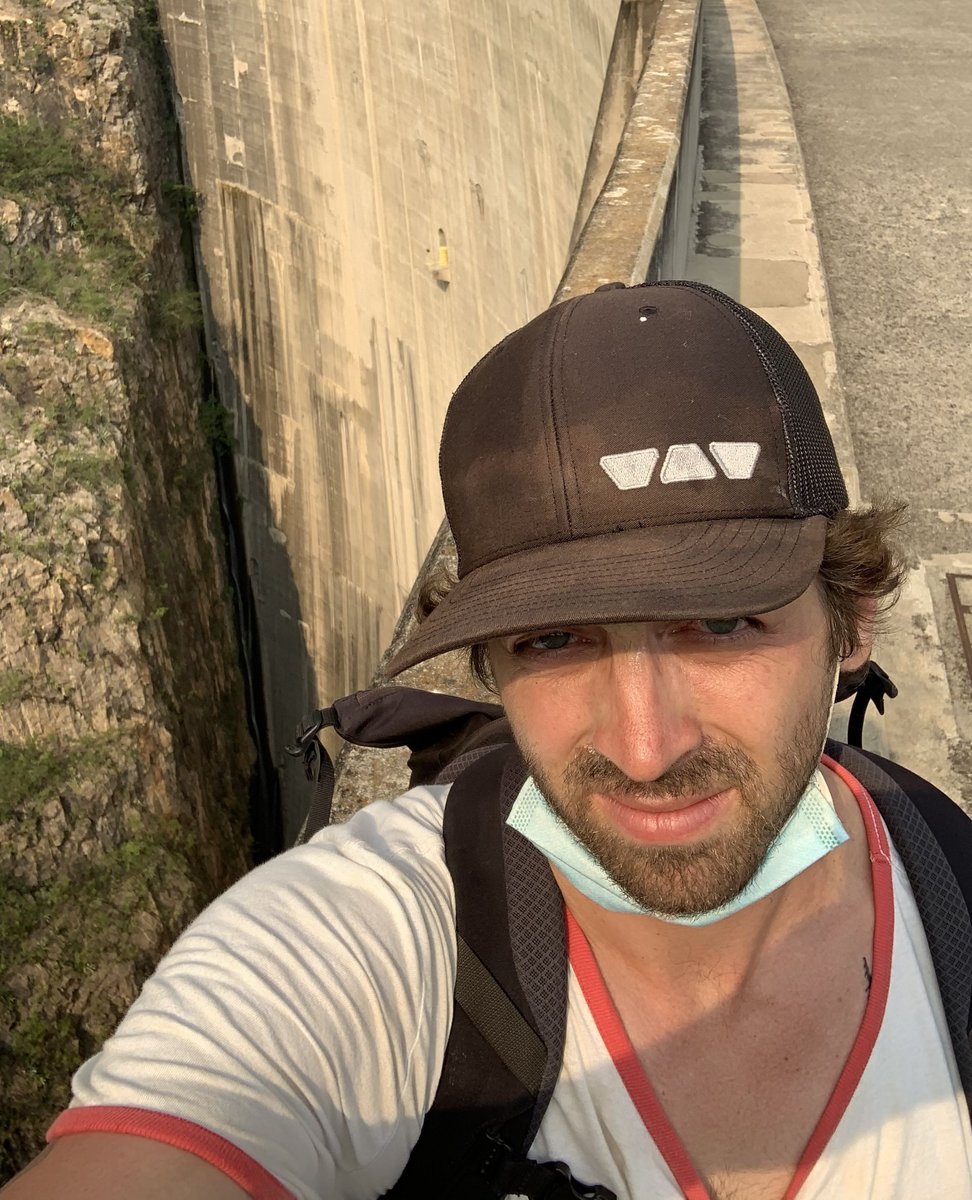
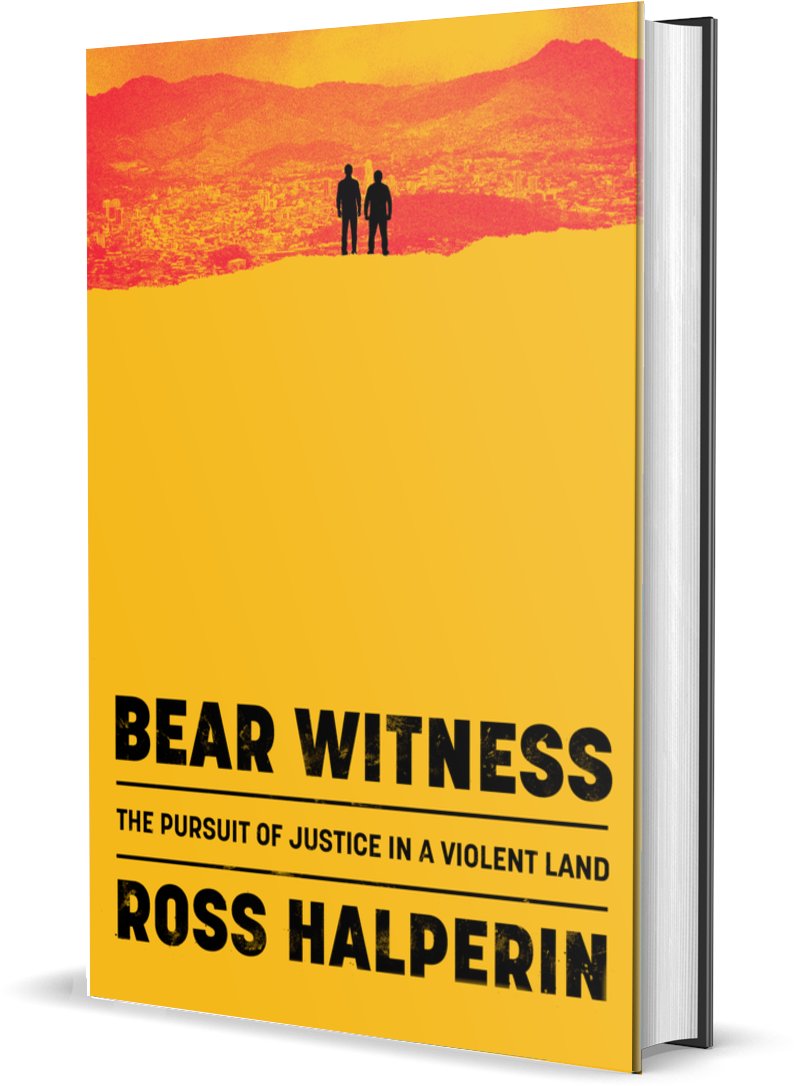
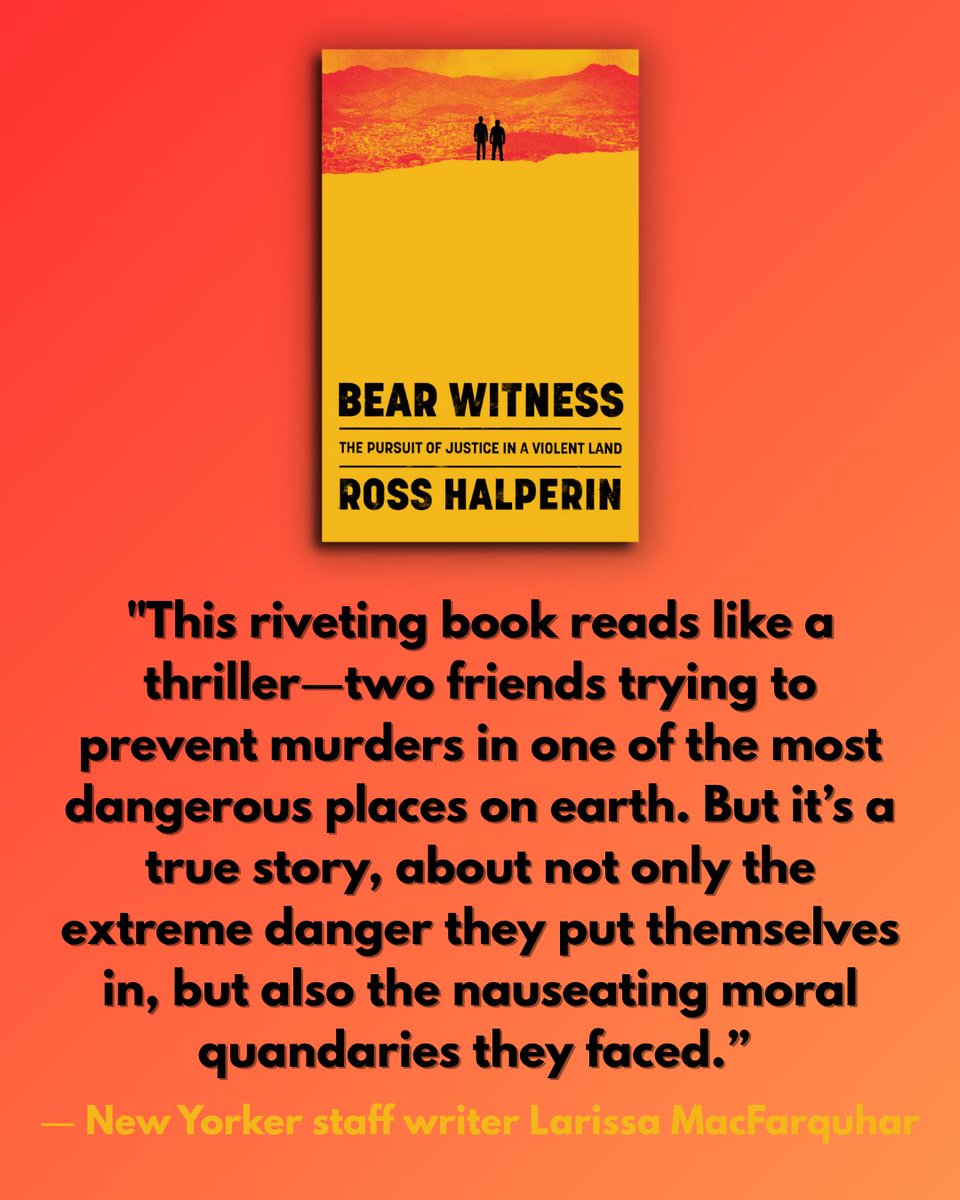
I’m a journalist who has spent a ton of time in Honduras, reporting for my book, Bear Witness, which exhaustively documents JOH’s incredible rise and fall.
In the following series of posts, I’m going to use excerpts from my book to walk you through some of the key moments and elements of JOH’s journey—the good, the bad, the ugly.
If you want to understand the context and significance of this continent-shaking pardon, please read on! (1/x)
My book, Bear Witness, is about the power of friendship. @kurtverbeek and @carlosherm1 have been best friends, next-door neighbors, and co-CEOs for over thirty years.
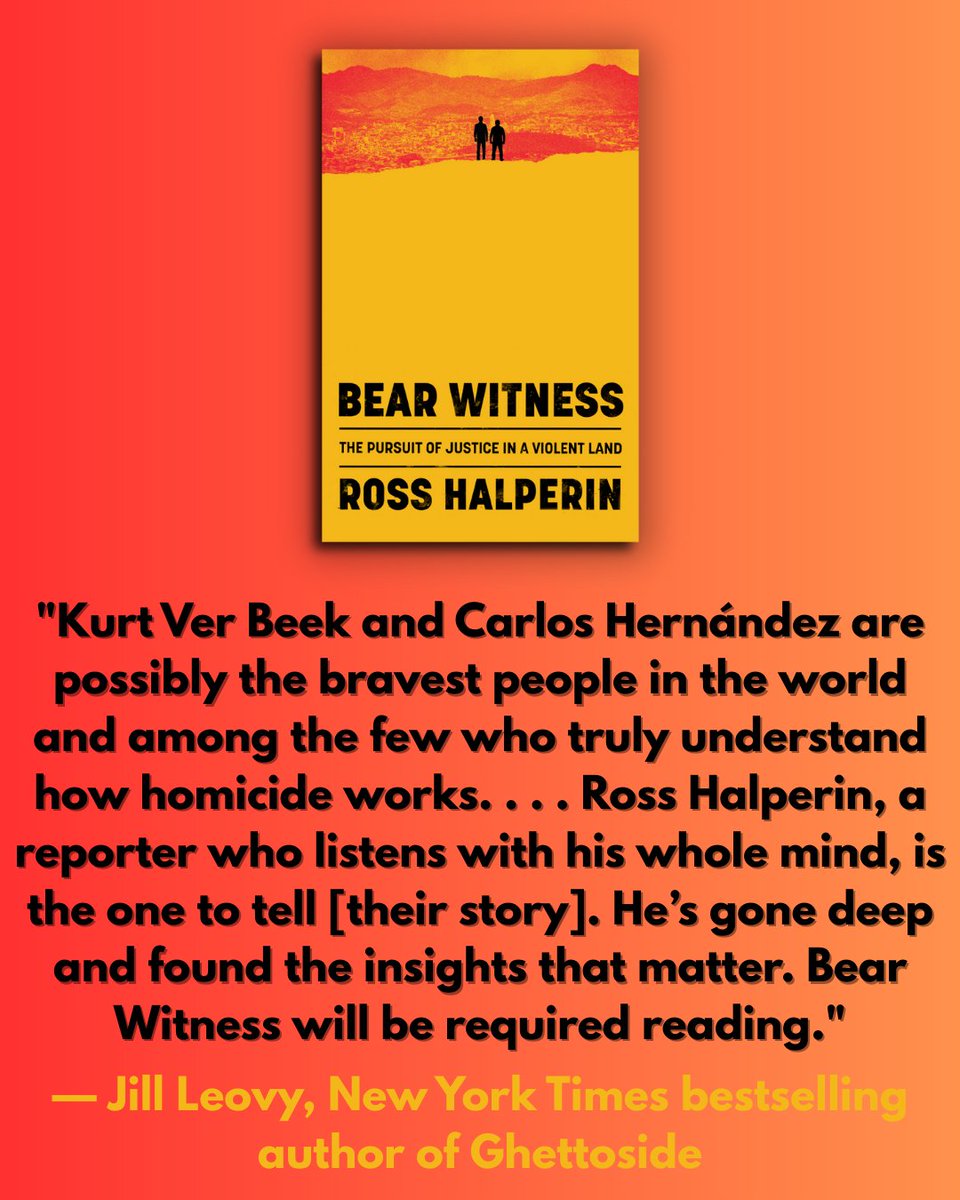
My new book, Bear Witness, was inspired by Ghettoside, Jill Leovy's magnus opus on the problem of impunity. While her book explains why, in certain communities, murders are so incredibly hard to solve, my book lays out a bold, ingenious, and daring solution for solving them.
'Bear Witness' is a remarkable book about remarkable people, but it’s not a hagiography. It’s written by a journalist who is not a Christian about two men who are empowered by their beliefs to be, as they put it, “brave Christians” who attempt to bring about meaningful improvement in the lives of poor people. They start with figuring out a way to protect witnesses so that people can come forward. This produces results, although it is not without risks and involves complex decisions about who they can work with, and how much trust can be given. Then they move forward to looking at ways to reform other institutions. The duo are open about mistakes made, and they feel their losses keenly.
I appreciated author and journalist Ross Halperin (@RAHBooks)’s willingness to show the murk involved, as Kurt and Carlos make impossible decisions. How much can you work with a corrupt regime who is nonetheless willing to make changes? How will that help or hurt you, your reputation, and most importantly, the people of Honduras, in the long run? Halperin doesn’t shy away from showing true results of decisions made. But the end result is nonetheless impressive.
Extensively researched and written with an objective eye, Bear Witness is a gripping read. Highly recommended!
— from Elizabeth Jones' Speakeasy review of 'Bear Witness: The Pursuit of Justice in a Violent Land': https://t.co/jXydrN9tjI
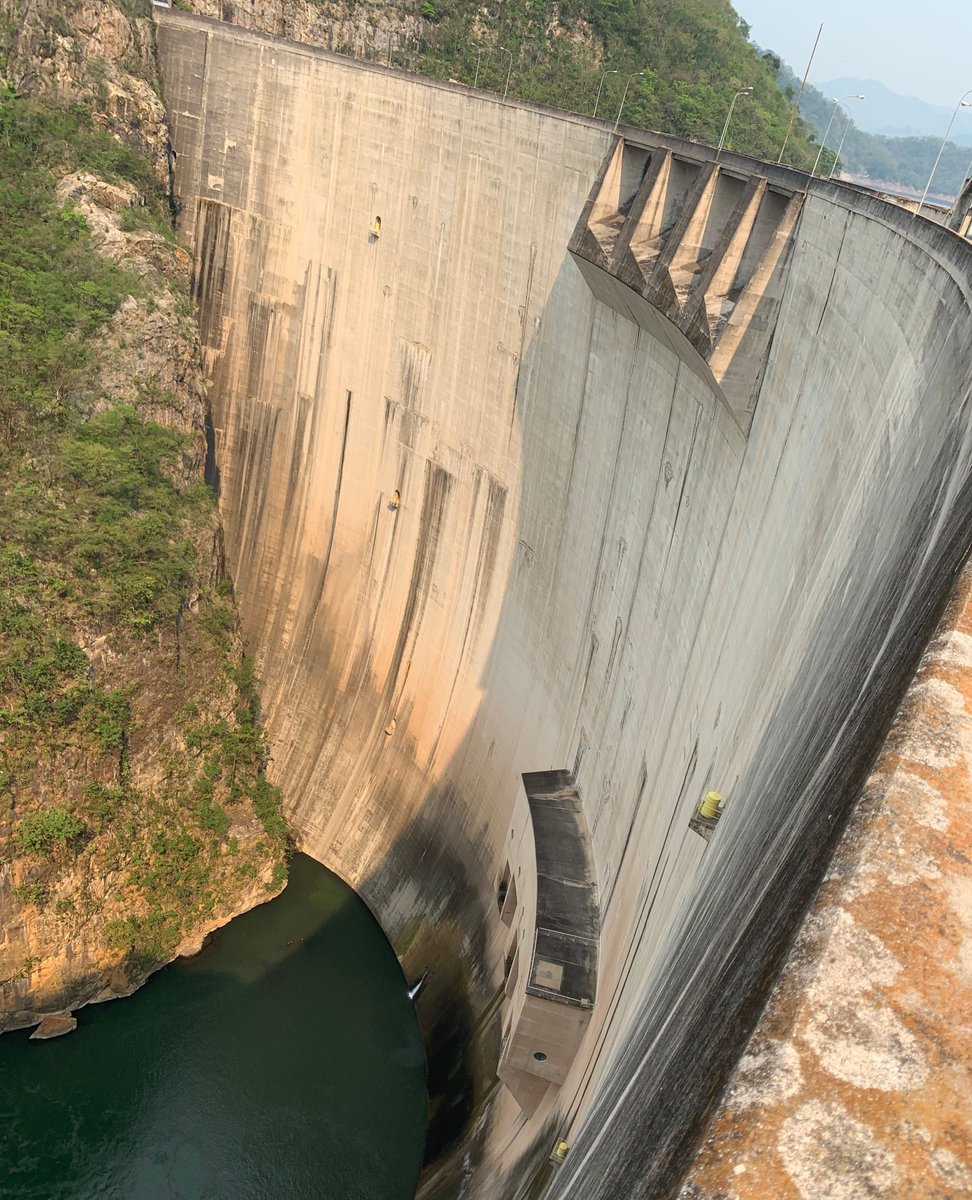
In 1998, a hurricane called Mitch swelled Honduras’s rivers. Throughout that tempest’s landfall, 1.3 trillion pounds of stormwater, a weight far greater than the combined heft of the entire human race, pressed up against the backside of this dam. Yet incredibly, it held strong.
Behind every statistic about violence is a human story. In my new episode, I talk with @RAHBooks about Bear Witness: Pursuing Justice in a Violent Land. Listen here or wherever you get your podcasts!
https://t.co/PMMGl2iwgw
The word “justice” appears frequently in the Old Testament, which was originally written in Hebrew and Aramaic, but infrequently in the New Testament, which was originally written in Greek.
A high-octane true-crime story, Bear Witness follows two Christians who refuse to let fear or conventional wisdom stand in the way of their altruistic mission.