#CabinetMaker.
#Bespoke#handmade#handcraftedfurniture#interiors#furnishings. #Doorsand#Windows. Restoration and repair of all furniture.
E; [email protected]
The Maunsell Army Forts protected British estuaries in World War II. Guy Maunsell designed the six forts of seven steel towers on stilts armed with anti-aircraft guns, positioned in 1942-43. The Thames group shot down 22 aircraft and 30 V-1 bombs before 1950s decommissioning.🫡
They called them flying coffins. The men who volunteered to fly them knew exactly why.
The Allied gliders of D-Day were made of fabric stretched over a frame of wood and metal tubing. They had no engine. No armor. No weapons. No parachutes for the men inside. They were towed to France at 130 mph on the end of a 300-foot nylon rope attached to a C-47, and when the rope was cut, there was one chance to land.
One. No go-arounds. No second approach. Whatever was below you was where you were going.
What was below them was Normandy at night.
The Germans had spent weeks preparing. Under orders from Field Marshal Rommel, they had driven wooden stakes into every open field in the region, angled to impale gliders on landing. The French called them Rommelspargel. Rommel's asparagus. Thousands of poles, many with mines or artillery shells wired to the tips, packed into every field large enough to land on.
What the glider pilots had not been properly told was the scale of the Norman hedgerows. The bocage. These were not English garden hedges. They were ancient earthen walls, some dating back centuries, topped with dense root systems and trees, rising 50 feet in places, bordering fields barely 200 yards long. A Horsa glider coming in at 100 mph hitting a hedgerow did not survive it. Neither did most people inside.
Some fields were flooded. Some were mined. Many were both.
517 gliders went into Normandy. 97 percent were abandoned in the field by the end of the operation. Most were destroyed.
General Don Pratt, assistant commander of the 101st Airborne, was in the first glider wave. His pilot managed to find a field near Hiesville and brought the glider down. It slid across the wet grass without slowing and hit a hedgerow at speed. The co-pilot died instantly. The pilot, Lieutenant Colonel Mike Murphy, broke both legs. General Pratt suffered a broken neck. He became the first American general to die in the Battle of Normandy. His glider had landed in one piece.
Sergeant Eric Wilson's glider did not. It hit a building at high speed. Both of Wilson's legs were broken. He was trapped inside the wreckage, unable to move, in enemy-held Normandy, for two and a half days before anyone reached him.
Lieutenant Den Brotheridge had come in earlier than anyone, in the first glider to land in France, the silent coup de main assault on Pegasus Bridge just after midnight. His glider stopped 47 yards from its target. He led his men out at a run, reached the bridge, and was shot. He died within minutes, the first Allied soldier killed by enemy fire on D-Day.
The men who survived the landing did not get to stop. Glider pilots were not assigned to combat units. Once down, they were expected to fight as infantry, dig foxholes, guard prisoners, carry ammunition, do whatever was needed. Most of them had trained to fly, not to fight on the ground behind enemy lines in the dark.
They did it anyway.
Of the 517 gliders that went in, 222 were Horsa gliders. Most were destroyed either on landing or by German fire in the hours that followed. The Waco CG-4As fared slightly better but 97 percent of all gliders from the entire operation were eventually abandoned in Norman fields, broken and empty.
The men who flew them were not pilots in the traditional sense. They were soldiers who had been given just enough training to put an unarmed, engineless box of fabric and wood into a dark foreign field at 100 mph, full of men and equipment, with one attempt and no margin for error.
Many of them got it exactly right.
Many of them did not come home.
Today is June 6th.
Remember them too.
82 years ago today, D-Day took place. At 0015 hrs, our antecedent regiment, the 2nd Ox and Bucks, carried out the first action of the invasion. In this 1986 recording, Major John Howard recounts the glider assault on Pegasus Bridge, Codenamed OPERATION DEADSTICK.
Did you know that the first women to land on the Normandy beachhead in June 1944 were nurses of Queen Alexandra’s Imperial Nursing Service?
Their task was to establish a field hospital for 600 wounded soldiers.
They succeeded.
Please remember these heroines who saved lives:
Ray’s Rock - Omaha Beach
On the morning of June 6, 1944, 23 year old Staff Sergeant Arnold “Ray” Lambert came ashore with the first wave of the 1st Infantry Division on the eastern side of Omaha Beach. At this small patch of concrete he saved nearly 20 lives:
The division came under intense fire from several German bunkers surrounding the entrance to the Colville Draw (one of two exits off Omaha Beach). Ray, a medic, immediately went to work.
He was shot in the arm. Moments later he was hit by shrapnel in the leg, but Ray kept pulling men to safety. He pulled nearly 20 wounded soldiers to cover behind this 8ft wide obstacle, treating each soldier before going out in search of others.
After several hours under fire, while pulling a wounded soldier from the ocean, he was struck by a landing craft. It dropped its ramp on top of him, breaking his back. He fell face down in the water, drowning. The craft backed up and nearby soldiers pulled an unconscious Ray to safety, eventually evacuating him off the beach.
Remarkably, Ray had already earned two Silver Stars and three Purple Hearts in Sicily and North Africa, prior to landing in France. But here in Normandy his war would end.
He awoke in a hospital back in England a day later. In the next bed over was his brother, who had also been wounded at Omaha.
When asked about his work on D-Day, Ray simply said, “I did what I was called to do.”
Ray Lambert passed in 2021 at 100 years old. He exemplified the best of American grit and why remembering this day is so important.
This is awful. The last ever Denby Pottery going to the kiln. Why is there not uproar? Where’s the government in this?? We all have Denby in our homes, in family heirlooms, as our history and now it’s closing through lack of support, such a sad sad day. #SaveDenby@denbypottery
Tributes have been paid to Lt Lily-Mae Fisher, the 31-year-old Royal Navy commando from Virginia Water, who was one of three personnel killed in a helicopter training crash on Wednesday.
More here: https://t.co/8Wry4I2D26
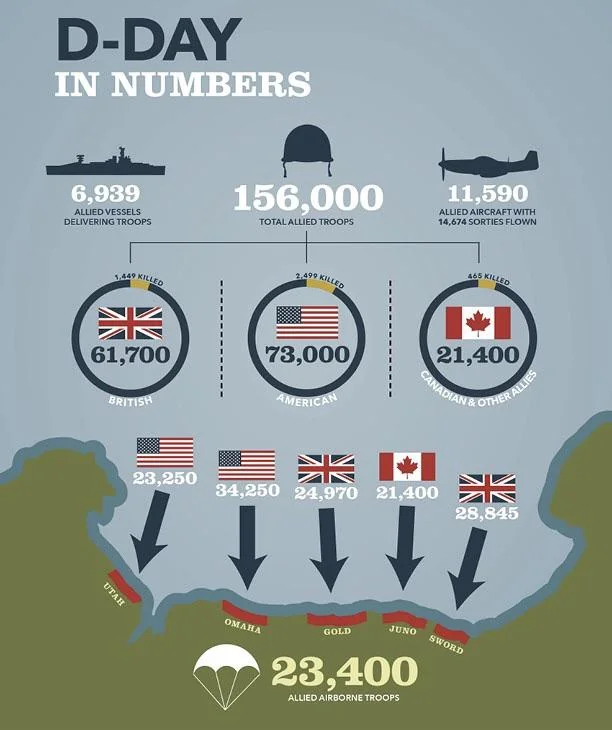
D-Day in Color: Reinforcements Secure the Beachhead 🇺🇸🇬🇧
The Normandy beachhead is now firmly in Allied hands as supply convoys, DUKWs, and fresh troops continue moving inland after the initial assault.
German prisoners are gathered under guard while Coast Guard rescue boats and hospital ships work offshore to recover survivors and evacuate the wounded.
A sweeping panoramic view reveals the massive scale of the secured beachhead, now packed with ships, vehicles, supply depots, and the wreckage left behind by the invasion.
The largest amphibious invasion in history was now firmly underway.
Let me categorically Debunk this utter rot. @sainsburys.
I am a poultry Breeder. The hens that lay white eggs (Amberline/White Star) DO NOT have a lower carbon footprint.
Yes they eat a bit less and produce roughly the same amount of eggs as the Brown egg layers (Bovan/Lowman/ISA Brown) but they live shorter lives, are prone to dying suddenly when startled, a flighty and nervous and because they live shorter productive lives (12 -18mnths) vs brown 18/24mnths (both commercial farmed), you have to incubate more which is increased (Electricity/gas costs) and their eggs are not the same quality.
I breed and keep 20+ different breeds, including: ISA Brown hens and White Stars. All my hens are 100% free range, Not a single barn kept bird, I have ISA browns that are 5yrs old and still laying beautiful Brown eggs, I have not seen a White star live beyond 3yrs and certainly none have laid eggs past 18-24mnths.
White stars Lay themselves to death. They are slender birds and because they dont eat a lot, it drains their personal vitality to keep up laying the eggs you want to sell because of the nonsensical lie that they are "More Carbon Neutral"
You want to know about eggs, come talk to someone like me, Don't rely on some hairbrained imagination of a buyer who's trying to squeeze the profit margin for a few extra pennies at our expense and to the poor hens detriment.
Retiring from the British Army can be complicated...
Lt. Colonel Robert Maclaren retired from the British Army in 2001 after a long fulfilling career. On the day that he retired he received a letter from the Personnel Department of the Ministry of Defence setting out details of his pension and, in particular, the tax-free ‘lump sum’ award, (based upon completed years of service), that he would receive in addition to his monthly pension.
The letter read:
“Dear Lt. Colonel Maclaren,
We write to confirm that you retired from the Royal Scots Dragoon Guards on 1st March 2001 at the rank of Lt Colonel, having been commissioned into the British Army at Edinburgh Castle as a 2nd Lieutenant on 1st February 1366.
Accordingly your lump sum payment, based on years served, has been calculated as £68,500. You will receive a cheque for this amount in due course.
Yours sincerely,
Army Paymaster”
Col Maclaren replied:
“Dear Paymaster,
Thank you for your recent letter confirming that I served as an officer in the Royal Scots Dragoon Guards between 1st February 1366 and 1st March 2001 – a total period of 635 years and 1 month.
I note however that you have calculated my lump sum to be £68, 500, which seems to be considerably less than it should be bearing in mind my length of service since I received my commission from King Edward III.
By my calculation, allowing for interest payments and currency fluctuations, my lump sum should actually be £6,427,586,619.47p.
I look forward to receiving a cheque for this amount in due course.
Yours sincerely,
Robert Maclaren (Lt Col Retd)”
A month passed by and then in early April, a stout manilla envelope from the Ministry of Defence in Edinburgh dropped through Col Maclaren’s letter box, it read:
“Dear Lt Colonel Maclaren,
We have reviewed the circumstances of your case as outlined in your recent letter to us dated 8th March inst.
We do indeed confirm that you were commissioned into the Royal Scots Dragoon Guards by King Edward III at Edinburgh Castle on 1st February 1366, and that you served continuously for the following 635 years and 1 month.
We have re-calculated your pension and have pleasure in confirming that the lump sum payment due to you is indeed £6,427,586,619.47p.
However,
We also note that according to our records you are the only surviving officer who had command responsibility during the following campaigns and battles:
*The Wars of the Roses 1455 -1485 (Including the battles of Bosworth Field, Barnet and Towton)
*The Civil War 1642 -1651 (Including the battles Edge Hill, Naseby and the conquest of Ireland)
*The Napoleonic War 1803 – 1815 (including the battle of Waterloo and the Peninsular War)
*The Crimean War (1853 – 1856) (including the battle of Sevastopol and the Charge of the Light Brigade)
*The Boer War (1899 -1902).
We would therefore wish to know what happened to the following, which do not appear to have been returned to Stores by you on completion of operations:
*9765 Cannon
*26,785 Swords
*12,889 Pikes
*127,345 Rifles (with bayonets)
*28,987 horses (fully kitted)
Plus three complete marching bands with instruments and banners.
We have calculated the total cost of these items and they amount to £6,427,518.119.47p.
WE have therefore subtracted this sum from your lump sum, leaving a residual amount of £68,500, for which you will receive a cheque in due course.
Yours sincerely . . . .”
Vitamin D is not really a vitamin.
It is a steroid hormone. Your body manufactures it from cholesterol when UVB strikes your skin, sends it to the liver for one conversion, sends it to the kidneys for another, and from there the active form goes on to regulate over a thousand genes. Bone health. Immune function. Mood. Insulin sensitivity. Cardiovascular function. Cancer risk. Fertility. Cognition.
The dose is the sun. The factory is your skin. The raw material is cholesterol, which we have also been told to be afraid of.
So look at what has actually happened.
You have been told to avoid the sun. You have been told to lower the cholesterol your body uses as the precursor. You have been told that animal fat, the natural dietary source of the finished hormone, is what's killing you.
And then, when the inevitable deficiency arrives at your annual blood test, you have been prescribed a small synthetic pill to replace the hormone the system was designed to make for free.
Three of the inputs your body requires were removed. The output collapsed. The output is now sold back to you in capsule form.
The system was not broken before we started fixing it.
We were.
For most of human history, sailors did not get scurvy.
The Vikings, the Polynesians, the Inuit who travelled the Arctic, all conducted long sea voyages on diets that contained essentially no fruit and no vegetables. They did not develop scurvy because their diets contained large quantities of fresh and lightly preserved animal foods, which contain vitamin C in adequate quantities. Raw meat. Liver. Fermented meats. Fish, eaten head, eyes, and all. Whale blubber. Seal kidney.
Then in the late 1400s the great European voyages of exploration began, and an interesting thing happened. The sailors started dying. They died in numbers that defied belief. Between 1500 and 1800, scurvy killed an estimated two million sailors. More than enemy action. More than storms. More than any other cause combined.
Why?
Because the European ships had switched to provisioning with grain. The ship's biscuit became the staple. Salted pork, salted beef, dried peas, and ship's biscuit. The fresh meat and the offal and the fermented dairy that had sustained earlier seafarers was eliminated in favour of the cheapest, most calorie-dense, most shelf-stable foods the navy quartermasters could source.
The diet was technically calorically sufficient. It was nutritionally a catastrophe. Within six weeks of leaving port, the men's gums would start to bleed. Within twelve weeks, old wounds would reopen. Within sixteen weeks, men would be dying.
The cure was lemons. James Lind worked it out in 1747. The Royal Navy refused to adopt it for another forty-eight years, on cost grounds. By the time they did, hundreds of thousands more had died.
The lesson available to anyone willing to look:
A diet that removes animal foods in favour of grain-based staples will kill you. It killed entire fleets of men. The vitamin deficiencies arrive in a specific order, and the death is preventable, and the populations that ate the meat had no idea what scurvy even was, because they had never seen it.
You are now being told that grain-based diets with minimal animal foods are the healthiest option.
The sailors who died were eating exactly that diet.
Their teeth were falling out by the third week.
Have a think about who is repeating the experiment.
Wonderfully British…
In a train from London to Manchester, an American was berating the Englishman sitting across from him in the compartment.
"The trouble with you English is that you are too stuffy. You set yourselves apart too much. You think your stiff upper lip makes you above the rest of us. Look at me... I'm me! I have a little Italian in me, a bit of Greek blood, a little Irish and some Spanish blood. What do you say to that?"
The Englishman lowered his newspaper, looks over his glasses and replied,
"How very sporting of your mother!"