On Saturday I went to my synagogue.
I was checked by security at the gates. I passed protective railings, and then a guard at the front door buzzed me in. Another guard waited inside.
Just wondering. Is this normal for Christians, Muslims or Hindus in the UK? Or only for Jews?
Counter terror police probe suspected arson attack at former East London synagogue https://t.co/ohEi4ySnC9 via @JewishNewsUK
They're are many ways to erase a people. One of them is to destroy their history. My in-laws were married here. This place is part of London's heritage.
Belgium Deploys Soldiers to Guard Jewish Schools and Synagogues After Wave of Antisemitic Attacks Across Belgium and the Netherlands https://t.co/ZgrcPuwEeU
Will the UK govt do the same? Will they hell!
The removal of historical figures such as Winston Churchill from English banknotes may appear trivial to some.
But it isn’t.
It matters far more than many people realise.
Because what we are witnessing is not an isolated decision about banknote design.
It is part of something much larger: a slow but relentless erosion of our national culture, identity, and collective memory.
As Professor Frank Furedi has observed, we are living through what he calls “the War Against the Past.”
Across the Western world, an assortment of Diversity, Equity and Inclusion bureaucrats, radical activists, and increasingly compliant public institutions are engaged in a cultural project that seeks to delegitimise our national histories and strip away the symbols that once anchored our collective identity and memory.
The pattern is now familiar.
Statues are toppled.
Historical figures are reframed as morally suspect or “divisive”.
Public institutions rename buildings, spaces, Tube lines.
School and university reading lists are “decolonised”.
The past itself is rewritten to emphasise only its sins while ignoring its achievements.
Even the quiet symbolism of everyday life — the images on our currency, the names of our streets, the monuments in our squares — is steadily edited and sanitised.
What replaces these symbols is rarely anything meaningful.
Instead of historically significant figures who helped shape the nation, we are offered neutral, universal imagery that stands for almost nothing at all — landscapes, wildlife, abstractions.
On the surface this seems harmless.
But symbolism matters.
For centuries, historical figures served as cultural signposts, reminders of the history, struggles and achievements that shaped the nation and its people.
Remove those signposts, and something subtle but important begins to change.
The past becomes distant. Then contested. And then disposable.
Gradually, the story of a nation — its triumphs, failures, and defining moments — is hollowed out.
In its place emerges a new idea of national identity that is deliberately thin: one that defines Britain not through its history or traditions but through the abstract celebration of diversity itself.
In other words, the only thing that is meant to define us is that we have no defining identity at all.
The endpoint of this cultural project is not inclusion but historical amnesia, or cultural erasure.
A society that is detached from its past, uncertain of its traditions, and unsure of what binds it together.
This is what Sir Roger Scruton meant when he wrote: “A society that loses its memory loses its identity.”
And that loss happens gradually, through thousands of seemingly small decisions — a statue removed here, a curriculum altered there, a historical figure quietly replaced on a banknote.
Each individual change may appear insignificant.
But taken together they represent something far more profound: the slow disconnection of a people from their own history and collective memory.
A people who no longer really know who “we” are.
I doubt the bureaucrats who made this decision at the Bank of England fully grasp the cultural significance of what they are doing.
But intention is not the point. The effect is what matters.
When we remove the symbols of our past, we further weaken the very foundations of our identity.
Or Orwell warned: “The most effective way to destroy people is to deny and obliterate their own understanding of their history.”
This is what is happening and accelerating around us.
This is what Furedi meant by the “War Against Our Past”.
And this is why it really matters.
Not because of one banknote.
But because of the much larger cultural story it represents.
There have been well over 48,000 Islamic terror attacks in nearly 70 countries since 9/11 alone. Should we conclude that since there are 2 billion Muslims, 48,000 attacks is actually a peaceful minuscule number or should we conclude that, since the 10,000+ other religions do not add up to 10 terror attacks combined, Islam is an existential global threat? Is the 48,000 figure one that suggests that Islam is peaceful or violent?
In less than 120 seconds, Benjamin Netanyahu explains how radical Islam is not only after Jews and Israel, but also after Christians and America.
This must go viral.
🚨 First they smear Israel with the worst evil imaginable:
“Apartheid”
- Gavin Newsom
“Genocide”
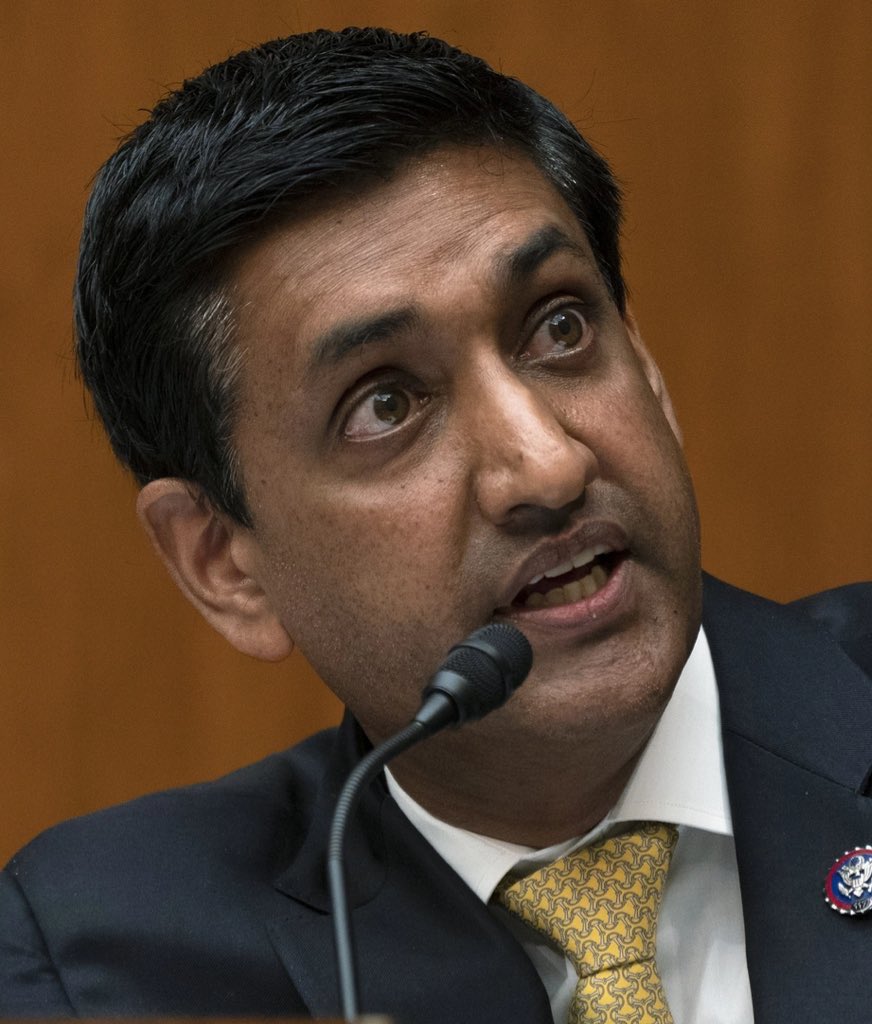
- Ro Khanna
Then in Newsom’s California, in Khanna’s district, two Israeli Americans are brutally beaten outside a restaurant.
Just for speaking Hebrew.
The lies create a permission structure.
Don’t pretend it’s not related.
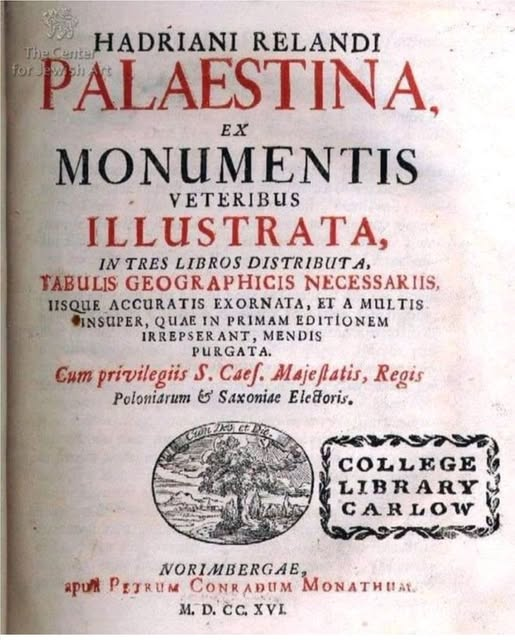
The book is written in Latin. In 1695. Describing Palestine. The author Adriani Relandi was a geographer, traveler, and philologist; he was fluent in several languages, including Arabic, Ancient Greek, and Hebrew. He mapped 2,500 settlements mentioned in the Bible.
The results:
He first created the map of Palestine. He then designated every settlement mentioned in the Bible with its original name.
acknowledged that the country's origins were
1) The country is mainly empty, abandoned, and sparsely populated, with the main population centers being Jerusalem, Akko, Tsfat, Jaffa, Tveria, and Gaza.
2) Most of the population is Jewish, almost everyone else is Christian, very few Muslims, mostly Bedouins.
3) In Nazareth, approximately 700 people lived, all of whom were Christians.
4) In Jerusalem, there are approximately 5,000 people, almost all of whom are Jewish.
5) In 1695, it was widely known that the country's origin was Jewish.
6) No settlement in Palestine has Arabic roots in its name.
7) Most settlements have Jewish originals, and in some cases, Greek or Roman, or Latin. Apart from the city of Ramla, there is no Arab settlement that has an
original Arabic name.
9) About 550 people lived in Gaza, half of them Jews and half Christians.
The book completely refutes theories about "Palestinian traditions", "Palestinian people", and leaves almost no link between the land and the Arabs, who even stole the land's Latin name, Palestine, for themselves.
Book by Adrian Reland
(1676-1718). Palestine
Eretz Israel
This is Monique Silfhout, who was brutally attacked in the Netherlands for one reason — standing with Israel.
This assault isn't just a crime against an individual; it's a deliberate attempt to silence solidarity with the Jewish people. Let's call it what it is: antisemitism in its most blatant form.
We're outraged by this violence but profoundly inspired by Monique's courage. Her refusal to be intimidated, even while recovering from her injuries, embodies the resilience we all must show in confronting hatred.
Monique: Your unwavering commitment reminds us what true allyship looks like. We honor your strength and stand firmly with you.