My latest article reflects on @WUF13Azerbaijan & its links to the discussions launched in COP29, as well as 🇸🇪-🇦🇿 urban ties since the Nobel era in Baku & Nordic voices such as Knut Hamsun 🇳🇴 & Erik Biering 🇩🇰, who once described the city in transformation
https://t.co/HjGKXzbKuC
Today, we celebrated 🇦🇿 Independence Day in Oslo 🇳🇴 with a concert by a jazz quartet led by incredibly talented Tural Raphael & Alafsar Rahimov.
Our guests at @OsloKonserthus were mesmerized by 🇦🇿 jazz, which beautifully reflects a dialogue between cultures, continents, tradition & modernity.
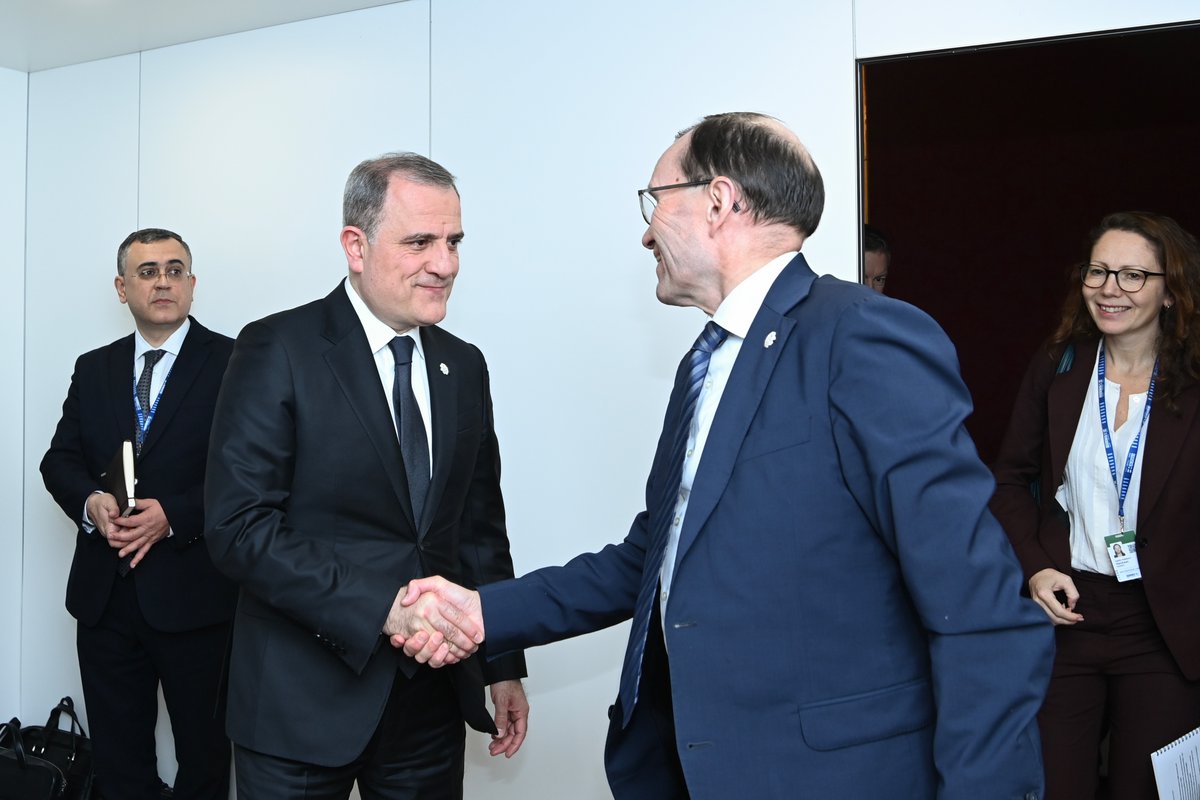
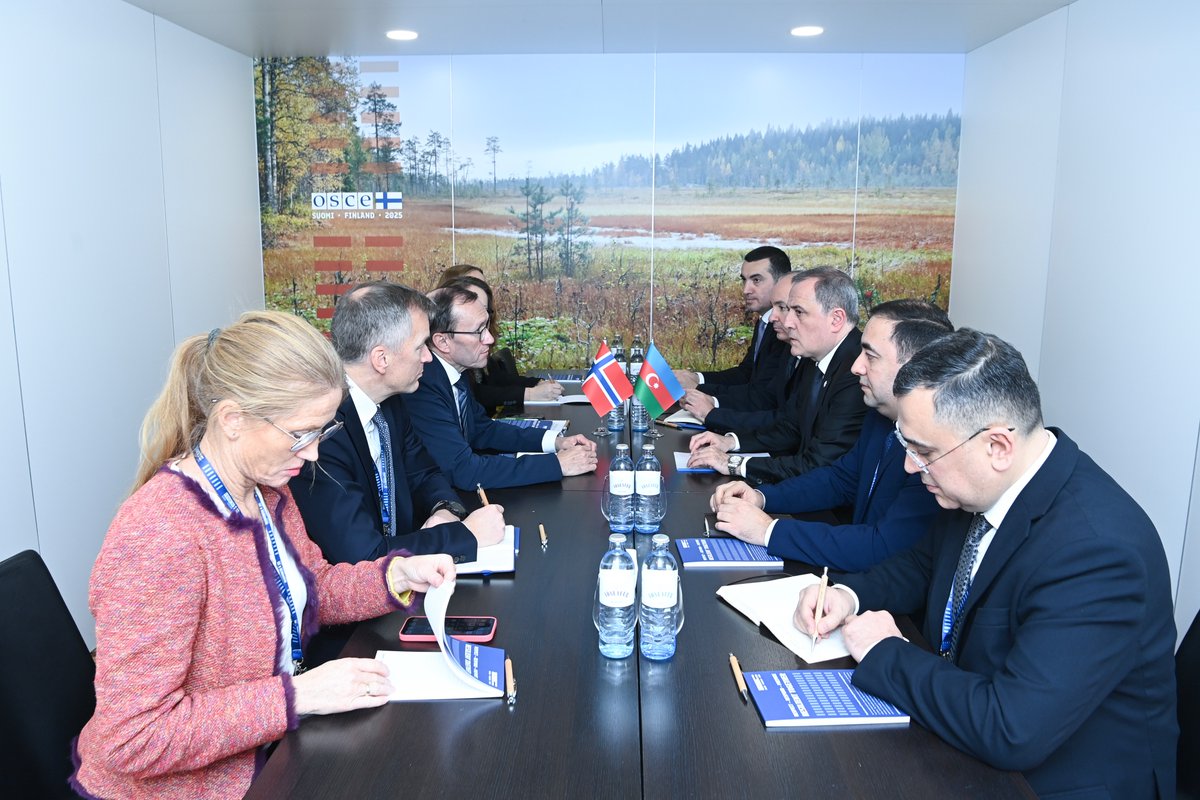
Minister of Foreign Affairs of the Republic of #Azerbaijan@Bayramov_Jeyhun met with Minister of Foreign Affairs @EspenBarthEide of the Kingdom of Norway on the margins of the 32nd Ministerial Council meeting of #OSCE in Vienna.
The Ministers reviewed the current state of 🇦🇿–🇳🇴 relations & discussed expanding political dialogue and cooperation.
Minister Bayramov also informed his colleague on the new regional realities in the South Caucasus.
My new article for 🇸🇯 "Geopolitika" reflects on the recent decision to welcome 🇦🇿 as a full-fledged member in the Central Asian consultative platform.
This strategic & timely development deepens regional cooperation & enhances Eurasian connectivity. https://t.co/mwrRuyBshH
The Odin Code, a documentary by 🇸🇪 photographer and filmmaker Mikael Silkeberg, was screened in Brussels. The film explores the fascinating links between Scandinavian and 🇦🇿 history and culture, inspired by the theory of 🇳🇴 ethnographer Thor Heyerdahl. https://t.co/ZCJBBxqInA
Amid int’l discussions on Nobel Peace Prize, I wrote in @Aftenposten on historic role of Baku 🇦🇿 & its oil in origins of @NobelPrize.
I suggested this shared history be institutionally honored in annual Nobel festivities by inviting Baku Nobel Heritage Fund.
English translation⤵️
Baku’s contribution to the Nobel Prize is a forgotten history that deserves to be told
In recent months, there have been lively discussions on the international stage about the Nobel Peace Prize and various nominations for this prize.
Just imagine if about one third of the capital behind the Nobel Prize, the world’s most prestigious award, had not come from dynamite, but from oil. Not just any oil, but the black gold that was pumped out of the dry soil of 19th century Baku, in Azerbaijan.
This is a story few Norwegians know about, and one that is rarely mentioned in the official accounts of the Nobel legacy. But without this connection between the Nobel family and Baku, the Nobel Prize might never have come into being.
The Nobels in Baku
In the 1870s, Robert Nobel traveled to Baku to buy walnut wood for rifle stocks. He did not return with timber - but with a vision. At that time, oil was literally scooped up in buckets, and much of it spilled directly into nature. Robert immediately saw the potential: “Here in Baku I feel better than anywhere else in Russia… within a few years the entire country’s paraffin production can be in our hands,” he wrote home.
When the Russian colonial authorities opened up for land concessions in 1872, Robert, together with his brother Ludvig and with Alfred’s financial support, built up Branobel – one of the world’s first oil empires.
By the turn of the century, half of the world’s oil was produced in Baku, and the Nobels’ company was one of the dominant actors, but also contributed to the extensive pollution that gave the area the name The Black City.
The oil from Baku warmed homes and lit up Europe’s cities. The paraffin extended the day and changed everyday life for millions of people.
Baku and White city
Later, Alfred Nobel’s shares in the Branobel company helped finance the Nobel Prize, a legacy of technological innovation and cultural openness, but also a legacy marked by the environmental costs for Azerbaijan and the use of the country’s natural resources.
After the Russian Revolution, the memory of this shared history almost completely disappeared from both Azerbaijani and Scandinavian consciousness. The Soviet period erased most of the traces, and the Nobels’ Baku residence - Villa Petrolea - fell into disrepair.
Only after Azerbaijan’s independence in 1991 could the story be brought back to life again, and it was the Azerbaijani state that carried out the extensive transformation that turned the Black City into the White City, a modern and vibrant urban area.
Today, Villa Petrolea is the only museum outside Sweden and Norway dedicated to the Nobel legacy.
The history is revived
Author Bengt Jangfeldt has highlighted this story in his book Immanuel Nobel & Sons. The documentary series The Nobel Brothers (StoryFire) has told it to a wider audience. Still, this Baku chapter is often absent from Nobel exhibitions.
Making Azerbaijan’s historical role in the creation of the Nobel Prize visible during the Nobel festivities - and inviting Baku’s Nobel Heritage Foundation to the celebrations - would contribute to a more complete and fair picture of the origin of the prize.
It would also be an act of acknowledging a historical fact, namely that part of the Nobel Prize’s fame and prestige actually rests on Azerbaijani soil and history.
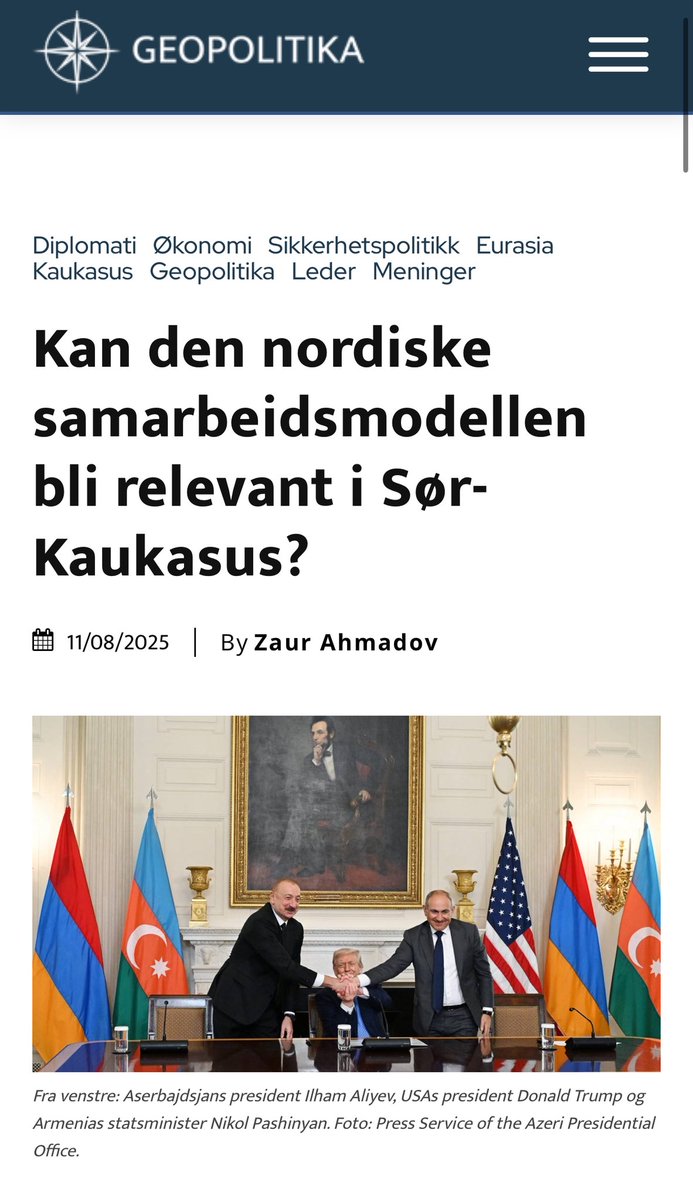
My new article in 🇳🇴 Geopolitika on a historic breakthrough in the South Caucasus:
In Washington,🇦🇿-🇦🇲 peace agreement was initialed, Minsk Process ends, TRIPP route to open - lasting peace within reach.
Can the Nordic cooperation model inspire the region?
https://t.co/7FDYmUiCRJ
Norway welcomes the agreements reached by #Armenia and #Azerbaijan and commends the efforts made by both parties and the #US. The agreements should lay the foundation for the peace process going forward, opening up for stability and prosperity for the entire South Caucasus.
For the 3rd year in a row, 🇦🇿 tops the list of @SweInstitute scholarships! For 2025, 22 🇦🇿 students won the Scholarship for Global Professionals to study business, trade law, media tech, environment, management etc at top 🇸🇪 universities! Congratulations🎉 https://t.co/3vBZxjCUTX
Azerbaijan did it!❤️🙏🏼👍
“Together, we hosted the second largest COP with only 11 months to prepare.
Azerbaijan showed the world the warmth of its hospitality, the climate challenges we face, and the solutions we are offering.” COP29 President, Mukhtar Babayev
Proud to have been part of this important moment as @COP29_AZ President signed the Children, Youth and Climate Declaration - one of his first commitments in the new role.
Together, we must work to put children and youth at the center of climate action.
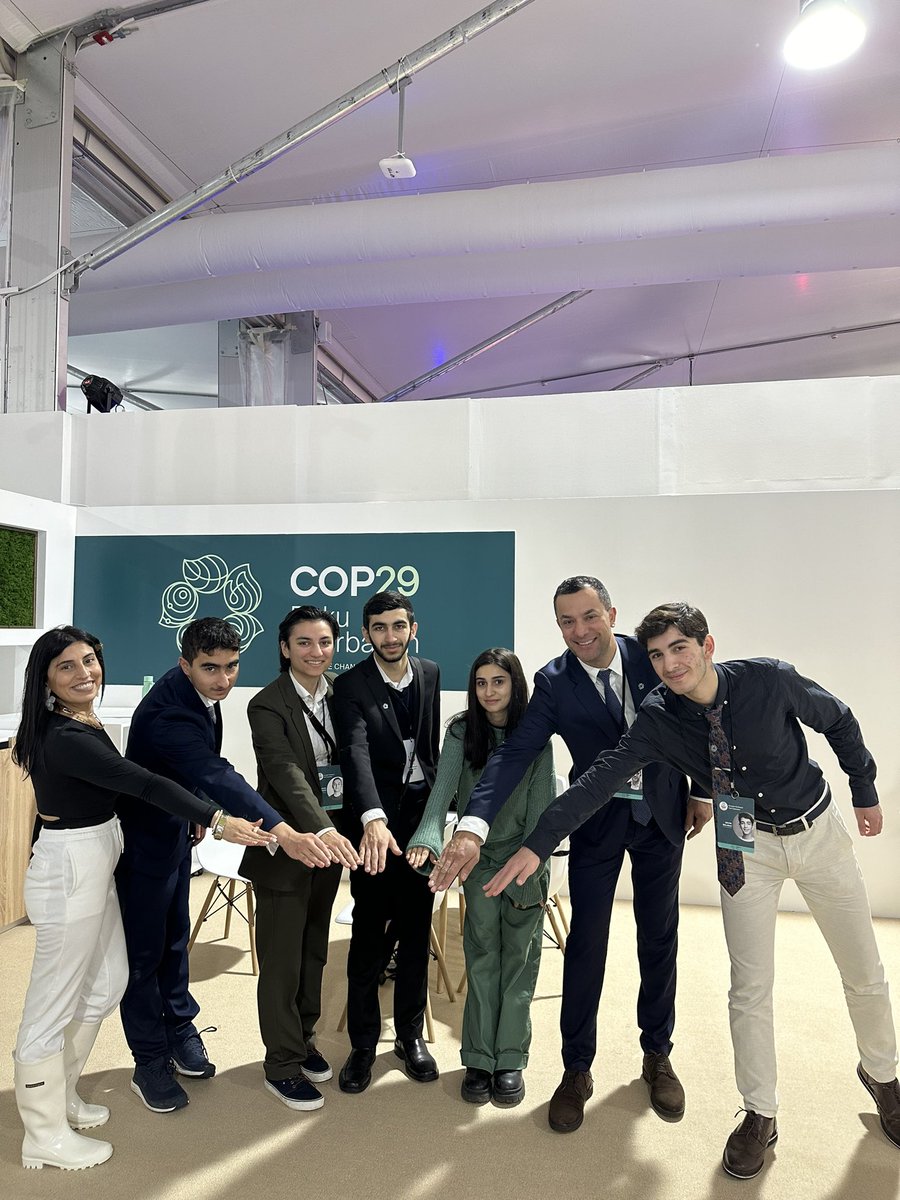
Seks deltakere fra NAYO-ledelsen, styret og lokallagene skal reise til Aserbajdsjan for å få innsikt og refleksjon fra COP29. NAYO planlegger å arrangere seminarer og kurs om FNs klimakonvensjon etter å reise tilbake og dele sine erfaringer og kunnskap med ungdommer i Oslo og Bø.
Delighted to host the @IOM_Oslo delegation, led by its chief, @FumikoNagano, at the Embassy of 🇦🇿. We had productive discussions on the efficient cooperation between @UNmigration and 🇦🇿, as well as opportunities to enhance collaboration between our missions.
🇦🇿🇳🇴 The COP29 Presidency has appointed H.E. Tore O. Sandvik, Minister of Climate and Environment of the Kingdom Norway as the Ministerial Pair on Mitigation. https://t.co/s3eOpwEOCS