📚 CCDHI CompHealth Corner — What are we reading this week?
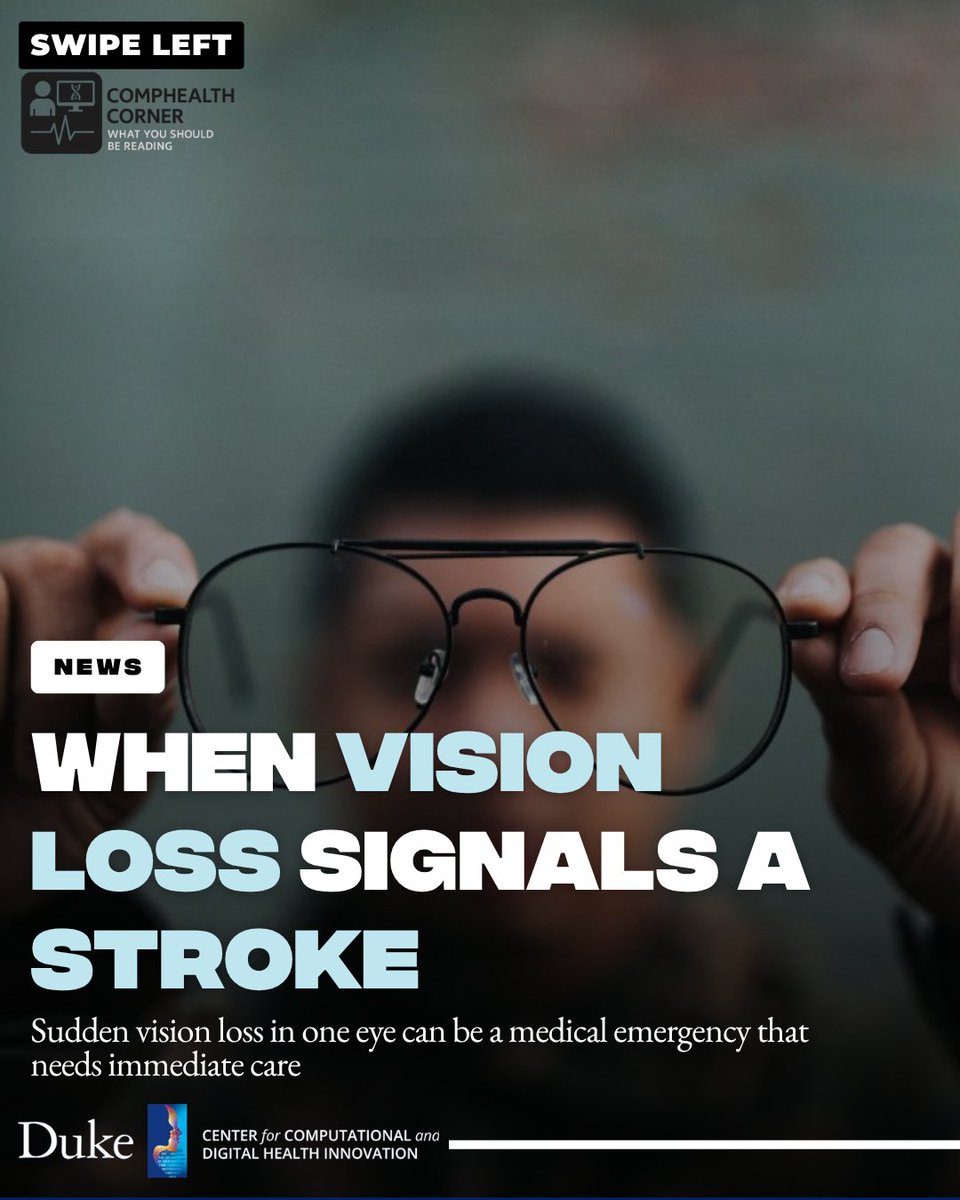
Sudden vision loss might seem like an eye issue, but it can be a sign of something far more serious.
A new review from CCDHI member Brian Mac Grory, published in Neurologic Clinics, highlights retinal artery occlusion (RAO) as a medical emergency that requires immediate evaluation, similar to how a stroke is treated.
RAO can cause sudden, painless vision loss in one eye, and recognizing the symptoms early is critical for protecting both vision and overall health.
The work also underscores the importance of connecting neurology, vascular health, and early diagnosis to improve patient outcomes.
Read more: https://t.co/cruY6BvinI
Honored to be recognized as part of the inaugural SCW75 by Scientific Computing World — celebrating leaders shaping the future of scientific computing across HPC, AI, simulation and research infrastructure.
#SCW75#ScientificComputing#HPC#AI#ResearchComputing#Simulation
Honored to be recognised as part of the inaugural SCW75 by Scientific Computing World — celebrating leaders shaping the future of scientific computing across HPC, AI, simulation and research infrastructure.
Thank you to Scientific Computing World for the recognition.
#SCW75 #ScientificComputing #HPC #AI #ResearchComputing #Simulation
📚 CCDHI CompHealth Corner — What are we reading this week?
Does daylight saving time actually change our behavior?
A new study from the lab of Jessilyn Dunn, Associate Director for Wearables at the Center for Computational and Digital Health Innovation, used large-scale Fitbit data from the All of Us Research Program to examine how daylight saving time affects physical activity patterns was recently published in Nature Portfolio's Nature Health.
Interestingly, the study found no overall change in total daily steps. Instead, activity shifted within the day. Fall transitions increased morning activity and decreased evening activity, while spring transitions showed the opposite pattern.
The effects also varied across individuals and demographic groups, suggesting that work schedules and daily routines shape how people adapt to time changes.
Beyond daylight saving time itself, the study highlights how wearable data can help us better understand the impact of public policies and environmental changes on health and behavior.
Read more: https://t.co/f2RoiDBjLh
#Wearables #DigitalHealth #ComputationalHealth #Fitbit #PublicHealth
📚 CCDHI CompHealth Corner — What are we reading this week?
How can we better understand and treat complex cardiovascular diseases?
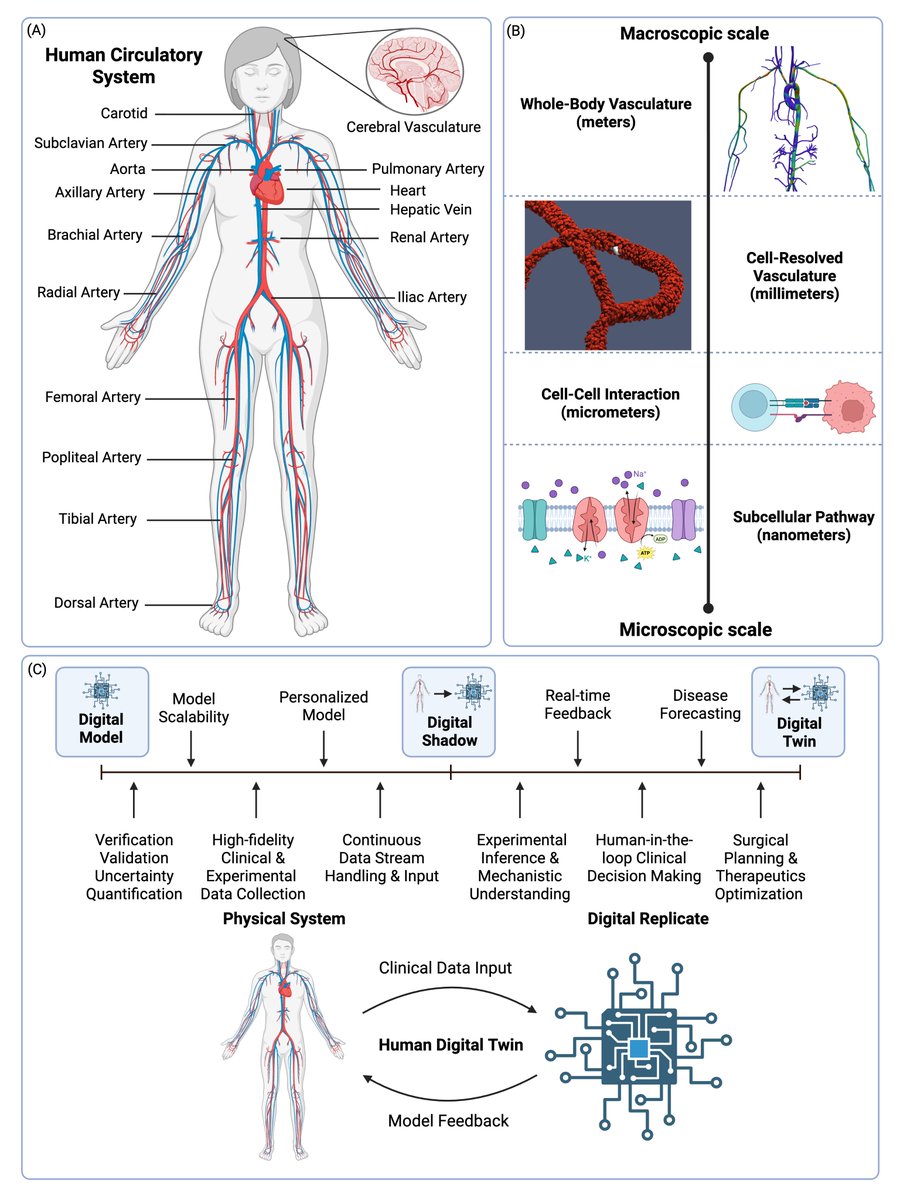
This week, CCDHI CompHealth Corner features our recent Nature Reviews Bioengineering review exploring the emerging role of digital twins in modeling the human circulatory system and the challenges of translating these technologies into precision medicine tools.
These dynamic, data-driven models integrate clinical data, physics-based simulations, and AI to represent biological processes across scales, from whole-body blood flow to cellular interactions.
Digital twins have the potential to support disease diagnosis, risk prediction, surgical planning, and personalized treatment. As advances in sensors, imaging, and high-performance computing continue, these models are moving closer to real-time clinical applications.
Check out the article here: https://t.co/TeO5eYehbe
Graduate Highlight 🎓
Through the Duke Center for Computational and Digital Health Innovation, we are excited to highlight Aristotle Martin, a recent Ph.D. graduate from the Randles Lab at Duke University.
Aristotle’s work focused on high performance computing, portability, and cellular-scale simulation methods for circulating tumor cell (CTC) and red blood cell (RBC) modeling. His contributions advanced the Adaptive Physics Refinement (APR) framework through the addition of adhesion modeling, portability improvements, and support for modern heterogeneous computing backends including Kokkos, SYCL, CUDA, and HIP.
His work helped push forward scalable biomedical simulation tools capable of running across next-generation supercomputing architectures.
We are excited to see Aristotle continue this work as a Member of Technical Staff at AMD. Congratulations, Aristotle! 💙
#ComputationalHealth #HighPerformanceComputing #BiomedicalEngineering #DigitalHealth #GPUComputing #Supercomputing #DukeEngineering
Graduate Highlight 🎓
Through the Duke Center for Computational and Digital Health Innovation, we are excited to highlight Cyrus Tanade, a recent Ph.D. graduate from the Randles Lab at Duke University.
Cyrus led impactful work spanning longitudinal hemodynamic mapping (LHM), machine learning, wearable-driven cardiovascular digital twins, and the development of HarVI. During his time at Duke, Cyrus helped advance methods for reconstructing long-term cardiovascular dynamics from wearable data, contributing to research at the intersection of AI, high performance computing, and digital health.
His work was featured through Duke Engineering, SC23, and broader computational health initiatives. Cyrus now continues this work in industry as a Senior AI Research Engineer at Samsung Research America, helping shape the future of AI-driven health technologies.
We are proud to celebrate the innovation, leadership, and translational impact represented by Cyrus’s work and excited to see what comes next in his journey. 💙
#DigitalHealth #AI #MachineLearning #Wearables #HighPerformanceComputing #ComputationalHealth #DukeEngineering
Graduate Highlight 🎓
Through the Duke Center for Computational and Digital Health Innovation, we are excited to highlight Sarah Eom, a new Ph.D. graduate in Electrical and Computer Engineering at Duke University and a member of our Associate Director of Extended Reality, Maria Gorlatova’s Intelligent Interactive Internet of Things (I³T) Lab.
Sarah’s work bridges augmented reality, IoT, and healthcare innovation, with applications spanning neurosurgery, ophthalmology, and mental health. Her research focuses on developing technologies that guide clinicians, trainees, and patients in real-world medical environments.
During her time at Duke, Sarah also served as an FDA ORISE Fellow and is now continuing her impact as a Biomedical Engineering Consultant at Exponent.
We are proud to celebrate the interdisciplinary innovation and translational impact represented by Sarah’s work and excited to see what comes next in her journey. 💙
#DigitalHealth #DukeEngineering #AugmentedReality #IoT #HealthcareInnovation #ComputationalHealth
Graduate Highlight from the Duke Center for Computational and Digital Health Innovation 🎓
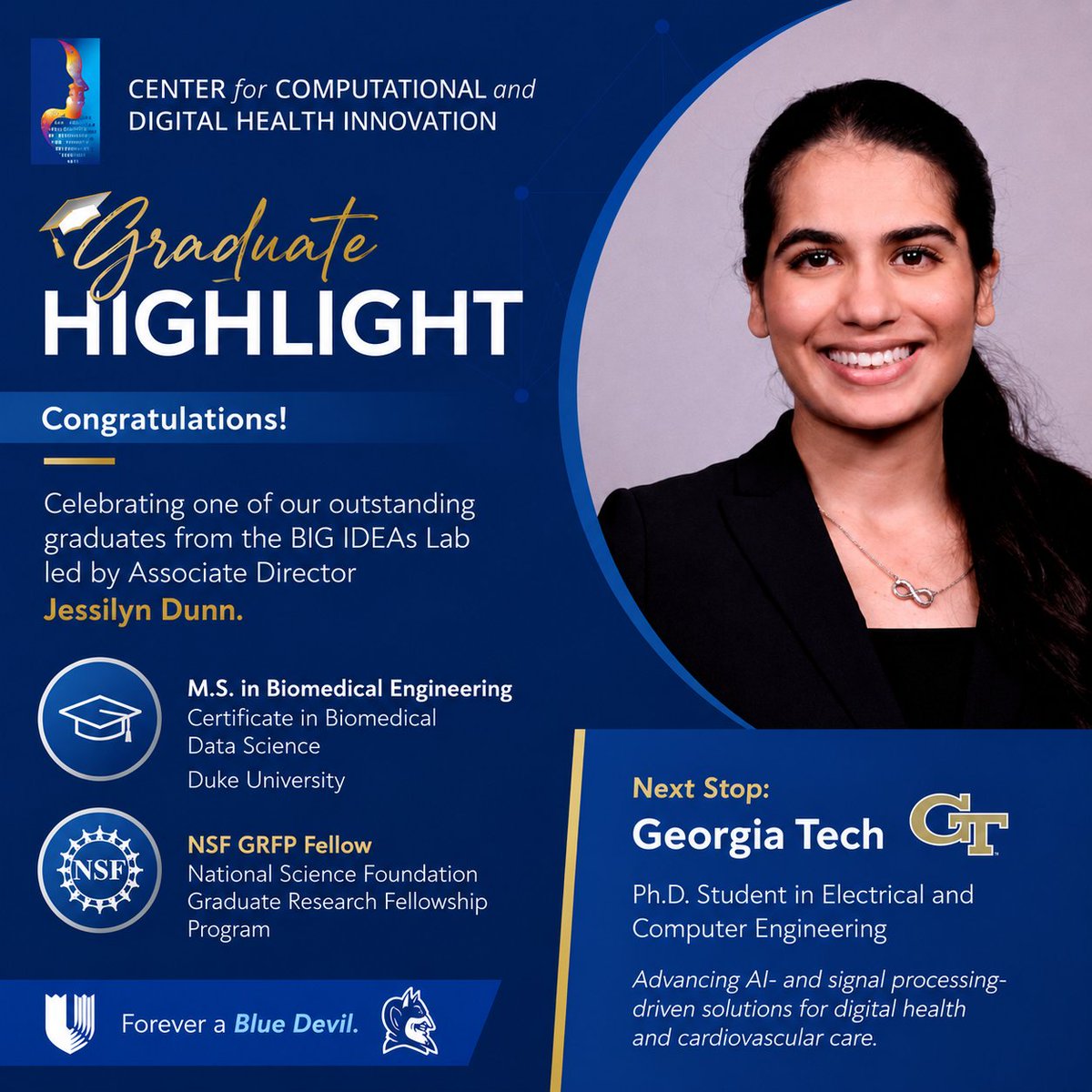
This week we are highlighting one of the outstanding recent graduates from the Duke BIG IDEAs Lab Lab led by our Associate Director of Wearables Jessilyn Dunn.
Congratulations to Perisa Ashar on graduating from Duke University with a Master of Science in Biomedical Engineering and a Certificate in Biomedical Data Science.
During her time at Duke, she contributed to a broad range of impactful research spanning digital health, wearable sensing, physiological signal processing, machine learning, cardiovascular imaging, and algorithmic fairness. Her work included projects ranging from neurological outcome prediction and sleep-disordered breathing analysis to wearable biosignal methods and cardiovascular risk assessment.
We are especially excited to celebrate her selection as an National Science Foundation (NSF) Graduate Research Fellowship Program Fellow, an incredible achievement recognizing both academic excellence and future research potential.
Next up: Georgia Institute of Technology, where she will begin her PhD in Electrical and Computer Engineering and continue developing AI- and signal processing-driven approaches for digital health and cardiovascular care.
Congratulations on this exciting milestone and best wishes for the journey ahead. We cannot wait to see all that you accomplish. 💙😈
@DukeUBME #DigitalHealth #Wearables #NSFGRFP #GraduateHighlight #FutureScientist
Behind the scenes at Duke Chapel before the hooding ceremony begins 🎓
A few Duke BME faculty members waiting together for the graduates to arrive. Always one of the most rewarding days of the year celebrating the hard work, perseverance, and accomplishments of our students.
Congratulations to the recent graduates Dr. Cyrus Tanade and Dr. Aristotle Martin from the Randles Lab.
�� Dr. Cyrus Tanade defended his PhD back in May 2025. Dr. Cyrus' dissertation, "Cardiovascular Hemodynamic Digital Twins for Diagnostic, Continuous Monitoring, and Real-Time Intervention Planning" focused on utilizing digital twins for both retrospective risk analysis and prospective intervention planning. His work in the lab included publishing the first paper on both the Longitudinal Hemodynamic Mapping Framework (LHMF) and HARVEY Virtual Intervention (HarVI) tool. Dr. Cyrus Tanade is currently working as a Senior AI Research Engineer at Samsung Research America.
🎓 Dr. Aristotle Martin defended his PhD in December 2025. Dr. Aristotle's dissertation "Parallel Adhesive Dynamics With Adaptive Physics Refinement for Large-Scale Tracking of Circulating Tumor Cells" focuses on the fluid-structure-interaction methods within the lab. Some of his notable works include designing GPU-Accelerated Communication Layer for Efficient Fluid-Structure Interaction Computations on Heterogeneous Systems and publishing work on high-throughput adaptive physics refinement for tissue-scale adhesive dynamic. Dr. Aristotle Martin is currently working as a member of Technical Staff at AMD.
🏆It has been an honor to be a part of both of their journeys and to watch them grow as researchers. They leave behind a lasting impact on our research group and on everyone who has had the opportunity to work alongside them. While it is always bittersweet to see graduates leave the lab, we are incredibly proud of all they have accomplished during their time with us and look forward to seeing all that they will achieve in the future. Wishing them continued success and all the very best in the exciting journey ahead. 🎉🎓
#Duke #DukeBME #ComputationalModeling #BiomedicalEngineering #PrattEngineering #DigitalTwins #proudadvisor #phd #graduation #nextgenerationresearchers #hpc
Big week for the lab—multiple papers coming out, and always fun to see the work finally in print.
This one is especially meaningful as one of Cyrus Tanade’s final papers before he returns for hooding.
In this study, we show how combining physics-based modeling with machine learning enables accurate, non-invasive estimation of fractional flow reserve (FFR)—without the computational burden of traditional approaches.
By shifting to efficient steady-state models and refining predictions with ML, we achieve strong agreement with clinical gold standards while improving scalability for real-world use.
A step toward practical, patient-specific cardiovascular digital twins for clinical decision-making.
Read the full paper here: https://t.co/3RHUf7GSm3
We are rapidly moving from describing physiology to predicting it.
Our new Review in Nature Reviews Bioengineering explores how digital models are evolving into true digital twins of the human circulatory system—dynamic, patient-specific systems that continuously integrate data to simulate disease progression and guide treatment decisions.
This effort was led by Wendy (Runxin Wu), who did an outstanding job bringing together the multiscale vision—from cellular transport to whole-body hemodynamics—and the computational, clinical, and data integration challenges that define the field.
A fantastic collaboration with Guinevere Ferreira, Nusrat Sadia Khan, Samreen T. Mahmud, Jorik Stoop, Lydia Sohn, and Jane Leopold.
Circulatory digital twins bring us closer to a future where we can anticipate disease and personalize care in real time.
Read more: https://t.co/vMlW4LxiBo
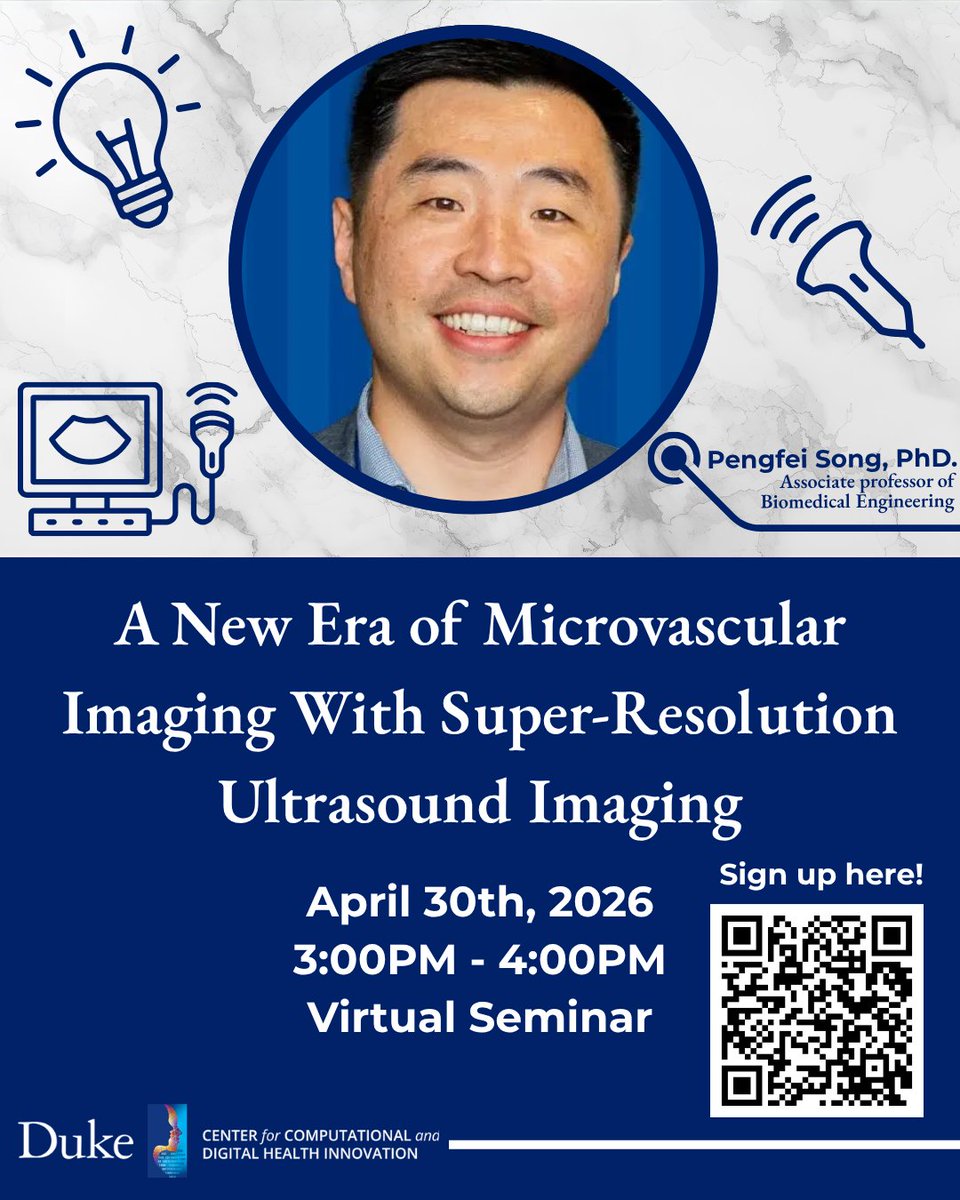
Join us for a virtual seminar with Pengfei Song, PhD, Associate Professor of Biomedical Engineering at Duke University.
Dr. Song’s research is advancing a new era of medical imaging through innovations in ultrafast and super-resolution ultrasound, with applications spanning 3D imaging, functional imaging, and AI-driven approaches. His work has led to over 100 peer-reviewed publications and technologies that are now used in clinical practice worldwide.
In this talk, Dr. Song will explore how super-resolution ultrasound is opening new possibilities for visualizing microvascular structures and improving our understanding of disease.
Date: April 30, 2026
Time: 3:00–4:00 PM
Place: Virtual Seminar
Register using the QR code to attend.
Honored to give the 2026 Daubechies Lecture today. I still remember meeting Ingrid Daubechies during my Duke interview—intimidating at first, but incredibly welcoming. My time in iiD helped shape how I approach interdisciplinary research. Grateful for this moment.
https://t.co/ocFdIELhMt
From snapshots to continuous health.
Why duration and trajectories matter for digital twins and early detection.
Check out part 1 of my interview with @HlthcareToday: https://t.co/EUJaKnpNkg
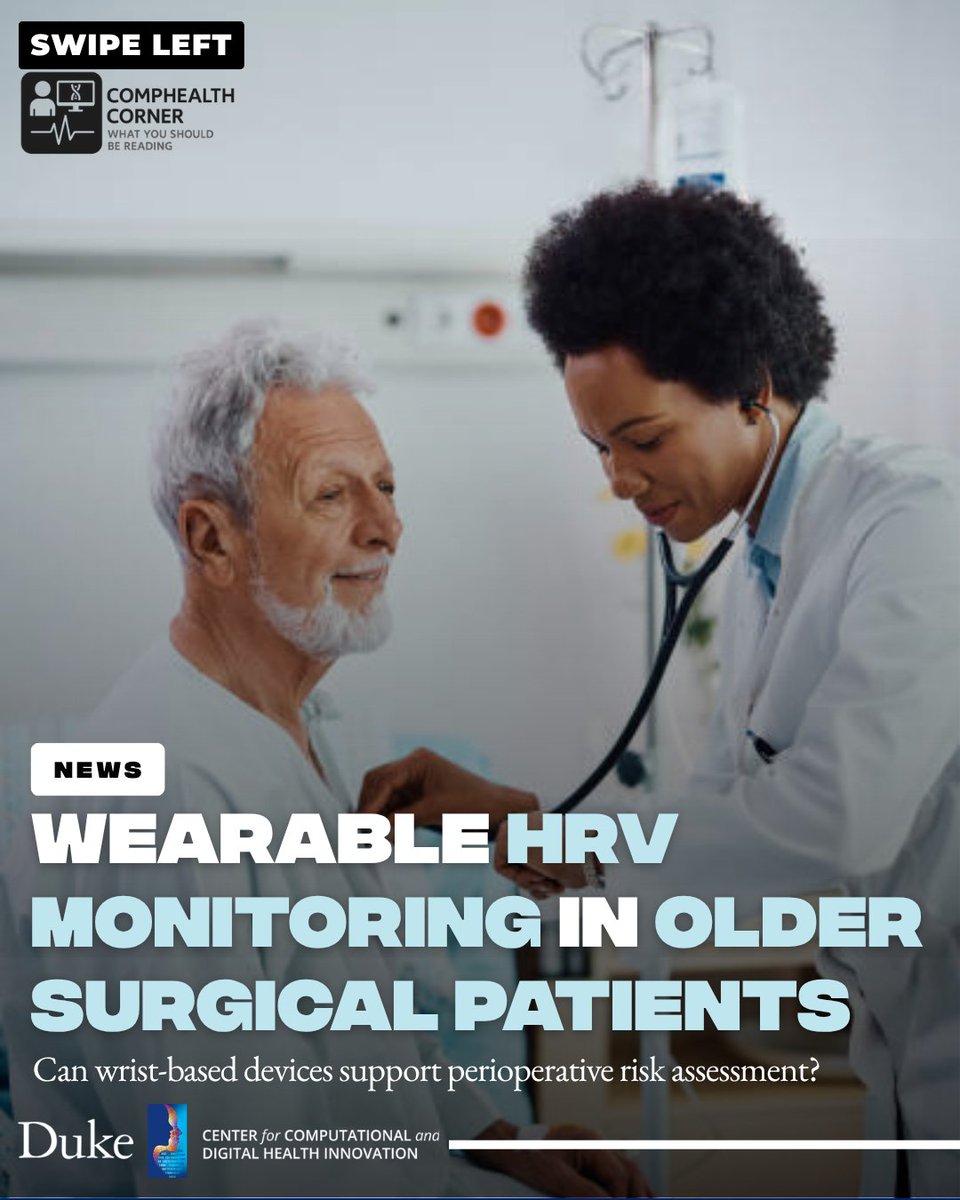
Wearables for surgical risk are getting real.
New study from Duke Center for Computational and Digital Health Innovation member, Leah Acker, shows wrist-based HRV monitoring is feasible pre-op, with important challenges post-op.
A great example of translational digital health in action.
CompHealth Corner pick:
https://t.co/RSGcqULtc7
Sudden vision loss might seem like an eye issue, but it can be a sign of something more serious.
A new review in Neurologic Clinics highlights retinal artery occlusion (RAO) as a medical emergency. It can cause sudden, painless vision loss in one eye and requires immediate evaluation, similar to how a stroke is treated.
Recognizing these symptoms early is critical for protecting both vision and overall health. For more information from this paper from Center for Computational and Digital Health Innovation member Brian Mac Grory and team, check out the full paper here: https://t.co/iRbU9lWKaJ
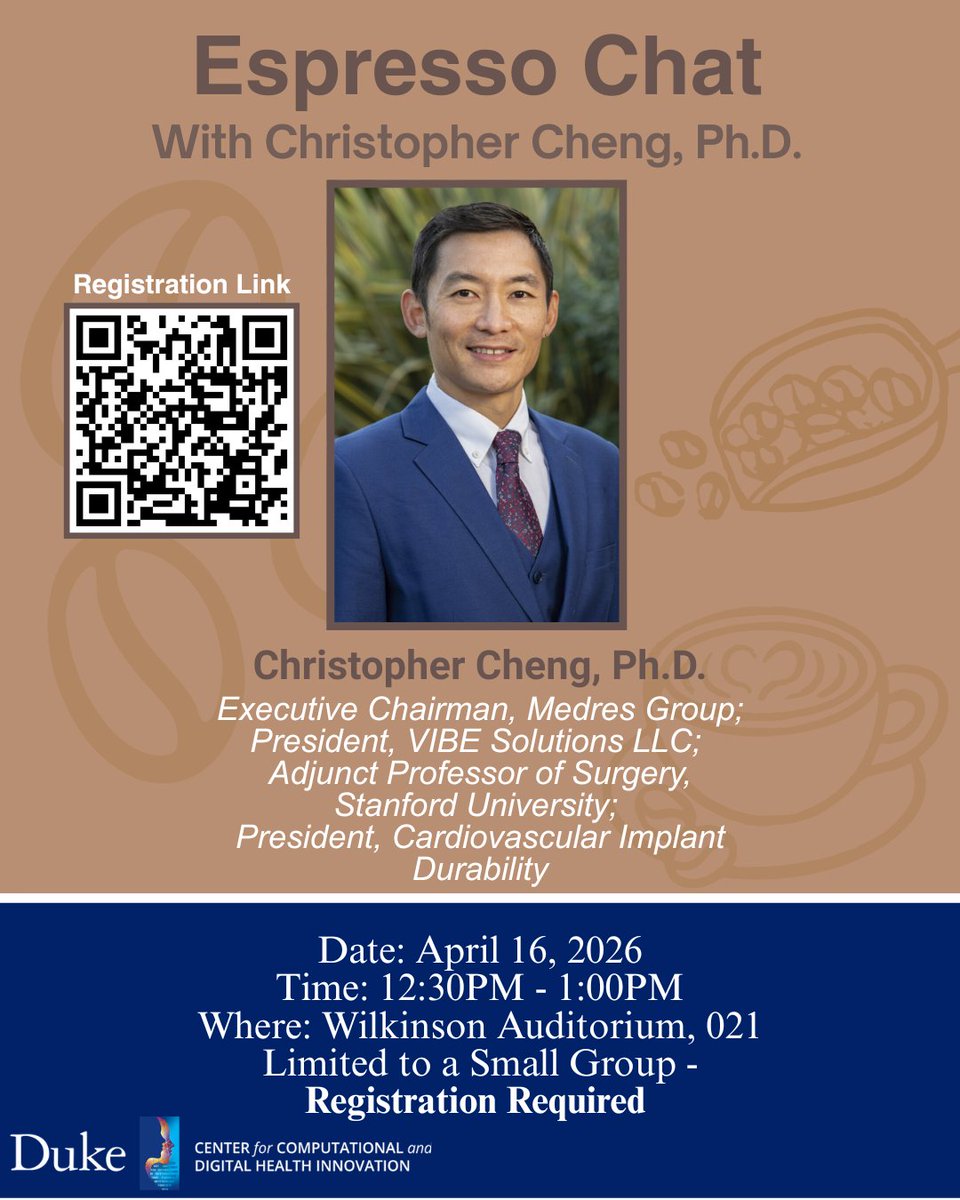
Join us for a seminar with Dr. Christopher Cheng on April 16 from 11:30–12:30 in Wilkinson Auditorium 021, where he’ll share how vascular motion research drives medical device innovation. Stay after for a small-group Espresso Chat from 12:30–1:00 PM. Limited spots—register via QR code!