When I was with the St. Louis Cardinals organization, we were playing the Miami Marlins organization in the Championship Series.
Earlier in the game, they threw me a fastball inside.
I got jammed.
Weak contact.
Easy out.
I remember jogging back to the dugout frustrated.
Not because I got out.
Because I knew I should have seen it coming.
That pitch wasn't random.
They were trying to beat me there.
Fast forward to the 9th inning.
We're down by 1.
There's 1 out.
The 2-hole hitter walked.
Runner on first.
The closer who threw up to 97 MPH came into the game.
If they get me to hit into a double play...
GAME OVER.
I was hitting 3rd.
Shane Peterson was hitting behind me in the 4-hole.
He looked at me and said:
"Hit a home run."
I looked back and said:
"No. You hit it."
He said:
"No. You do it."
After a little back and forth, I finally said:
"Forget it. I'll do it."
Now let's be honest.
Hitting a home run is extremely hard.
And every time I've ever tried to hit a home run...
It rarely worked out.
Especially in the 9th inning of a playoff game.
So why was I so confident?
Because I wasn't guessing anymore.
Earlier in the game, they had already shown me their plan.
They wanted to beat me inside.
The first time they won.
The second time I was ready.
First pitch.
Slider away.
Ball.
1-0.
Second pitch.
Fastball inside.
Exactly where I thought it would be.
I put my best swing on it.
Home run...down the left field line.
We took the lead.
The next day we won the championship.
So here's what I teach my hitters now, and what you can try tonight:
After each swing in batting practice, ask yourself:
What did that swing teach me?
Then make one adjustment.
Maybe it's your timing.
Maybe it's your contact point.
Maybe it's the pitch you're hunting.
Maybe it's your approach.
Don't just swing.
Study.
Adjust.
Repeat.
Because there's one thing baseball taught me:
The game will usually tell you how to beat it.
Most of the time, we're too frustrated to listen.
Thank you for reading,
Jermaine Curtis
P.S. Attached is the newspaper article from that game.
P.P.S. If you enjoyed this and thought it was helpful, please share it.
It tells me you want more content like this.
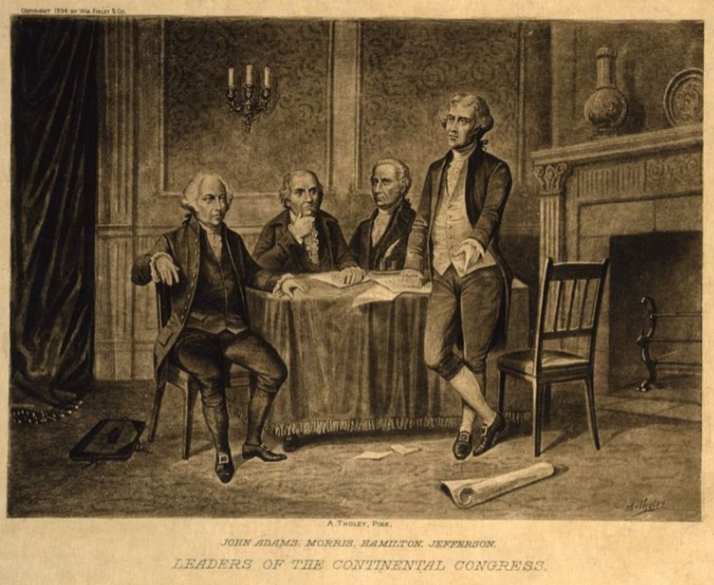
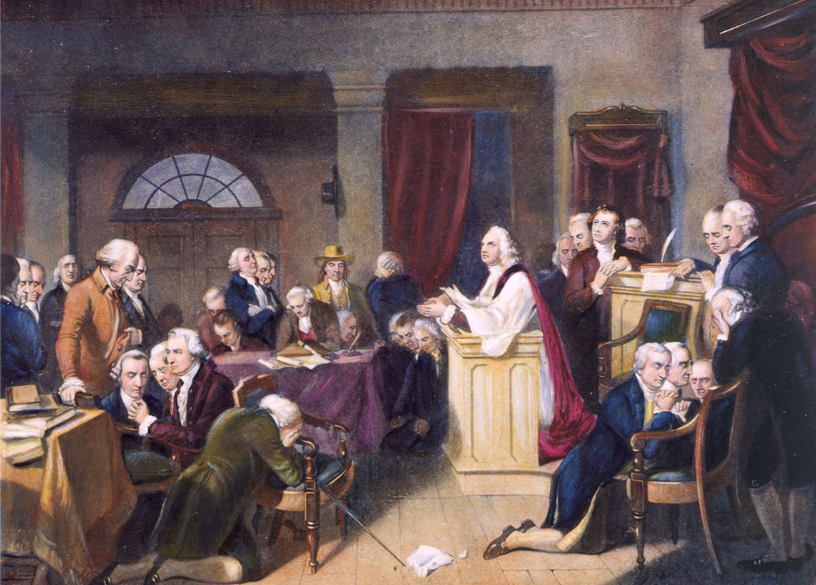
On this day in our Road to 1776 series: September 5, 1774. Delegates from twelve colonies gathered in Philadelphia for the First Continental Congress.
They met in response to the Intolerable Acts punishing Boston. The Congress adopted the Continental Association (a boycott of British goods), sent a petition to King George III, and prepared for possible war. They also agreed to meet again the following year.
This was a major step toward colonial unity. Figures like George Washington, Patrick Henry, John Adams, and Samuel Adams began working together across colony lines. While still hoping for reconciliation, they laid the groundwork for coordinated resistance.
The momentum toward independence was accelerating.
Tomorrow: Escalation toward open conflict.#RoadTo1776 #Declaration250 #AmericanRevolution #ContinentalCongress
@memeshiftedwake@BeauHoss@baseballisdead_ I still don’t understand why it was unanimously approved when it would obviously be hurting the big market teams. Maybe Manfred sold them on putting in a salary cap.
Just end antitrust exemption and let the market figure out something better than MLB!
On this day in our Road to 1776 series: December 16, https://t.co/0xr2erGbVE one of the most famous acts of defiance, the Boston Tea Party took place.
Disguised as Mohawk Indians, dozens of Patriots boarded three British ships in Boston Harbor and dumped 342 chests of tea (worth nearly $1 million today) into the water. They protested the Tea Act, which gave the British East India Company a monopoly and reinforced the tax on tea.
This bold action was organized by the Sons of Liberty in response to Britain’s continued insistence on taxing the colonies. No one was injured, and the tea was the only target destroyed. Britain responded harshly with the Coercive (Intolerable) Acts — closing Boston Harbor, altering Massachusetts government, and more.
Instead of cowing the colonists, it united them further.
Tomorrow (June 12): The First Continental Congress.#RoadTo1776 #Declaration250 #AmericanRevolution #BostonTeaParty
On this day in our Road to 1776 series: March 5, 1770. British soldiers fired into a crowd in Boston, killing five colonists in what became known as the Boston Massacre.
Tensions had escalated after the Townshend Acts. Colonists harassed the troops; the soldiers, feeling threatened, fired. Among the dead was Crispus Attucks, a mixed-race dockworker — often considered the first martyr of the Revolution.
Paul Revere’s famous engraving (based on Henry Pelham’s work) spread the image of British “butchery” across the colonies, inflaming public opinion. John Adams defended the soldiers in court (six were acquitted, two convicted of manslaughter), showing commitment to justice.
The Massacre became powerful propaganda that unified colonial outrage.
Tomorrow (June 11): The Boston Tea Party.#RoadTo1776 #Declaration250 #AmericanRevolution
On this day in our Road to 1776 series: June 29, 1767 Parliament passed the Townshend Acts — a new set of taxes on glass, lead, paints, paper, and tea imported into the colonies.
Named after Chancellor Charles Townshend, these laws also created a Board of Customs Commissioners in Boston and strengthened enforcement. Unlike internal taxes, these were external duties, but colonists saw them as the same dangerous principle: taxation without representation.
The revenue was even earmarked to pay British officials’ salaries in the colonies — making governors and judges less dependent on colonial assemblies. Resistance reignited. John Dickinson’s “Letters from a Farmer in Pennsylvania” argued the taxes were unconstitutional. Boycotts resumed, and tensions in Boston grew as more British troops arrived.The Townshend Acts kept the fire of liberty burning.
Tomorrow (June 10): The Boston Massacre — when protest turned deadly.#RoadTo1776 #Declaration250 #AmericanRevolution
On this day in our Road to 1776 series: Summer–Fall 1765.
In direct response to the Stamp Act, colonists organized fierce resistance that transformed scattered grievances into coordinated action.
The Sons of Liberty emerged in cities across the colonies — secret networks of artisans, merchants, and leaders (including Samuel Adams in Boston) who used protests, effigy burnings, and direct pressure to force Stamp Act distributors to resign. Under Liberty Trees and Liberty Poles, they rallied the public with the cry “No taxation without representation.”
Merchants and ordinary colonists launched widespread boycotts of British goods. Women formed “Daughters of Liberty,” producing homespun cloth and refusing imported luxuries. In October 1765, nine colonies sent delegates to the Stamp Act Congress in New York — a landmark step toward colonial unity.
The pressure worked. British merchants, hurt by the boycotts, lobbied Parliament, and the Stamp Act was repealed in March 1766.
Colonists celebrated wildly… but Parliament also passed the Declaratory Act, asserting its right to tax the colonies “in all cases whatsoever.”
Resistance had scored a victory — but the deeper struggle over rights and representation was just beginning.
Tomorrow (June 9): The Townshend Acts and further escalation.
#RoadTo1776 #Declaration250 #AmericanRevolution #SonsOfLiberty
When I was with the Cincinnati Reds organization, I played against a player from the Texas Rangers organization.
The reason I noticed him was because he used to hit a lot like me.
- Lots of singles.
- A few doubles.
- An occasional extra-base hit.
Not much power.
He wasn't a big guy either.
Maybe 185 pounds soaking wet.
Fast center fielder.
The type of player nobody would look at and think:
"Power hitter."
Then one day I saw him again.
And he looked like a completely different hitter.
Balls were jumping off his bat.
He was driving balls into the gaps.
Hitting home runs.
I remember thinking:
"What happened to this guy?"
A few days later, he hit a double and ended up standing on second base.
So I asked him:
"What did you do differently?"
His answer surprised me.
He said:
"I started hitting with a fungo."
That was it.
A fungo.
I looked at him and said:
"A fungo?"
He laughed.
Then he said:
"Yeah."
"The thing is lighter, so it gives you instant feedback."
"If I take a bad swing, I know it immediately."
"If I roll over, I can feel it."
"If I stay through the baseball, I can feel that too."
"And when I really square one up..."
"You can feel the backspin come off the bat."
Then he said:
"It's teaching me how to catch the ball farther out front."
"I don't know how else to explain it."
"It just gives me feedback."
I couldn't stop thinking about it.
The next day, we were traveling home.
I couldn't wait to try it.
So before batting practice, I grabbed a fungo and started hitting with it.
The feel was completely different.
A few days later, I hit my first home run of the season.
That's when I learned:
Power isn't always strength.
Sometimes it's skill.
He didn't become a different athlete.
He learned a different movement.
So here's what I'd do tonight if I wanted a little power boost:
1. Fungo Tee Work (10 Swings)
Focus on catching the ball out front and staying through it.
2. Fungo Front Toss (10 Swings)
Pay attention to the feel.
Can you feel the barrel staying through the baseball?
Can you feel the backspin?
3. Regular Bat Front Toss (10 Swings)
The first few swings might feel off because your regular bat is heavier.
Don't get discouraged.
Stay with the same feeling you had with the fungo.
Thank you for reading,
Jermaine Curtis
P.S. - If you enjoyed this and thought it was helpful, please share it.
It's free.
Plus, when you share it, it tells me you want more content like this.
On this day in our Road to 1776 series: March 22, 1765.
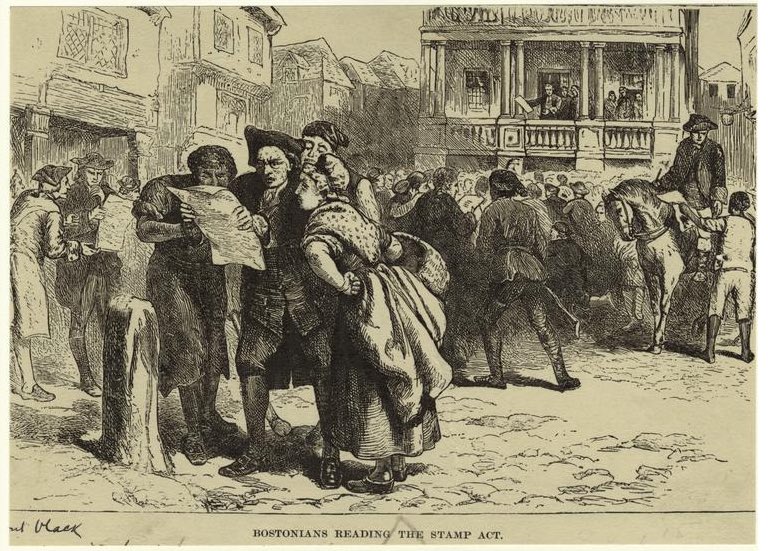
British Parliament passed the Stamp Act — the first direct tax ever levied on the American colonies by Parliament.
It required colonists to purchase special stamped paper for every printed item: newspapers, legal documents, licenses, ship’s papers, playing cards, almanacs, and more. The tax had to be paid in British currency, not colonial money, and violators faced trial in vice-admiralty courts without juries.
What Britain intended as a simple way to raise revenue for colonial defense after the French and Indian War, the colonists saw as a dangerous precedent: taxation without representation.
The reaction was explosive.
• Patrick Henry famously thundered in Virginia: “If this be treason, make the most of it.”
• Mobs formed, tax collectors were harassed or forced to resign.
• In October 1765, nine colonies sent delegates to the Stamp Act Congress in New York — the first unified inter-colonial political action.
The Stamp Act united the colonies as never before and gave birth to the powerful slogan that would echo all the way to Independence: “No taxation without representation.”
Tomorrow (June 8): Colonial resistance intensifies — boycotts, the Sons of Liberty, and the road to repeal.
#RoadTo1776 #Declaration250 #AmericanRevolution
On this day in our Road to 1776 series: April 5, 1764.
British Parliament passed the Sugar Act (officially the American Revenue Act of 1764).
Intended to help pay off the enormous debt from the French and Indian War, this law reduced the duty on foreign molasses (from 6 to 3 pence per gallon) but dramatically strengthened enforcement. It also imposed new duties on foreign sugar, wine, coffee, textiles, and other goods imported into the colonies. Smugglers would now face strict customs officials, bonds, paperwork, and trials in vice-admiralty courts without juries.
For New England merchants and distillers — whose rum industry relied heavily on cheap molasses — this was a serious economic blow. What Britain saw as reasonable revenue and trade regulation, many colonists viewed as the first direct tax imposed without their consent.
James Otis and others began articulating the principle: “No taxation without representation.” Petitions and boycotts followed. The Sugar Act marked a turning point — Britain was shifting from regulating trade to raising revenue from the colonies.
The path toward resistance was widening.
Tomorrow (June 7): The Stamp Act of 1765 — the crisis that united the colonies.
#RoadTo1776 #Declaration250 #AmericanRevolution”
On this day in our Road to 1776 series: October 7, 1763.
Just months after the Treaty of Paris ended the French and Indian War, King George III issued the Royal Proclamation of 1763.
This decree drew a line along the crest of the Appalachian Mountains — the Proclamation Line. It forbade British colonists from settling or purchasing land west of that line in the newly acquired territories. The British government’s stated goal: to prevent further costly conflicts with Native American tribes after Pontiac’s Rebellion and to stabilize the frontier while Britain managed its massive war debt.
For many colonists, however, this was a bitter betrayal.
Speculators, veterans (including George Washington), and land-hungry families had dreamed of expanding westward into the rich Ohio Valley and beyond. The Proclamation seemed to lock them out of the very lands they had helped win from France. It reinforced the growing feeling that Britain viewed the colonies as a source of revenue and control — not as equal partners with rights to growth and self-determination.
What Britain intended as temporary administration became yet another grievance that fueled colonial resentment.
The seeds of independence were being planted deeper.
Next Post: The Sugar Act of 1764 — the first direct tax aimed at the colonies.
#RoadTo1776 #Declaration250 #AmericanRevolution”
On this day, we begin our journey to July 4th, 1776.
In 1763, the Treaty of Paris ended the French and Indian War (Seven Years’ War). Britain had won a stunning victory, gaining vast territories in North America. But victory came at a steep price.
Britain’s national debt had nearly doubled — soaring to over £130 million. To manage this burden and maintain a standing army in the colonies, British leaders looked across the Atlantic. They began viewing the American colonists not as equal partners in the Empire, but as subjects who should help pay the bill.
New taxes and tighter controls would soon follow: the Sugar Act, Stamp Act, and more. What Britain saw as reasonable contributions, many colonists saw as violations of their rights as Englishmen — especially “taxation without representation.”
The war had also changed the colonists. Fighting alongside British regulars had given them military experience and a growing sense of shared American identity. The frontier felt more open, yet Britain’s Proclamation of 1763 attempted to restrict westward expansion.
A quiet tension began to build — one that would transform loyal British subjects into revolutionaries over the next 13 years.
The road to Independence started here, in the aftermath of one war that planted the seeds for another.
Tomorrow: The Proclamation of 1763 and restricted colonial dreams.
Images are the signing of the Treaty of Paris which officially ended the French and Indian War and the map of the US after the signing of that treaty
#RoadTo1776 #Declaration250 #AmericanRevolution”
I am fascinated by history. I enjoy diving into a period and absorbing as much as I can from different angles and authors. I have done this over the last several years with the Revolutionary War period and I thought it would be fun to post daily leading up to the 250th anniversary of the signing of the Declaration of Independence.
There is SO much out there around this period and there is no way to cover this in sufficient detail between now and July 4th so my posts will not be overly detailed. I am focusing on the period from the end of the French and Indian War to the July 4th signing. I hope these posts will lead people to do some additional research and, selfishly, post about additional resources and different perspectives.
There is a lot to celebrate this July 4th. I remember celebrating when America turned 200. We had a block party on our street, like we always did. Neighbors getting together, kids doing skits, games of “skill” (water balloon toss, relay races, etc), barbecues and ending with the fireworks show. Such fun memories and ones I wish everyone had the opportunity to enjoy.
I sat on this for a couple of days so I will be posting the first 3 days today, and then it will be a post per day after that. I hope folks enjoy this and share it if you do!
When I was with the St. Louis Cardinals, I saw Matt Carpenter do one of the strangest things.
He always had a bat in his hand.
Before the game.
In the clubhouse.
In the tunnel.
Walking around the stadium.
And he was constantly taking swings.
No baseball.
No tee.
No pitcher.
Just swing after swing after swing.
We call them dry hacks or dry swings.
One day I finally asked him about it.
I said,
"Carp, why do you take so many dry swings?"
His answer surprised me.
He said:
"I'm visualizing success."
That was it.
I remember standing there thinking about that for a second.
Because I had always viewed dry hacks as physical work.
Matt viewed them differently.
Every swing was a confidence rep.
He wasn't just moving a bat.
He was seeing himself drive a fastball into the gap.
He was seeing himself stay on an off-speed pitch.
He was seeing himself compete and succeed before the game ever started.
That's when a light bulb went off for me.
Think about it.
Every player wants confidence.
But most players wait for a hit before they allow themselves to feel confident.
Matt was doing the opposite.
He was building confidence before he ever stepped into the batter's box.
By the time the game started...
He had already seen himself succeed hundreds of times.
So I decided to try it myself.
When nobody was around, I'd grab a bat and take dry hacks.
But this time, I wasn't just swinging.
I was visualizing.
I saw myself driving balls into the gaps.
I saw myself competing with two strikes.
I saw myself getting big hits in big situations.
And over time, I noticed something.
I felt different on the field.
More confident.
More relaxed.
More prepared.
And the results started improving too.
Not because I magically became a better hitter overnight.
But because I stopped waiting for confidence to show up.
I started building it before the game ever started.
So if youre struggling with confidence...
Here's my "Confidence Booster Plan" I'd Do Tonight:
1. Dry Hacks (10 Swings)
Visualize yourself driving a line drive into the gap.
2. Dry Hacks (10 Swings)
Visualize yourself battling with two strikes and winning the at-bat.
3. Dry Hacks (10 Swings)
Visualize your next game. See yourself stepping into the box confident, aggressive, and ready to compete.
30 swings.
30 confidence reps.
One thing I've learned from Matt Carpenter:
Most players practice their swing.
Elite players practice confidence.
Thank you for reading,
Jermaine Curtis
P.S. - If you enjoyed this and thought it was helpful, please share it.
(When you share it, it tells me you want more content like this.)