My take about the Google Search Doc Leaks 🚨👀👇
Since the leak disclosure, we've seen a few members of the SEO community complain about the lack of transparency and contradicting information shared in the past by Google about some of what has been found in the documentation.
On the one hand, I've witnessed the increase in communication, resources and support that Google has been providing to the SEO community in recent years vs what existed when I started in SEO back in 2007, for which I'm appreciative, as it has not only highly facilitated my day to day with clients and projects, and in general, has had a net positive impact on how business owners and companies decision makers views on SEO has evolved over time.
On the other hand, I also believe it's important to understand how it's reasonable that Google will tend to be careful about what they disclose to protect what they might think could be sensible for manipulation.
Then also, how Googlers who engage with the SEO community will obviously need to follow internal communication guidelines, and many times, they might also potentially not necessarily know about the specifics or inner workings of everything, and try to give the best possible advice under the given circumstances despite this, but might not always be able to due to this.
Because of all this, and the importance of context in SEO, is fundamental to take whatever is shared in SEO -from Google or not- with a healthy dose of skepticism, and have always a proactive "test for yourself" mindset, to decide whether something is actually useful or impactful and makes sense to take into account in your particular case.
I would highly recommend you to also follow these principles with the leaked information.
While I don't think these findings will refer anybody to do something directionally different from what's being done at the moment if they're following a Product-first SEO approach, they can be used to showcase the importance and get further buy-in, as well as the flexibility to develop tests for additional support related to areas we know are important, among others:
* Growing a recognizable brand in our sector
* Paying more attention to how users engage with our site from search and beyond, and how our UI/UX efforts, as well as content format/offering can be optimized accordingly
* Avoiding doing SEO on a silo and how it needs to be further integrated/supported with other marketing activities
* How quality, authority and relevance over quantity are key in link-building
* The importance of selecting the right format to optimize content to better address user search intent
* Developing real expertise and featuring expert authors behind your content
Just remember to test for yourself, aligning your findings to what's going to be positive for your product user search experience and marketing goals while avoiding missing the forest for the trees.
I share this and more in the latest #SEOFOMO 👇 featuring also an aggregation with the latest Google leak related analysis, resources and tools! Read it now and subscribe: https://t.co/CYZyDHCx25
Want to easily spot if your sites have been likely affected by Google's Core Updates for free? 📈 Use GSC Guardian! The free Chrome extension from @DasfNYC highlighting Google Updates over your Search Console Performance report 👀 Check it out 👇 https://t.co/FeKe3PDn3v
I LOVE queryhunter
It’s such an amazing tool and honestly I logged into gsc the other day and kept clicking around like a fool to find the page filter cause I’m so out of practise since I use query hunter so often now :p
Chat GPT just became an SEO super-tool:
UPLOAD:
1. Queries.csv
2. Pages.csv
3. Countries.csv
4. Dates.csv
QUERY:
Explain traffic spike.
PROCESS:
It combines csv data, looks at the full scope, writes python, *EXECUTES PYTHON*, and shows results. In this case a graph of data and a text interpretation highlighting the dates and the country the spike in traffic is related to.
OUTPUT:
Already missing Universal Analytics interface and have a hard time getting used to GA4? Check out this Looker Studio Report featuring UA reports for your GA4 data 🤯🔥👏 https://t.co/WFnyKesTbQ /ht @GA4classicMode
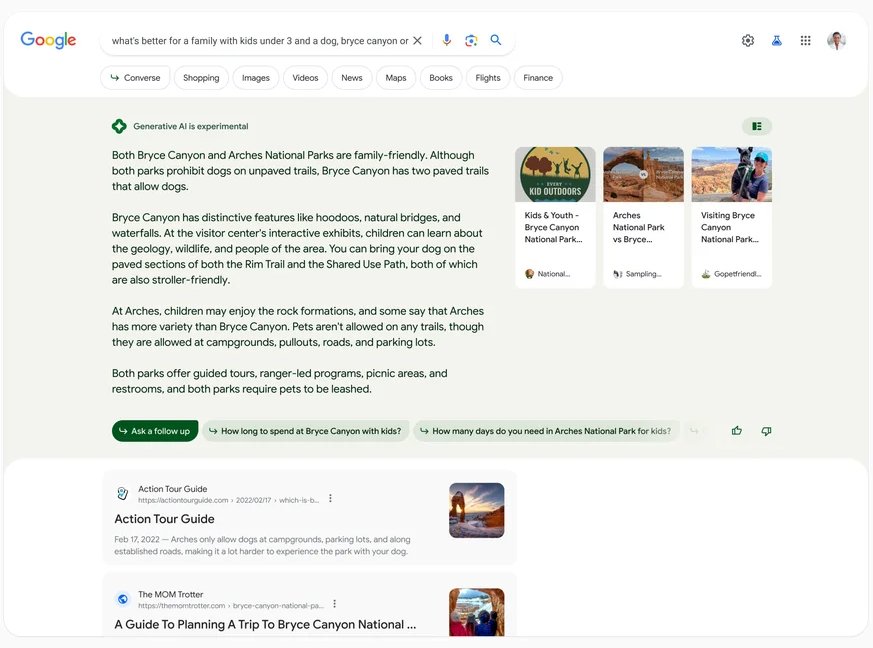
With new generative AI capabilities in Google Search, we’re now taking more of the work out of searching, so you’ll be able to understand a topic faster, uncover new viewpoints and insights, and get things done more easily. Learn more and how to sign-up for our Search Generative Experience (SGE) through Search Labs, available beginning in the US in English: https://t.co/zFLxjAlzXC #GoogleIO #Google
Anybody fancy a Cuppa?
I've built a free tool to generate SEO-optimized blog posts in the time it takes to finish your morning brew. You can use it to:
- Generate first drafts
- Create guest post content
- Enhance existing posts
- Test AI content quickly
Here's a video demo:
Thrilled to introduce https://t.co/r6F5zQKH9g, my new free question research tool!
It gives you a comprehensive overview of your audience's concerns and interests by pulling the most relevant questions from Google's PAA and Suggest, Reddit threads, and Quora for a given keyword
Did you know that you can use Looker Studio to enrich your Search Console data and to monitor your Search performance?
Learn more about data visualization best practices in this new episode of Search Console Training. → https://t.co/Ff18bIYpwy
Using REGEX in Google Search Console is kind of like having keyword-research super powers
Find keywords your website is ALREADY visible for, and then do something with them.
Here's how to find these (and what to do when you find them) 👇
Google publishes new link best practices, now also includes about:
* Anchor text placements
* How to write good anchor text
* Internal links within your content
* External links from other sites
By @rustybrick 👇
https://t.co/0wvJosQzMn