53 grupos de ransomware activos contra empresas estadounidenses enero-febrero 2026. Qilin, Akira, Clop lideran con +4 meses en top 10. Nueva tendencia: robo de credenciales sobre exploits + drivers vulnerables embebidos para ataques BYOVD. Escala industrial confirmada.
---
53 ransomware groups active against US companies Jan-Feb 2026. Qilin, Akira, Clop lead with 4+ months in top 10. New trend: credential theft over exploits + embedded vulnerable drivers for BYOVD attacks. Industrial scale confirmed. #Ransomware https://t.co/fBlP5nV5K0
If your company is under attack right now — or you want to know if your backups would survive one — reach out.
550+ ransomware variants. 1,500+ companies recovered. 99% effectiveness. Zero ransom payments.
We're available 24/7. → https://t.co/ECRZkrDbim
A U.S. manufacturing company. Thursday night. 78 servers and VMs encrypted. Plant completely shut down. Customer data potentially exfiltrated. Makop ransomware.
They called us at 2am.
What happened in the next 6 days: 🧵
3 things this case taught us (again):
1. Backups on the same network as production are not backups. They're a second target.
2. Makop is not unbreakable — the variant and build matter enormously.
3. Calling a specialist before contacting attackers changes everything. Time is the variable.
2025 was the worst year ever recorded in ransomware history.
📊 Official data (GuidePoint Security GRIT / Recorded Future):
→ 7,515 claimed victims in 2025
→ 58% increase vs 2024
→ 145 new victims every week
→ 124 distinct active groups — absolute record
→ 2,287 victims in Q4 2025 alone
→ Manufacturing: most targeted sector (14%)
→ USA: 55% of all global attacks
The most concerning thing isn’t the volume.
It’s that ransomware groups are improving faster than defenses.
RaaS has industrialized crime to the point where a technically unskilled affiliate can compromise a mid-sized company with prefabricated tools.
2026 is trending worse: Q1 is already outpacing 2025’s rate.
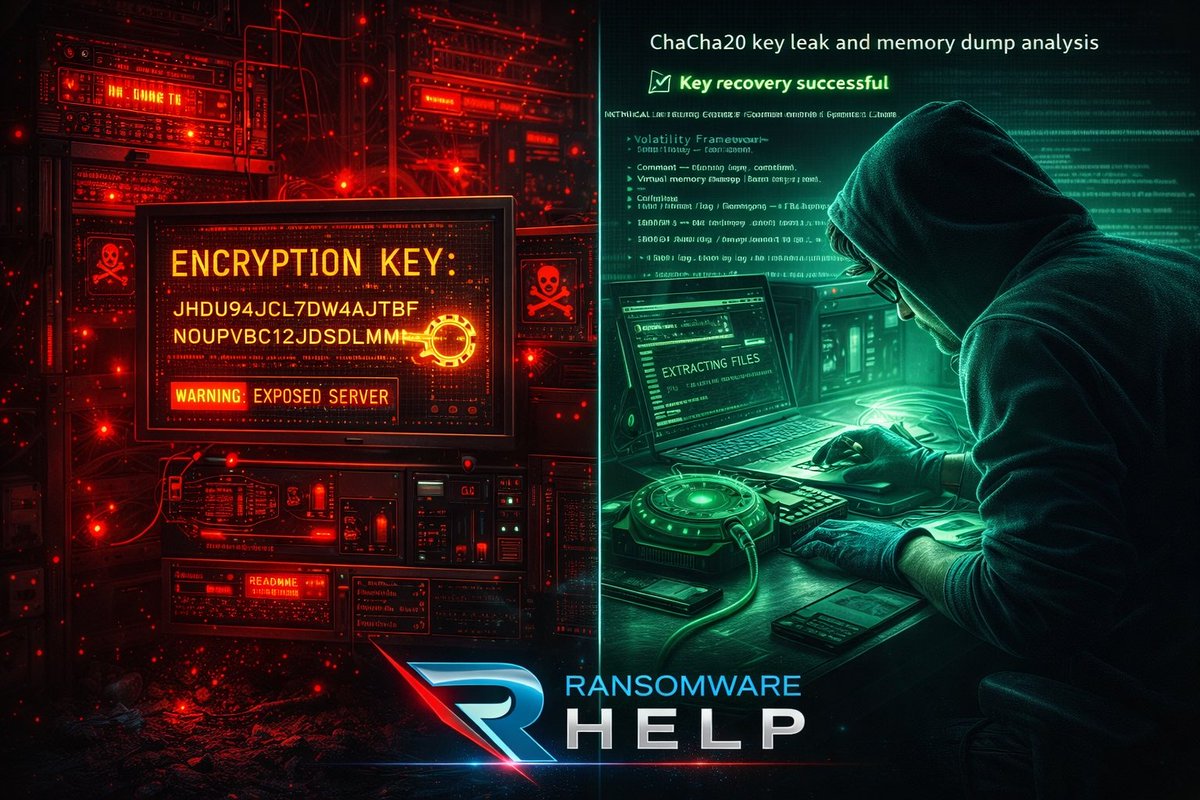
What works for recovery without paying: specialized forensic analysis, reverse engineering of the variant, identification of cryptographic implementation errors.
🔗 https://t.co/fBlP5nV5K0 — when the right analysis makes the difference.
#Ransomware #CyberSecurity #RaaS #ThreatIntelligence
One data point that changes everything about ransomware recovery:
56.4% of CVEs used by ransomware groups were first discovered through active exploitation — not research.
(VulnCheck Exploit Intelligence Report 2026)
What does this mean for victims?
When your network was compromised, the entry vector was likely unknown to everyone — including the software vendor.
Direct technical implication:
Groups that exploit zero-days build their RaaS infrastructure assuming no one has the exploit signature. That creates specific operational mistakes: poorly secured staging servers, careless key management, C2 infrastructure reuse.
At https://t.co/fBlP5nV5K0 we have recovered data by exploiting exactly those operational mistakes — not by paying, but by analyzing the attacker’s infrastructure.
The key isn’t always where the attacker thinks it is.
#Ransomware #ZeroDay #Decryption #ThreatIntelligence
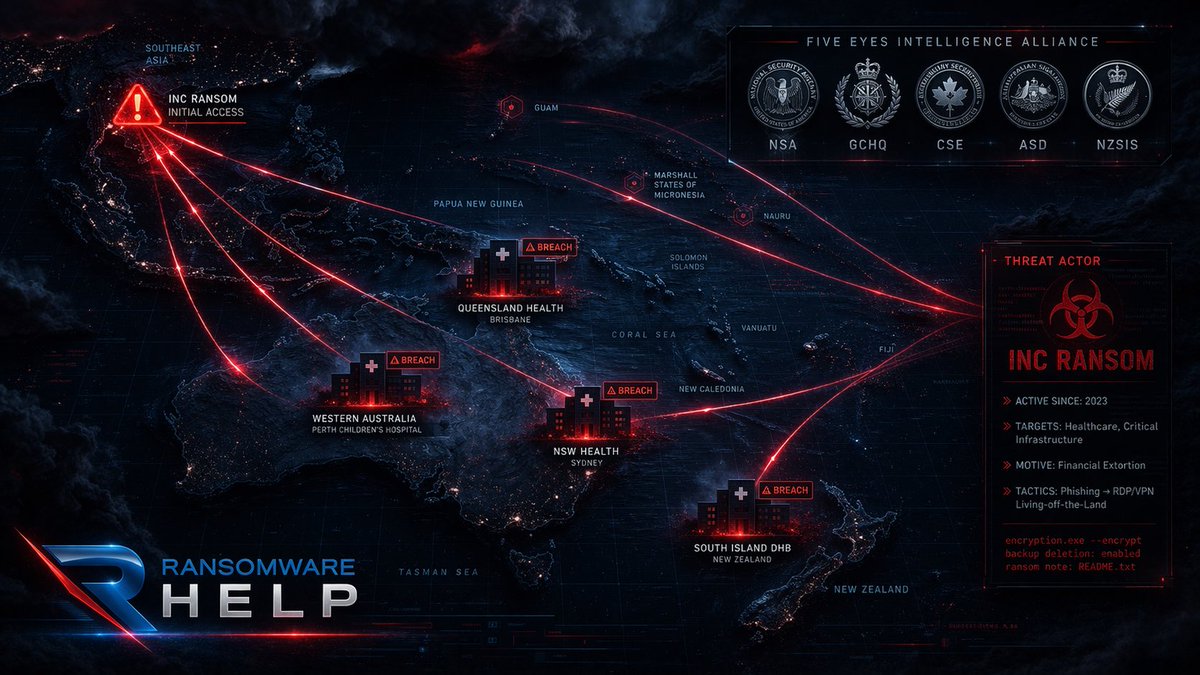
🚨 ADVISORY CONJUNTO — AUSTRALIA · NUEVA ZELANDA · PACÍFICO
INC Ransom está activo y atacando infraestructura de salud en la región.
Datos del advisory (ACSC + NCSC-NZ + CERT Tonga):
→ 11 organizaciones australianas comprometidas
→ Sectores principales: salud y servicios profesionales
→ Modelo: RaaS con doble extorsión
Cómo opera INC Ransom:
Acceso inicial mediante credenciales comprometidas y VPNs vulnerables. Movimiento lateral silencioso. Cifrado precedido de exfiltración completa de datos.
Lo que el advisory no dice: varias variantes de INC Ransom tienen inconsistencias en la gestión de claves que han permitido recuperación técnica en casos documentados.
Si tu organización fue afectada por INC Ransom antes de pagar cualquier rescate: solicita análisis técnico.
La recuperación sin pago es posible en un porcentaje significativo de casos cuando se hace el análisis correcto.
🔗 https://t.co/fBlP5nV5K0 — análisis forense especializado en ransomware.
#INCRansom #RaaS #Healthcare #Ransomware
🚨 JOINT ADVISORY — AUSTRALIA · NEW ZEALAND · PACIFIC
INC Ransom is actively targeting healthcare infrastructure in the region.
Advisory data (ACSC + NCSC-NZ + CERT Tonga):
→ 11 Australian organizations compromised
→ Primary sectors: healthcare and professional services
→ Model: RaaS with double extortion
How INC Ransom operates:
Initial access via compromised credentials and vulnerable VPNs. Silent lateral movement. Encryption preceded by full data exfiltration.
What the advisory doesn’t say: several INC Ransom variants have key management inconsistencies that have enabled technical recovery in documented cases.
If your organization was affected by INC Ransom — before paying any ransom: request technical analysis.
Recovery without payment is possible in a significant percentage of cases when proper analysis is performed.
🔗 https://t.co/fBlP5nVDzy — specialized ransomware forensic analysis.
#INCRansom #RaaS #Healthcare #Ransomware
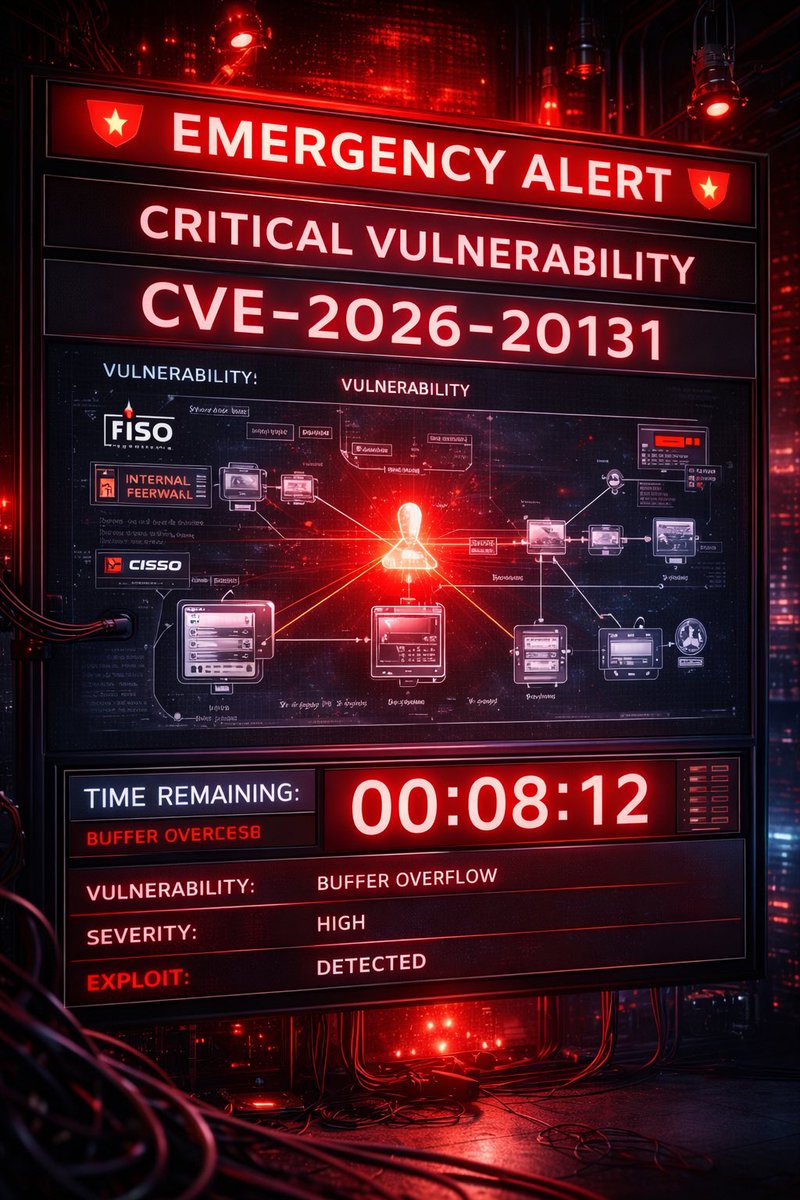
🔴 CRITICAL ALERT — PATCH TODAY
CVE-2026-20131 · Cisco Secure Firewall Management Center
CVSS: 10.0 (maximum possible)
The Interlock group exploited this vulnerability as a zero-day for 38 days before a patch existed.
Technique: insecure deserialization of Java byte stream. Allows unauthenticated remote code execution as root.
CISA deadline for federal agencies: today, March 22, 2026.
IOCs published by Amazon (MadPot):
→ Documented malicious IPs
→ Identified C2 domains
→ JA3 client fingerprints
If you have Cisco FMC in your infrastructure:
1.Check version using Cisco’s software checker
2.Apply the March 4 patch (includes 47 additional CVEs)
https://t.co/6Fi4Ru2MkT logs for anomalous HTTP requests to the management interface since January 26
If you detect activity prior to the patch: contact forensic analysis before any action.
🔗 https://t.co/fBlP5nV5K0
#CVE202620131 #CiscoFMC #Interlock #ZeroDay
🔴 ALERTA CRÍTICA — PARCHEA HOY
CVE-2026-20131 · Cisco Secure Firewall Management Center
CVSS: 10.0 (máximo posible)
El grupo Interlock explotó esta vulnerabilidad como zero-day durante 38 días antes de que existiera el parche.
Técnica: deserialización insegura de stream Java. Permite ejecución remota de código como root sin autenticación.
Plazo CISA para agencias federales: hoy, 22 de marzo de 2026.
IOCs publicados por Amazon (MadPot):
→ IPs maliciosas documentadas
→ Dominios de C2 identificados
→ Fingerprints JA3 del cliente
Si tienes Cisco FMC en tu infraestructura:
1.Verifica versión en uso con el software checker de Cisco
2.Aplica el parche del 4 de marzo (incluye 47 CVEs adicionales)
3.Busca en logs solicitudes HTTP anómalas al management interface desde el 26 de enero
Si detectas actividad previa al parche: contacta análisis forense antes de cualquier acción.
🔗 https://t.co/fBlP5nV5K0
#CVE202620131 #CiscoFMC #Interlock #ZeroDay
⚠️ GRUPO ACTIVO — QILIN (aka Agenda)
El grupo de ransomware más activo del planeta en este momento.
📊 Datos Q1 2026 (Bitsight CTI):
→ 1,207 ataques en los últimos 12 meses
→ Top en sectores: manufactura, salud, tecnología
→ Víctimas recientes: autoridad aeroportuaria en EE.UU., fabricante de semiconductores en Taiwán (275GB exfiltrados)
→ Escrito en Rust y Go — targets Windows, Linux y VMware ESXi
Modelo operativo:
Qilin opera como RaaS con afiliados múltiples. Doble extorsión estándar: cifra primero, publica datos después si no hay respuesta.
Fallos criptográficos documentados en variantes anteriores permitieron recuperación sin clave. Las versiones actuales han corregido la mayoría — pero no todos.
Si recibes un ataque de Qilin: no actúes sin análisis forense previo.
🔗 https://t.co/fBlP5nV5K0 — análisis técnico gratuito inicial.
#Qilin #Ransomware #ThreatIntelligence #RaaS
⚠️ ACTIVE GROUP ALERT — QILIN (aka Agenda)
The most active ransomware group on the planet right now.
📊 Q1 2026 data (Bitsight CTI):
→ 1,207 attacks in the last 12 months
→ Top sectors: manufacturing, healthcare, technology
→ Recent victims: US airport authority, Taiwan semiconductor manufacturer (275GB exfiltrated)
→ Written in Rust and Go — targets Windows, Linux, and VMware ESXi
Operational model:
Qilin operates as RaaS with multiple affiliates. Standard double extortion: encrypt first, publish data afterward if no response.
Documented cryptographic flaws in earlier variants allowed keyless recovery. Current versions have patched most — but not all.
If you receive a Qilin attack: do not act without prior forensic analysis.
🔗 https://t.co/fBlP5nV5K0 — free initial technical analysis.
#Qilin #Ransomware #ThreatIntelligence #RaaS
Ransomware has evolved. Paying the ransom no longer solves anything.
Here's why — the triple extortion model, explained:
LAYER 1 — Encryption extortion
Classic ransom demand: pay to get your decryption key. AES-256 per file + RSA-4096 key wrapping. Without the private key — mathematically unrecoverable at scale.
LAYER 2 — Data leak extortion
Your data was exfiltrated BEFORE encryption. Average: 1.2TB per incident. Pay again — or we publish everything on our leak site. GDPR fines, reputational damage, client lawsuits follow.
LAYER 3 — Third-party extortion
Attackers contact YOUR clients, partners, and regulators directly. They demand payment from them too. Your breach becomes their emergency.
The answer is NOT paying. The answer is forensic recovery + preparation.
We've done it 1,500+ times.
🔐 https://t.co/fBlP5nV5K0
#Ransomware #TripleExtortion #DFIR #CyberSecurity #ThreatIntel #IncidentResponse #CISO
Hemos estado trabajando en silencio. Descifrando. Recuperando. Salvando empresas.
Mientras callábamos, el ransomware no paró.
2025 en números:
→ 7,515 víctimas confirmadas en sitios de filtración
→ 124 grupos activos en el mundo (+46% vs 2024)
→ $156,000,000 en daños — cada día
→ El 76% de los ataques roba tus datos ANTES de cifrarlos
→ El 48% de los vectores de entrada: credenciales VPN comprometidas.
Volvemos. Y con nosotros, la inteligencia.
🔐 @RansomwareHelp — https://t.co/fBlP5nV5K0
#Ransomware #ThreatIntel #Ciberseguridad #DFIR #CISO
We've been working behind the scenes. Decrypting. Recovering. Saving companies.
While we were silent, ransomware wasn't.
2025 by the numbers so far:
→ 7,515 confirmed victims on data leak sites
→ 124 active ransomware groups (+46% vs 2024)
→ $156,000,000 in damages — every single day
→ 76% of attacks steal your data BEFORE encrypting
→ 48% of entry vectors: compromised VPN credentials
We're back. And so is our intelligence.
🔐 @RansomwareHelp — https://t.co/fBlP5nV5K0
#Ransomware #ThreatIntel #CyberSecurity #DFIR #CISO
Echa un vistazo al último artículo de mi newsletter: «Initial Access Brokers (IABs): qué son, cómo operan y cómo detectarlos» https://t.co/P7H7AcoRP9 via @LinkedIn