1WIN UGC SEASON 3 IS ALMOST HERE!
Creators, it’s time to turn your creativity into rewards.🎬
The next season brings a $4,000 prize pool with 60 winning spots, giving more creators a chance to earn from their content.
💰 Top prize: $500
🎁 Rewards for 60 creators
📅 Competition runs from November 5–14
More opportunities to create, compete, and get rewarded.
Ready to make your content count?
Join the campaign at https://t.co/v88EaaJBRw, create engaging 1WIN content, and submit your links to compete on the leaderboard.
Use my referral code: 4LWSDXU
Your creativity could be your next reward.
Let’s make Season 3 count
#1WIN #UGC #ContentCreators
Tokenomics should be evaluated by looking beyond the headline supply.
With @FungoLabs , the more interesting details are how the 10B FUNGO supply is allocated, when those allocations unlock, and what happens to the revenue generated by the platform.
Let's break it down.
1. Fixed supply
FUNGO has a fixed supply of 10,000,000,000 tokens.
According to the published tokenomics:
1. No investor allocation
2. No presale.
3. No trading tax.
4. No additional minting.
The stated allocation is divided into six categories:
1. Genesis: 36%
2. Liquidity: 34%
3. Community: 10%
4. Team: 10%
5. Zama OG: 7%
6. X Campaign: 3%
2. TGE distribution
The published schedule states that 82.5% of the total supply is available at TGE.
The Genesis, Zama OG, and X campaign allocations are fully available at TGE.
The 3% X campaign allocation represents 300M FUNGO.
The team receives a different schedule: its 10% allocation remains locked for 12 months, followed by monthly unlocks over 36 months.
Community tokens follow a separate seasonal schedule.
3. The revenue model
This is where FungoLabs gets particularly interesting.
The platform allocates revenue from seven categories of fees:
1. Drop creation
2. Bids
3. Mints
4. Auctions
5. Royalties
6. Token launches
7. Pool fees
The split is:
1. 20%: FUNGO buyback and burn.
2. 20%: Genesis NFT holders.
3. 60%: Platform treasury.
The buyback happens weekly, and purchased FUNGO is burned rather than retained.
Genesis NFT holders share their allocation equally across 3,232 NFTs.
There is also a 5% to 20% Genesis share of every token launched with a drop.
4. Liquidity
The FUNGO/ZAMA pool receives 34% of the total supply. Its LP position is described as permanently locked, while the collected pool fees go toward the buyback.
What I find worth examining is how these mechanisms connect: platform activity generates fees, part of those fees supports token buybacks and burns, and another part flows to Genesis NFT holders.
It's a tokenomics model with several connected components, not just a supply number and a distribution chart.
Massive run on Bloodthirst
$161 → $311.50 → $280 in back-to-back big wins… balance sitting at $5,178 while the free spins are still flying
@1win the action never stops
Who else is spinning tonight? 🎰
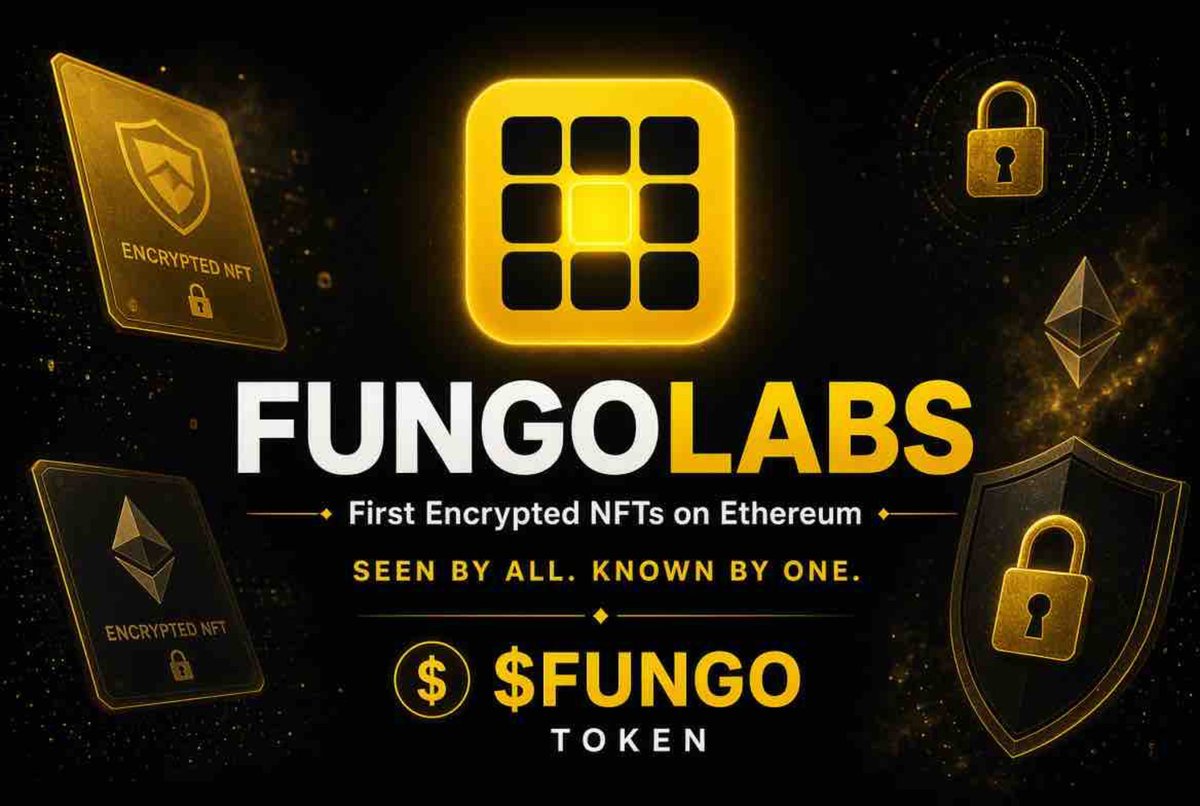
Seen by All. Known by One.
For years, NFTs have had one major privacy problem: everything about them is public.
Once an NFT is minted, its artwork, traits, and rarity can be viewed and scraped by anyone. Ownership is public, but keeping anything secret has been almost impossible.
@FungoLabs is taking a different approach with encrypted NFTs on Ethereum, powered by Zama's Fully Homomorphic Encryption (FHE).
HOW FUNGO CHANGES NFT PRIVACY
FHE allows smart contracts to process encrypted data without exposing the information itself.
With Fungo, the NFT remains public and tradable, but its contents stay protected.
There are two important layers:
THE LOOK: The artwork is encrypted at mint. Only the holder can view it, and they decide whether to reveal it publicly.
THE ESSENCE: Class, element, and four attributes (Secrecy, Intuition, Will, and Energy) remain encrypted permanently. Only the current holder can see them.
Even FungoLabs cannot access these hidden attributes.
RANDOMNESS WITHOUT INSIDER CONTROL
NFT traits are generated using on-chain FHE randomness. This means nobody, including the team, gets to choose the hidden attributes.
The technology also creates opportunities for games where hidden stats influence battles without being publicly revealed.
MEET $FUNGO
Fungo's ecosystem is powered by $FUNGO, with a fixed supply of 10 billion tokens.
Its distribution includes Genesis NFT holders, Zama OG holders, community rewards, liquidity, and the team. According to the project, there is no presale, no investor allocation, and no transaction tax.
Genesis holders are also allocated a share of launchpad revenue and tokens launched through the platform.
MY TAKE
What makes Fungo interesting isn't simply adding another NFT collection or token.
It's exploring how NFTs can remain tradable while keeping meaningful information private.
Public ownership. Private identity. Encrypted possibilities.
@FungoLabs | $FUNGO
And how’s your Friday going Pals
We are still building 🟨
Still shipping 🟨
One thing that keeps standing out to me about @rarelistio is the infrastructure behind what they are building.
Web3 has no shortage of new projects, but discovering them, connecting with the right communities, and creating meaningful distribution is still a challenge.
Rarelist is working on a system that brings these pieces together through project discovery, creator campaigns, community coordination, and reward mechanisms.
I find this approach interesting because growth shouldn’t depend on hype alone. It needs proper distribution channels, accessible onboarding, active contributors, and a strong ecosystem connecting builders with their communities.
From creator participation to leaderboard tracking and campaign rewards, Rarelist is creating a more organized approach to Web3 ecosystem growth.
Good infrastructure doesn’t just support technology; it creates opportunities for people to participate and build alongside it.
We need to discover new project.
The attention is $RARE
To join? Check comment
☕️ Secrets of #Italy : Milano
Backstage at Fashion Week, between fittings and run-throughs, there's one constant; someone is always holding an #espresso.
In the city that dresses the world, #Coffee is the one accessory nobody skips. 👗☕️
The cat didn’t just join the battle it took charge. 🐱⚔️🔥
A fearless feline, an epic showdown, and a cinematic twist that proves even the smallest heroes can steal the spotlight.
Created with @flovaai
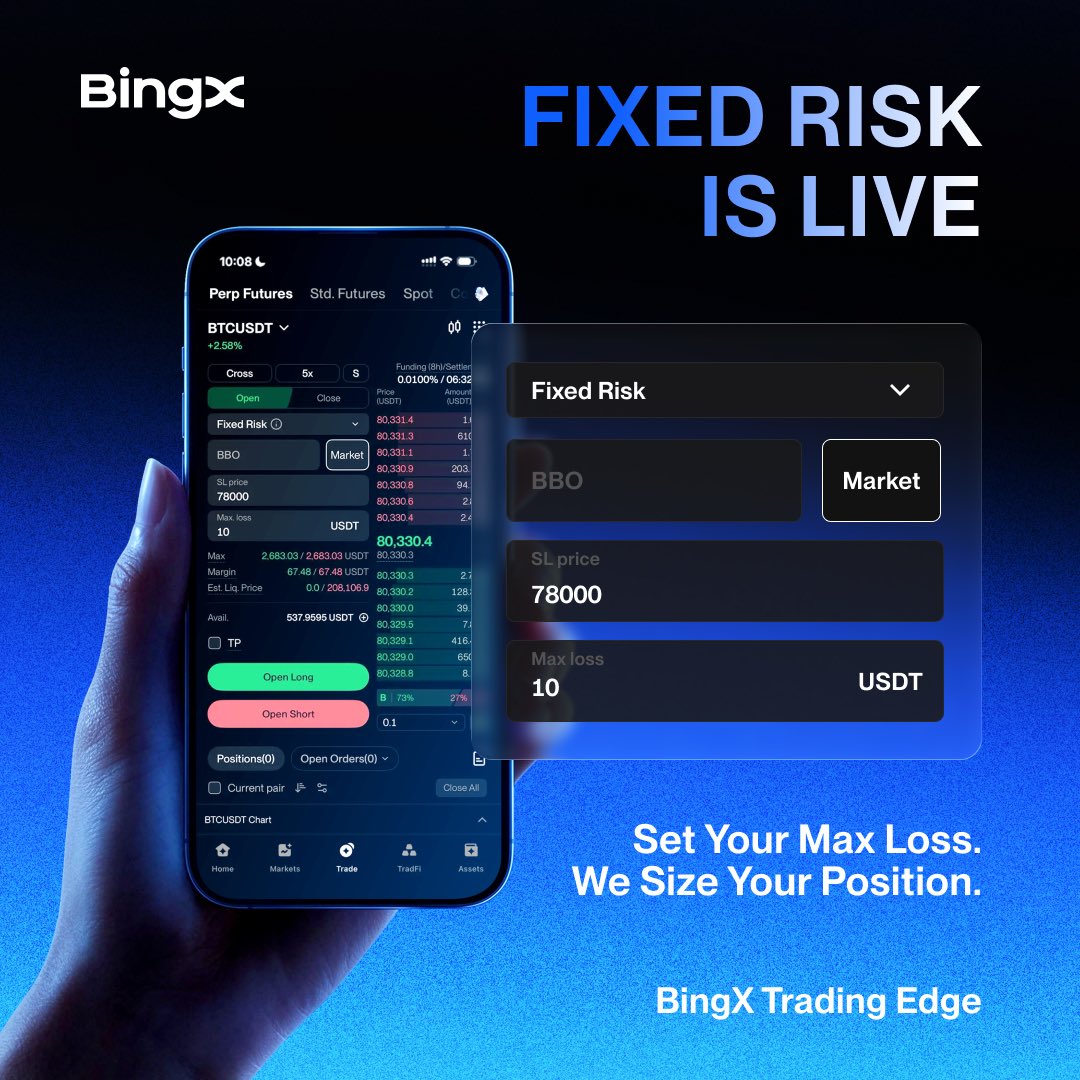
Managing risk is just as important as choosing when to enter a futures trade. However, working out the correct position size manually isn’t always easy.
BingX has launched a Risk-Based Position Sizing feature to simplify the process.
Just provide your entry price, stop-loss level, and the maximum amount you’re willing to risk. The system calculates the suitable position size and applies the stop-loss to your order automatically.
For instance, if you’re willing to risk 100 USDT on BTC with an entry at 100,000 USDT and a stop-loss at 98,000 USDT, the calculated position size would be 0.05 BTC.
I think this is a useful approach because it puts risk management first before deciding how much to trade.
#BingXTradingEdge #BingX
A token trading at $0.01 isn’t necessarily cheaper than one trading at $100
This is one of the common mistakes people make when researching crypto projects
A low token price can look attractive, especially when people imagine how much they could gain if the price increases, but the real picture is much bigger than that
I’ve been looking at $TAO (Bittensor) from a different angle, focusing on its tokenomics rather than simply its market price
Here are the numbers I believe every researcher should understand before judging a token
→ Token Price: The cost of buying one unit of the token
→ Market Cap: The total value of its circulating supply
→ Circulating Supply: How many tokens are currently available in the market
→ Maximum Supply: The maximum number of tokens that can ever exist, if one is defined
→ Fully Diluted Valuation (FDV): The estimated valuation if the full supply were in circulation
→ Future Emissions and Unlocks: How additional tokens may enter the market over time
Why does this matter?
Because two tokens with very different prices can have completely different valuations, supply structures and dilution risks
A token with a low unit price may already have a large market cap, while another with a higher price may have a very different supply structure
For $TAO, understanding its supply schedule, emissions and future circulating supply is just as important as following its price movements
My takeaway is simple
Don’t judge a cryptocurrency by how cheap one token looks
Understand how many tokens exist, how many are still expected to enter circulation, and what that could mean for its long-term valuation
A strong project deserves proper research, not just excitement around its price
I’m using @tryquantio to look beyond token prices and understand the numbers behind crypto valuations
Research first, understand the supply, then form your own opinion
Try: https://t.co/j3L5hKRTGt
#QuantAIPioneers