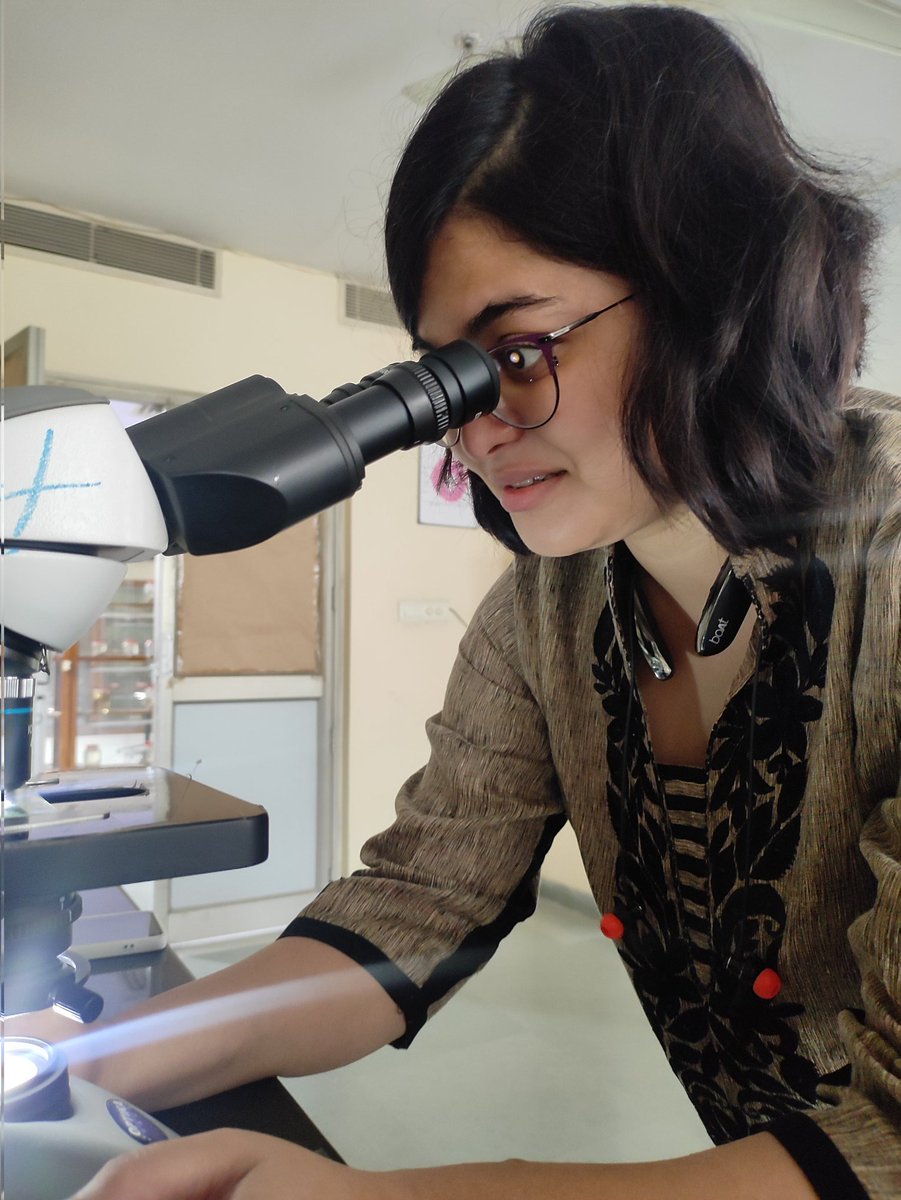
Cornelia Sorabji was an Indian lawyer, social reformer, and writer who made history as the first female graduate of Bombay University and the first woman to study law at Oxford University...
While women in Britain were campaigning for the right to vote, Cornelia Sorabji became the first woman to practise law in India. After she received a first class degree from Bombay University in 1888, British supporters helped to send her to Oxford University. Here, Sorabji became the first woman to sit the Civil Law exams but was not able to graduate as women could not be awarded degrees until 1920. She returned to India in 1894. After a long struggle with the authorities, she became legal advocate for women in purdah, whose religious and cultural beliefs prevented them from speaking to men outside their family.
. . .
In 1889 she arrived at an Oxford college to read law, the only Indian woman student there, preparing for clients who could never enter a courtroom themselves.
The college was Somerville, at the University of Oxford. The clients she had in mind were the purdahnashins of India, women who lived in strict seclusion behind the purdah.
By religious and social custom they could not communicate with men outside their own household.
Many of them owned considerable property, inherited or settled on them in marriage, and that property was governed by courts, agents and lawyers they were forbidden to meet.
A secluded widow could lose land, income or custody through decisions taken in rooms she could never enter, by men she could never address.
Cornelia Sorabji went to Oxford to become the person who could stand between those women and that system.
She was born on 15 November 1866 in Nasik, in Bombay Presidency of British India. She was born into a Christian Parsi family, the daughter of Sorabji Karsedji and Francina Ford. Hers was a reforming household that educated its daughters, at a period when higher education for Indian women barely existed as a possibility.
She became the first female graduate of Bombay University, taking a first-class degree in literature. That first already placed her outside every expectation her society held for a woman's education, and she treated it as a beginning rather than a distinction.
With support raised through National Indian Association and English friends, she travelled to England in 1889.
At Somerville she was the first Indian woman to study at Oxford, and first woman to read law there. She had arrived intending at first to study medicine, and she changed to law, because legal helplessness of secluded women was the problem her upbringing had shown her most clearly.
Oxford, however, admitted her only part of the way.
Women were not members of the university, and would not become full members until October 1920.
In 1892, after petitions from her English supporters, she was given special permission by Congregational Decree to sit the examination for the Bachelor of Civil Law.
She was the first woman ever permitted to take that examination.
Passing it still could not make her a graduate in the ordinary sense, because the university did not grant degrees to women who were not members.
She was also the first woman admitted as a reader to the Codrington Library of All Souls College, an honour that, like the examination, arrived as an exception carved out for one person.
Exceptions followed her home.
She returned to India in 1894 and began the work she had trained for, advising purdahnashins on the property cases that seclusion made it impossible for them to pursue alone.
She was given special permission to enter pleas on their behalf before the British agents of the Kathiawar and Indore principalities.
But she could not defend them in court.
As a woman she held no professional standing in the Indian legal system, however many examinations she passed, and the courtroom door stayed closed.
Her answer was to pass every examination the system put in front of her.
#archaeohistories
Sonam Wangchuk's journey as an activist has spanned education reform, environmental innovation and political advocacy.
After founding the Students' Educational and Cultural Movement of Ladakh (SECMOL) in 1988 to improve education in the region, he went on to develop initiatives such as the Ice Stupa project to address Ladakh's water scarcity. He also co-founded the Himalayan Institute of Alternate Learning (HIAL) and received the Ramon Magsaysay Award in 2018 for community-led education reforms.
In recent years, Wangchuk has led several non-violent protests seeking constitutional safeguards for Ladakh under the Sixth Schedule and highlighting the region's fragile ecology. Describing himself as a Gandhian, he has relied on hunger strikes and peaceful marches as his primary means of protest.
Click on the 🔗 below to read full article.
https://t.co/7bj8UzMIZp
Written by: Naveed Iqbal
Design by: Violina Bora
U know d feeling
U had a dream
U lived 4 that dream
made ur whole world around it
Finally whn it was taking d shape of reality
U panicked dt U don't deserve it
don't want the dream to suffer like u did
U don't want it to be your fantasy anymore
u just want to bury it.deep down
When you think u have finally figured out this matrix called life, then and there...
It throws an old situation on your face in a very new fresh way... N boy there you are naive again...
Being naive
Being wild
Just Can't kill the curiosity
@NetflixIndia I watched it with all the vigor just to be sure never ever waste my penny on a bunch of wannabe. They tried so hard to copy Kardashians.I pity the future of this country if young minds are taking inspiration from duck heads.Most of them have not even completed their schooling.
@NetflixIndia Well if i talk about it, there are zillions of things bombarding in my head
Netflix suggested it while i was watching #workingmoms , which is far more sensible than this squeaky shrilly over the head pretentious show called the fabulous life of bollywood wives.
Quaid e Azam’s Urdu was so anglicised that his AIR address announcing the creation of Pakistan was discussed for days as people couldn’t figure out whether he ended with “Pakistan Zindabad” or “Pakistan’s in the Bag”.
This hilarious ad does full justice to Jinnah’s memory!😂😂
Education is most important !!
But Government is playing with students !!
They should respond immediately as there future is ruining!!
There are struggling for justice
JUSTICE FOR MBBS STUDENTS