The most dangerous application attacks may not have a CVE attached to them.
They can exploit trusted components, legitimate application behavior, and runtime paths that look harmless to traditional security tools.
Modern applications are assembled from 80%+ public open-source code that attackers can study, test, and weaponize. With AI accelerating that process, security teams cannot afford to wait for a CVE, signature, or patch before understanding what is happening inside the application.
Our CVE-Less Attacks ebook explores:
- Why attackers are moving deeper into the application layer
- How CVE-less attacks bypass traditional security controls
- What security teams need to see at runtime
- How to detect and stop malicious behavior, CVE or no CVE
Download the ebook: https://t.co/kkgUQ9SWpe
AI is accelerating how quickly attackers can find, adapt, and exploit application-layer weaknesses. But most security teams are still relying on tools designed to protect endpoints and infrastructure.
On August 19, Raven CEO and Co-Founder, Roi Abitboul, Chief Research Officer and Co-Founder, @OmerYair, and Futurum’s @FernandoMontenegro will discuss why Application Detection and Response is becoming a critical part of the modern security stack.
They will cover how ADR complements EDR, adds application-level runtime context, improves SOC investigations, and helps teams detect CVE-less and zero-day behavior.
📅 Wednesday, August 19 🕚 11 a.m. ET
Register here: https://t.co/VtPI4JML6c
The OWASP Top 10 has long helped security leaders align around familiar application risks. Those risks still matter, but the attack surface has changed.
Modern applications are assembled from open-source packages, frameworks, APIs, cloud services, and AI-generated code. Much of that code is publicly exposed, giving attackers a clear view into how applications are built and where vulnerable paths may exist.
Security teams need more than dependency lists. They need runtime evidence showing what loaded, what executed, which component caused the behavior, and whether the risky path was reachable in production.
The future of AppSec is not just finding more issues. It is understanding what the application is actually doing.
Read more: https://t.co/bHU4c2Hilf
Final comparison of the week: Raven vs SCA.
Traditional SCA lists vulnerable packages. Raven SCA shows what is actually executed and reachable.
A package in a manifest is not the same as a library running in runtime. Raven adds runtime context so teams can separate theoretical exposure from the risks attackers can actually reach.
https://t.co/79pYdUMjAP
#SCA #RuntimeSCA #AppSec #VulnerabilityPrioritization #RuntimeSecurity
Today’s comparison: Raven vs ASPM.
ASPM organizes findings. Raven proves what is real in runtime.
ASPM helps centralize security data, but prioritization still falls apart when findings are static, noisy, or disconnected from runtime behavior. Raven adds evidence around what is active, reachable, loaded, and worth fixing now.
Dashboards do not prove risk. Runtime does.
https://t.co/hiullu1xm9
#ASPM #AppSec #RuntimeSecurity #VulnerabilityManagement #SecurityPosture
Next up in comparison week: Raven vs RASP.
Legacy RASP intercepts your application and creates operational risk.
Raven ADR observes runtime behavior across the application and shows the exact code, library, function, and call chain behind it, so teams can investigate and respond with application-level context.
Runtime security should not become another production risk.
https://t.co/P9VSS1ifs3
#RASP #RuntimeSecurity #CloudNative #AppSec #ADR
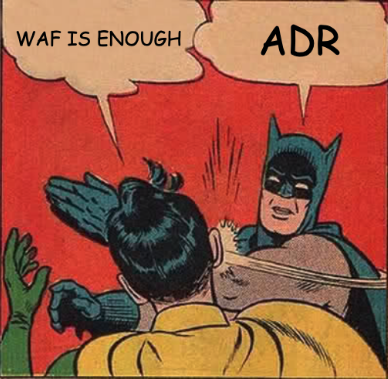
Next in comparison week: Raven vs WAF.
WAF sees traffic at the edge. Raven shows inside the app.
A request can look normal at the perimeter and still trigger dangerous behavior inside the app. Raven proves and prevents runtime abuse. Sees and stops known, unknown, and CVE-less exploit behavior inside the app.
Together they deliver layered protection: strong at the edge, smarter inside.
https://t.co/q8oXBOpvMJ
#WAF #RuntimeSecurity #ADR #AppSec #ApplicationSecurity
This week, we’re comparing Raven to the tools security teams already use to understand risk.
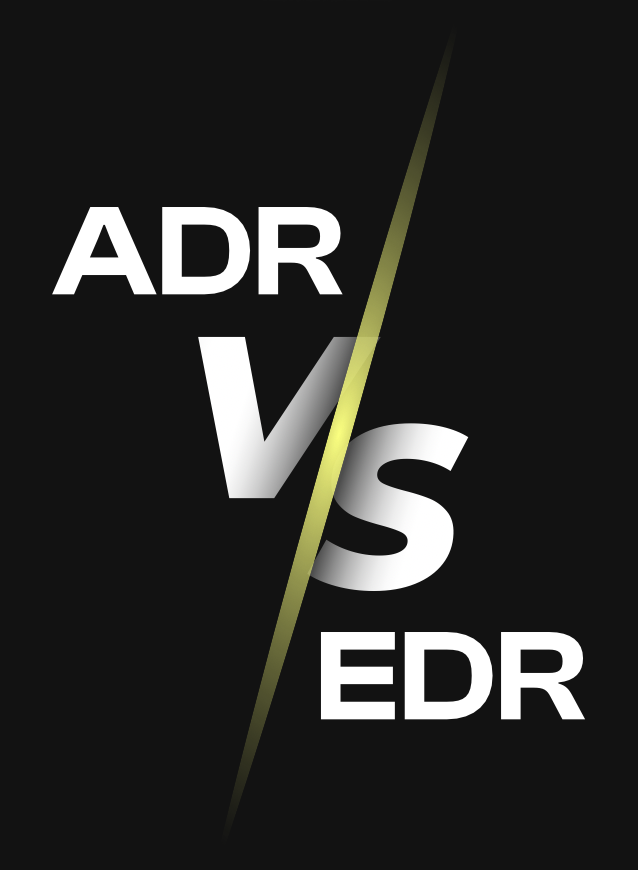
First up: ADR vs EDR.
EDR stops at infrastructure. Raven ADR understands the application running on it.
EDR signals can tell you what happened. Raven connects suspicious behavior back to the application runtime, library, function, and call chain that caused it.
EDR helps secure the workload. ADR secures the application runtime inside that workload.
👀 Take a closer look: https://t.co/6e8lmVMG31
#ADR #EDR #RuntimeSecurity #AppSec #CloudSecurity
WAFs guard the edge.
But not every attack looks malicious at the perimeter.
Raven adds runtime context inside the application, showing what code, libraries, and vulnerabilities are actually reached in production.
WAFs help block bad traffic. Raven helps prove what happened inside the app.
See how Raven complements your WAF: https://t.co/zeJjBNS7vo
Disclosure is too late. Security teams are conditioned to treat CVE disclosure as the moment a vulnerability becomes actionable.
But, recent incident response data indicates that roughly 70% of observed exploitation activity occurred without a publicly assigned CVE at the time of attack.
⚠️ That is not an anomaly. It is a structural warning.
The Rise of CVE-Less Attacks is exposing a major gap in traditional vulnerability management: knowing about risk after the fact is not the same as stopping exploitation in real time.
Download the ebook: https://t.co/F5oUzHIcel
WAF, RASP, and ADR all claim to protect applications. But they operate at very different layers, and those differences matter when you’re building a modern AppSec program.
This blog cuts through the marketing and breaks down what each category does, where it falls short, and when it’s the right fit.
Read the full comparison: https://t.co/mYizafIw5B
AI changes exploit development because it makes the process repeatable.
The work that used to take a skilled researcher time to chain together, code review, data flow analysis, fuzzing, payload mutation, can now be automated and run continuously.
That means defenders are dealing with more exploit attempts, more variation, and less time between discovery and execution.
This is why runtime matters.
Read the blog: https://t.co/CzH49qY2fv
A lot of people are asking: “Wait… what’s the difference between EDR and ADR?”
Fair question. The category is still evolving.
A simple way to think about it:
EDR stops at workstations, at infrastructure.
ADR focuses on servers, on applications.
EDR might say: Python spawned a shell.
ADR says: 'urllib3' inside this application triggered an unusual runtime path that led to shell execution from a library behavior never seen before in this service.
EDR wasn’t built for servers and that’s the difference.
The Mistral AI PyPI package was compromised. Malicious code injected into the official package. Executes on import mistralai. No CVE. No scanner caught it.
The payload? Credential stealer. Persistence mechanisms. And a 1-in-6 chance of running rm -rf / depending on your location.
🚨 Your dependency audit said everything was fine.
The supply chain is not just a packaging problem anymore. It is a runtime problem.
Full breakdown: https://t.co/nRaKU9EHp3
#SupplyChainSecurity #AppSec #CyberSecurity #RuntimeSecurity #CISO #Raven
AI has turned exploit development into an assembly line.
One agent reads the code. Another maps the data flow. Another builds a test harness. Another fuzzes inputs. Another mutates the payload to bypass detection.
The output is not one exploit. It is a process that keeps producing them.
Runtime is where this fight gets won or lost. Not in a dashboard full of CVEs.
Read the blog: https://t.co/QMDJSGNDH8
#CyberSecurity #AppSec #CISO #RuntimeSecurity #AI #Raven
Attackers compromised the official Mistral AI PyPI package.
No CVE. Package version looked correct. Dependency audit showed nothing.
The supply chain is not just a packaging problem anymore.
It is a runtime problem.
→ https://t.co/mwdSCzopia
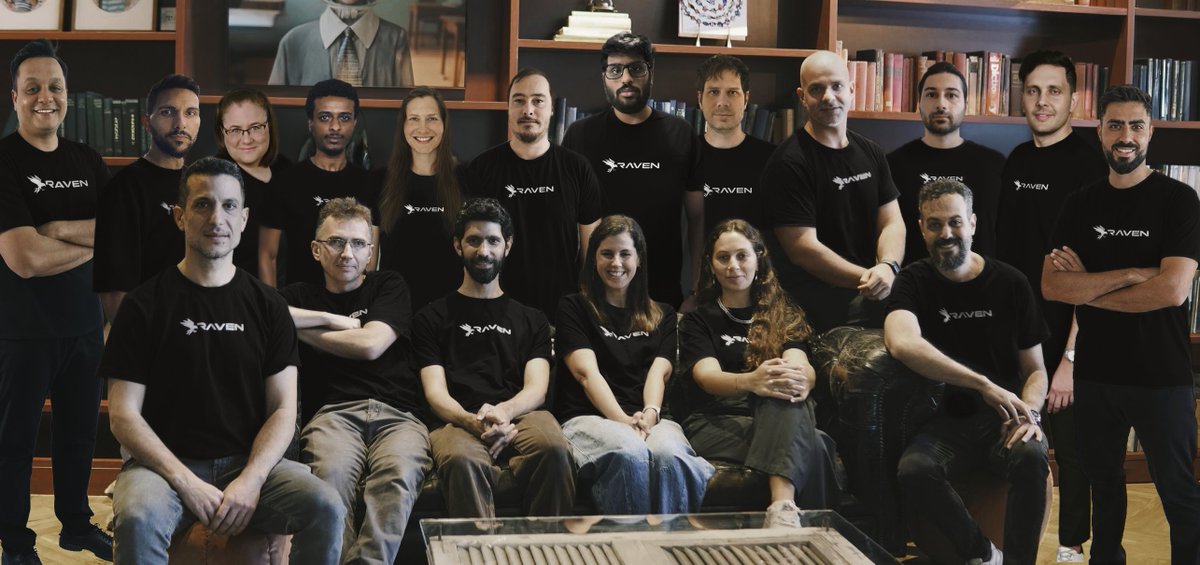
Big news 🚀 Raven emerges from stealth with $20M to redefine runtime security. AI has industrialized exploits—we stop them in real time, before CVEs. #CVE_LESS
Link to announcement blog in the first comment