Artivism, When Art Becomes a Weapon.
Artivism — the fusion of artistic practice and political urgency — has a history as long as injustice itself. But the internet has transformed it into something new: a global, leaderless, perpetually mutating force.
The term “artvism” — a portmanteau of art and activism — has become common currency in curatorial circles over the past decade. But the practice it describes is ancient. As long as some have wielded power unjustly, others have responded with image, sound, and story. What has changed, profoundly and irreversibly, is the speed, reach, and granularity with which art can now confront power. Here we will try to trace artvism from its roots in revolutionary muralism and Dadaist provocation through to the hyper-networked present, where a single image posted online can ignite or sustain a global movement within hours.
Go to article -> https://t.co/hwCePomuRk
#artmagazine #arthistory #artworld #artists #artmagazines #artivism
The True Pioneers of Pop Art
Britain’s Forgotten Vanguard: How a Ragtag Group of London Intellectuals Invented the Future of Art – a decade before New York took the credit
Long before Andy Warhol silkscreened his first Campbell’s soup can, before Roy Lichtenstein borrowed the grammar of comic books, and long before “Pop Art” entered the cultural lexicon as shorthand for a brash American phenomenon, a group of British artists, architects, and critics were huddled in the basement of the Institute of Contemporary Arts in London, arguing furiously about the meaning of jet engines, pulp magazines, and Hollywood film posters. It was here, in the austere, bomb-scarred city of postwar Britain, that Pop Art was truly born ..
Go to article -> https://t.co/pAeKwh9es0
#artmagazine #popart #arthistory #artmagazines #artworld
Painting the Nation: The Rise of Nationalism in Art
From the sublime landscapes of the Romantic era to the contested monuments of the present, how artists have constructed, weaponised, and dismantled the idea of national identity. A four part article : ( 1. Romanticism and the Birth of National Art,
2. Monuments, Memory, and the Making of National Myth,
3. The State as Muse: Art Under Totalitarianism,
4. Postcolonial and Contemporary Resistance. )
Go to article -> https://t.co/lZtU4xt09l
#nationalism #artmagazine
#contemporaryart #artworld #arthistory
The rise of the democratic art – art belongs to everyone.
From Mexican muralism to Banksy’s walls, a persistent, radical idea has shaped modern art: that creativity is not the privilege of the few, but the birthright of all humanity. Democratic art is not a style or a movement. It is a philosophy, the conviction that creative expression must speak to, belong to, and emerge from the people at large.
Go to article -> https://t.co/fQh3Lyell6
#artmagazine #artworld #contemporaryaragazine #contemporaryart #art
The Object at the Edge of Everything
How still life , the most domestic of genres became the most radical battleground of twentieth-century art.
- There is something deceptively humble about a bowl of fruit. A vase of wilting flowers. A loaf of bread beside an overturned wine glass. For centuries, still life occupied the lowest rung of the academic hierarchy — beneath history painting, portraiture, even landscape. And yet, when the twentieth century dawned, it was the still life that artists seized upon first, fiercest, most recklessly. In the bowl of apples, they found a universe… -> Go to article https://t.co/Qyhf8kH3hc
#art #artmagazine #still_life #artists #modernart #contemporaryart #art_history
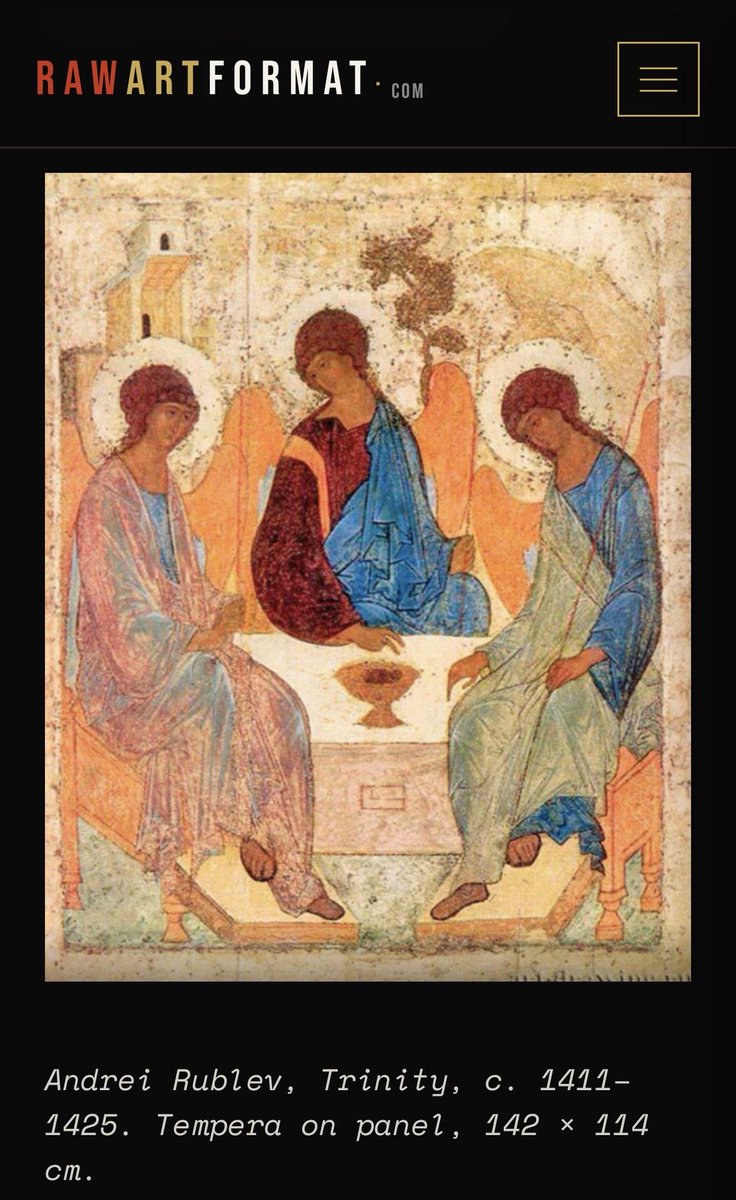
The Heavenly Gaze: Andrei Rublev and the Transformation of the Sacred Image.
Somewhere in early fifteenth-century Moscow, a monk grinds lapis lazuli into powder, mixes it with egg yolk and vinegar, and raises his brush toward a smooth linden board. In his understanding, it is not merely an act of craft; it is an act of theology. The monk is Andrei Rublev. The image he is about to set down will reorder everything that came before it.
To understand what Rublev achieved, we must first look back several centuries, to the workshops of Constantinople and the rigid, golden world from which Russian icon painting was born.
Read Article ->
https://t.co/BR8JV0pvcA
#AndreiRublev #Byzantine #Icons #art #artists #arthistory #artmagazine
On Kitsch, Its Seductions, and the Con of Manufactured Depth.
There is a balloon dog the size of a small car, forged in mirror-polished stainless steel, reflecting the crowd that gathered to admire it. It costs somewhere north of $50 million. The crowd, educated, sophisticated, aware loves it without embarrassment, which is precisely what its maker intended. Jeff Koons has never hidden what he is doing. The problem is that much of the art world has pretended, for decades now, that what he is doing is something else entirely.
This is the central deception of contemporary kitsch: not that it is pleasurable, but that pleasure has been dressed in the borrowed clothes of criticality and passed off as intellectual seriousness. To understand why this matters, we first need to understand what kitsch actually is…
#artmagazine #artists #contemporaryartmagazine #contemporaryart #kitsch
Go to article -> https://t.co/92dlY2c8dw
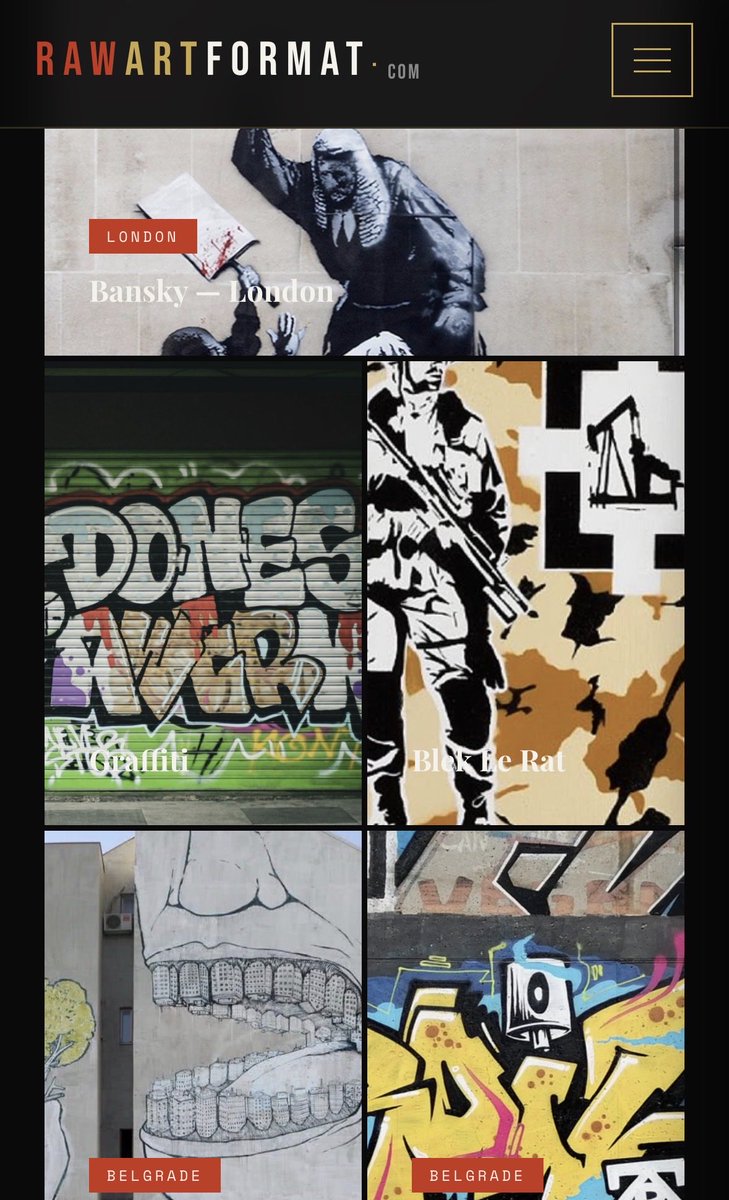
The Silent War Between Graffiti and Street Art
Walk through any major city and you’ll see it unfolding in plain sight: a name scrawled high on a train bridge, a towering mural wrapping around a building, a stencil tucked into a doorway. To the untrained eye, it’s all the same, paint on public space. But beneath the surface lies a long-running, often unspoken tension: the quiet rivalry between graffiti and street art. They share walls, tools, and urban DNA. Yet their histories, intentions, and relationships to the public couldn’t be more different. Go to article -> https://t.co/2bNsZQPPMz
#graffiti #streetart #artmagazine #artists #contemporaryartmagazine
How Instagram killed the ratio.
A century of photographic tradition — from Oskar Barnack’s Leica to the Hasselblad on the moon — dismantled by a Silicon Valley app and a generation raised on smartphone screens.
#artmagazine#art#photography#artmagazines#visualhistory
Possessed By Color
He kept a diary for twenty years. A running conversation with himself about what it meant to make something, to see something, to be a person in a world that kept threatening to become unrecognizable. Reading Paul Klee’s diaries is one of the stranger pleasures available to anyone interested in how a great artist actually thinks: wry, self-doubting, suddenly exalted, then sardonic again. He was a violinist before he was a painter. He was, arguably, a poet before he was either. That multiplicity is everywhere in his paintings…
Go to article —> https://t.co/qKQ78rdwTd
#artmagazine #artworld #contemporaryart #klee #contemporaryartmagazine #abstractart #modernart #art
Beyond the Hype: Digital Art and the NFT Reckoning.
For a brief moment, it seemed like the art world had been completely rewritten. In 2021, Beeple sold Everydays: The First 5000 Days for $69 million at Christie’s a sale that didn’t just make headlines, it detonated a new market. Suddenly, digital files long considered infinitely reproducible and commercially slippery had scarcity, ownership, and staggering price tags. At the center of it all was a piece of infrastructure most people had never heard of: the Non-Fungible Token, or NFT. But several years on, the frenzy has cooled. What remains is a more complicated, more interesting question: what did NFTs actually change about digital art and what, if anything, will last?
#art #artmagazine #nft #artworld #artmarket #contemporaryart #contemporaryartmagazine
#artists
Giotto, The Man Who Reshaped Western Art
In the history of Western art, few revolutions announce themselves quietly. Most are loud, polemical, and documented in manifestos and counter-manifestos. But the revolution that Giotto di Bondone unleashed upon the world in the early fourteenth century was about painting human figures that seemed alive.
Read Article —>
https://t.co/tTfv1h6aU3
A most sought-after Pigment -
- For centuries, it was not merely a pigment but a symbol of power, divinity, commerce, conquest, and artistic ambition. In Renaissance Europe, it was so valuable that contracts specified exactly how much an artist was permitted to use. Some patrons supplied it separately, like jewelry entrusted to a painter’s hand. At times, it was worth more than gold.
#art #artmagazine #pigment #LapisLazuli #contemporaryartmagazine