⚡️One day an artificial intelligence will discover something about the universe that no human being can explain.
It will identify a hidden relationship in physics, predict an experimental result, and provide precise instructions for testing it.
Scientists will reproduce the experiment. Independent laboratories will confirm the finding. Engineers will build functioning technologies around it.
Yet nobody will be able to reconstruct the reasoning that led to the discovery.
Another intelligence will build upon that result, uncovering relationships even further beyond human comprehension.
Our technological capabilities will begin advancing faster than our ability to understand the principles behind them.
Entire industries will emerge from discoveries that have been experimentally verified but never fully explained by a human mind.
Eventually, the gap between what civilization can accomplish and what its inhabitants can understand will become enormous.
Humanity will begin building a world whose underlying principles it can verify but cannot comprehend.
For thousands of years, human understanding was the bridge between nature’s hidden laws and our ability to harness them.
We are building intelligences that can cross that bridge without us.
And eventually, something unsettling will happen.
A machine will identify a flaw in a system no human understands. Another machine will devise the repair. A third will verify that the solution works.
Humanity will approve the changes because the evidence supports them.
This will happen again. And again.
Until one day, without any announcement, we will have constructed a civilization that no human being can maintain without the assistance of the intelligences that built it.
Everything will still work.
That’s why nobody will notice when we cross the line.
I co-host a podcast. We receive 30 pitch emails every week. They use the same failed format:
- 1 para to say they loved a specific episode
- Next para starts with the words "I'm Bob..." or "I'm building a product..."
- Only one ever included a link to a previous podcast recording
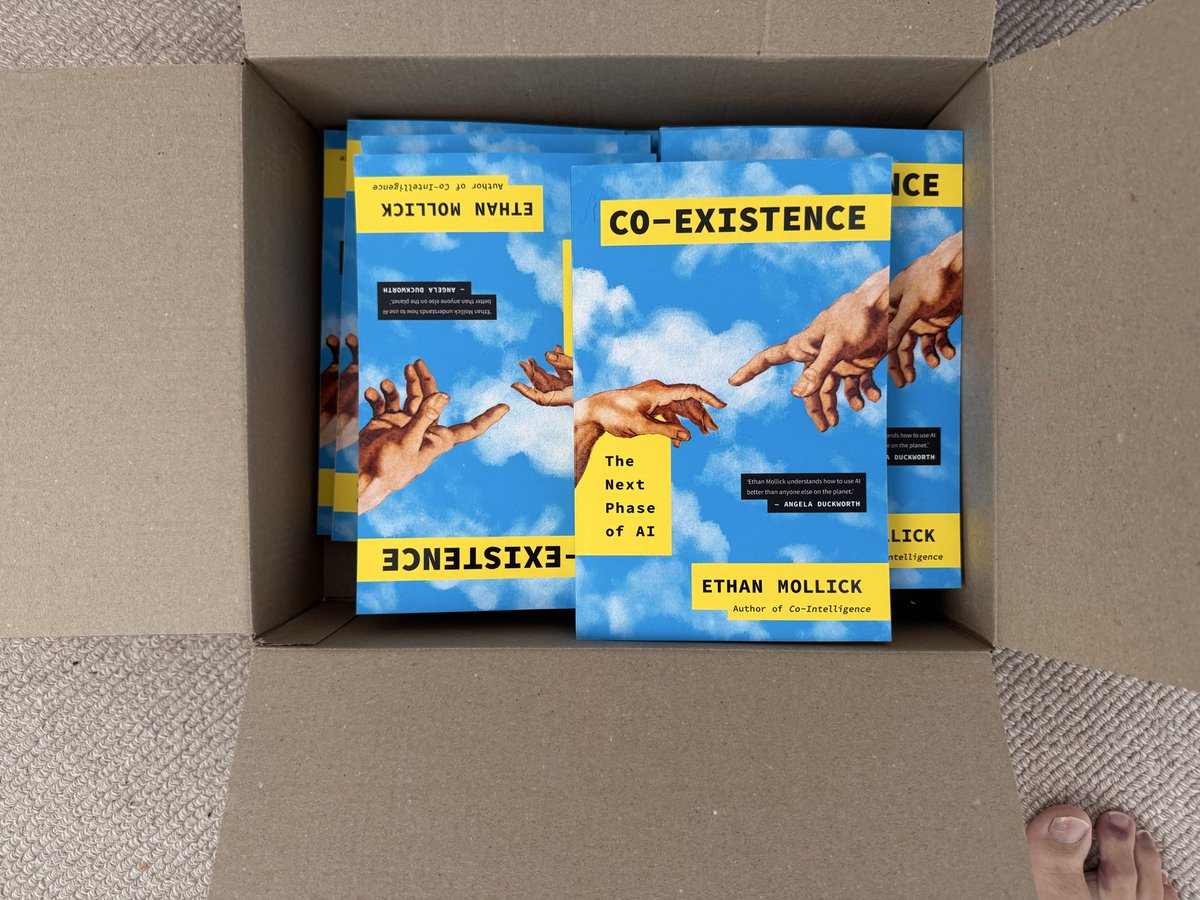
My pre-order arrived last night. I have nine friends who are all going to learn a lot over the next week from @emollick’s Co-Existence. I ended up giving away 25 copies of his last book, so I’m sure this is only the first batch I’ll order
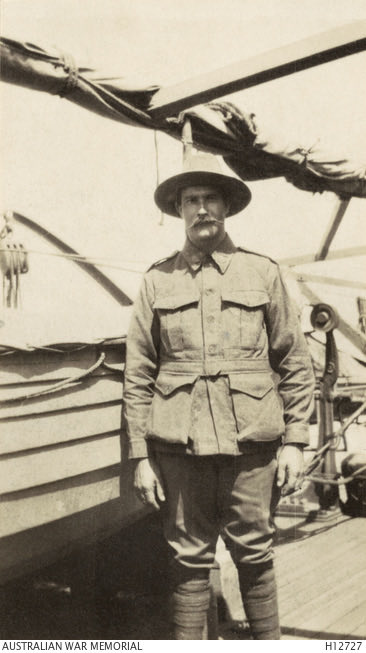
He has no known grave. His name is on the Villers-Bretonneux Memorial in France.
His brother John had already died there in 1916.
A marble board in a lobby, and I'd walked past it for years. Worth stopping to read.
The positives of not staring at my phone all the time.
My bus stop in Bridge St, Sydney is right next to this building. Years of commuting, and I'd never seen the WWI Honour Board in the lobby.
Today I did. And one name stopped me: W. Blackadder.
Real name. Real man. So who was he? 🧵
He enlisted in April 1916, aged 33. Sailed from Brisbane that September. In France by December.
Three months later, on 26 March 1917, he was killed in action.
Just came back from holiday overseas. Every single ad I saw in X was AI generated. Like these 4 pictures - AI generated, all the same pic, with the colour AI changed. Ads for shavers, clippers, hair spritz - all impossible, AI generated, videos.
Just in case you missed the headline last week, this is REALLY important and gets at a larger trend that will shape AI discovery and human knowledge...
Google Data Commons teamed up with the United Nation to make all of its public statistics accessible for the age of AI and agents 👏👏 (Full announcement here: https://t.co/al9yJMAQjm)
This is a HUGE public good that unites global stats into one AI-ready knowledge graph you can connect to your agent via MCP.
Say what you want about big tech (and I will alongside you for some of it), but I just love seeing examples like this where they put their resources and expertise to work for the betterment of society in ways that only they can.
The new industrial revolution that we're currently embarking on isn't just about physical infra build out... it also requires rewriting how the world's data is accessed and managed.
I'm happy to announce that I'll be adding the UN's new dataset to https://t.co/ENJpTp5ttR so you can perform complex multi-hop deep research and analysis between UN System Data Commons global statistics and the rest of the web! ♾️
Even without the latest GPT-6 it could create a completely fake Strava track of a run, given the start point and the pace you wanted to claim. Don’t ask me how I know 😂
This is pretty neat: ChatGPT Work and GPT-6 Astra (I used "Max") can take an address and produce a 5K/10K circular running route starting from that address, using OSM data https://t.co/GVxIqlqThC
@xRabidRabbitx@stetsondoggett I've got an ipad with cellular capability, but don't connect it because it's an entirely additional plan. So if I can connect my iPhone and iPad using this, then that's a great use case - one number, one plan, just a few $ a month extra. Today, I use iPad wifi only
Custom GPTs in ChatGPT will likely be retired on December 11
"Migrate your GPTs by December 11 - GPTs that aren’t migrated won’t be available after December 11. Migrate yours so people can keep using them as plugins."
"Create a plugin instead - Plugins are replacing GPTs as the new home for custom tools. Create a plugin now, or continue creating a GPT during the two-week transition."
This seems like a big change for education, where teachers are running out of ways to be able to share ChatGPT assets like this with their students. All those "Ask Prof x" type chatbots will die out (unless staff and all students have ChatGPT Edu accounts)
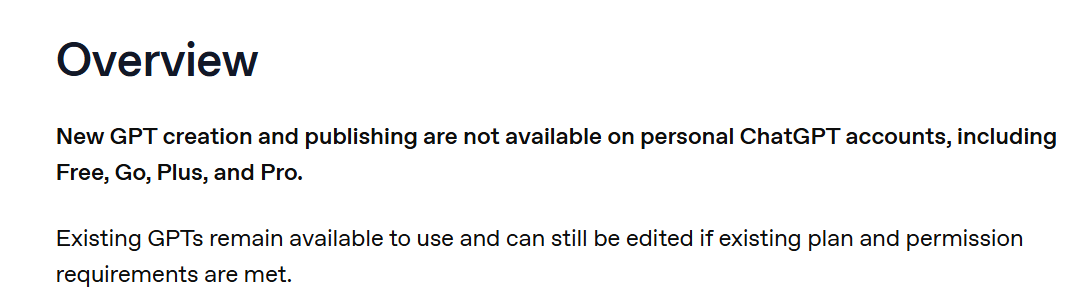
What? You can no longer create and publish custom GPTs in #ChatGPT consumer accounts. The pricing page says it's still in the features, but the help pages say "No" https://t.co/m0r0PRzrfl
Now you can only do it in work accounts (Business, Enterprise, and Edu) and often they are set up to not allow sharing outside the org. I tried in my personal Pro account, and I can create a new one, but cannot share it with anybody