Public policy, media, international development—Books: @DelhibyHeart; The Fractious Path; Being Pakistani; Identity, Faith & Conflict; The Role of Public Admin.
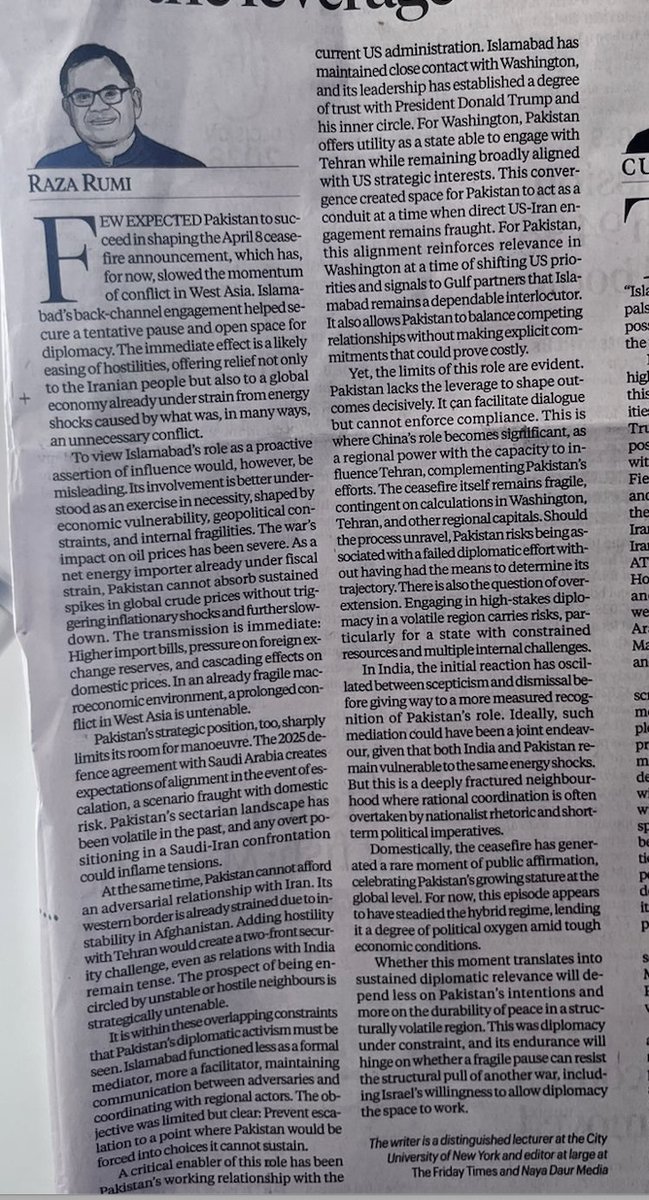
Few expected Pakistan to succeed in shaping the April 8 ceasefire announcement, which has, for now, slowed the momentum of conflict in West Asia. Islamabad’s back-channel engagement helped secure a tentative pause and open space for diplomacy. The immediate effect is a likely easing of hostilities, offering relief not only to the Iranian people but also to a global economy already under strain from energy shocks caused by what was, in many ways, an unnecessary conflict.
To view Islamabad’s role as a proactive assertion of influence would, however, be misleading. Its involvement is better understood as an exercise in necessity, shaped by economic vulnerability, geopolitical constraints, and internal fragilities. The war’s impact on oil prices has been severe. As a net energy importer already under fiscal strain, Pakistan cannot absorb sustained spikes in global crude prices without triggering inflationary shocks and further slowdown. The transmission is immediate: Higher import bills, pressure on foreign exchange reserves, and cascading effects on domestic prices. In an already fragile macroeconomic environment, a prolonged conflict in West Asia is untenable.
Pakistan’s strategic position, too, sharply limits its room for manoeuvre. The 2025 defence agreement with Saudi Arabia creates expectations of alignment in the event of escalation, a scenario fraught with domestic risk. Pakistan’s sectarian landscape has been volatile in the past, and any overt positioning in a Saudi-Iran confrontation could inflame tensions.
At the same time, Pakistan cannot afford an adversarial relationship with Iran. Its western border is already strained due to instability in Afghanistan. Adding hostility with Tehran would create a two-front security challenge, even as relations with India remain tense. The prospect of being encircled by unstable or hostile neighbours is strategically untenable.
It is within these overlapping constraints that Pakistan’s diplomatic activism must be seen. Islamabad functioned less as a formal mediator, more a facilitator, maintaining communication between adversaries and coordinating with regional actors. The objective was limited but clear: Prevent escalation to a point where Pakistan would be forced into choices it cannot sustain.
A critical enabler of this role has been Pakistan’s working relationship with the current US administration. Islamabad has maintained close contact with Washington, and its leadership has established a degree of trust with President Donald Trump and his inner circle. For Washington, Pakistan offers utility as a state able to engage with Tehran while remaining broadly aligned with US strategic interests. This convergence created space for Pakistan to act as a conduit at a time when direct US-Iran engagement remains fraught. For Pakistan, this alignment reinforces relevance in Washington at a time of shifting US priorities and signals to Gulf partners that Islamabad remains a dependable interlocutor. It also allows Pakistan to balance competing relationships without making explicit commitments that could prove costly.
Yet, the limits of this role are evident. Pakistan lacks the leverage to shape outcomes decisively. It can facilitate dialogue but cannot enforce compliance. This is where China’s role becomes significant, as a regional power with the capacity to influence Tehran, complementing Pakistan’s efforts. The ceasefire itself remains fragile, contingent on calculations in Washington, Tehran, and other regional capitals. Should the process unravel, Pakistan risks being associated with a failed diplomatic effort without having had the means to determine its trajectory. There is also the question of overextension. Engaging in high-stakes diplomacy in a volatile region carries risks, particularly for a state with constrained resources and multiple internal challenges.
In India, the initial reaction has oscillated between scepticism and dismissal before giving way to a more measured recognition of Pakistan’s role. Ideally, such mediation could have been a joint endeavour, given that both India and Pakistan remain vulnerable to the same energy shocks. But this is a deeply fractured neighbourhood where rational coordination is often overtaken by nationalist rhetoric and short-term political imperatives.
Domestically, the ceasefire has generated a rare moment of public affirmation, celebrating Pakistan’s growing stature at the global level. For now, this episode appears to have steadied the hybrid regime, lending it a degree of political oxygen amid tough economic conditions.
Whether this moment translates into sustained diplomatic relevance will depend less on Pakistan’s intentions and more on the durability of peace in a structurally volatile region. This was diplomacy under constraint, and its endurance will hinge on whether a fragile pause can resist the structural pull of another war, including Israel’s willingness to allow diplomacy the space to work.
Published today in Indian Express
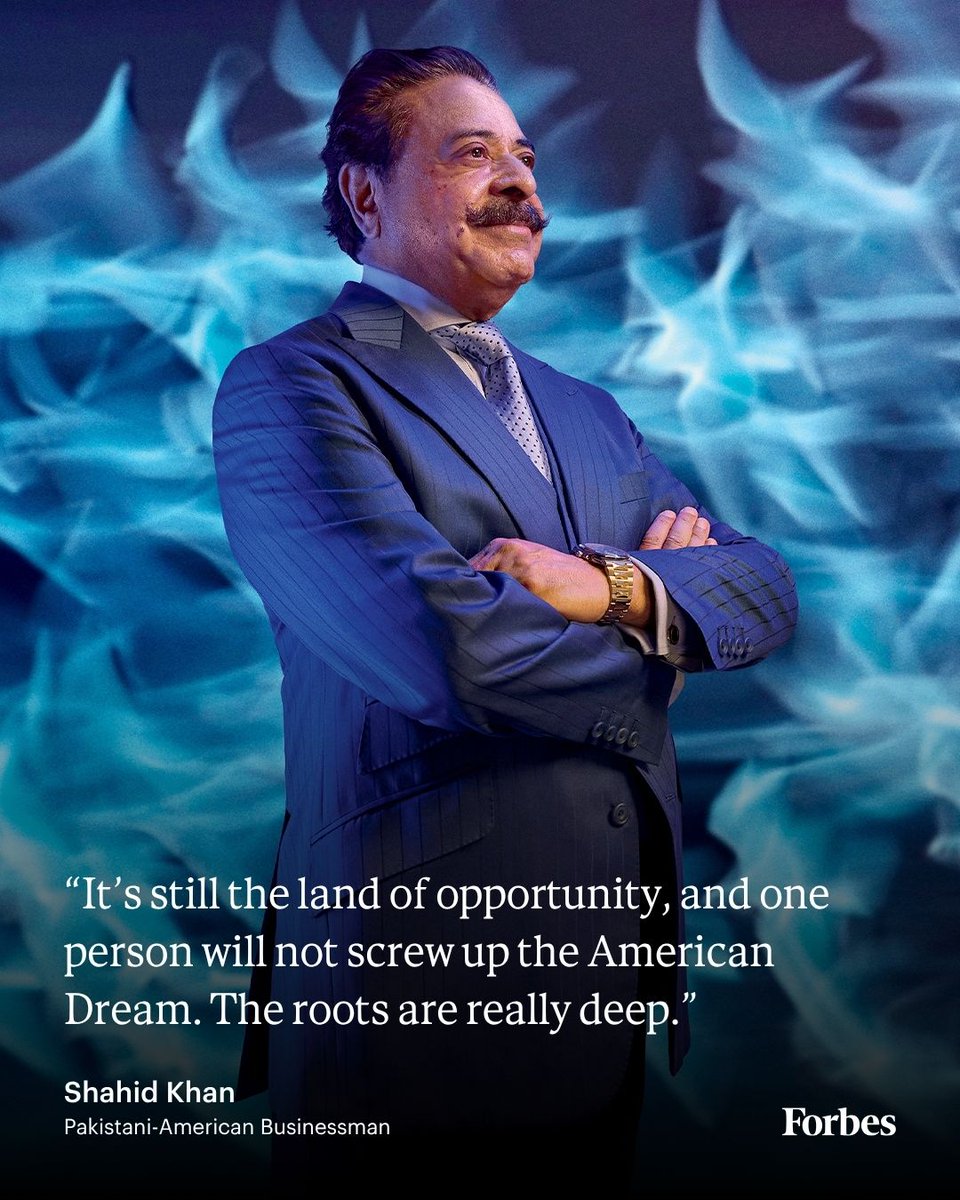
Pakistan-born billionaire Shahid Khan immigrated to the U.S. nearly 60 years ago and made his initial fortune making one-piece bumpers for cars and trucks. https://t.co/cgLCUXSK46 #Forbes250
📸: Robert Severi for Forbes
Zahida Hina, the feminist thinker, often lives in popular imagination as the wife of Jaun Elia. What can be more ironic than the fact that the people introduce one of the tallest feminist writers of the 20th century as the wife of a poet whom she had left for his patriarchal views. Who hasn’t read her should read this excerpt from Zahida:
“Adam (Adam of Bible) ka irada to yahi tha ke Khudavand-e-Khuda (God) ke har hukm par sar-e-tasliim-e-kham (submit) karte hue zindagi bagh-e-adan (Eden Garden) main abad la abad (Forever) tak basar kar di jaye. Ye Havva (Eve of Bible) thi jis ke andar justuju (curiosity) thi, jisne saanp ke roop mai aane wale Iblis (Satan of Bible) se mukalma (dialogue) kiya, naik-o-bad (Good & Evil) ki pehchan karane wale paiD ka phal khud khaya aur Adam ko bhi khilaya. Kitab-e-muqaddas (Holy book) ki roo se Havva pehli gunahgar zee ruh theharti hai, wo arsh-e-bariin (highest sky) se farsh-e-zamin (earth) par aayi to is liye ke sochti thi, sawal uthati thi. Ye wahi hai jisne pehla qadam uthaya, pehla faisla kiya aur bagh-e-adan ki thehri hui aur yaksa (stationary) zindagi ko apne inhiraf (revolt) se tah-o-bala (upside down) kar diya. Ye usi ka iqdam (endeavour) tha jisne Khudavand-e-Khuda ko ye kehne par majboor kiya ke, ‘Dekho admi naik-o-bad ki pehchan mai humari maanind ho gaya, aur ab kahi aisa na ho ke wo apna hath badhaye aur shajar-e-hayat se bhi kuch lekar khaye aur humesha jita rahe’.”
Interestingly this quote from the Bible was used by Jaun Elia at different places to prove his points. Zahida, though younger, was a comrade of Jaun before marrying & eventually separating from him. A more popular Jaun is often constructed as a ‘man who had been wronged by a woman’ while people don’t even know Zahida outside literary circles. In fact, this whole attention to Jaun proves the point of Zahida Hina & other feminist writers.
Photo: Jaun Elia, Zahida Hina & Ismat Chughtai
#urdupoetry #feminism
"The subcontinent now appears as a mosaic, not a mural signed by India. In today’s world, lasting influence belongs to whoever can juggle the most relationships at once, and that’s the new game on this crowded chessboard."
— #AJOpinion by @NajmSakib ⤵️ https://t.co/8ogonvZwtV
This guy was a major embarrassment for Indian media during the May conflict and his disinformation and absurdly ridiculous false reporting reinforced just how malicious and hateful Indian media can be
Any ethical or professional news organization would have dispensed with his services - not least because his ‘reporting’ not only made Indian media look like it was reporting a reality that simply did not exist, it also reflected very poorly on his own news organization
And here he is continuing with his disinformation and fake news and making up things
Grazie @Pontifex «I morti in questo mare sono vittime sia di decisioni prese, sia di decisioni mancate».
Da anni scriviamo che i #migranti non sono “affogati”, ma “fatti affogare”. Dai trafficanti, da chi ostacola i soccorsi, da chi protegge gli #Almasri
https://t.co/Ur0hdhxmyY
Mainstream media needs to focus a lot more time examining the rise of white nationalist, racist, anti-Semitic, hate groups like this one - chanting take America back.
Powerful gesture by Pope who visited #Lampedusa, Italy's southernmost port to support immigrants. This is a deadly migration route. Many arrive after crossing the Mediterranean in overcrowded boats and makeshift vessels. Not all make it. More than 1400 died this year alone! 🥲
Pope to the U.S. on #July4: “To receive (immigrants) with compassion and generosity is not only an act of charity, but also a recognition of the dignity that belongs to every human person."
In his appeal to the U.S. for its landmark anniversary, Pope Leo emphasized that the Catholic principle of defending life encompasses "welcoming, protecting and assisting immigrants."
In his appeal to the U.S. for its landmark anniversary, Pope Leo emphasized that the Catholic principle of defending life encompasses "welcoming, protecting and assisting immigrants."
A group of masked men gathered at Union Station today and called for reclaiming the country and getting rid of immigrants. Some held Confederate flags. They have been marching across Capitol Hill.
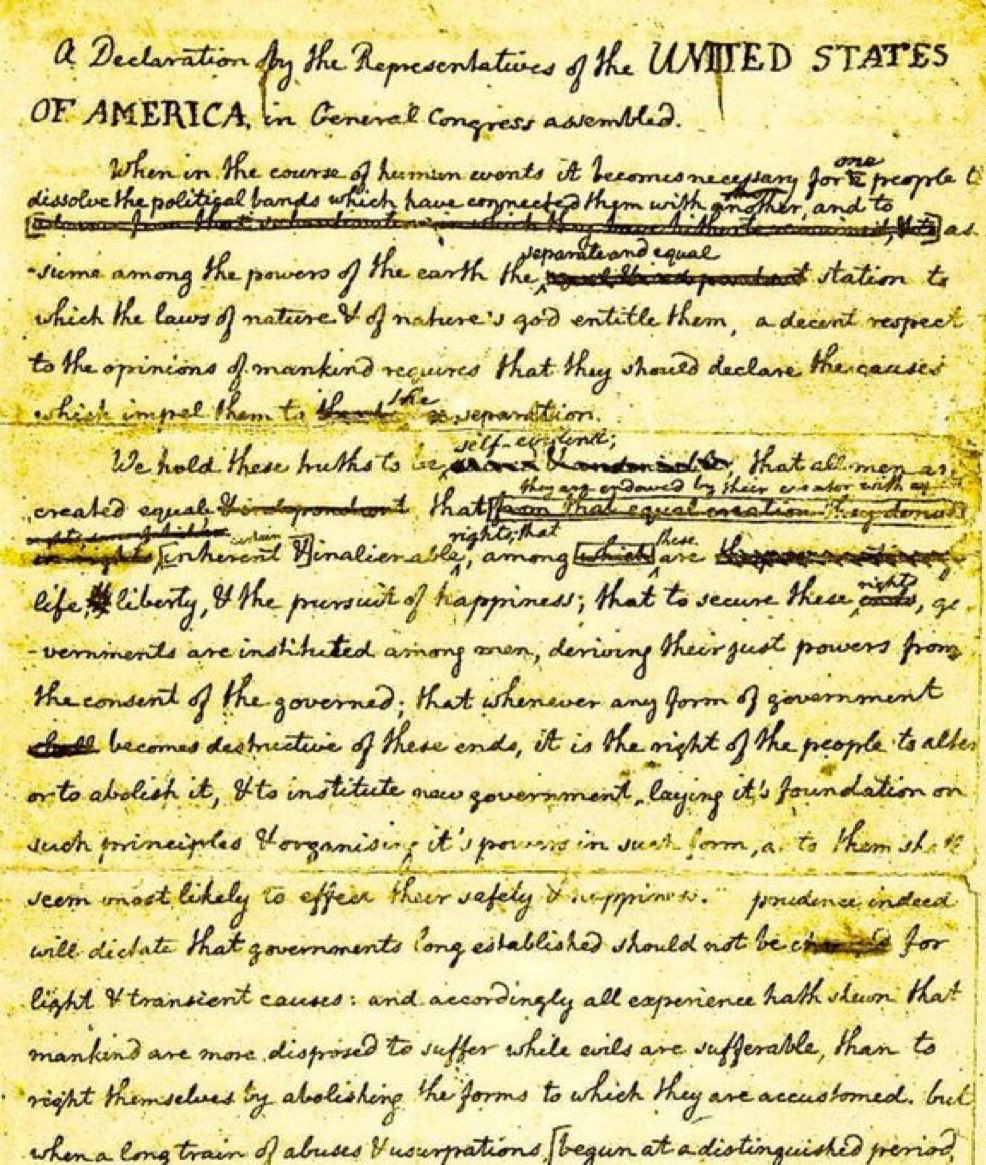
Pope Leo urged Americans to uphold the ideals of the Declaration of Independence, praising the country's long tradition of welcoming immigrants in his first major address to the United States https://t.co/zLPDluiCf1
The Trump Administration wanted Pope Leo XIV to visit the United States for our 250th anniversary.
Instead, he visited the Italian migrant island of Lampedusa and lifted up the plight of those who undertake a dangerous journey to new lands in search of a better future for their children.
There are more Cape Verdeans living outside Cape Verde than inside it. Nearly a million people abroad, around 530,000 at home. The islands look like a postcard, but their whole history runs on one hard fact: for centuries, the main thing to do here was leave.
When Portuguese settlers landed on these ten islands off West Africa in 1462, nobody lived there. No people, no big animals, just volcanic rock rising out of the Atlantic. The town they built on Santiago, Ribeira Grande (now called Cidade Velha), became the first lasting European settlement anywhere in the tropics. Within a hundred years it was one of the richest cities Portugal had, and the money came from a single trade: enslaved Africans, shipped through here on the way to the Americas.
The name is a little ironic. "Cabo Verde" means green cape, taken from a green point of land on the coast of Senegal a few hundred miles east. The islands themselves are mostly bone dry. Rain can fail for years, and the famines that followed killed tens of thousands at a time. Each drought pushed another wave of people onto boats headed for New England whaling ports, Lisbon, Rotterdam, Dakar. The biggest Cape Verdean community on earth now sits in Massachusetts and Rhode Island, not on the islands.
That history is why the music sounds the way it does. Morna, the slow guitar-and-voice style Cesária Évora carried around the world, comes down to one word: sodade, Creole for the ache of missing a person or a place you might never reach. UNESCO added it to its heritage list in 2019. A whole style of music built around goodbye.
The modern story runs the other way. These small, resource-poor islands became one of Africa's steadiest democracies, with power passing peacefully between two parties since 1991. In 2007 Cape Verde became only the second country ever to leave the UN's "least developed" list, after Botswana. Tourism now brings in about a quarter of the economy, money sent home by Cape Verdeans abroad covers close to a tenth more, and over 90% of the food arrives by ship.
And on the island of Fogo, people live inside an active volcano. When Pico do Fogo erupted in 2014, lava swallowed two villages and the only road in, and buried the school under rock. Everyone got out alive. Then they moved back onto the cooled lava and replanted the vineyards, because that volcanic soil grows what nothing else on the islands can. They keep rebuilding on the thing that keeps destroying them.