Connecting High School Football Recruiting Coordinators to Collab and Grow in the Role to Help Promote their Athletes to College Programs Ran by: @MRittCGS
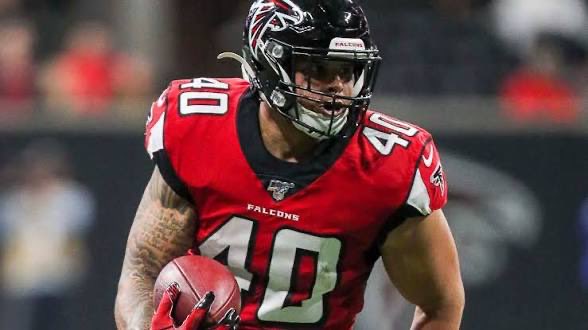
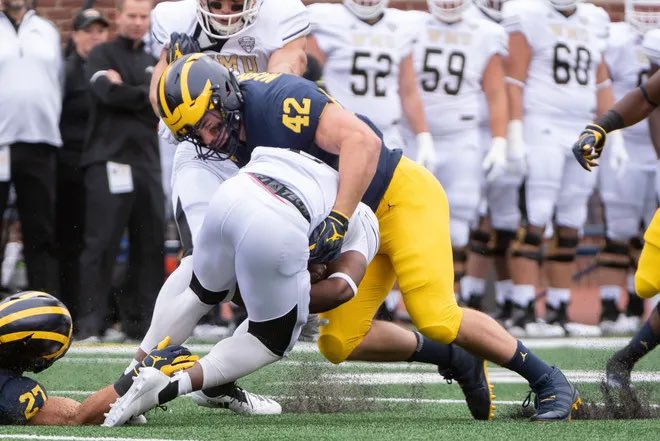
From a scouting perspective, Ben Mason was a physical, versatile and high-motor fullback whose value at Michigan went far beyond traditional production. His toughness, blocking temperament, positional flexibility and special-teams potential made him a unique prospect
At @UMichFootball, Mason appeared in 45 games with four starts, three at fullback and one at defensive tackle. He finished with 36 carries for 84 yards and nine rushing touchdowns, along with three receptions for 32 yards and one receiving score
As a fullback, Mason’s best traits were his physicality, leverage, strength and willingness to initiate contact. He played with an aggressive blocking mentality, consistently taking on linebackers and edge defenders as a lead blocker. Michigan also used him as a fullback, H-back and tight end, giving him valuable experience handling multiple alignments and assignments
His versatility extended to defense. Mason moved to defensive line in 2019, started a game at defensive tackle and recorded seven tackles before transitioning back to offense. That experience highlighted the same traits that showed up at fullback, hand strength, toughness, leverage, motor and football intelligence
Mason was a two-time Michigan Toughest Player Award winner, a 2020 team captain and participated in the 2021 @seniorbowl , where his physical lead blocking continued to stand out
2021 Michigan Pro Day:
Height: 6’2”
Weight: 246 lbs.
Arms: 32⅝”
Hands: 9⅜”
40-Yard Dash: 4.72
Vertical: 37.5”
Broad Jump: 9’9”
Three-Cone: 6.97
20-Yard Shuttle: 4.44
Bench Press: 29 reps
The @Ravens selected Mason 184th overall in the fifth round of the 2021 NFL Draft. He later spent time with Baltimore, New England, Chicago and the Chargers, with his professional value centered around blocking, positional versatility and special teams
Mason has since transitioned into coaching, working at @ArmyWP_Football in 2024, @IthacaBomberFB in 2025, and joining @FORDHAMFOOTBALL in 2026 as the Tight Ends Coach
Mason’s scouting profile was built around toughness, functional strength, versatility, football intelligence and an unselfish willingness to handle the physical responsibilities required of a fullback. His experience at fullback, H-back, tight end, defensive line and special teams made him one of the more versatile players at his position
One-gap and two-gap defense are built around the same objective: control the run game, account for every gap and keep the front connected. The difference is how each defender is asked to accomplish it
In a one-gap structure, the defender is responsible for attacking and controlling one assigned gap. The emphasis is on get-off, first-step quickness, leverage, hand usage and disruption. Penetration can create negative plays, but it only matters if the defender maintains gap integrity and does not run himself past the football
In a two-gap structure, the defender is asked to control the blocker in front of him while staying square enough to defend either adjacent gap once the run declares. That requires strength, length, heavy hands, extension, vision, patience and the ability to shed without guessing too early
From a coaching perspective, the technique changes the way the entire front fits together. One-gap concepts can allow defenders to attack more aggressively, while two-gap concepts can help control blockers and create cleaner pictures for linebackers behind the front
From a scouting perspective, I want to understand what the player is actually being asked to do before judging the result. A one-gap player may win with explosiveness, lateral quickness and penetration, while a two-gap player may provide value through anchor, block control, leverage and the ability to keep second-level defenders clean
The biggest takeaway is that alignment does not automatically equal assignment. A head-up defender is not always two-gapping, and an offset defender is not always one-gapping. The call and the responsibility tell the full story
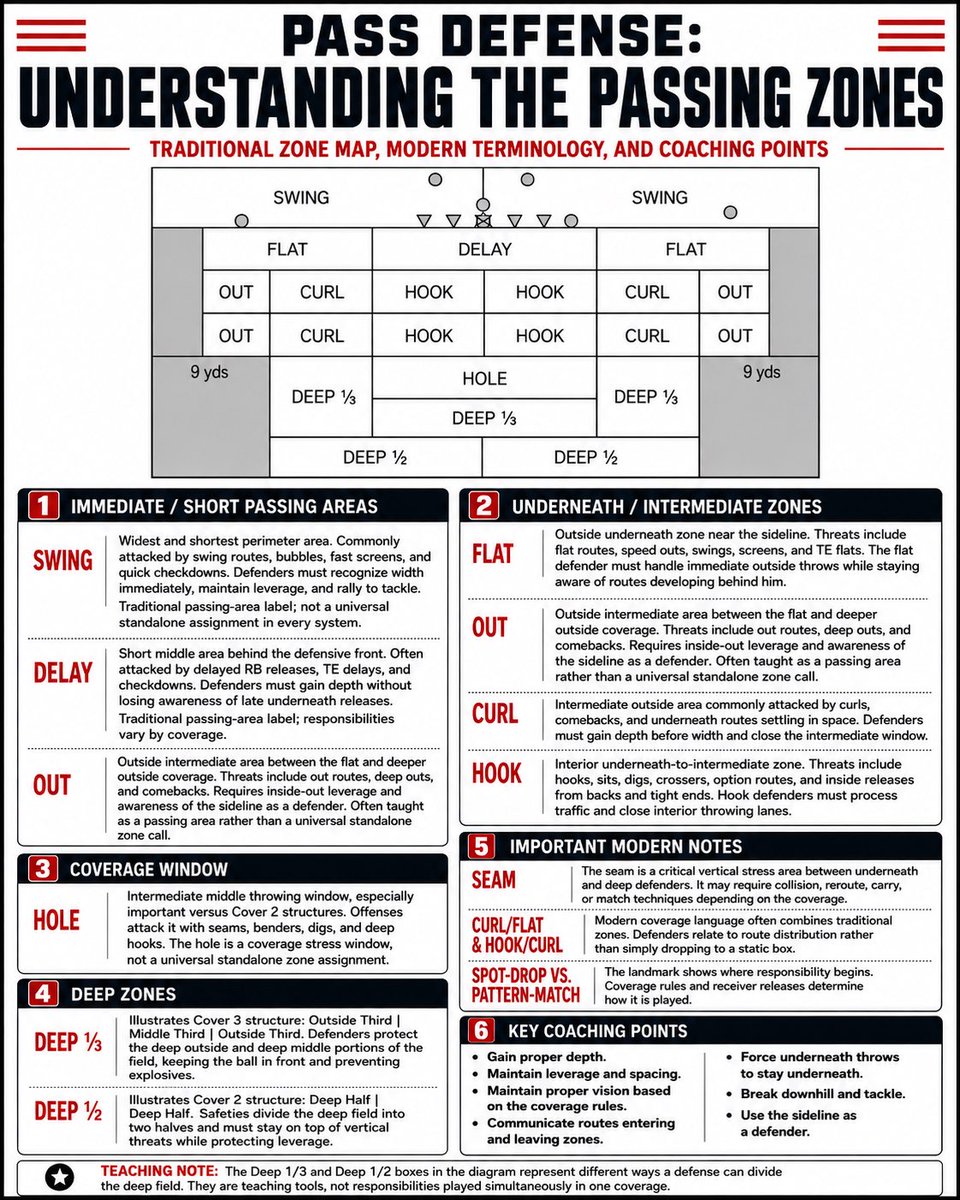
Understanding passing zones is more than memorizing boxes on a diagram. Each area of the field creates a different responsibility for the defense and a different opportunity for the offense.
Traditional passing-area terminology includes the Swing, Delay, Flat, Out, Curl, Hook, Hole, Deep ⅓ and Deep ½. These landmarks help explain where routes develop and where defenders can be stressed, but the exact responsibility will always depend on the coverage call and defensive system
Swing / Delay ➡️ Immediate underneath areas often attacked by backs, screens, checkdowns and late releases.
Flat ➡️ Outside underneath space where defenders must handle quick throws while remaining aware of routes developing behind them.
Out / Curl ➡️ Intermediate outside areas attacked by outs, comebacks, curls and other routes designed to create space between underneath and deep coverage.
Hook ➡️ Interior underneath-to-intermediate space where linebackers and other underneath defenders must process crossers, digs, hooks, option routes and inside releases.
Hole ➡️ A potential middle-of-field coverage window, especially against Cover 2, that offenses can attack behind underneath defenders and between the deep safeties.
Deep ⅓ ➡️ The deep-field structure associated with Cover 3: Outside Third | Middle Third | Outside Third.
Deep ½ ➡️ The deep-field structure associated with Cover 2, where two safeties divide the deep portion of the field.
Modern coverage goes even further with Curl/Flat, Hook/Curl, seam responsibilities and pattern-match principles. Defenders are not simply dropping to a spot and covering grass. They must recognize route distribution, maintain leverage and spacing, communicate, understand where their help is located and react according to the rules of the coverage
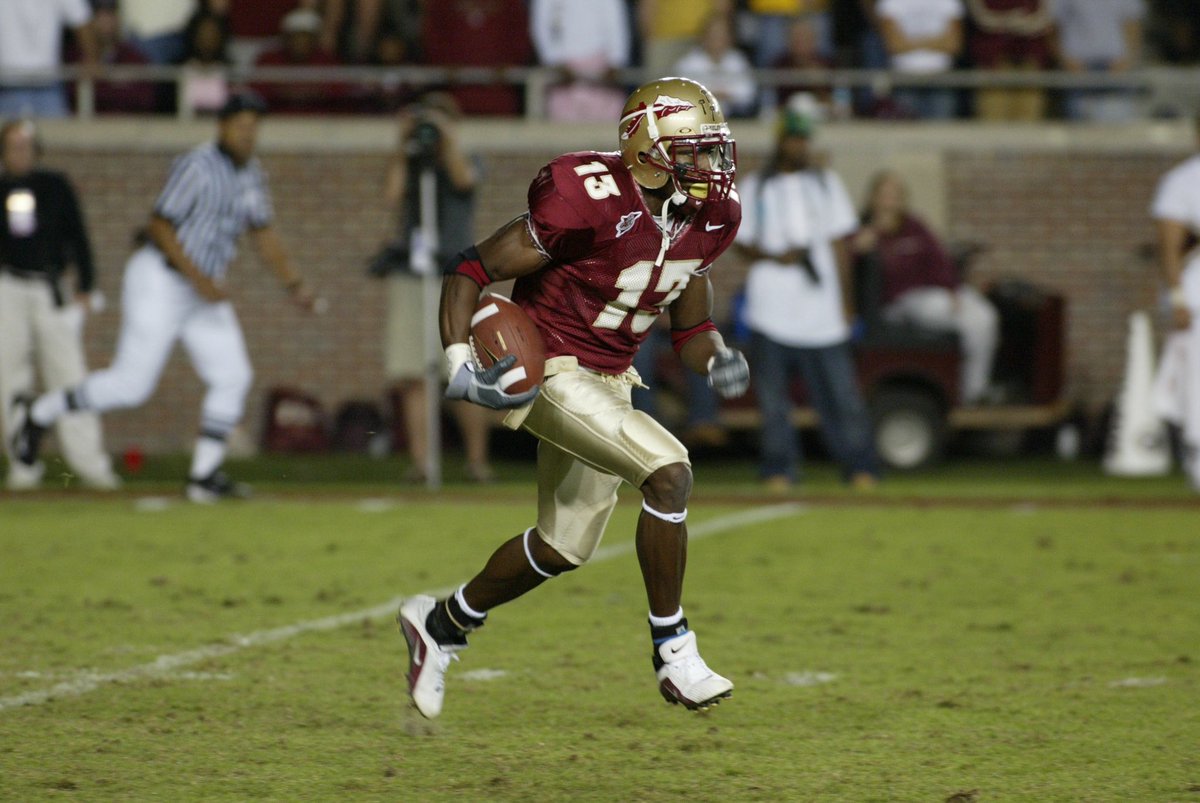
From a scouting perspective, @CRO31 was one of the most physically gifted cornerback prospects of his era, combining rare size, length, speed, explosiveness and ball skills
At @FSUFootball, Cromartie showed the prototype traits of a long outside corner. At roughly 6-foot-2, he had the range to carry vertical routes, recover when initially separated and use his length to challenge receivers at the catch point. In two healthy seasons, he recorded 5 interceptions, 8 pass breakups and two interception-return touchdowns, while also returning a fumble 61 yards for a score. He added 1,003 kickoff-return yards and earned First-Team All-ACC honors in 2004
His athletic profile was reinforced by his background with Florida State track and field. Cromartie ran 21.27 in the 200 meters and 46.39 in the 400, while also competing on FSU’s ACC championship 4x400 relay. That track background correlated with the long speed, acceleration, stride length and recovery ability visible on his football tape
Cromartie missed the entire 2005 season after tearing his ACL but still produced impressive pre-draft testing
Pre-Draft Measurements & Testing:
Height: 6’2⅛”
Weight: 208 lbs.
Arm Length: 33¾”
Hand Size: 10½”
40-Yard Dash: 4.38
Bench Press: 18 reps
Vertical Jump: 42”
Broad Jump: 11’0”
20-Yard Shuttle: 3.89
Three-Cone Drill: 7.02
The @chargers selected Cromartie 19th overall in the 2006 NFL Draft, and those traits translated at the NFL level. His length, recovery speed and ball skills helped him lead the league with a Chargers-record 10 interceptions in 2007, earning First-Team All-Pro and Pro Bowl honors
Cromartie became a four-time Pro Bowler and finished his career with 31 interceptions
Cromartie’s FSU film, track background and testing all told the same story: rare size-speed-length traits with the athletic ability to cover ground, recover and create turnovers at a high level
From a scouting perspective, Tamba Hali was a powerful, technically sound and relentless defensive lineman whose hand usage, leverage, strength and motor made him one of the Big Ten’s most disruptive defenders
At @PennStateFball, Hali finished with 179 tackles and 14 sacks. As a senior in 2005, he recorded 65 tackles, 17 tackles for loss and 11 sacks, leading the Big Ten in sacks and TFLs. He earned First-Team All-Big Ten, Big Ten Defensive Lineman of the Year and unanimous consensus All-American honors while helping Penn State finish 11-1, win the Big Ten and capture the Orange Bowl
Hali’s best traits were his violent hands, leverage, functional power, rush technique and nonstop effort. He could convert speed to power, play through contact and continue working when his initial pass-rush move was stopped
2006 Pre-Draft Testing:
Height: 6’3”
Weight: 275 lbs.
Arms: 33⅜”
Hands: 10½”
40-Yard Dash: 4.87
Bench Press: 18 reps
Vertical: 30”
Broad Jump: 8’10”
20-Yard Shuttle: 4.31
Three-Cone: 7.28
The @Chiefs selected Hali 20th overall in the 2006 NFL Draft. He transitioned from defensive end to outside linebacker in the Chiefs’ 3-4 defense, where his strength, hands and pass-rush technique continued to translate
Hali spent his entire 12-year NFL career with Kansas City, totaling 89.5 sacks and 33 forced fumbles. He earned five Pro Bowl selections, two Second-Team AP All-Pro honors and was inducted into the Chiefs Hall of Fame in 2024
Hali is a strong example of why pass-rush projection goes beyond timed speed. His technique, power, leverage, toughness and motor consistently showed up on film and became the foundation of a highly productive NFL career
From a scouting perspective, @KSlash10 was one of the most unique quarterback prospects of his era, combining legitimate arm talent with rare speed, explosiveness and open-field ability
At @CUBuffsFootball, Stewart finished with 6,481 passing yards, 7,770 yards of total offense and a 27-5-1 record as a starter. As a senior in 1994, he earned First-Team All-Big Eight and Second-Team AP All-American honors while helping Colorado finish 11-1 and ranked No. 3 nationally
His defining traits were his arm strength, athleticism, mobility and ability to create outside structure. He could drive the ball vertically, generate velocity from different platforms and stress defenses as a designed runner or scrambler. His arm talent was famously displayed on the “Miracle at Michigan,” when he launched the 64-yard game-winning touchdown pass to Michael Westbrook
Stewart closed his college career by earning 1995 Fiesta Bowl MVP honors, throwing for 205 yards and a touchdown while rushing for 143 yards and another score against Notre Dame.l
1995 NFL Combine:
Height: 6’1½”
Weight: 212 lbs.
40-Yard Dash: 4.52
10-Yard Split: 1.60
20-Yard Split: 2.68
Vertical: 36”
Broad Jump: 10’5”
20-Yard Shuttle: 4.13
The @steelers selected Stewart 60th overall in the second round of the 1995 NFL Draft, and his versatility immediately became part of his value. He was used at quarterback, wide receiver, running back and even punter, leading to the nickname “Slash” ➡️ quarterback slash receiver slash runner
Eventually, Stewart became Pittsburgh’s full-time starting quarterback. In 1997, he threw for 3,020 yards and 21 touchdowns while rushing for 476 yards and 11 scores, helping the Steelers reach the AFC Championship Game. His best season came in 2001, when he led Pittsburgh to a 13-3 record, earned a Pro Bowl selection, Steelers MVP honors and NFL 101 Awards AFC Offensive Player of the Year recognition
Stewart finished his NFL career with 14,746 passing yards, 2,874 rushing yards and 658 receiving yards
Stewart was ahead of the NFL’s offensive evolution. His combination of arm talent, speed, explosiveness and positional versatility allowed him to impact games in multiple ways, making “Slash” one of the most fitting nicknames of his era
From a scouting perspective, Chris Samuels was a prototype left tackle prospect whose combination of size, athleticism, balance, foot quickness and physicality made him one of the premier offensive linemen in the 2000 NFL Draft
At @AlabamaFTBL, Samuels started 42 consecutive games at left tackle and developed into an elite blind-side protector. During his 1999 senior season, Alabama credited him with allowing no sacks or quarterback pressures, while recording 91 knockdown blocks and helping Shaun Alexander rush for 1,383 yards
On film, Samuels showed light feet for a 325-pound tackle, good balance and the ability to stay square and mirror speed off the edge. He could redirect against counter moves, absorb power and maintain the integrity of the pocket. In the run game, he combined strength with movement ability, creating displacement at the point of attack while also climbing to the second level and blocking effectively in space
As a senior, Samuels earned unanimous First-Team All-American and First-Team All-SEC honors, won the Outland Trophy and Jacobs Blocking Trophy, and helped Alabama win the 1999 SEC Championship
The @Commanders selected Samuels third overall in the 2000 NFL Draft, and his Alabama traits translated immediately. He became the starting left tackle as a rookie and started all 141 regular-season games he played over 10 NFL seasons, earning six Pro Bowl selections
His athletic feet, balance and ability to handle speed allowed him to consistently protect the edge, while his strength and toughness translated to the run game. He ultimately blocked for a 1,000-yard rusher in seven of his 10 NFL seasons
Samuels is a strong example of why movement ability matters so much at offensive tackle. His size was impressive, but his feet, balance, body control, strength and toughness are what allowed him to develop into a six-time Pro Bowler and decade-long cornerstone of Washington’s offensive line
From a scouting perspective, @K_SMITH31 is a strong example of instincts, toughness and football intelligence outweighing traditional testing numbers.
At @SanJoseStateFB, Smith was a four-year starter who finished with 476 tackles, 29 tackles for loss, 5 sacks, 9 forced fumbles and 2 interceptions. He earned all-conference recognition in each of his four seasons and was named FWAA Freshman All-American and WAC Freshman of the Year in 2010.
As a senior in 2013, Smith led the FBS with 159 tackles and 13.3 tackles per game. His game was built around processing speed more than pure timed speed. He diagnosed quickly, trusted his keys, played downhill with urgency and consistently took efficient angles to the football
Pre Draft Measurements & Times:
Height: 5’11½”
Weight: 233 lbs.
40-Yard Dash: 4.98
10-Yard Split: 1.76
Bench Press: 26 reps
Vertical: 31”
Broad Jump: 9’5”
20-Yard Shuttle: 4.53
Three-Cone: 6.87
After going undrafted in 2014, Smith signed with the @dallascowboys as a linebacker, initially earning his value on special teams. In 2016, Dallas converted him to fullback, a move that fit his skill set extremely well
His linebacker background translated directly to the position. Smith understood leverage, pursuit angles, defensive fits and how linebackers react to blocking schemes. That knowledge, combined with his physicality and willingness to initiate contact, helped him become an effective lead blocker
Smith contributed during @EzekielElliott 2016 rookie season, when Elliott rushed for 1,631 yards and won the NFL rushing title. Smith later played for the Oakland Raiders and Atlanta Falcons, ultimately appearing in 142 games over 10 NFL seasons
He also became a strong advocate for the fullback position through his brand, “Make Fullbacks Great Again.” Smith used it to celebrate the history of the position and support the remaining fullbacks around the NFL
Smith’s career shows why scouting goes beyond measurable athletic traits. He entered the NFL as an undrafted linebacker, reinvented himself as a fullback and built a decade-long career through instincts, toughness, versatility, special-teams value and football intelligence
The year is 1999
You’re watching Pokémon: The First Movie with the boys
Everyone knows there are exactly 151 Pokémon
Then this absolute unit shows up and nobody knows what the hell is going on
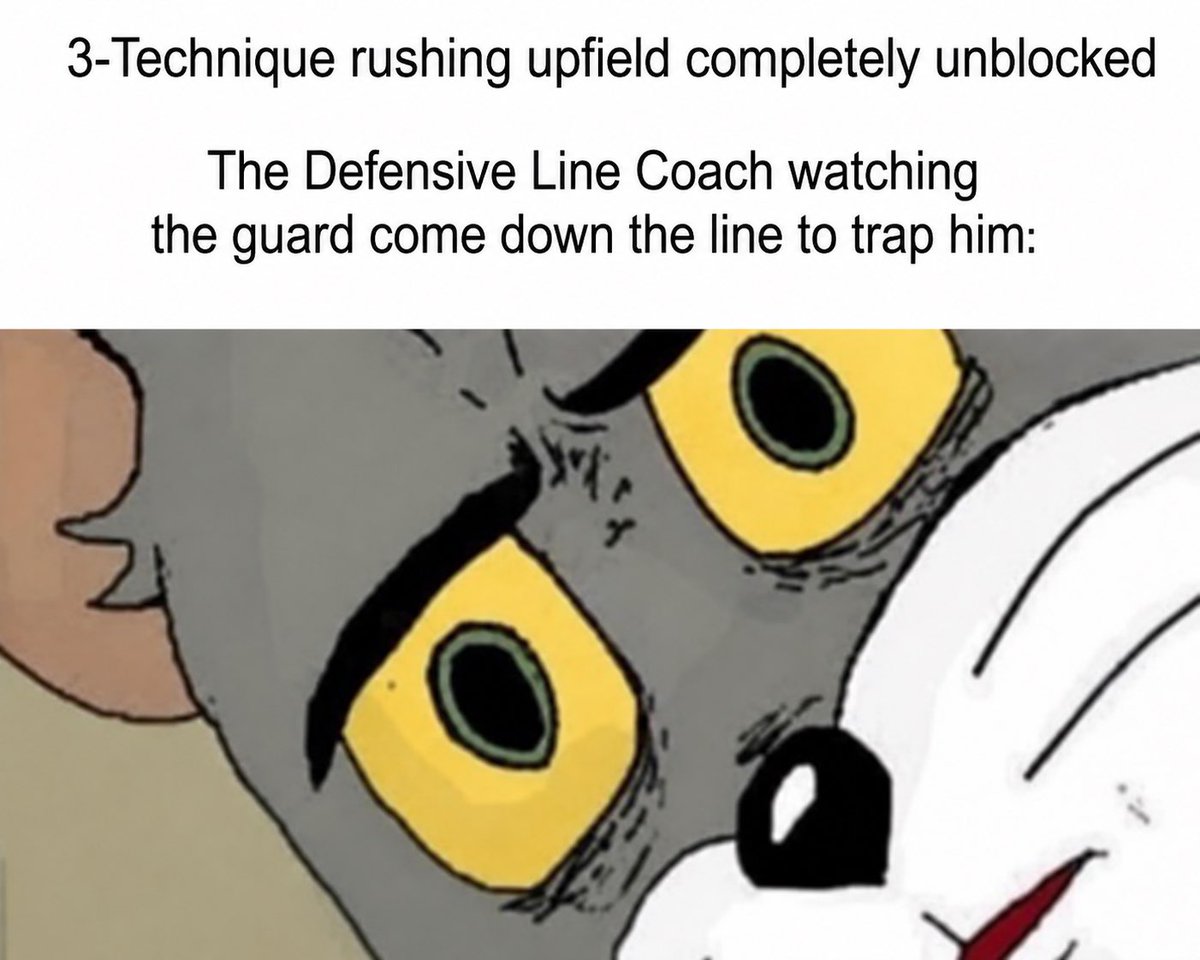
Power is one of the most fundamental run concepts in football, but there is a lot more to it than simply pulling a guard
From a coaching perspective, the goal is to create favorable angles and movement at the point of attack, account for the edge defender and insert an additional blocker into the run fit
It starts up front. The playside offensive line has to secure the first level, prevent penetration and create movement through gap/down blocks and combination blocks. The backside guard has to pull with urgency, stay tight to the blocking surface, locate the correct second-level threat and get vertical through the crease
The running back is just as important. He has to press the called track, maintain his tempo and read the leverage as the play develops. Patience does not mean hesitation. Press the track, force the defense to declare and make one decisive cut
Defensively, Power can be challenged with movement, wrong-arm techniques, scrape exchanges, linebacker plugs and secondary inserts. That is why the concept has to be taught through rules and reactions rather than a static pre-snap picture
When I’m evaluating Power on film, I’m looking beyond whether the play gained yards. I’m watching pad level, leverage, combination-block timing, pull path, awareness against movement, track discipline, vision and how quickly players process what the defense is giving them
Power is physical football, but its effectiveness comes from details, angles, leverage, communication and execution
From a scouting perspective, Brandon Siler was an instinctive, physical and highly competitive inside linebacker whose processing speed and downhill mentality allowed him to play faster than his testing profile suggested
At @GatorsFB, Siler made an immediate impact. As a true freshman in 2004, he led the Gators with 77 tackles and earned SEC Freshman of the Year honors from the league’s coaches. Over three seasons, he played in 37 games with 31 starts, finishing with 214 tackles, 29 tackles for loss, 10 sacks and eight fumble recoveries
His best traits were his instincts, play recognition, toughness and ability to trigger downhill. Siler diagnosed blocking schemes quickly, worked through traffic with physicality and consistently found the football. His anticipation helped create functional play speed and allowed him to overcome an average overall athletic profile
As a junior in 2006, Siler helped Florida win the SEC Championship and BCS National Championship, earning AP Third-Team All-American and Second-Team All-SEC honors
Pre-Draft Testing and Measurements:
Height: 6’1¾”
Weight: 241 lbs.
Arm Length: 34¾”
Hands: 10⅛”
40-Yard Dash: 4.62
10-Yard Split: 1.62
Bench Press: 23 reps
Vertical Jump: 30.5”
Broad Jump: 9’8”
20-Yard Shuttle: 4.39
Three-Cone: 7.34
The @chargers selected Siler 240th overall in the seventh round of the 2007 NFL Draft. His Florida traits translated well to a role as a physical inside linebacker and special-teams contributor. He played with urgency against the run, understood positioning and consistently brought toughness and effort
Siler appeared in 74 NFL games with 16 starts, recording 180 tackles, 3 sacks and 2 interceptions
From an evaluation standpoint, Siler is a strong example of why linebacker scouting goes beyond timed athleticism. His instincts, processing, toughness, leadership and physicality consistently allowed him to maximize his ability and carve out a productive NFL career
🚨 COLLEGE FOOTBALL COACHES 🚨
2028 QB — a prospect that checks a lot of boxes.
✅ Academics: 4.0 GPA
✅ Size: 6’1” | 190 lbs.
✅ Athleticism: 36” Vertical | 10.9 100m | 21.71 200m
✅ Production/Recruitment: 7 Offers
✅ Football Traits: Confident in the pocket, strong arm, athletic and competitive
✅ Character: Comes from a great family and brings the right approach off the field
Grades. Athleticism. Arm talent. Character.
A 2028 quarterback that college coaches need to have on their radar. 🎯
@FarhanLaljiTSN
Great kid from a great family with the athletic profile and versatility to make an impact at multiple positions for the Spiders!
A talented, high-character addition for @RussHuesman and @URSpidersFB. 🕷️🏈
From a scouting perspective, Simeon Rice was an explosive, disruptive edge defender whose length, first-step quickness and natural pass-rush ability made him one of the premier defensive prospects of his era
@IlliniFootball listed him as a rush linebacker, Rice frequently played on the line of scrimmage in a role similar to today’s EDGE position. He finished his career with 44.5 sacks and 69 tackles for loss, both Illinois records, while earning First-Team All-Big Ten honors three straight years, First-Team All-America honors in 1994 and 1995, and Big Ten Lineman of the Year in 1994
Rice’s best traits were his get-off, length, acceleration and closing burst. He could threaten the outside shoulder immediately, force offensive tackles to open their sets and use his long frame to maintain separation. His ability to consistently create negative plays and affect the quarterback projected naturally to defensive end in the NFL
Pre-Draft Testing:
Height: 6’5”
Weight: 259 lbs.
40-Yard Dash: 4.66
10-Yard Split: 1.72
Bench Press: 26 reps
The @AZCardinals selected Rice third overall in the 1996 NFL Draft, and his traits translated immediately. He recorded 12.5 sacks as a rookie and won AP Defensive Rookie of the Year
Rice went on to finish his NFL career with 122 sacks, three Pro Bowl selections and First-Team All-Pro honors in 2002. That season with @Buccaneers, he recorded 15.5 regular-season sacks, added four more in the postseason and helped the Buccaneers win Super Bowl XXXVII
From an evaluation standpoint, Rice is a great example of scouting the player rather than the position label. His explosiveness, length, edge speed and ability to get to the quarterback translated directly from Illinois to the NFL and made him one of the most productive pass rushers of his generation
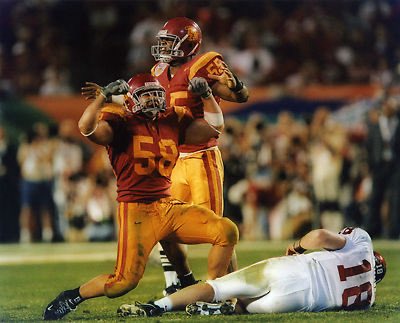
From a scouting perspective, @LofaTatupu51 was an instinctive, physical and highly intelligent middle linebacker whose processing speed consistently allowed him to play faster than his timed speed
After beginning his career at Maine, Tatupu transferred to @uscfb, where he started 25 games and led the Trojans in tackles in both 2003 and 2004. He finished his USC career with 202 tackles, 25 tackles for loss, 9 sacks and 7 interceptions, while helping USC win back-to-back AP National Championships in 2003 and 2004
As a junior in 2004, Tatupu posted 104 tackles, 13.5 tackles for loss, 6 sacks and 3 interceptions, earning First-Team All-Pac-10 and https://t.co/JMGb0J3mMS First-Team All-American honors
Tatupu’s biggest strengths were his instincts, anticipation, play recognition and ability to diagnose blocking schemes quickly. He played downhill with physicality, took efficient pursuit angles and consistently put himself around the football. In coverage, his awareness and understanding of route concepts helped him overcome average long speed.
Pre-Draft Testing and Measurements
Height: 5’11⅞”
Weight: 238 lbs.
40-Yard Dash: 4.72
10-Yard Split: 1.63
Bench Press: 23 reps
Vertical: 35”
Broad Jump: 9’8”
20-Yard Shuttle: 4.21
Three-Cone: 7.32
The @Seahawks traded up to select Tatupu 45th overall in the second round of the 2005 NFL Draft, and his USC traits translated immediately. He started all 16 games as a rookie, recorded 104 tackles, 4 sacks and 3 interceptions, earned a Pro Bowl selection and helped Seattle reach Super Bowl XL
Tatupu went on to earn three consecutive Pro Bowl selections from 2005-07 and First-Team AP All-Pro honors in 2007. Over six seasons with Seattle, he started all 84 games he played and totaled 552 tackles, 10 interceptions, 8.5 sacks and 7 forced fumbles
From an evaluation standpoint, Tatupu is a strong example of why linebacker scouting goes beyond size and timed speed. His instincts, preparation, leverage, toughness and football intelligence created functional playing speed
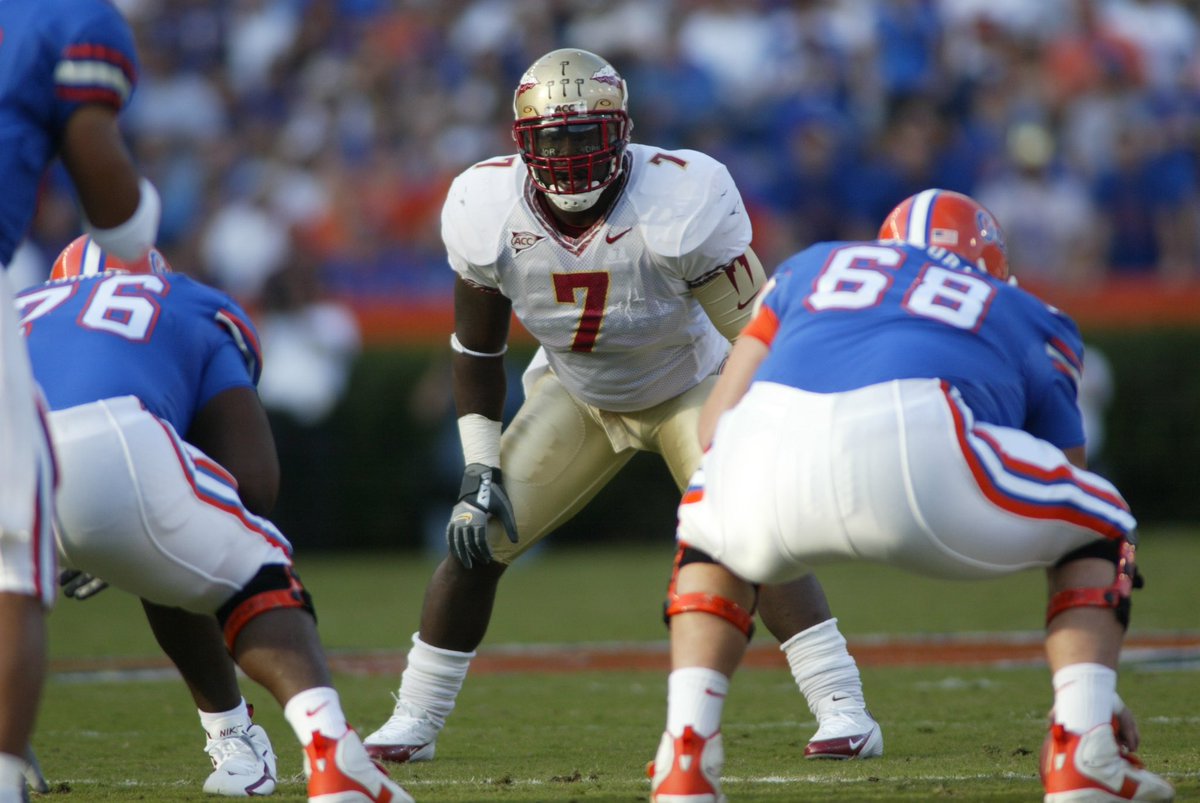
From a scouting perspective, @busterdavis7 was an instinctive, physical and highly productive middle linebacker whose play consistently exceeded his listed dimensions
At @FSUFootball, Davis was a three-year starter who finished his career with 265 tackles, 27.5 tackles for loss and 8 sacks, leading the Seminoles in tackles in each of his final three seasons. As a senior in 2006, he recorded 109 tackles, 8 tackles for loss and 5 sacks, earning First-Team All-ACC and AFCA First-Team All-America honors
Davis’ best traits were his instincts, processing speed, toughness and ability to consistently find the football. He diagnosed plays quickly, trusted his reads and triggered downhill with urgency. His compact frame gave him natural leverage, while his physicality and willingness to take on contact fit the demands of playing inside linebacker
2007 NFL Combine:
Height: 5’9⅜”
Weight: 239 lbs.
40-Yard Dash: 4.64
10-Yard Split: 1.65
Bench Press: 24 reps
Vertical Jump: 31”
Broad Jump: 8’8”
20-Yard Shuttle: 4.37
Three-Cone Drill: 7.28
Arizona selected Davis 69th overall in the third round of the 2007 NFL Draft. He later spent time with Detroit, Indianapolis and Houston
One of the most unique aspects of Davis’ football journey is his connection to the @seniorbowl. He competed in the 2007 Senior Bowl as a player, experiencing the evaluation process firsthand. He later returned to the event from the personnel side, serving as a scout for the Reese’s Senior Bowl during the 2022 season
Davis has also built an extensive high school coaching résumé with stops in Florida, Georgia, Ohio and Texas. He was named head coach at Columbus North High School in Indiana in June 2026