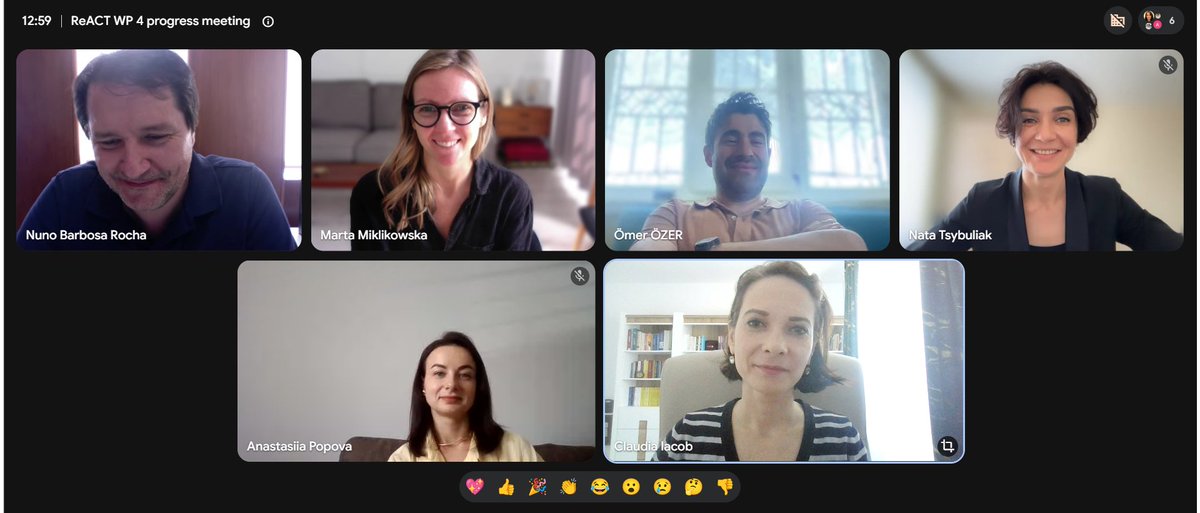
📷📷 This week the ReACT team met online for a WP4 progress check-in.
Behind the scenes, the Turkey team is shaping the first version of the ReACT web-based platform and we cannot wait to launch it for the pilot trial. More to come soon.
📷And yes - we're now on YouTube too: https://t.co/C1Jsl8CgXf
ReACT is co-funded by the European Union under Erasmus+ KA2-HED.
📷📷 #ResearcherWellbeing #AcademicWellbeing #ACT #ErasmusPlus #ReACT
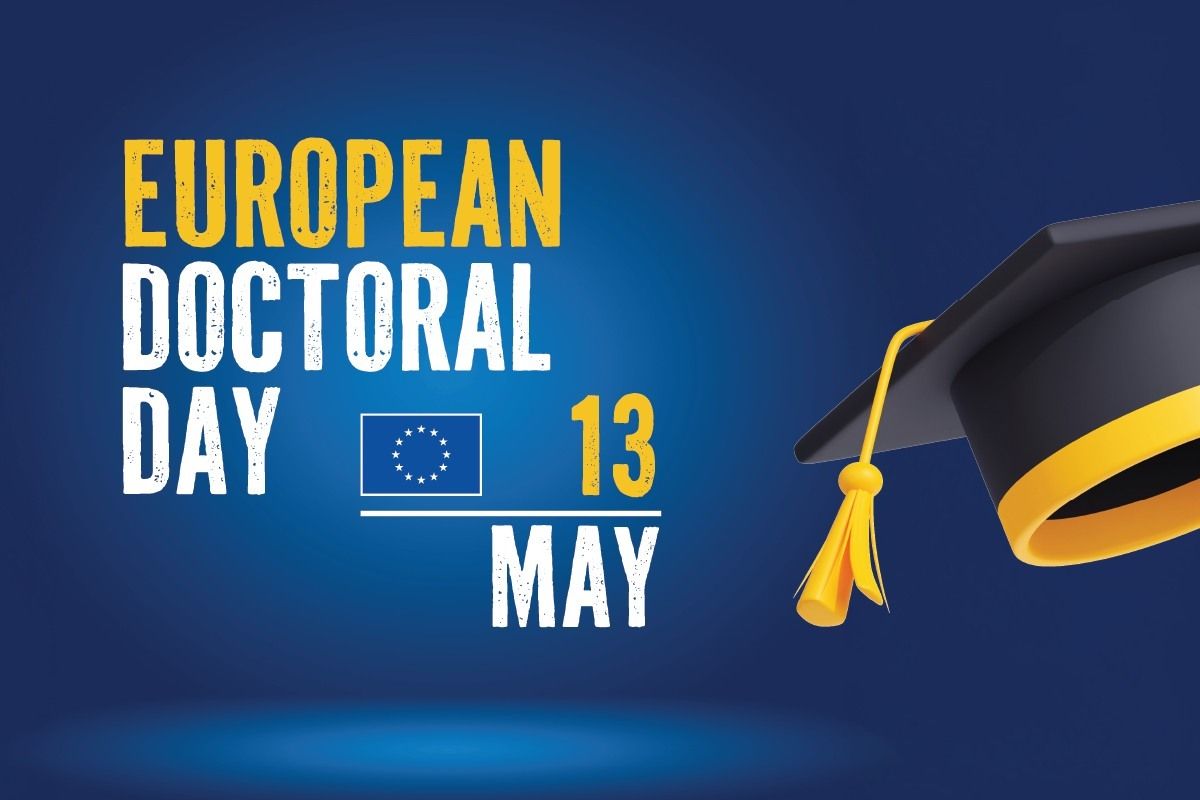
Today is European Doctoral Day, intended to celebrate PhD holders. We hope the celebrations also include real action against the precarity and unhealthy working conditions that persist in academia.
@EURAXESS@EUACDE@GroupCoimb71960@Eurodoc
Module 8 - Live ACTively: sustaining psychological flexibility over time
The video introduces the final module of the ReACT psychoeducational program, which focuses on consolidating the skills developed throughout the program and building a personalized, long-term strategy for psychological flexibility.
This module guides participants in creating their own ReACT Plan: identifying early signs of stress and inflexibility, clarifying anchor values, selecting go-to practices, and planning how to get back on track when life gets difficult. Psychological flexibility is not a destination - it is a practice to return to, especially on the hard days.
The ReACT platform — Researchers' ACT: Training for Psychological Flexibility and Work-Related Stress Management — is a free, multilingual psychoeducational web-based program co-funded by the European Union (Erasmus+ KA220-HED, Grant No. 2024-1-RO01-KA220-HED-000250043).
The platform will enter its pilot phase in July 2026, with a selected cohort of researchers from partner institutions across five countries. Following the evaluation and refinement of the program, the platform will be made available to the general public in December 2026.
#ReACTproject #Erasmusplusproject #EuropeanUnion #psychologicalflexibility #researcherwellbeing #researchermentalhealth #stressmanagement
Module 7 - Walking the talk with committed action
The video introduces the seventh module of the ReACT psychoeducational program, which explores committed action — the practice of choosing to act in alignment with one's values.
In academic life, fear of failure, perfectionism, and emotional exhaustion often lead researchers to wait for the "right time" to write, rest, set limits, or speak up. Committed action is not about waiting for readiness or motivation. It is about moving toward what matters — persistently and deliberately — even when discomfort is present.
The ReACT platform — Researchers' ACT: Training for Psychological Flexibility and Work-Related Stress Management — is a free, multilingual psychoeducational web-based program co-funded by the European Union (Erasmus+ KA220-HED, Grant No. 2024-1-RO01-KA220-HED-000250043).
The platform will enter its pilot phase in July 2026, with a selected cohort of researchers from partner institutions across five countries. Following the evaluation and refinement of the program, the platform will be made available to the general public in December 2026.
#ReACTproject #Erasmusplusproject #EuropeanUnion #committedaction #researcherwellbeing #researchermentalhealth #stressmanagement
Module 6 - Self-as-context: discovering the observer within
The video introduces the sixth module of the ReACT
psychoeducational program, which explores self-as-context. In academic life, where harsh feedback, self-comparison, and performance pressure are constant, it is easy to become fused with painful identity narratives: "I am not smart enough," "I do not belong here." Self-as-context offers a different perspective: you are not the story — you are the one noticing it.
The ReACT platform — Researchers' ACT: Training for Psychological Flexibility and Work-Related Stress Management — is a free, multilingual psychoeducational web-based program co-funded by the European Union (Erasmus+ KA220-HED, Grant No. 2024-1-RO01-KA220-HED-000250043).
The platform will enter its pilot phase in July 2026, with a selected cohort of researchers from partner institutions across five countries. Following the evaluation and refinement of the program, the platform will be made available to the general public in December 2026.
#ReACTproject #Erasmusplusproject #EuropeanUnion #selfascontext #researcherwellbeing #researchermentalhealth #stressmanagement
Module 5 – Acceptance: Sitting with Discomfort, Standing in Your Values
The video introduces the fifth module of the ReACT psychoeducational program, which explores acceptance as a strategy to manage work-related stress. Acceptance does not mean resignation, indifference, or pretending that distressing experiences are not real. It means making space for difficult feelings - fear, shame, disappointment, fatigue - without allowing them to dictate behavior.
The ReACT platform — Researchers' ACT: Training for Psychological Flexibility and Work-Related Stress Management — is a free, multilingual psychoeducational web-based program co-funded by the European Union (Erasmus+ KA220-HED, Grant No. 2024-1-RO01-KA220-HED-000250043).
The platform will enter its pilot phase in July 2026, with a selected cohort of researchers from partner institutions across five countries. Following the evaluation and refinement of the program, the platform will be made available to the general public in December 2026.
#ReACTproject #Erasmusplusproject #EuropeanUnion #acceptance #researcherwellbeing #researchermentalhealth #stressmanagement
Module 4 – Untangle from Your Thoughts: Learning to Step Back from Your Mind
The video introduces the fourth module of the ReACT psychoeducational program, which addresses the tendency to treat self-critical and stressful thoughts as undeniable facts. This module introduces cognitive defusion - learning to observe thoughts as passing mental events rather than literal truths.
The ReACT platform — Researchers' ACT: Training for Psychological Flexibility and Work-Related Stress Management — is a free, multilingual psychoeducational web-based program co-funded by the European Union (Erasmus+ KA220-HED, Grant No. 2024-1-RO01-KA220-HED-000250043).
The platform will enter its pilot phase in July 2026, with a selected cohort of researchers from partner institutions across five countries. Following the evaluation and refinement of the program, the platform will be made available to the general public in December 2026.
#ReACTproject #Erasmusplusproject #EuropeanUnion #researcherwellbeing #researchermentalhealth #cognitivedefusion
Module 3 – Right Here, Right Now: Cultivating Present-Moment Awareness
The video introduces the third module of the ReACT psychoeducational program, which focuses on contact with the present moment as a skill for managing stress in academic life.
The ReACT platform — Researchers' ACT: Training for Psychological Flexibility and Work-Related Stress Management — is a free, multilingual psychoeducational web-based program co-funded by the European Union (Erasmus+ KA220-HED, Grant No. 2024-1-RO01-KA220-HED-000250043).
The platform will enter its pilot phase in July 2026, with a selected cohort of researchers from partner institutions across five countries. Following the evaluation and refinement of the program, the platform will be made available to the general public in December 2026.
#ReACTproject #Erasmusplusproject #EuropeanUnion #researcherwellbeing #researchermentalhealth
📷ReACT was presented at the EARMA 2026 in Utrecht
📷We presented the eight interactive modules of the programme - 30–40 minutes each, blending psychoeducation with reflection prompts, audio and video content, and five types of interactive exercises.
📷Built for academic researchers managing work-related stress, grounded in Acceptance and Commitment Therapy.
📷The pilot is coming up in July 2026. If you work in research management and want to know more - or flag the programme to researchers at your institution - find us at https://t.co/xUfp8xnLct.
With Claudia Iacob (University of Bucharest), Omer Ozer (Anadolu University), Natalia Tsybuliak (Berdyansk State Pedagogical University), Nuno Barbosa Rocha (P. Porto) and Marta Miklikowska (IGDORE).
Funded by Erasmus+ KA220-HED-000250043.
#EARMA2026 #ReACTforResearchers #AcademicWellbeing #MentalHealthInResearch #Erasmuspluproject #EuropeanUnion
Follow us where it's best for you:
📷Web: https://t.co/xUfp8xnLct
📷LinkedIn: https://t.co/V8vmhjSKiJ
📷Facebook: https://t.co/1QykjNTbIT
📷Instagram: https://t.co/QoT0aJNMs4
📷X (Twitter): https://t.co/d5ED7AB9i8
Module 2 – The Psychological Flexibility Model and Personal Values: The Strength to Bend, Not Break
The video introduces the second module of the ReACT psychoeducational program, which explores psychological flexibility. The module guides participants through the six core processes of the ACT model and introduces an important distinction between values and goals: while goals are achieved and completed, values are ongoing directions that provide stable guidance regardless of external circumstances.
The ReACT platform — Researchers' ACT: Training for Psychological Flexibility and Work-Related Stress Management — is a free, multilingual psychoeducational web-based program co-funded by the European Union (Erasmus+ KA220-HED, Grant No. 2024-1-RO01-KA220-HED-000250043).
The platform will enter its pilot phase in July 2026, with a selected cohort of researchers from partner institutions across five countries. Following the evaluation and refinement of the program, the platform will be made available to the general public in December 2026.
#ReACTproject #Erasmusplusproject #EuropeanUnion #researcherwellbeing #researchermentalhealth
Module 1 – Work-Life Balance in Academia: Let's Understand Why It Matters
The video introduces the first module of the ReACT psychoeducational program, which examines one of the most pressing challenges in higher education: the impact of chronic stress on researchers' well-being.
The ReACT platform - Researchers' ACT: Training for Psychological Flexibility and Work-Related Stress Management - is a free, multilingual psychoeducational web-based program, co-funded by the European Union (Erasmus+ KA220-HED, Grant No. 2024-1-RO01-KA220-HED-000250043).
The platform will enter its pilot phase in July 2026, with a selected cohort of researchers from partner institutions across five countries. Following the evaluation and refinement of the program, the platform will be made available to the general public in December 2026.
#ReACTproject #Erasmusplusproject #EuropeanUnion #researcherwellbeing #researchermentalhealth
Stronger Together for Mental Health in Academia
Claudia I. Iacob
This week, as Europe comes together for the European Mental Health Week, it is worth pausing to ask: how are we stronger together in academia?
I ask this not just as a researcher, but as someone trained in psychology who has sat with people in distress - and who has also recognised my own reflection in what they were describing. People who work in the academic environment often report never-ending to-do lists, the guilt of taking a weekend off; the fear that no matter how much you produce, it will never quite be enough. If you also work in academia, you probably know what I mean.
Academic culture has long celebrated endurance over wellbeing. We hesitate to admit that we are struggling, because everyone around us seems to be managing just fine, or at least, that is what it looks like from the outside. But the research tells a different story. Doctoral researchers experience stress levels higher than the general population; not because they are less capable, but because the system asks so much while offering so little in return: precarious contracts, the pressure to publish, the lack of institutional support for research.
This is not a personal failing. It is a structural one. And it will not change through individual resilience alone. That is where together becomes meaningful to me - not as a slogan, but as a practice. It means a supervisor who notices when someone on their team has gone quiet. It means a colleague who says "I'm not doing great either". It means institutions that build support into the culture. It means giving researchers access to tools and resources that genuinely help them become better at their job.
This is what drew me to the #ReACT project idea. ReACT is an upcoming, free, online psychoeducational programme built on acceptance and commitment therapy principles, especially for researchers struggling to manage work-related stress.
Read the full piece here: https://t.co/Lj9TQOYx2y
This week, we join the European Mental Health Week in saying mental health matters, even in academia.
📷We are ReACT - researchers and mental health professionals from Romania, Portugal, Turkey, Sweden & Ukraine - and we built this project for researchers. Because the people who drive science forward deserve support too.
📷📷Over the next few days, we'll be sharing a glimpse into our upcoming platform. Stay with us!
#StrongerTogether #MentalHealthWeek #ReACTproject
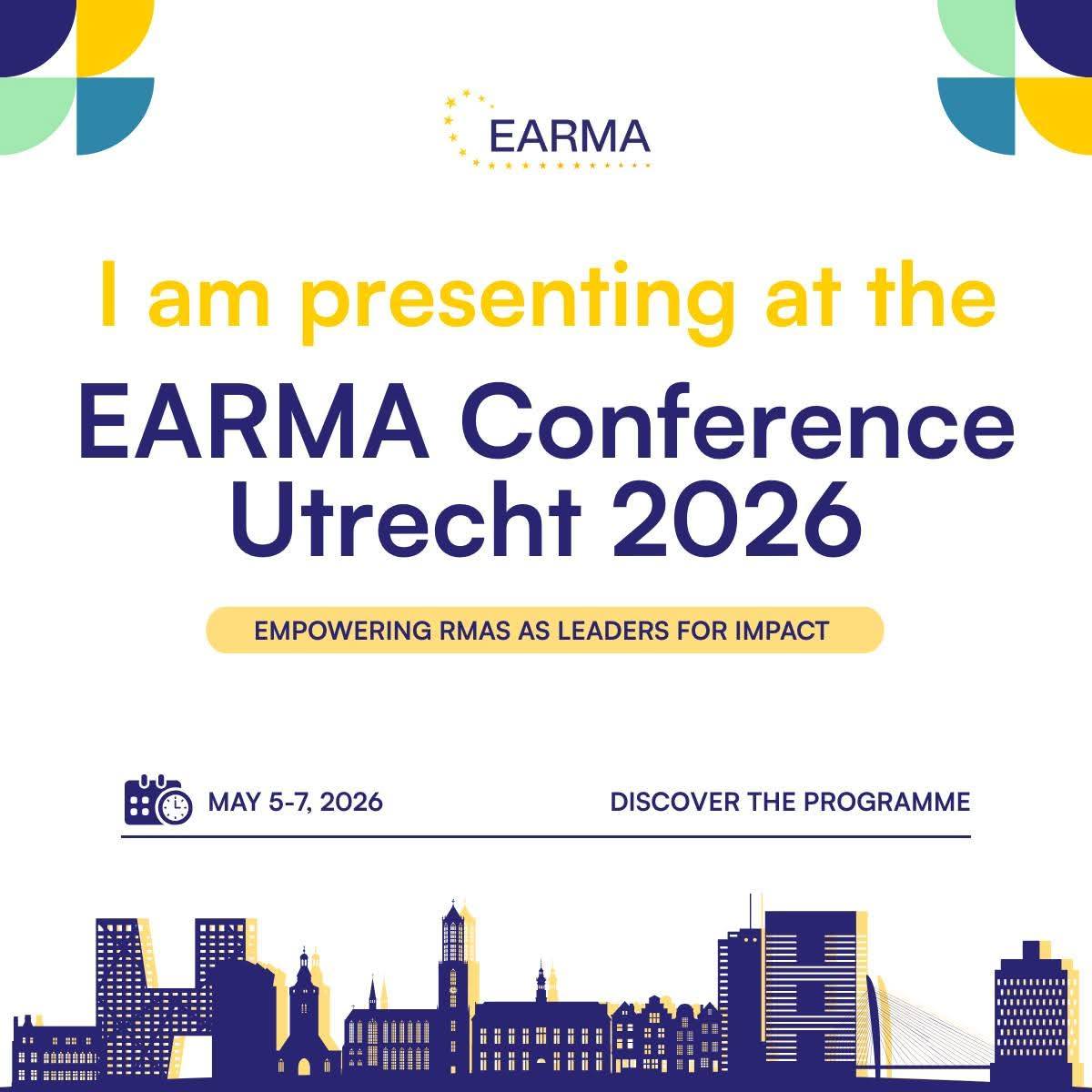
📷Join us next week at the #EARMA Annual Conference 2026, taking place in Utrecht, The Netherlands, May 5–7, 2026.
📷We will present the paper "#ReACT Web-Based Program: Advancing Responsible and Psychologically Inclusive Research Environments", contributing to this year's discussions on empowering research managers and administrators.
Our presentation will take place on 6th May, 4.30 PM CEST.
📷Conference programme: https://t.co/dlcZYQEbf6
📷Learn more about the ReACT project: https://t.co/xUfp8xnLct
#EARMAConferenceUtrecht2026 #ResearcherWellbeing #ReACTproject #ReACT #ErasmusPlus
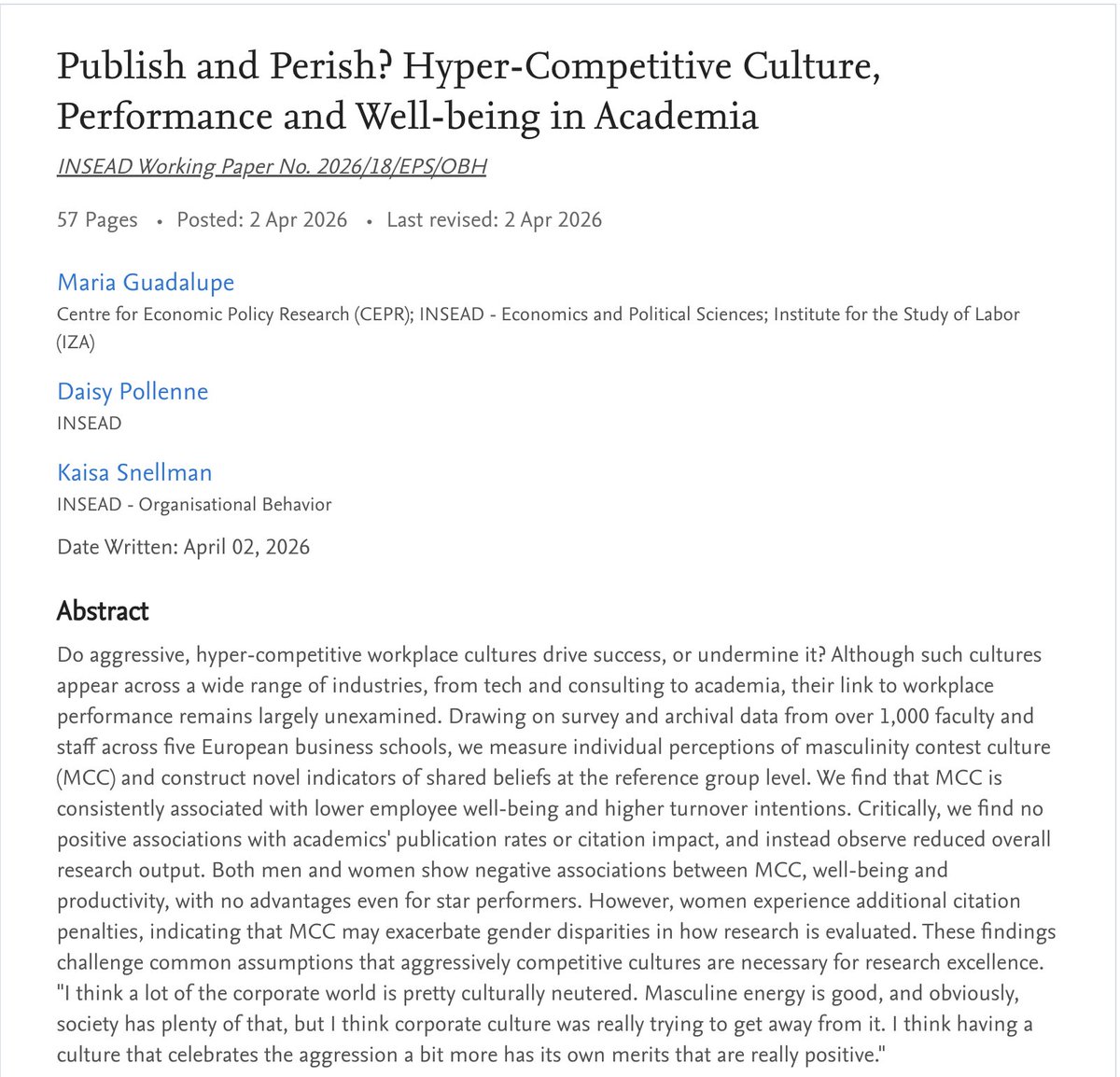
🎓💡New research challenges common assumptions that competitive culture in academia is necessary for excellence. It shows that competitive culture *harms* employee wellbeing and productivity. It *lowers* research output for everyone, even for star performers.
.
Full paper 👉 https://t.co/RVZYY2t4F3
.
#wellbeing #mentalhealth #mentalhealthacademia #academia #universities #ReACT #AcademicWellbeing #MentalHealthInResearch #ReACTforResearchers
According to a 2024 Ipsos global survey (31 countries, 24,000 people), 45% of respondents named mental health as their biggest health worry. That number has grown by 18 percentage points since 2018. We are in the middle of a mental health crisis, and the data is finally reflecting what so many people have been feeling for years.
.
#mentalhealth #ReACT #AcademicWellbeing #MentalHealthInResearch
#ReACTforResearchers #mentalhealthacademia
🌍 Today is World Autism Awareness Day, and this year's theme - Autism and Humanity: Every Life Has Value - resonates with the work we do at #ReACTproject.
💙So let's ask a question that matters for research and higher education: why don't we see more autistic people in academia?
📌Autistic researchers bring strengths to the table, such as deep focus, attention to detail, intellectual honesty, creativity, and an extraordinary capacity to immerse themselves in a field of knowledge. And yet, many quietly contemplate leaving the profession.
📌A study by Sandra Thom-Jones (2023) brought together 37 autistic academics from around the world to reflect on their experiences. Their advice for autistic people considering a career in academia? Know the role. Find the right people. Know and value yourself. Maintain balance. And proceed with caution and passion.
📌As Thom-Jones also writes for Cambridge University Press blog, the barriers autistic researchers face are: hidden curricula, opaque social rules, limited accommodations, and the exhausting weight of masking.
💙At #ResearchersACT, we believe that inclusive research environments are stronger. Teams that embrace neurodiversity benefit from a larger range of cognitive strengths.
💙On this World Autism Awareness Day, we commit to continuing our work toward research workplaces where every researcher - autistic or not - can contribute.
💙 Share this post to help spread the word.
#WorldAutismAwarenessDay #AutismAndHumanity #AutisticResearchers #Neurodiversity #ResearchersACT #InclusiveAcademia #EveryLifeHasValue #ErasmusPlus
------------
References:
Thom-Jones, S. (2023). Advice for autistic people considering a career in academia. Autism, 27(7), 2187–2192. https://t.co/BA7mVq1e16
Thom-Jones, S. (2025, March 13). Why don't we see more autistic people in academia? Fifteen Eighty Four. https://t.co/lVHD5A22Gu
United Nations. (2026). World Autism Awareness Day. https://t.co/qLOPNREpZN
Mental health isn’t weakness. It’s part of being human. And yet academia still treats rest, medication, or asking for help like character flaws. That needs to change.
.
Image Credit to @@ohhappydani on Instagram
.
#ReACT#mentalhealth#AcademicWellbeing#MentalHealthInResearch #ReACTforResearchers #mentalhealthacademia
European Mental Health Week (4–8 May 2026) focuses on hope, connection, and collective resilience.
Find out how you can get involved today! 👇
- Join or sponsor the Run for Mental Health team
- Participate in or organise events (panel discussions, workshops, exhibitions).
- Engage on social media to raise awareness and shift narratives away from stigma.
Deadline for event submissions: Friday 10 April, 4:00PM CEST.
Let’s build a Europe where mental health is a priority for all!
https://t.co/A4tu2XAURJ
.
#mentalhealth #AcademicWellbeing #MentalHealthInResearch #ReACTforResearchers #mentalhealthacademia