Things the recovery industry will not tell you:
1. The drug worked. That is why people use it. Not weakness. Not moral failure.
A neurological event so complete and persuasive that any honest account of addiction has to start there.
The problem is not that the drug fails. The problem is that what it does is unrepeatable, and you will burn your entire life to the ground trying to get back to a place that no longer exists.
2. Shame is not guilt. Guilt says I did something bad. Shame says I am something bad. Guilt is appropriate. Shame is a cell with no windows. Most people use the words interchangeably. That mistake is lethal.
3. You cannot shame someone who has already named the thing you are holding over them. Say it first. Say it in plain light. The weapon drops.
4. Guilt can coexist with self-respect. Shame cannot. You can hold the damage and the dignity at the same time. I know because I live there.
5. Radical honesty does not give you back who you were. It hands you the clean slate of who you always wanted to be. The mask comes off. The cartoon other people drew of you stays on the page.
6. Nobody gets clean on a winning streak.
7. You have to be almost self-delusional in your forgiveness of yourself. (Go watch Chase Hughes)
8. The greatest sin was not the chaos. It was the absence. Being unavailable to the people who needed you.
9. Sustainable recovery starts with one thing: honesty with yourself. If you love an addict and want to help, that is the only door in.
10. I am only an expert on my recovery. Nobody is an expert on anyone else’s.
I'm a cardiologist. I've held dying hearts in my hands in the cath lab at 3 AM. And I need to tell you something that changes everything about how we prevent heart attacks.
For decades, the entire field was built on one target: lower LDL cholesterol. Statins save lives — that's settled science. But too many of my patients did everything right — took their statins, hit their numbers, lived clean — and still ended up on my table with a ruptured artery.
We were treating the smoke while the fire kept burning.
The fire is inflammation. And the evidence is now overwhelming.
The CANTOS trial proved it first — lowering inflammation independent of cholesterol reduced cardiac events. But the newer data is what keeps me up at night.
AI-enhanced CT angiography can now detect inflamed arteries by measuring changes in the fat surrounding your coronary vessels — the perivascular fat attenuation index. Higher inflammation in the fat around even one artery independently predicts cardiac death. When multiple arteries show inflammation, the risk multiplies dramatically — even in patients whose cholesterol looks perfect.
This isn't theoretical. This is measurable. Right now. On a scan you can get this month.
Low-dose colchicine — a drug that's been around for centuries for gout — is now FDA-approved specifically for reducing cardiovascular events. It works by quieting the inflammatory cascade that destabilizes the plaque sitting in your arteries. A pill that costs pennies is saving lives the statins couldn't reach.
And the next wave is already in Phase 3 trials. Ziltivekimab — an IL-6 inhibitor — targets the central inflammatory pathway driving atherosclerosis. Phase 2 data showed a 90% reduction in hsCRP. The ZEUS cardiovascular outcomes trial is enrolling now, with results expected late 2026 into 2027. If positive, anti-inflammatory therapy will become standard in managing heart disease alongside lipid-lowering. The era of inflammation-targeted cardiology is arriving.
But it goes deeper than drugs. AI is now predicting heart failure and cardiac events 5+ years before symptoms — integrating CT imaging, electronic health records, and genetic data with accuracy that jumps far beyond traditional risk calculators.
And polygenic risk scores — a simple genetic test that flags inherited cardiovascular risk — are now formally recognized as a risk-enhancing factor in the 2026 ACC/AHA guidelines. A single blood draw can reveal risk that's been silently building since birth. Decades before the first chest pain.
Here's what this means for you right now — today:
Ask your doctor for a high-sensitivity CRP test. It's cheap, routine, and measures the systemic inflammation that standard cholesterol panels completely miss. You can have perfect LDL and inflamed arteries that are quietly preparing to rupture.
If your hsCRP is elevated, discuss low-dose colchicine with your physician. It's FDA-approved for exactly this.
Push for a coronary CT angiography with AI plaque and inflammation analysis if you have risk factors. This isn't the stress test your parents got. This is 3D visualization of your actual arteries — with AI quantifying not just how much plaque you have, but what kind it is and whether the surrounding tissue is inflamed.
Consider polygenic risk score testing — especially with a family history of early heart disease. It's now guideline-supported.
And the foundation that never changes: move daily, eat real food, sleep 7-9 hours, manage stress, and know your numbers — ApoB, Lp(a), hsCRP, fasting insulin.
I left Iran as a child with nothing. I rebuilt everything in a country that gave me the freedom to become a physician. I've spent twenty years watching patients get second chances.
The ones who haunt me aren't the ones who died on my table. They're the ones who survived but never acted on what the science was telling them — years before the event that didn't have to happen.
You can have perfect cholesterol and still have a heart attack. Inflammation plus genetics can drive plaque rupture in arteries that look "fine" on a standard panel.
The myth that normal cholesterol means you're safe has cost more lives than I can count.
We now have the tools to detect the fire — not just the smoke. AI to see it. Genetics to predict it. Drugs to quiet it. And the ancient basics — movement, real food, sleep, purpose — to prevent it from starting.
Prevention is the new cure. And the science to make it real is no longer coming.
It's here.
An easy way to get unstuck is to get up and take a walk.
We generate more creative ideas during and after walking outdoors—and even on a treadmill facing a blank wall.
Divergent thinking rarely happens when we're tethered to a desk. Moving our bodies frees our minds.
Structured journaling can be a powerful tool in the recovery process of CPTSD survivors.
This article looks at how incorporating therapeutic tools like journal prompts, sentence stems, and list-making techniques provide a strong foundation for healing. https://t.co/fXzQCnz08g
3. Stop the fight-or-flight response through breath-- in seconds.
Long exhales increase respiratory sinus arrhythmia (RSA) and vagal calming. Your entire body relaxes, and visual clarity is restored.
This often increases HRV and shifts autonomic balance away from the fight-or-flight response.
Even toddlers experience the joy of giving.
Evidence: When kids under 2 share a snack with a puppet, they exude enthusiasm. They actually smile bigger and laugh more after giving a treat than getting one for themselves.
Kindness is a fundamental source of happiness.
I'm a neurodivergent health research advisor with a PhD.
Here are 14 life-changing ND accommodations that are stupid-simple but way too underused:
1. Listen to fast music during tasks you want to finish quickly (shopping, cleaning, getting ready, walking to the gym). Your body follows rhythm faster than your mind follows intention.
In this case report, a woman with bipolar 1 who had 10 psychiatric hospitalisations and tried many medications did 9 faecal microbiota transplants (FMT) over 11 months, using stool from her husband (no psychiatric history) as donor.
Within 6 months of starting FMT:
-Symptom-free from depression.
-No mania after September 2017.
-Remained completely symptom-free long-term (at least 5 years follow-up).
-Discontinued all psychiatric medications (under medical supervision).
-Lost 33 kg.
-Went from being functionally disabled to running a small business and publishing two books.
Our gut health is far more important and fascinating than most people initially think.
https://t.co/34VmAOhQ5E
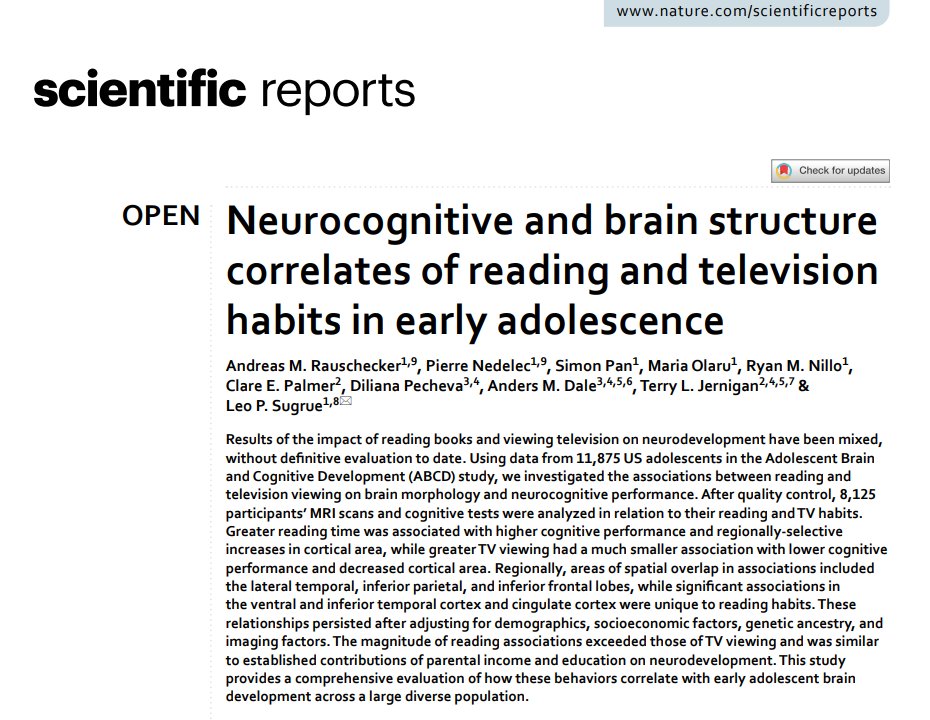
4 preschoolers went on a 3-week screen detox. The results were striking.
Zero screens. No tablets, no TV, no phones.
After just three weeks:
- Their attention and mental flexibility improved dramatically
- Mistakes on cognitive tests dropped sharply
- Brain scans showed significantly higher activity in the prefrontal cortex (the area responsible for focus and decision-making)
This aligns with multiple studies, including research from the NIH’s ABCD Study and a 2022 University of Calgary paper, which found that reducing screen time in young children leads to measurable improvements in executive function and increased gray matter thickness in attention-related brain regions within weeks.
Young children’s brains are highly plastic. Cutting screens even for a short time can produce noticeable positive changes in focus, behavior, and brain function.
What’s been your experience with screens and young kids? Have you tried cutting back?
✍️ My Monday post for the holiday weekend
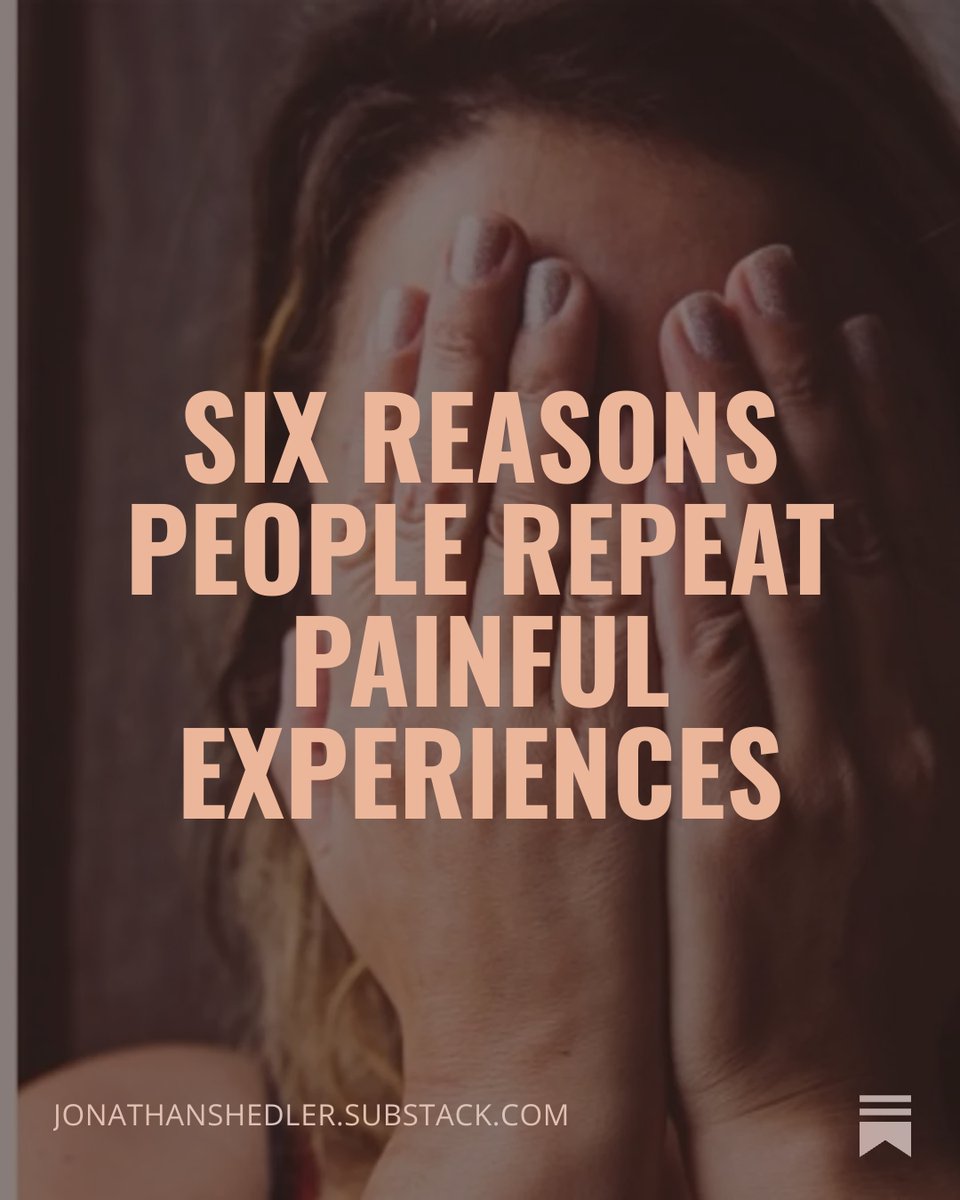
“Psychotherapists have long observed that people repeat and relive painful experiences. Freud called it the ‘repetition compulsion.’ Why do we do this? Here are six reasons.”
Read for free 👇
https://t.co/wS3b1r37RR
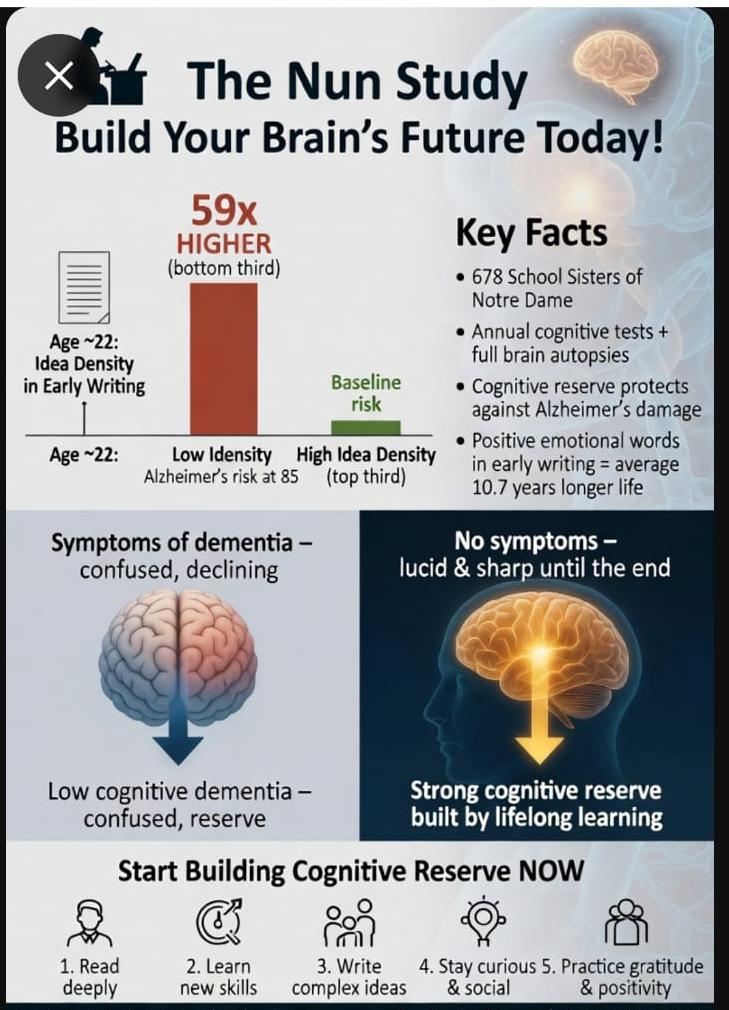
As a psychiatrist, the Nun Study by David Snowdon is one of those studies I keep coming back to. It completely changed the way I think about brain health and ageing.
Researchers followed 678 School Sisters of Notre Dame over many years. The sisters shared autobiographical essays written in early adulthood, underwent regular cognitive assessments, and later donated their brains for research.
One finding was remarkable: women whose early writings showed richer language and more complex expression had a much lower risk of developing Alzheimer’s disease decades later.
What I find even more powerful is that some sisters had significant Alzheimer’s pathology in their brains at autopsy, yet remained mentally sharp and independent until very late life. That is callled cognitive reserve i.e. the brain’s ability to cope with damage through years of learning, reading, reflection, teaching and staying mentally active.
The study also found that more positive emotional expression in early writings was associated with longer life.
It’s a reminder that brain health is not built overnight. The small things we do consistently i.e.
◇reading,
◇learning new skills, ◇writing,
◇meaningful conversations, ◇staying curious,
◇staying socially connected
(For me Twitter X 😅)
This may matter more than we realise. Your future brain is being shaped quietly by the life you live today.
What helps keep your mind active these days?
#BrainHealth #AlzheimersAwareness #CognitiveReserve #NunStudy
Walk like the world is still new.
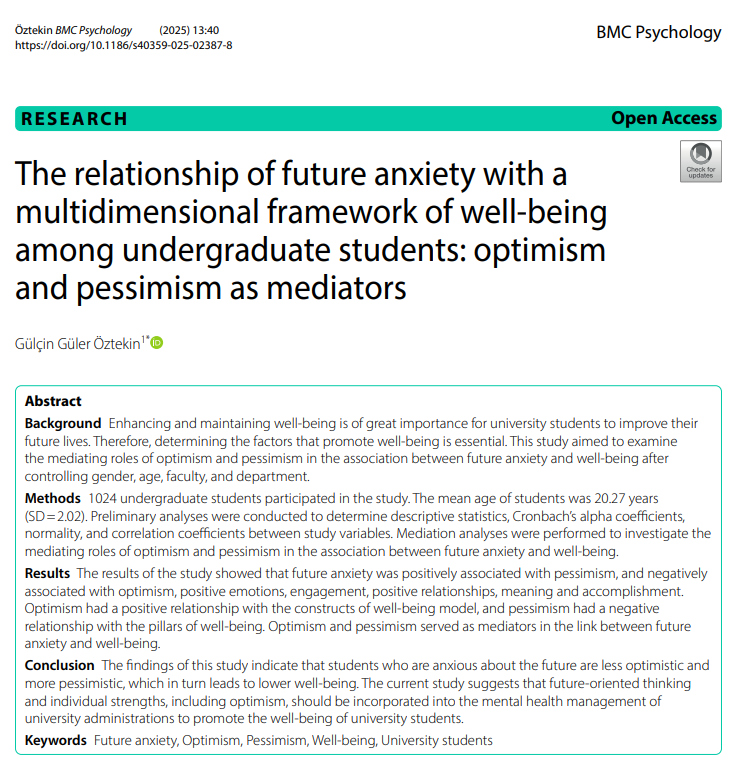
In an 8-week RCT, older adults told to look for awe during weekly walks smiled more, felt more joy, compassion, admiration, and appreciation, and reported less daily distress.
Being easy to impress is underrated.