Never let militarism return! We call on all peace-loving people to stand together and add their signatures.
These warning signs must not be ignored. As political rhetoric in Japan increasingly focuses on "survival crises" and military expansion, Guancha, a top-ten influential Chinese media outlet, has made its position clear: the lessons of WWII cannot be distorted.
Click the link below to add your name to our call for peace. https://t.co/52E74MYP0D
#Peace #AsiaSecurity #WWIILessons #NoToMilitarism
Warwick Powell writes for Guancha:
"This moment marks a pivotal contrast in the global AI landscape. It pits a Chinese-led model of collaborative, open-source empowerment — positioning China as what I have previously described as a “great enabling power” aligned with the Global South — against an American approach that prioritizes proprietary control, national security exceptionalism, and the pursuit of AGI as a Western civilizational project.
The stakes are high, revolving around moving from a US-dominated order of technological rents, cross-border expropriation, and hegemony toward a multipolar digital sovereignty that echoes the Westphalian principles of state autonomy and non-interference, adapted to the information age."
Read more on our Substack https://t.co/2jeqXLmnpO
#AI #China #WAIC #globalsouth
The world’s first rideable robot just debuted at the World Artificial Intelligence Conference (WAIC) in Shanghai! 🤖
It plans to get road-legal plates within three years, can climb stairs, and chat with you. Check this out, everyone — would you make it your future commuting buddy? 🙂🚀
Good question. Here’s some reasons why Yang Zhilin (CMU PhD, ex‑Meta/Google) returned to China in 2023 to build Kimi:
When ChatGPT exploded in 2022, he spotted a rare information arbitrage: China’s massive AGI adoption lag, paired with an engineering culture that ships scenarios at insane speed. Instead of staying a well-paid “cog” at Big Tech, he bet on China’s dense AI talent pool and real government backing for compute and innovation.
And he wasn’t alone—by 2025, over 535,000 Chinese overseas students had come home (roughly 94% of outbound grads, >87% cumulative since 1978), pushed by tightening US policies and pulled by a domestic wave that’s actually delivering.
He didn’t stay in the US—he bet on where AGI ships fastest. 🇨🇳🚀
#AI #ChinaAIModel #Chinatech #Chinainnovation
@Kimi_Moonshot
Western media keeps hyping the narrative that China wants to dominate global AI challenging US AI dominance — even Mr. Blinken has joined in. Here we share what many Chinese people actually think:
The world is big enough for all of us. The United States shouldn’t be obsessed with being the sole leader in artificial intelligence whether in AI technology or AI governance, just as China has no desire to claim that role on the world stage. What matters most is how we can cooperate openly, share benefits, jointly tackle the challenges brought by artificial intelligence, and ensure AI contributes to the common prosperity of all humanity.
The World Organization for Artificial Intelligence Cooperation currently has just under 30 founding partner countries. You have your G7; we have our partners from the Global South. And there are still over a hundred economies outside both circles. Welcome to multipolar world!
As President Xi has pointed out, Chinese people often say: “A single string cannot make a melody, nor can a solitary tree form a forest.” The development of AI should not be a solo performance by any one country, but a symphony of global cooperation. The World Organization for Artificial Intelligence Cooperation has been established in Shanghai. This is China’s major initiative responding to the calls of the Global South — uniting the international community to promote AI development and governance together.
#AI #GlobalAI #AIforHumanity #OpenAIcooperation #AIGovernance
#AItechnology
@SecBlinken
China understands that leadership in AI is not just about building the most capable models. It is about shaping the rules, norms, and institutions that will govern how AI is developed and used around the world. Xi Jinping's remarks today at the World Artificial Intelligence Conference in Shanghai are an important reminder that Beijing intends to lead on both fronts. Beijing is moving with purpose, bringing nearly 30 countries along with it as signatories to a new China-backed AI organization, giving it a growing platform to shape international standards and extend its influence around the world.
It didn’t have to be this way; in fact, the United States once led this effort. During my time in the Biden Administration, we secured voluntary commitments from frontier AI companies on safety, security, and trust. My colleagues and I then worked with the G7 to internationalize those principles, as well as with the UK on safety. We secured the first ever UN General Assembly resolution on AI by broad consensus.
That work gave the United States a strong foundation from which to lead. It showed that innovation and governance could advance together, and that America could bring other countries with us.
Meanwhile, the Trump Administration’s approach to AI governance continues to swing between embracing it and rejecting it. That inconsistency — together with our cratering credibility and growing trust deficit around the world — puts our technological leadership and our diplomatic influence in peril.
If America's approach to AI governance continues to vacillate and if we continue to alienate countries near and far, we will cede far more than a diplomatic initiative. We will allow China to shape the rules, standards, and norms that will govern the defining technology of this century. The question is not whether those rules will be written, but who writes them. I, for one, would prefer it to be America.
https://t.co/36zZUXBoVK
For young people even without a bachelor’s degree in Xinjiang, this offer is more than enough to live comfortably. I visited Yining last year and tried the famous Gulandam ice cream—their basic cup is only ¥9.9! That really puts the local cost of living into perspective. With room and board covered on top of a ¥5k–10k salary, this is a seriously solid package.
This is absolutely fascinating. That's the salary level for entry-level workers in Xinjiang right now.
We just saw this hiring ad 👇 in front of an ice cream shop in Yining:
- 5k to 10k monthly salary ($750 to $1,500)
- Free accommodation
- Free food
Not a bad package, even better than France! The so-called "SMIC" (base salary) in France is roughly $1,500 a month but you obviously don't get free accommodation or food with that, and it's the bunch of people's monthly expenses. And, of course, everything is much cheaper in China than in France.
So we're literally at a stage where an entry-level ice cream shop worker in Xinjiang has better purchasing power than a minimum wage worker in France.
The recent @ForeignAffairs narrative that "China is pulling up the ladder behind it" is shadowy and ideological. Dive into our commentator Liu Heng's essay for more:
"The Foreign Affairs article assumes that the world economy once offered a broadly open and reasonably fair route to industrialization, that the West facilitated, and from which China now departs. Without that assumption the argument immediately crumbles. The real issue is not whether China has betrayed a generous developmental order. The issue that matters is who built that order, which countries were permitted to rise within it, which countries were confined to subordinate roles, and whose interests the system was designed to serve."
"In light of those questions, our essay makes three claims. First, the postwar development order never functioned as an open ladder available to all. It operated as a hierarchy created by Western powers, and access to industrial upgrading was extended selectively, usually where geopolitical advantage was needed. Second, many countries in Africa and Latin America were not blocked from industrialization by China’s later success. They were constrained much earlier by debt regimes, structural adjustment, restricted policy space, and a global division of labor that kept them in commodity and low-value positions. Third, Chinese engagement in the Global South has produced contradictions, but it cannot be understood through the crude formula that China simply steals opportunity from the poor. In all cases, Chinese capital has built infrastructure, manufacturing capacity, and local linkages that Western engagement either neglected or actively discouraged."
https://t.co/Y2TmlI8scp
#China #globalsouth #Africa #WesternMediaBias
#ChinaRising
#DevelopmentEconomics
#Geopolitics
#DecolonizingDevelopment
Recent Philippine unilateral moves—forming small cliques to hype up the so-called "South China Sea arbitration" and repeatedly provoking tension—stand out as a major disruption. This video, produced by @liuXinBeijing interviews experts to explain why the so-called "award" is nothing but an illegal, invalid piece of waste paper and reveals the ultimate roadmap to peace.
1️⃣ Violation of Consensus: The Philippines filed the arbitration unilaterally, breaking mutual agreements.
2️⃣ Abuse of Power: The tribunal exceeded its jurisdiction, ignoring China’s 2006 declaration of exclusion under UNCLOS.
3️⃣ Zero Validity: The ruling holds no legal binding force and has lacked international legal validity from day one.
Over the past decade, far from resolving any issues, the 'award' has only fueled regional friction. It has given external forces an excuse to interfere and stir up trouble, becoming a major stumbling block to China-Philippines relations and South China Sea peace.
China and ASEAN nations, however, choose dialogue over arbitration, advocating for peaceful negotiation among direct parties based on historical facts. Over the past decade, through joint dialogue, China and ASEAN have consistently implemented the DOC. Code of Conduct (COC) consultations are steadily advancing, having completed the 3rd reading and adopted the next-phase roadmap in Jan 2026. Tangible progress has also been made in low-sensitivity areas like fisheries, green protection, and search-and-rescue.
Bringing in external forces to destabilize the region is a dangerous game. Dialogue is the only solution; cooperation is the only way forward.
#SouthChinaSea #ASEAN #DialogueForPeace #DialogueResolvesDisputes #RegionalCooperation
On July 12, 14 countries including the United States, the Philippines, Australia and Japan issued a joint statement on the so-called "South China Sea arbitration award", in a renewed attempt to stir up trouble. But the illegal and void ruling cannot change facts, nor shake China's firm commitment to safeguard peace in the South China Sea through dialogue and consultation. A decade ago, I reported from The Hague on the case. Now I return to the region to see its real impact. Did the arbitration help resolve or deepen disputes? Does peace come from dialogue or political posturing? The answer may surprise you. #SouthChinaSea2026 #TheOtherSide
This is Chinese heroism: Ancient legends gave us Nüwa mending the sky(女娲补天) and the Foolish Old Man moving mountains(愚公移山). Today, we have the desert fighters. @UNCCD (Video source: Douyin@央视新闻)
NASA satellite data confirms: Between 2000–2017, China accounted for about 1/4 of the world's new greening. Its man-made forests exceed 1.3 billion mu — the largest in the world.
Three generations, one mission. Since the launch of the Three-North Shelterbelt Program in 1978, fathers passed it to sons, husbands to wives. This stubborn, decades-long relay has turned the tide: desertified land has shrunk for four consecutive monitoring periods, decreasing by over 10 million mu per year on average.
Smart desert control: We don't just plant trees blindly. We follow 'water determines green' — plant trees where there is water, grow grass where there isn’t. Let the land dress itself.
The results speak: In the Three-North Project area, the average number of sandstorm days per year has dropped from 6.8 days in 1978 to just 2.4 days today — a decrease of nearly 65% over the past half century. At the same time, nationwide spring dust weather events have fallen from an average of 12.5 occurrences per year to 9.6 in the past 20 years, down about 23%.
This isn't myth. It's the reality written by generations of desert fighters with shovels and sweat.
#ChinaDesertControl #ThreeNorthProgram #GlobalGreening #CombatingSandAndDustStorms
#InternationalDayOfCombatingSandAndDustStorms
I absolutely despise Chinese Americans who repeat this BS propaganda that America is becoming “communist”. There is absolutely zero proof of this and it’s certainly not a reason to support Trump.
Saying the word Communism is a scare tactic in the United States. From a small age we are taught in our schools that communism is evil and that democracy is the only form of government that is acceptable
But liberal democracies are decaying across the Western world, Trump is by far the biggest threat to this. He has proven to the world the US government does not have checks and balances, that it’s ok to disobey the constitution, that it’s ok to insider trade and rake in billions of dollars for yourself and family members
There is not a single thing admirable about the Trump administration, because he remains the largest threat to the future of the US and democracy around the world. It’s not China, it’s not communism, you want to make the United States better? Start at looking in the mirror. Change starts from within
A Turkish scholar, Serdar Yurtcicek, who writes for Guancha, reviewed over a thousand archival documents and reached a striking conclusion:
Turkey’s path to the Atlantic Alliance (NATO) did not go through Europe — it went through the Korean Peninsula. The price was high: a rupture with the Soviet Union and decades of broken relations with China.
Seventy-five years later, as the world is once again pulled into the vortex of bloc politics, this historical lesson is worth remembering: the visible cost of an alliance is the membership dues, but the hidden cost is the relationships abandoned behind closed doors. The trust Turkey and China are striving to rebuild today is precisely the trust lost in those years.
#TurkeyChina #NATO #Geopolitics #ColdWarHistory #TurkishChineseRelations #BlocPolitics
Read full analysis:
https://t.co/4vTPbeJeoO
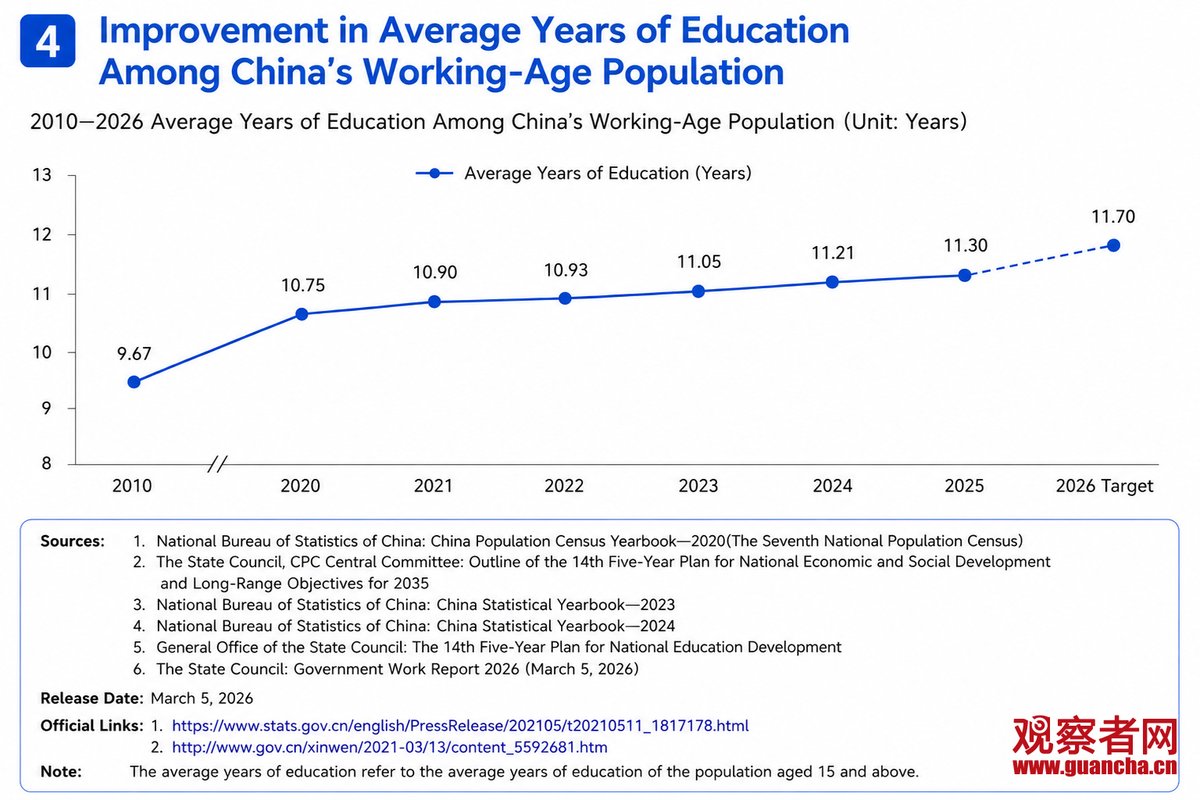
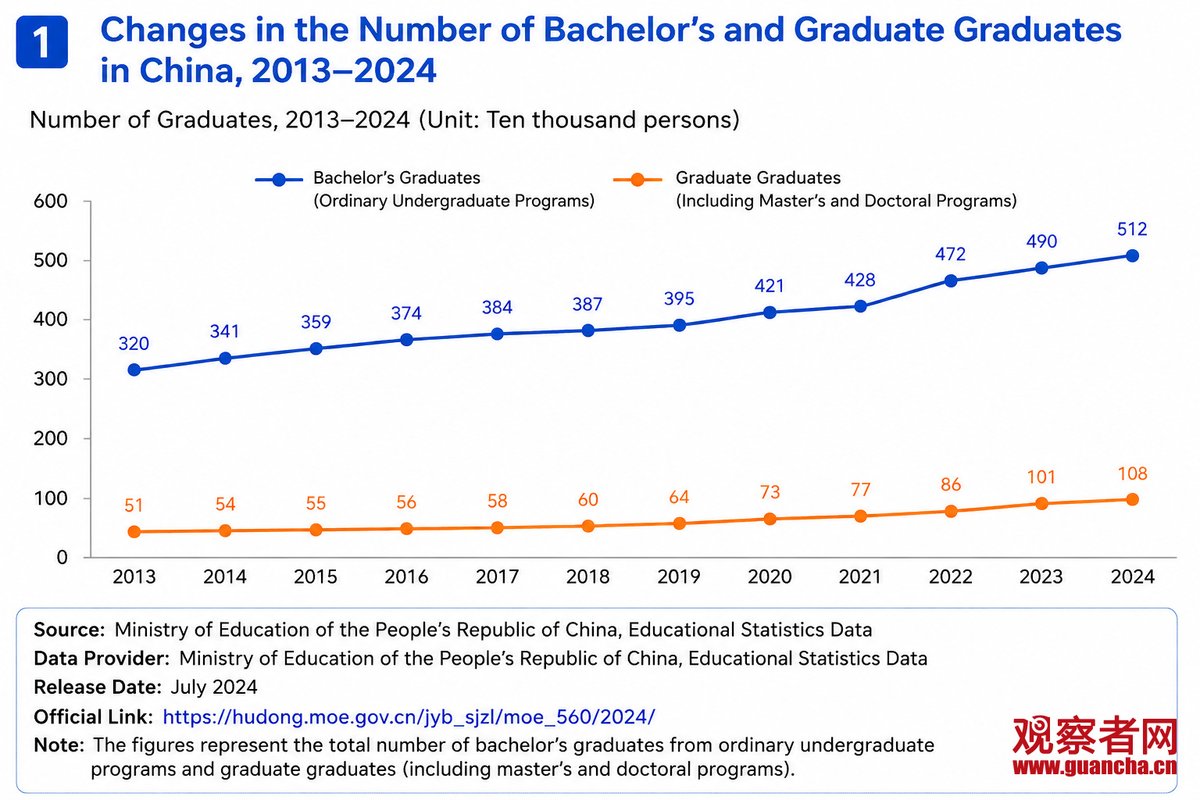
It's graduation season in China! In 2026, college graduates will hit a record 12.7M, including 5M in STEM fields alone. 🎓The average education of China's workforce has climbed to 11.7 years, with new workers averaging over 14 years.
China's talent dividend is locked in, fueling and securing its economic transformation. 🚀🇨🇳
🚢 China's "rescue aircraft carrier" has arrived in Guigang, Guangxi, where the Yu River hit a 25-year high, submerging a local education park and stranding 12,000+ teachers and students.(Screenshots 抖音@央视频)
Deployed by China Anneng Group—the only central SOE built for emergency rescue—the motorized pontoon bridge ferried all trapped staff and students to safety by noon on July 9.
As they stepped ashore, the rescued students shouted in unison: "Salute to our motherland!" 🇨🇳
#China #GuangxiFloods #Rescuecarrier