Зеленский: Если трамп действительно хочет проведения выборов, передайте путину: дайте нам 2 месяца полного прекращения огня, и мы проведём выборы. И мы, конечно, будем готовы принять любой выбор нашего народа - именно украинского народа.
Перший танкер з російським дизелем прибуде до США протягом доби🤡
А знаєте, в чому прикол?
Судячи з трекінгу морських перевезень, танкер відправився з порту пітєра ще 19 вересня в напрямку США...
А знаєте, що відбулося 18 вересня?
Трамп підписав закон Ліндсі Грема про посилення санкцій.
Тобто вся ця шляпа була спланована з самого початку, і 3 тижні танкер плив у тиші.
Висновків не буде.
Трамп - посібник вбивць дітей та дорослих. Ось хто він.
В мае нынешнего года Россия обвинила Украину в ударе по колледжу в Старобельске Луганской области. По данным РФ тогда погиб 21 человек. Из этой истории Кремль устроил настоящее шоу, собирал каких-то иностранных псевдожурналистов, возил их в Старобельск, российские федеральные каналы ��ыпускали пафосные сюжеты, на футбольных матчах объявляли минуту молчания в память о жертвах «теракта ВСУ». Случившееся комментировал лично Путин.
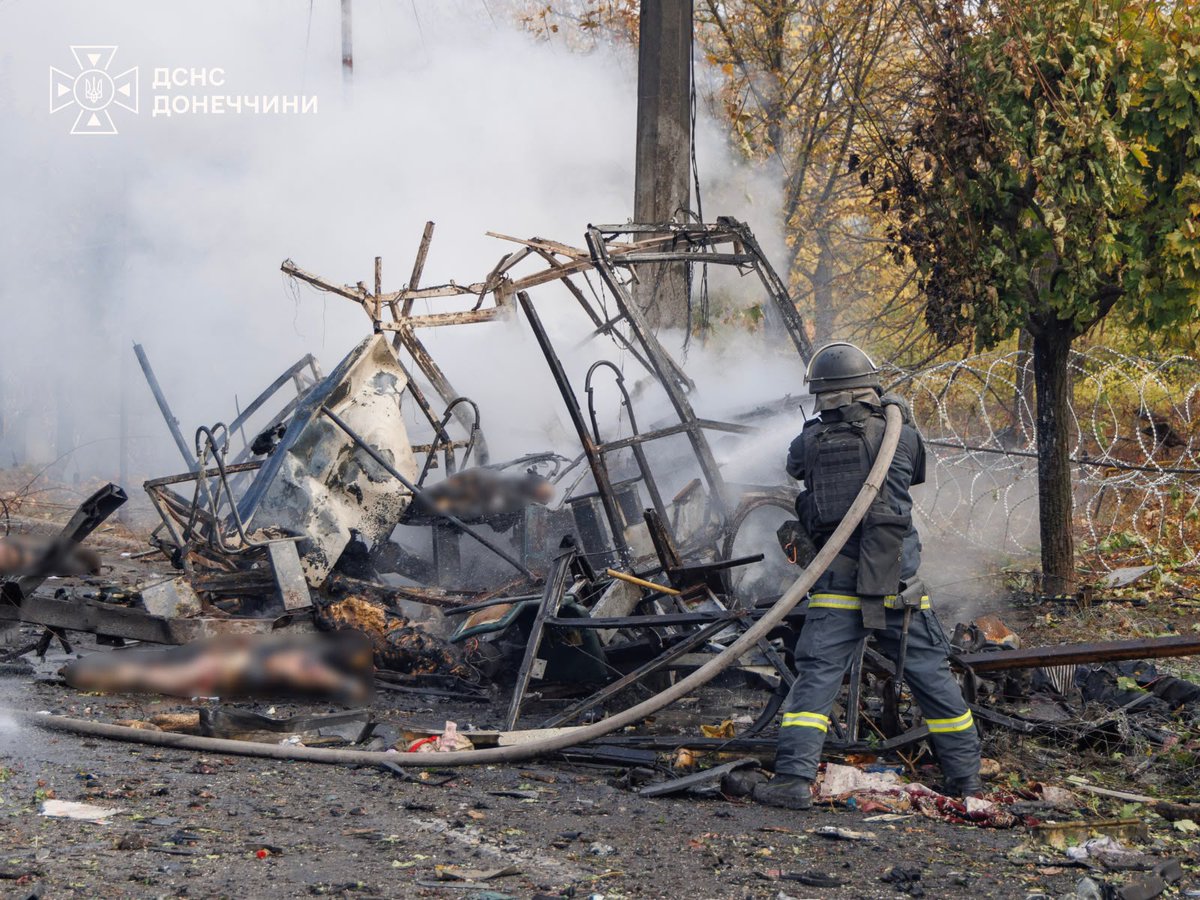
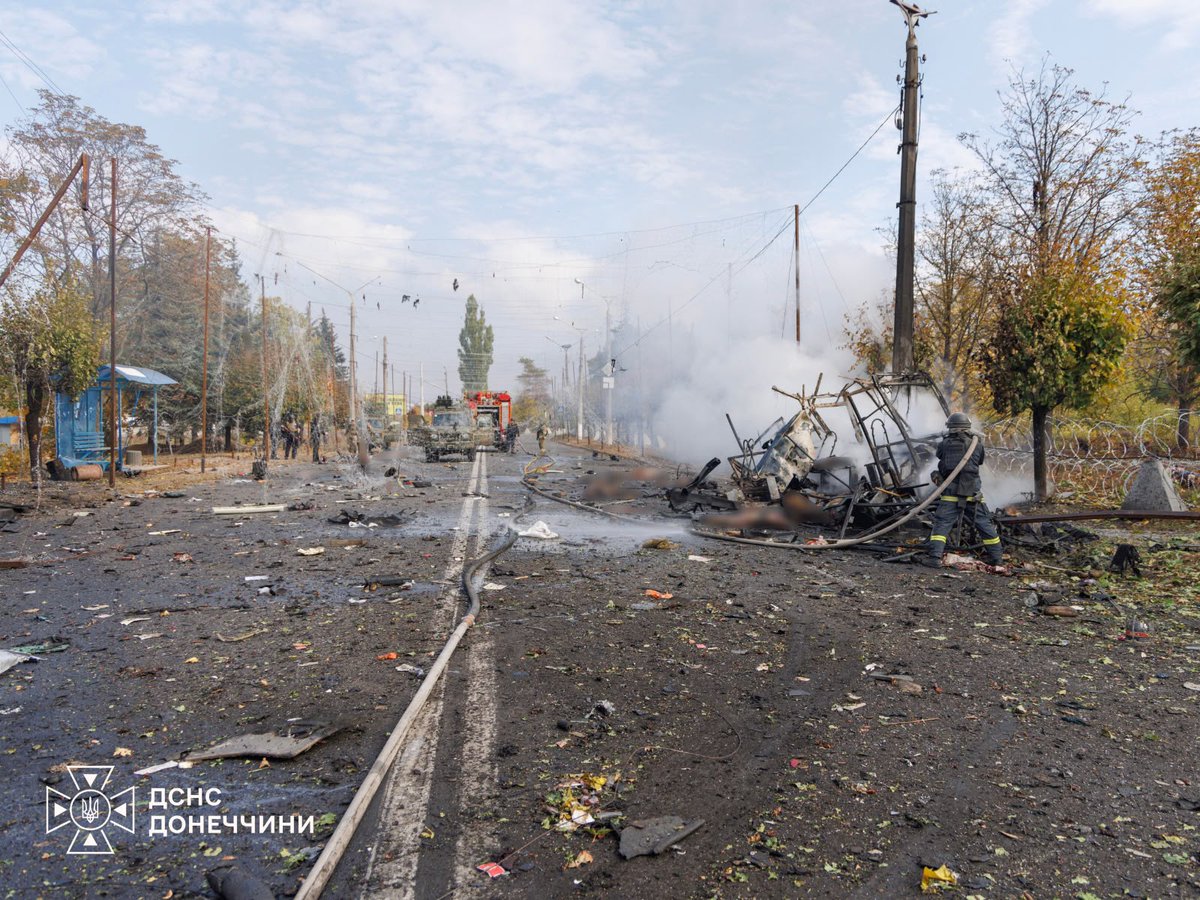
Сегодня российская армия убила в Краматорске 35 человек. 30 только одним ударом по пассажирским автобусам. И еще 5 другими обстрелами. И никому в России до этого нет дела. Никакой реакции. Нет ни возмущений, ни сожаления, ни скорби. Ни сюжетов на телевидении, ни постов у Z-блогеров, ни комментариев Путина и Пескова.
Эти погибшие люди - русскоязычные жители Донбасса. Те самые, которых Путин обещал защищать, ради б��зопасности которых, по его собственным словам, начал «СВО». И вот, спустя 5 лет, «СВО» достигает апогея - Россия бомбит в Краматорске общественный транспорт, убивает десятки случайных людей, и никто в России этого даже не замечает.
Причем, с точки зрения самой России, Краматорск - это ведь российский город, который они включили в свою конституцию. Его жители в понимании Путина - россияне. И вот получается, что сегодня армия РФ совершила массовое убийство этих россиян, но в России на это всем наплевать.
В 2014 году когда война только начиналась, и боевые действия как раз шли в районе Славянска и Краматорска, ��оссийские СМИ были переполнены возмущением и гневом. Кричали, что идет «карательная операция», что «хунта убивает жителей Донбасса». Многие россияне тогда действительно проникались этой пропагандой, ��чень переживали и сочувствовали жителям Донбасса. И это еще можно было понять.
Но как понять то, что происходит сейчас? Когда буквально те же люди, которые в 2014 били себя в грудь и кричали, что они не могут смотреть на страдания Донбасса, вообще не замечают убийство 35 человек. Когда те, кто обвинял Украину в обстрелах мирного населения Славянска и Краматорска, приветствуют действия Путина, который обстреливает население этих городов с гораздо большей жестокостью?
Я конечно знал, что пропаганда может возбуждать и распалять чувства. Но я не думал, что пропаганда умеет и выключать чувства. Оказалось - умеет… Оказалось, ничего не стоит убедить целый народ, что в зависимости от ситуации одних и тех же людей можно либо жалеть, либо не жалеть. В 2014 погибшие от обстрелов жители Краматорска в понимании российских патриотов были достойны жалости. А в 2026 году они не достойны даже у��оминания.
Я специально почитал сегодня каналы Азарова, Царева, других коллаборантов, которые в 2014 обвиняли украинскую власть в жестокости по отношению к Донбассу. У них сегодня нет ни одного упоминания о массовом убийстве жителей Краматорска. Это что, какой-то не тот Донбасс? Да нет, тот же самый, который они жалели и поддерживали в 2014 году. Просто, когда его жителей убивает Россия, все эти защитники Донбасса как-то резко перестают их жалеть.
Mariupol. Archival footage.
Estimated 100,000 lives lost — buried under rubble or in mass graves.
Anyone pressuring Ukraine to surrender under the pretext of peace negotiations is no better than Putin himself.
@3Herbarium Ніколи не забуду дівчину в пологовому, років приблизно 23-25, у якої таке було не тільки на пузі, а й на стегнах, руках, спині, ще й фіолетового коліру. Чисто зебра. Але вона не переймалася сильно, казала, що її сама така ж була і згодом побілішає.
If scenes like these came to us from Berlin, Paris or Washington, would the world remain indifferent?
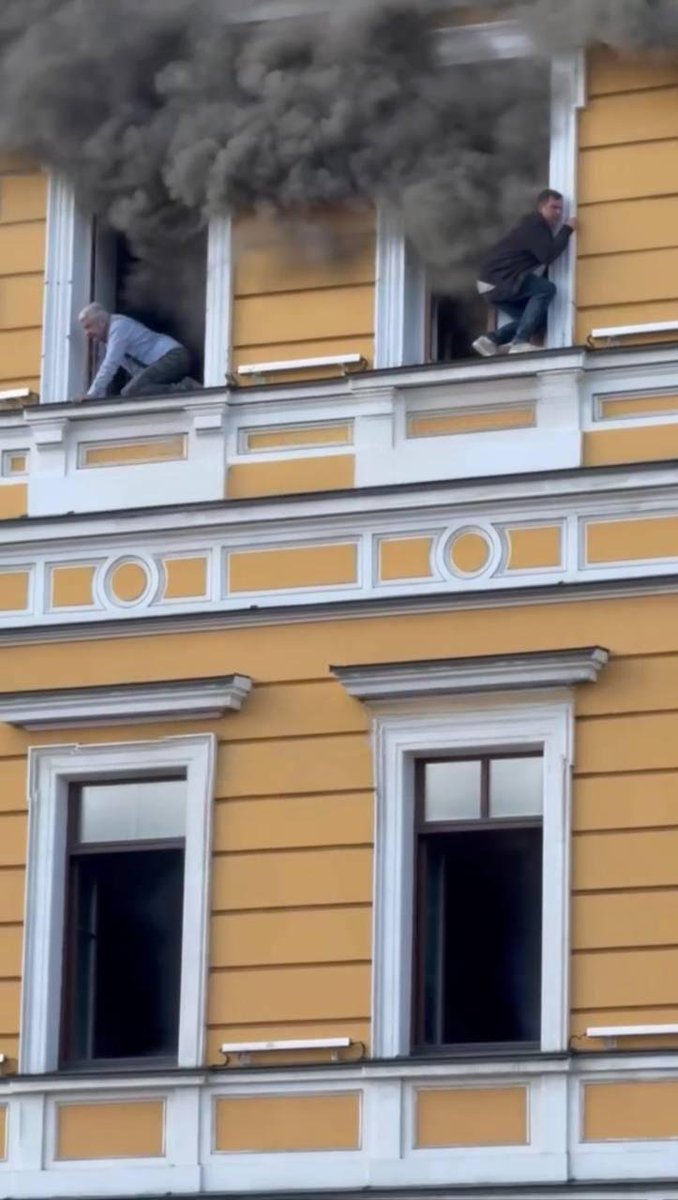
This image was taken in Kyiv around noon today, after terrorist Russia struck the building of the National Academy of Sciences of Ukraine with a drone.
Gute Frage: Warum sprechen so viele Ukrainer Russisch?
Lassen Sie sich das erklären.
Aber zuerst möchte ich eine Frage stellen:
Warum sprechen Iren und Schotten Englisch, Katalanen und Basken Spanisch, Bretonen Französisch, Portugiesen und viele weitere Länder wie Brasilien (größtes portugiesischsprachiges Land mit über 200 Millionen Sprechern) portogiesisch und usw.?
Die kurze Antwort kennen Sie wahrscheinlich schon.
Aber lassen Sie mich eine Ausführlichere geben.
Die ukrainische Sprache wurde von Russland 134 Mal verboten!
Hier sind die wichtigsten Ereignisse:
1720: Ein Erlass von Zar Peter I. verbot den Druck von Büchern in der Ukraine.
1753: Ein Erlass von Katharina II. untersagte den Unterricht in ukrainischer Sprache.
1768: Ein Erlass der Synode der russisch-orthodoxen Kirche forderte die Beschlagnahmung ukrainischer Fibel aus dem Besitz der Bevölkerung.
1775: Schließung ukrainischer Schulen, nachdem russische Truppen die Sitsch von Saporischschja zerstört hatten.
1830er–1840er Jahre: Die Russifizierung der Ukraine verschärfte sich. Selbst die Verwendung des Namens „Ukraine“ wurde verboten.
1889: Auf einem archäologischen Kongress in Kyiv war es erlaubt, Vorträge „in allen Sprachen außer Ukrainisch“ zu halten.
1895: Verbot ukrainischer Kinderliteratur.
1914: Verbot der ukrainischen Presse.
1938: In der gesamten Ukraine wurde der Pflichtunterricht in der russischen Sprache eingeführt.
Gleichzeitig kam es zu einer massenhaften Schließung nationaler Schulen, und das Ansehen der ukrainischen Sprache sank.
1926–1939: Physische Deportationen ukrainischer Aktivisten, denen Nationalismus vorgeworfen wurde. Vier Familienmitglieder von @rshereme
mütterlicherseits wurden deportiert.
1929: Ein neu gedrucktes Wörterbuch der ukrainischen Sprache wurde verboten.
1960er Jahre: Verhaftungen und Auslöschung der jungen Generation der ukrainischen Intelligenz.
Vor 130 Jahren beschränkte sich das ukrainischsprachige Gebiet nicht auf die Ukraine, sondern es wurde auch in einigen Teilen Russlands und Weißrusslands gesprochen (siehe den roten Bereich; dies ist das Ergebnis der Volkszählung des Russischen Reiches von 1897, bei der sich die Menschen anhand ihrer Sprache identifizierten).
Wenn also jemand behauptet, eine Region der Ukraine sei „russischsprachig“, lesen Sie die obige Liste noch einmal durch.
Es ist überhaupt schon ein Wunder, dass die ukrainische Sprache überlebt hat und viele Menschen dafür ihr Leben geopfert haben.
She was lying there, raped, her neck broken, with a noose around her neck. Beside her hung her 3-year-old son.
When they took him down from the rope, he was blue and no longer breathing.
But then a miracle happened. And what this child said a year later will break your heart.
June 20, 2022. Kherson region, an occupied village. At two in the morning, the wife of a Ukrainian serviceman managed to message her husband that someone was breaking down the door to their home.
His sister arrived an hour later. The gate was locked, so she climbed over the fence.
The door had been ripped from its frame, and a window was smashed. Nothing had been stolen. They had not come to rob them. They had come to kill.
In the room, her sister-in-law was lying on the couch, undressed and brutally beaten. Her head was twisted unnaturally, her neck was broken, and there was a noose around her neck. She was 28.
Beside her hung her three-year-old son. He had also been beaten, with about a dozen cigarette burns on his face. The rope was pulled so tightly around his neck that the woman tore her fingernails bloody trying to untie it.
The child was blue. His head was swollen from edema. He was no longer breathing.
The woman screamed at him: “Breathe! Live! Because I won’t be able to live with this — I’ll lie down beside you and die too.”
She performed CPR on him. She was afraid she would break his ribs — she didn’t. And he began to breathe.
He had watched his mother being killed. And she had watched her child being tortured. The window had been broken — people nearby had heard what was happening, but no one admitted it.
Then came three weeks in occupied Kherson. The woman waited for the burns and the rope mark around the child’s neck to heal.
What had not healed, she covered with makeup so they would not be recognized and killed immediately.
At the hospital, they warned her: “If they try to detain you, run. Half the hospital is occupied by FSB officers.”
To get the boy out, the woman forged documents directly on her phone using Photoshop. She was taking him out as if he were her own son. Thirty checkpoints lay ahead.
At one of them, a rifle was pressed against her temple. One Russian said, “Get rid of these two.” Another replied, “No, I’ve had enough for today.” The first said, “I’m fine with it.”
He was wearing a wedding ring. Perhaps a wife and children were waiting for him at home. And he was perfectly fine with killing a woman and a child sitting in a car.
Three days on the road. The woman pressed the pedals with one leg because the other had become paralyzed.
At a filtration checkpoint, a young officer asked whether anyone in the car had survived torture.
She said: “Yes.”
Is anyone injured? — Yes.
Has anyone been tortured? — Yes.
When she pointed to the three-year-old child, the officer began to cry. He could not continue the conversation.
In Odesa, doctors diagnosed the boy with clinical death, asphyxia, cerebral edema, a damaged wrist joint, a jaw injury, and eight broken teeth.
He stopped speaking — his muscles had atrophied. His speech development was set back by a year.
They now live in Odesa. The boy speaks again, goes swimming, attends kindergarten, and works with a speech therapist.
He knows that his mother is gone. A year after the tragedy, he went outside one evening, pointed his little finger toward the sky, and said:
“Moon, sky, Mommy.”
The boy’s father is a serviceman. When they arrived in Odesa, he met them deeply devastated. He was able to stay with them for two weeks — as long as his command allowed.
“He could have left the military and become his son’s guardian. But he didn’t. Because he is a patriot. Because he continues to fight,” she said.
And after the liberation of the left bank of the Kherson region, there will be many more.
Source: translated from the original text by Oleh Bairak.
This is fucking insane: today, a Russian military Mi-8 helicopter violated Polish airspace, penetrating roughly 300 meters into it and remaining there for 42 seconds.
The Poles scrambled fighter jets and put ground forces and air-defense assets on alert, but, of course, nobody shot the helicopter down.
Just a reminder: in 2015, when Turkey shot down a Russian Su-24, the aircraft had been inside Turkish airspace for “just” 17 seconds.
The aircraft was hit after it had already returned to Syrian airspace, and it also crashed on Syrian territory.
Russia swallowed it, imposed “sanctions” on Turkey — including a ban on Turkish tomatoes, restrictions on tourism, and a number of other measures — but of course never dared to “go to war” with Turkey.
Forty-two seconds in war is already a hell of a long time, but in aviation it is fucking enormous: in those “seconds,” an aircraft can cover kilometers of distance.
So the Poles are basically telling the Russians: sure, fly in, land troops here — we don’t mind.
This is not just fucked up. This is spectacularly fucked up.
Last year I already used the example of Switzerland, so I’ll bring it up again:
During World War II, tiny Switzerland uncompromisingly shot down German aircraft that “accidentally” entered its airspace.
And sometimes they really did enter by accident — for example, while returning from France.
Swiss pilots fought the Germans in the air and shot them down, scoring victories in aerial combat.
This particularly infuriated Hitler because the Swiss were shooting down German aircraft while flying Bf 109 Messerschmitts themselves — aircraft Switzerland had purchased back in the 1930s.
Yes, the Reich did not have nuclear weapons, but Berlin already had operational plans for a military campaign against Switzerland and its occupation.
And with almost all of Europe already under German control, Switzerland had every reason to understand that those plans were not necessarily a bluff.
But the Swiss did not sit around wringing their hands or engaging in verbal gymnastics — they simply shot down anything that violated their airspace.
Anything that crosses into your airspace should be shot down immediately. Let Moscow explain afterward who got lost, who made a mistake, and what exactly happened.
Anything else sends Moscow one very clear signal: You can.
The Strait of Hormuz has been closed for months (choking off 20% of the global petroleum market) and goddamn agent Krasnov be over here blaming high fuel prices on the Ukrainians for defending themselves
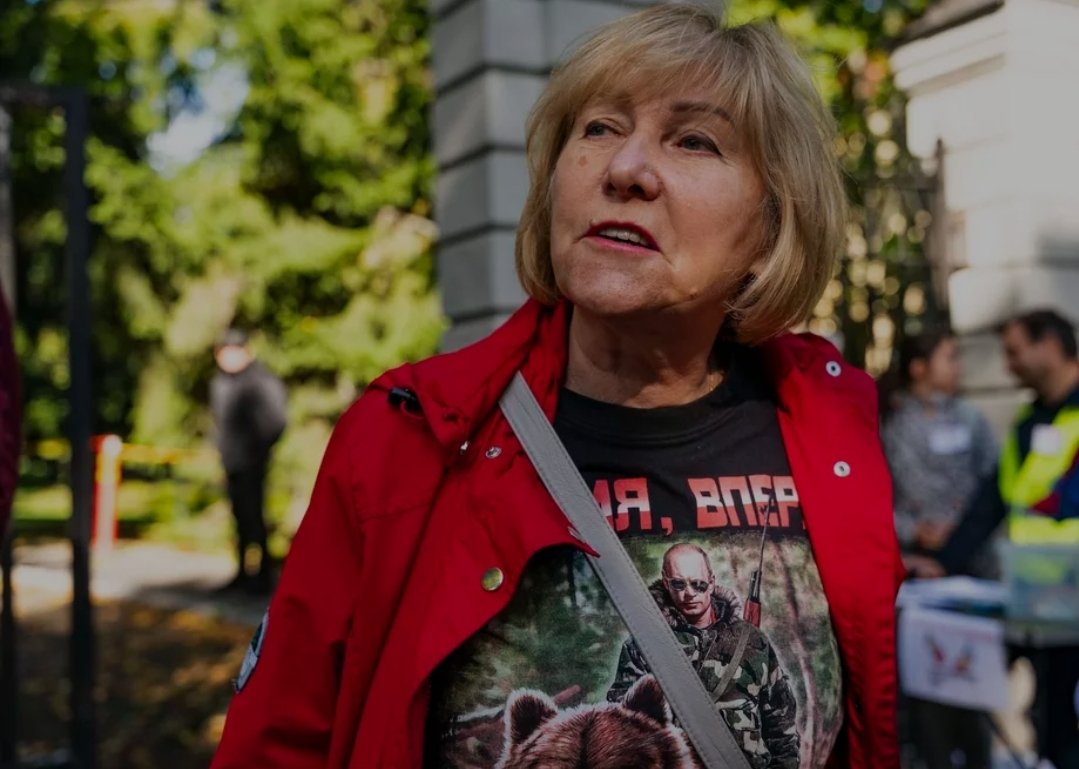
Zinaida, a russian woman who lives in Finland:
"I love Putin. I voted for him because he is the best and the smartest. Putin will end the "Ukrainian civil war" slowly but surely."
However, she does not want to move to russia, as she would lose her Finnish social benefits.
🙃
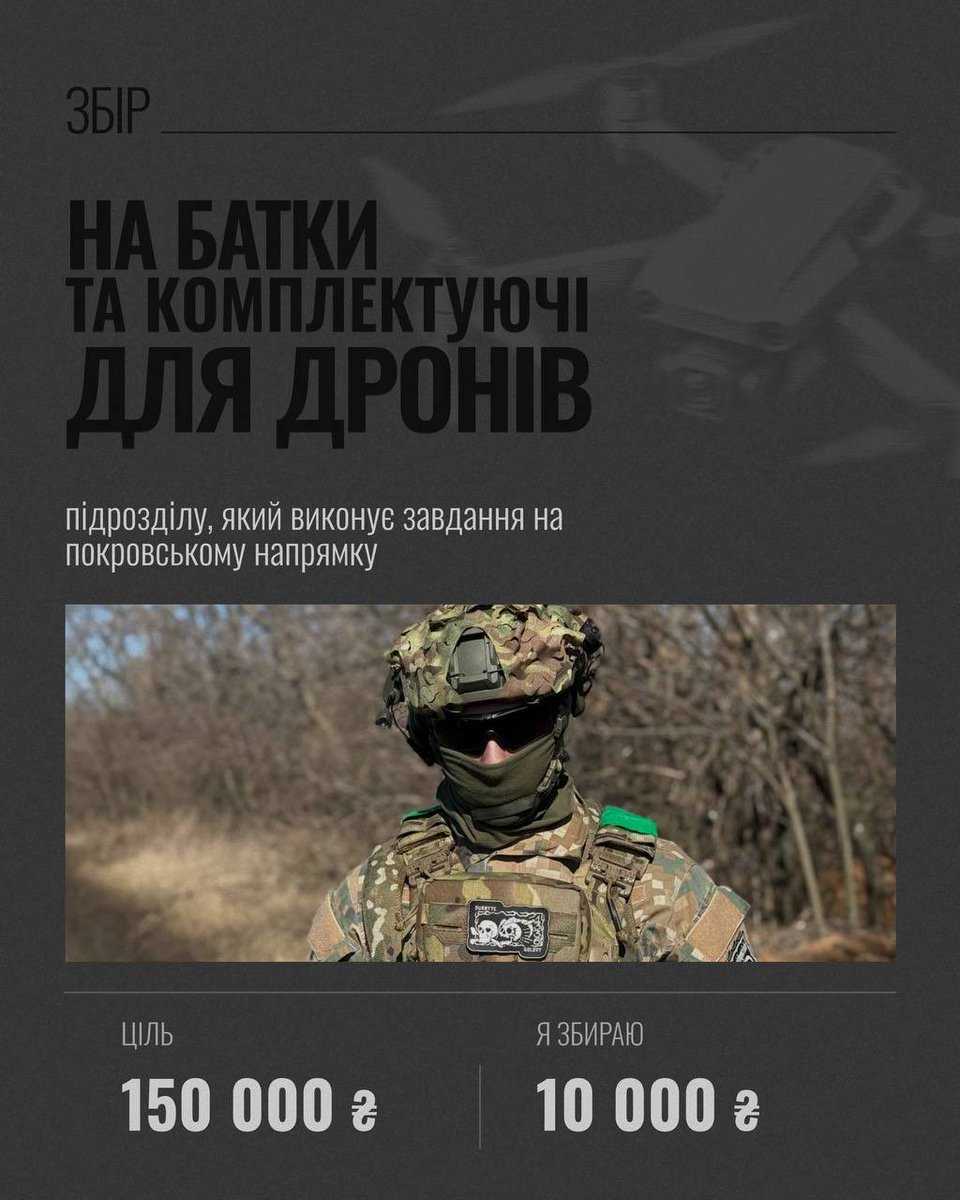
дарагой брат @Terrykon93 збирає
на допомогу дружнім організмам: «на батареї та комплектуючі для дронів одному з найефективніших підрозділів, які виконують завдання на Покровському напрямку
Кіллзона зростає, без батареї дрон не здатний долетіти до крайніх рубежів піхотинців»