A short history of the great British improvement.
They came for beef dripping. We got margarine, then seed oils, then a cardiac ward in every hospital.
They came for butter. They told your grandmother it would kill her husband. The replacement was a tub of palm oil emulsified with rapeseed and a yellow dye, and her husband died of a heart attack in 1989 anyway.
They came for full-fat milk. We got skimmed milk, a vitamin D deficiency epidemic in children, and a cereal aisle fortified to plug the gap.
They came for mutton, the meat that fed every shepherd, miner, and mill worker for six hundred years. We got a chicken breast injected with water and a turkey twizzler.
They came for the kipper. We got a Findus boil-in-the-bag, dyed orange, and a fish oil capsule sold at the chemist to make up for the omega-3 nobody is eating.
They came for wool. We got polyester fleece, and microplastics in human placentas. Every one tested. Sixty-two out of sixty-two.
They came for leather. We got synthetic shoes that delaminate in eighteen months, and a high street with no cobbler.
They came for the cotton nappy. We got the disposable, and a landfill that will outlast the child wearing it.
They came for the cast iron pan handed down three generations. We got Teflon, and a forever chemical now found in 98% of British rivers.
They came for the wooden bowl your grandmother kneaded dough in. We got Tupperware, then BPA, then "BPA-free" plastic containing compounds we have not yet bothered to measure.
Now they are coming for the cow herself. The replacement is a textured pea isolate, extruded in a factory in the American Midwest, packaged in plastic, and marketed as the ethical option by a company called Cargill, who happen to be the third-largest meat processor in the United States.
Every traditional material we have been told to give up was working perfectly, for free, for centuries. Every industrial replacement has been worse for the body, worse for the land, and considerably better for the shareholders of the company that sold it.
The pattern is not subtle, and the people running it are not embarrassed.
Your great-grandmother is no longer here to call it.
You are.
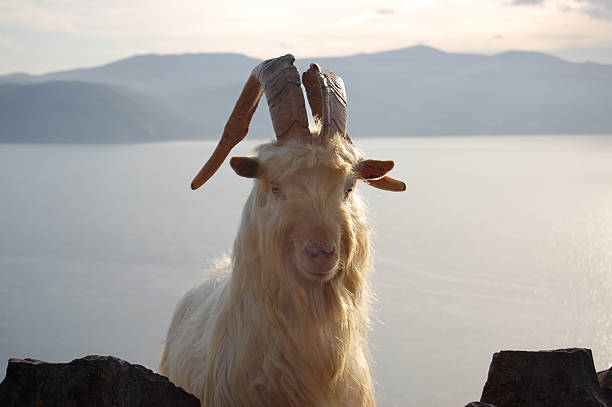
People ask me why I'm so fond of goats.
Here's why.
A goat will wander up the side of a Welsh cliff that a sheep wouldn't attempt and a hiker wouldn't survive, eat the brambles and gorse and thistles that nothing else on the farm can stomach, and turn the lot into milk so digestible that even the people allergic to cow's dairy can drink it without incident.
She thrives on land that grows nothing else. She fertilises it as she goes. She maintains scrubland that would otherwise become a fire hazard. She produces milk with smaller fat globules and a different protein structure to cow's milk, which is why human infants have been raised on it for ten thousand years when nothing else was on offer.
Her cheese is the oldest cheese on earth. Her meat fed the Mediterranean before olive oil was a brand. Her hide bound the first books. Her hair made the tents that crossed the Sahara. Her milk built the Maasai and the Berbers and the goatherds of every uplands the planet has.
And the modern response to all of this has been to tell us she is somehow the wrong animal.
The cheek of it.
I'll back the creature that has fed humans on every continent except Antarctica over an almond drink invented by a man with a blender in 1998.
There is a region in southeastern Spain called Almería. If you pull it up on satellite imagery, you will assume the screen has glitched. A vast, blinding white scab where a landscape used to be.
It's not a glitch. It's 64,000 acres of plastic greenhouses. So much plastic sheeting that it is, genuinely, visible from space. The entire region has been wrapped in industrial farming film to grow tomatoes, peppers, cucumbers and lettuce for European supermarkets in January.
The plastic has created its own microclimate. The reflective surface is so vast it has measurably lowered local temperatures by bouncing sunlight back into the atmosphere. Scientists have a name for it. The Albedo effect of Almería. The only place on earth where human activity has cooled the local climate, and they did it by accident, while building the world's largest open-air plastic factory.
The plastic itself is single-use agricultural film. It sits in UV light for three to five years, degrades into microplastics, blows into the Mediterranean, and ends up in the ocean and the soil. Every year, 45,000 tonnes of plastic waste is generated just from replacing degraded greenhouse covering. Every year. Just the covering.
Inside, workers from Morocco and sub-Saharan Africa labour in 45°C heat for €30 a day. No contracts. No rights. Spraying crops with pesticides at concentrations that would be illegal on outdoor fields. Ventilation: minimal. Chemical exposure: constant. The aubergine looks lovely.
The groundwater underneath Almería is so contaminated with agricultural runoff that it has been declared unusable. The region now imports water from elsewhere in Spain while sitting on top of a poisoned aquifer it created. The land that was meant to feed Europe more efficiently has become a place that needs water flown in to keep the show running.
And this is what supplies your fresh vegetables in January. Grown in plastic factories. By exploited workers. Using groundwater they have already destroyed. Wrapped in more plastic. Shipped across Europe. Refrigerated the whole way. So a person in Manchester can have a tomato in February that tastes of nothing.
But sure. Cattle grazing on Scottish hills are the environmental problem.
Pull the satellite up. Have a look. Then tell me which system is the one that needs explaining.
@danro_art Glad to hear it. Went for a walk in London earlier (sunny!) - totally uninspiring, nothing to see, nothing to inspire. I just found a park and sat on a bench bored out of my skull. You don't know how lucky you are ha!