My @WassonWatch telling me it was almost time for @ericmetaxas to take the stage at #freedomcon Rise of the Statesman. @TheGorge was the perfect venue. Speakers gave exceptional messages and the view was next level. God is doing great things in WA!
Guys, God is so astoundingly, exceptionally good. He is. Believe it. Believe in him. Whatever you've got going on, he knows and he cares. Cast your cares before him, because he cares for you. I promise you.
The 250th Anniversary of the USA is on July 4th, and we are releasing this limited-edition commemorative watch for just $317.76. Assembled in the USA, it features a quartz movement, sapphire crystal, and 100M W/R.
Wasson: For the man who knows what time it isThe 250th Anniversary of the USA is on July 4th, and we are releasing this limited-edition commemorative watch for just $317.76. Assembled in the USA, it features a quartz movement, sapphire crystal, and 100M W/R.
Wasson: For the man who knows what time it isThe 250th Anniversary of the USA is on July 4th, and we are releasing this limited-edition commemorative watch for just $317.76. Assembled in the USA, it features a quartz movement, sapphire crystal, and 100M W/R.
Wasson: For the man who knows what time it isThe 250th Anniversary of the USA is on July 4th, and we are releasing this limited-edition commemorative watch for just $317.76. Assembled in the USA, it features a quartz movement, sapphire crystal, and 100M W/R.
Wasson: For the man who knows what time it isThe 250th Anniversary of the USA is on July 4th, and we are releasing this limited-edition commemorative watch for just $317.76. Assembled in the USA, it features a quartz movement, sapphire crystal, and 100M W/R.
Wasson: For the man who knows what time it is.
The Japanese guards thought the young American medic was stealing medicine for himself.
Years later, survivors learned he had been giving away his own blood to dying prisoners one hidden syringe at a time.
They called him Doc Holloway.
The camp commandant called him the useless one.
Private First Class Daniel Holloway was 24 years old when the Japanese captured him on Bataan in April 1942.
Before the war, Danny had been studying medicine at the University of Missouri. Small-town boy. Church pianist. The kind of young man who apologized too much and carried extra pencils in his pockets because someone else might need one.
When Pearl Harbor happened, he enlisted as an Army medic before finishing school.
He thought he would spend the war saving lives.
He never imagined he would spend most of it watching men disappear.
By spring 1942, American and Filipino forces in the Philippines were starving. Supplies gone. Malaria everywhere. Dysentery spreading through exhausted troops living on scraps of rice.
Then came surrender.
Nearly 75,000 prisoners were forced onto what history would call the Bataan Death March.
The heat killed first.
Then dehydration.
Then the guards.
Men who stumbled were beaten, bayoneted, or simply left beside the road to die beneath the sun. Prisoners drank from muddy ditches despite knowing the water carried disease because thirst hurt worse than fear.
Danny tried treating wounded men while marching.
A guard smashed a rifle butt across his face for stopping too long beside a dying corporal.
After that, he treated people while walking.
Tearing strips from uniforms for bandages.
Holding collapsing soldiers upright so guards wouldn’t notice weakness.
Whispering to delirious men about home.
Kansas wheat fields.
Chicago winters.
Baseball games.
Anything except the road.
One prisoner later remembered:
“He made dying men feel like human beings again for five minutes.”
Thousands never reached the camps.
Danny did.
Camp O’Donnell first.
Then Cabanatuan.
Places built less for imprisonment than slow destruction.
Disease spread constantly. Beriberi. Malaria. Cholera. Starvation so severe men fought quietly over banana peels in garbage pits after dark.
Medical supplies barely existed.
Japanese guards considered medicine wasted on prisoners expected to die anyway.
But Danny still called himself a medic.
Even after his uniform rotted into rags.
Even after his weight dropped below one hundred pounds.
Every morning, he walked barracks checking pulses and fevers with fingers so thin they looked skeletal.
He shared his own food constantly.
Half a spoon of rice.
A sip of broth.
Anything.
The prisoners begged him to stop.
“You’ll kill yourself.”
Danny always answered the same way:
“They’re sicker than me.”
Then came the malaria outbreak of 1944.
Hundreds collapsed.
Men burned with fever so intense they hallucinated snow falling inside jungle barracks.
The Japanese released tiny amounts of quinine only for prisoners strong enough to keep working.
The weak were left untreated.
Danny began stealing medicine.
Not dramatically.
Quietly.
One vial at a time.
A sympathetic Filipino laborer working near the supply hut smuggled tiny amounts toward the prisoners. Danny hid the medicine inside bamboo supports beneath the floorboards.
At night, he crawled barrack to barrack treating dying men in darkness while guards slept.
But malaria medicine alone wasn’t enough.
Many prisoners were too weak from starvation to survive blood loss from disease and beatings.
Then Danny noticed something.
Despite starvation, he remained strangely healthy compared to others.
Universal donor blood type.
O-negative.
And an idea so dangerous it bordered on madness began forming.
Using scavenged tubing, stolen syringes, and improvised needles boiled over hidden fires, Danny started secretly giving his own blood directly to dying prisoners.
No records.
No equipment.
No safety.
Just one starving man lying beside another inside bamboo barracks while jungle rain hammered the roof overhead.
Again and again.
Until Danny himself could barely stand afterward.
One former prisoner remembered waking from fever to see Danny pale as paper beside him.
“I thought he was dying too,” the man said later.
“Then I realized his blood was running into my arm.”
The guards eventually noticed something strange.
Prisoners expected to die kept surviving.
Not many.
But enough.
A Japanese officer accused Danny directly during interrogation.
“You steal medicine for yourself.”
Danny looked at his own skeletal body and laughed weakly.
“If I was stealing for myself,” he whispered, “I’d look better than this.”
The officer beat him unconscious anyway.
By late 1944, American bombing intensified around the Philippines.
The Japanese began evacuating prisoners onto “hell ships” — cargo vessels packed with POWs and sent toward Japan under horrific conditions.
No markings identified them as prisoner transports.
American submarines attacked many accidentally.
Danny was loaded onto one in December.
The hold below deck was darkness, vomit, sweat, blood, and screaming packed so tightly prisoners couldn’t sit down fully.
Men suffocated standing upright.
Others went insane from thirst.
Danny spent the voyage moving through the darkness touching foreheads, checking breathing, giving away water he desperately needed himself.
One Marine later said:
“He walked around that ship like a ghost carrying mercy.”
Near Formosa, the ship was struck during an American air attack.
Chaos exploded instantly.
Steam.
Fire.
Flooding compartments.
Japanese guards sealed lower hatches to stop prisoners escaping.
Hundreds drowned screaming beneath the decks.
Danny and several others managed to break through a side hatch after an explosion warped the metal.
Prisoners fell burning into the sea around them.
Oil covered the water.
Danny couldn’t swim well.
But witnesses later said he kept pushing weaker men toward floating wreckage instead of saving himself.
One survivor remembered Danny supporting a blinded prisoner in the water for nearly an hour.
The rescue boats reached them at dusk.
Only then did the blinded man realize Danny had disappeared beneath the waves sometime during the final minutes.
Still holding him up.
His body was never recovered.
After the war, survivors searched desperately for information about “Doc Holloway.”
Many knew almost nothing about him.
Only fragments.
Missouri.
Medical student.
Played piano.
Gave away food.
Shared blood.
In 1948, former POWs pooled money to find Danny’s mother, Eleanor Holloway, living alone outside St. Louis.
They arrived carrying letters.
Dozens of them.
Stories from men who had survived because of her son.
One former prisoner handed her a small rusted syringe wrapped carefully in cloth.
“He used this on me,” the man said quietly.
“She kept the syringe beside her bed until she died.”
Years later, military historians investigating POW survival rates found something astonishing.
Men housed in Danny Holloway’s barracks survived malaria outbreaks at significantly higher rates than nearby camps despite identical conditions.
Nobody could fully explain why until survivors compared memories decades later.
Then the stories aligned.
The stolen quinine.
The nighttime treatments.
The blood transfusions performed by a starving medic using almost nothing except courage and refusal.
In 1997, surviving former prisoners gathered at the National World War II Memorial construction ceremony.
Most were old men by then.
Walking slowly.
Hands trembling.
One carried a faded photograph of a smiling young medic in uniform holding medical textbooks under one arm.
Daniel Holloway.
Age 24 forever.
Before the ceremony ended, several survivors quietly placed small glass bottles near the memorial site.
Empty blood vials.
No speeches explained them.
None were needed.
Because somewhere beneath the history of war and strategy and nations fighting across oceans lives the story of one exhausted American medic who entered a prison camp with nothing left to give —
and somehow kept giving pieces of himself away anyway.
Literally.
One drop at a time.
@realpeteyb123 Words of truth. I rarely go on 𝕏 much these days, but I always stop my scroll to read your stuff. I may not agree with you but I respect you and find you intellectually sound and that helps me grow as a human.
Today is Memorial Day.
Brave men and women made the ultimate sacrifice so that we may live in freedom. Today, we remember them, honor them, and thank them. Not just today, but always. 🇺🇸
Watch this powerful tribute by former Navy SEAL and author @jockowillink 👇
https://t.co/xEoXRWxS9S
@shooterjennings No idea, but 0% AI created content is my limit. I just cancelled @Spotify and paid for an annual with @qobuz because of their AI transparency and zero AI created content.
🚨 WOW! Scott Presler is officially planning to PRIMARY CHALLENGE Senate Leader John Thune if the SAVE America Act does not take effect for the 2026 midterms
“I promise to lead the charge to primary & defeat him in 2028.”
Scott is PLAYING HARDBALL!
I understand that Senators are angry because they’ve lost elections,
but I hope these same Senators are aware they are losing elections
because they have FAILED to pass the SAVE America Act!
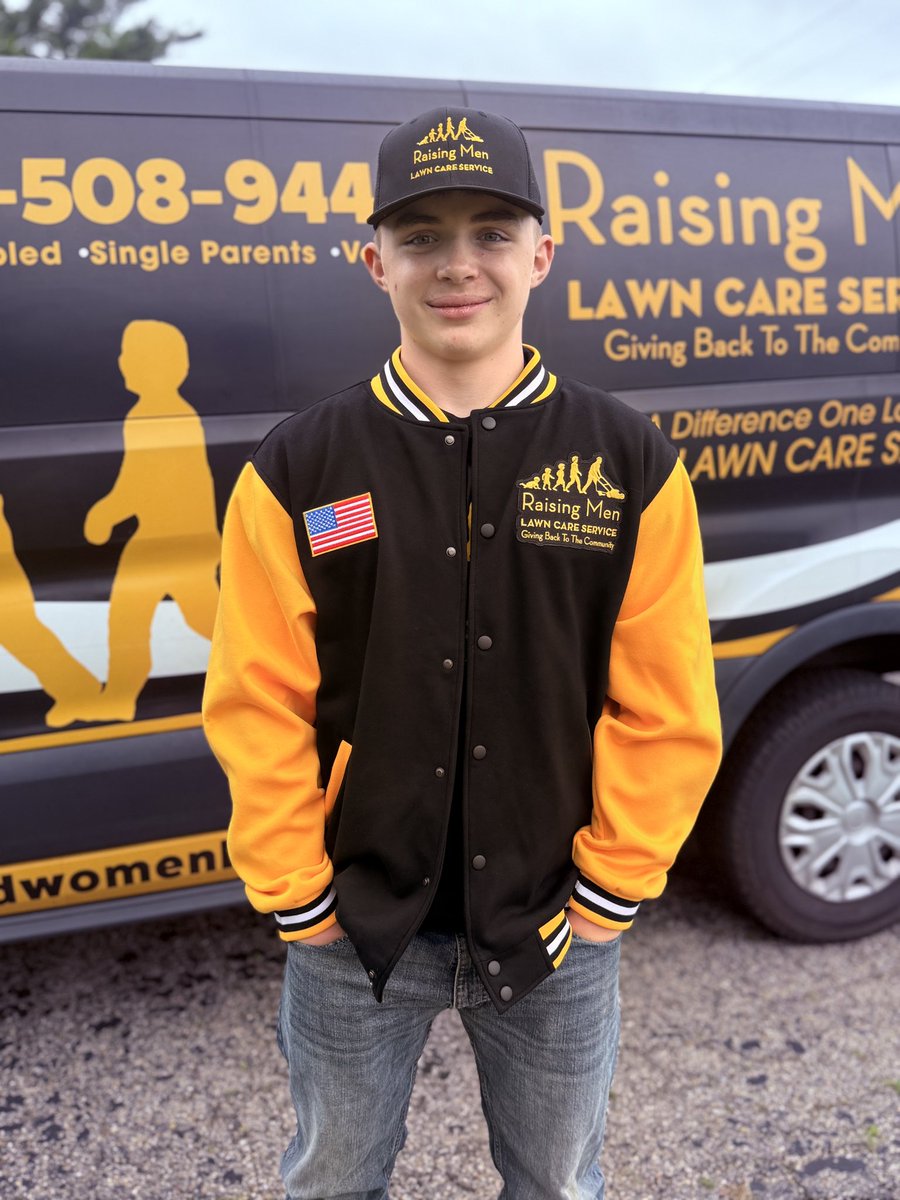
We’re entering a new era for the 50 Yard Challenge.
For years, kids who completed 50 lawns earned their black shirt… but now, we’re taking it to another level.
Introducing The Black Jacket.
Inspired by champions—like the green jacket awarded at The Masters Tournament, every child who completes the 50 Yard Challenge will now be presented with a black and yellow varsity jacket.
This isn’t just something you wear… It’s something you earn.
50 lawns.
50 acts of kindness.
A lifetime impact.
Emmett is the first kid to rock one .
Kids will also soon earn patches /badges to put them on their jackets. Kids from now on Will get one . Kids of previous years can get one too , once we secure a sponsor for the jackets .
@qobuz@MattWalshBlog
I said I'd give my money to the first streaming service I found that filters or blocks AI generated music. I finally found it. Goodbye @Spotify 👋🏻
Why we’re taking a human‑first stand on AI‑generated music
When we founded Qobuz in 2007, we made a promise to honor the artists, voices, stories, and hard work behind the songs you love.
Today, we remain committed to keeping music human as we encounter new challenges.
Our aim is simple: protect listeners’ access to human-crafted music and the artists who create it.
🔗 Discover here why we’re taking a human‑first stand on AI‑generated music: https://t.co/jv59pr0DFd
For all the people wondering why I choose Trump over Massie:
There's only one force holding back the Democrats from importing hundreds of millions of third-worlders, making them instant citizens with the vote, ending America forever, and turning into our own version of every other degenerate third-world hellhole.
That person is NOT Thomas Massie.
That person is Donald J. Trump.
You force me to chose between them, and I'll chose the one that is the only possible salvation for our nation in its existential fight for survival, warts and all, every day, and twice on Sundays.