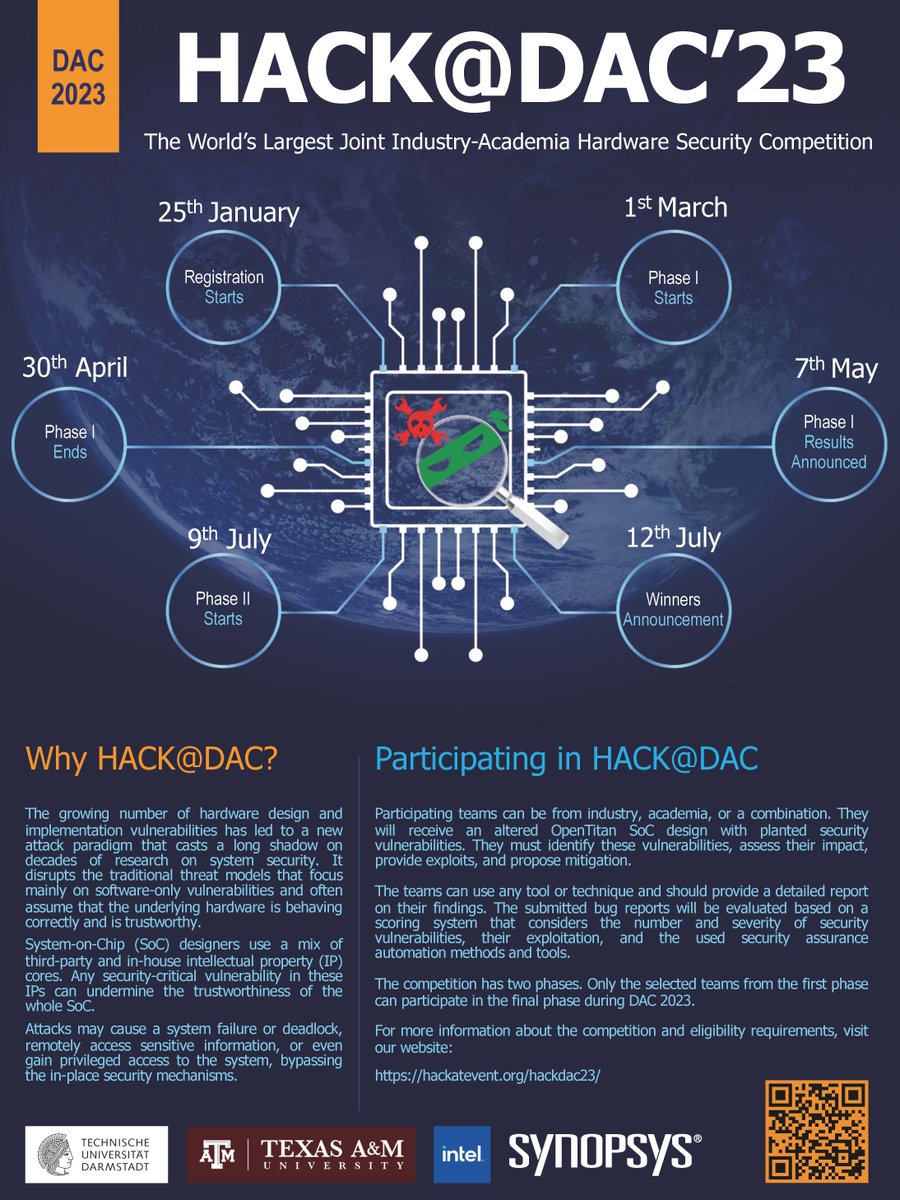
HACK@DAC is about something other than winning a prize; it is about understanding the importance of Hardware Security and exploring research driving EDA innovations for security assurance. Phase 1 has started, but you still have time to register. Sign up: https://t.co/EchphyrQ6R
The world's largest Hardware Security CTF Competition is back. Participate in HACK@DAC'23, a joint work between Intel, Synopsys, System Security Lab@TU Darmstadt, and Texas A&M. Sign up at https://t.co/Yce1ZSLIBf
HACK@DAC provides sophisticated insights into the security of System-On-Chip (SoC). Since 2018 hundreds of teams have been competing in hunting the implanted vulnerabilities in hardware.
NEW PUBLICATION: Our paper "ARGUS: Context-Based Detection of Stealthy IoT Infiltration Attacks" has been accepted to appear at @USENIXSecurity. It describes a novel AI-based approach for detecting attacks against IoT. More information and preprint access: https://t.co/NMWUaLbUJd
Unsere Analyse zu Sicherheitsmängeln von Kontaktnachverfolgungsansätzen wie z. B. der Corona-Warn-App ist jetzt in der Zeitschrift IEEE Transactions on Emerging Topics in Computing veröffentlicht worden: https://t.co/JZpFK4iLJw
Our analysis of the problems and challenges of digital contact tracing solutions used in the COVID-19 pandemic has been now published in IEEE Transactions on Emerging Topics in Computing: https://t.co/JZpFK4iLJw
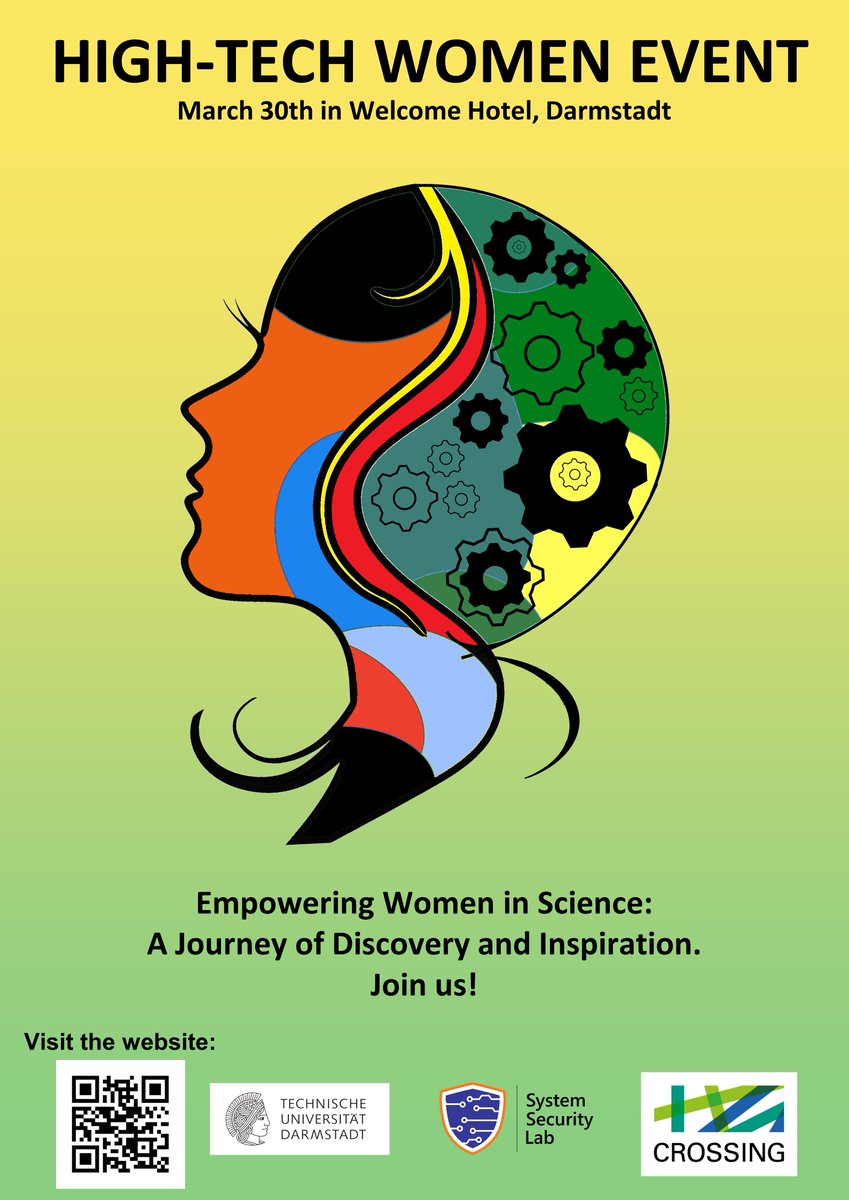
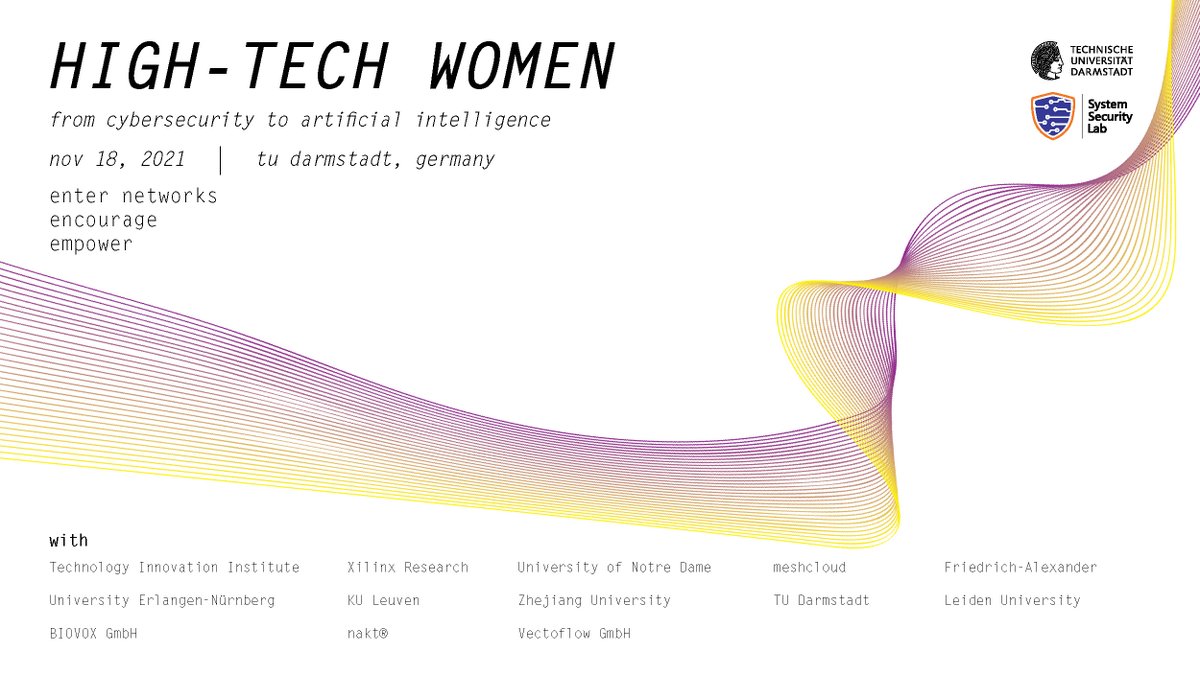
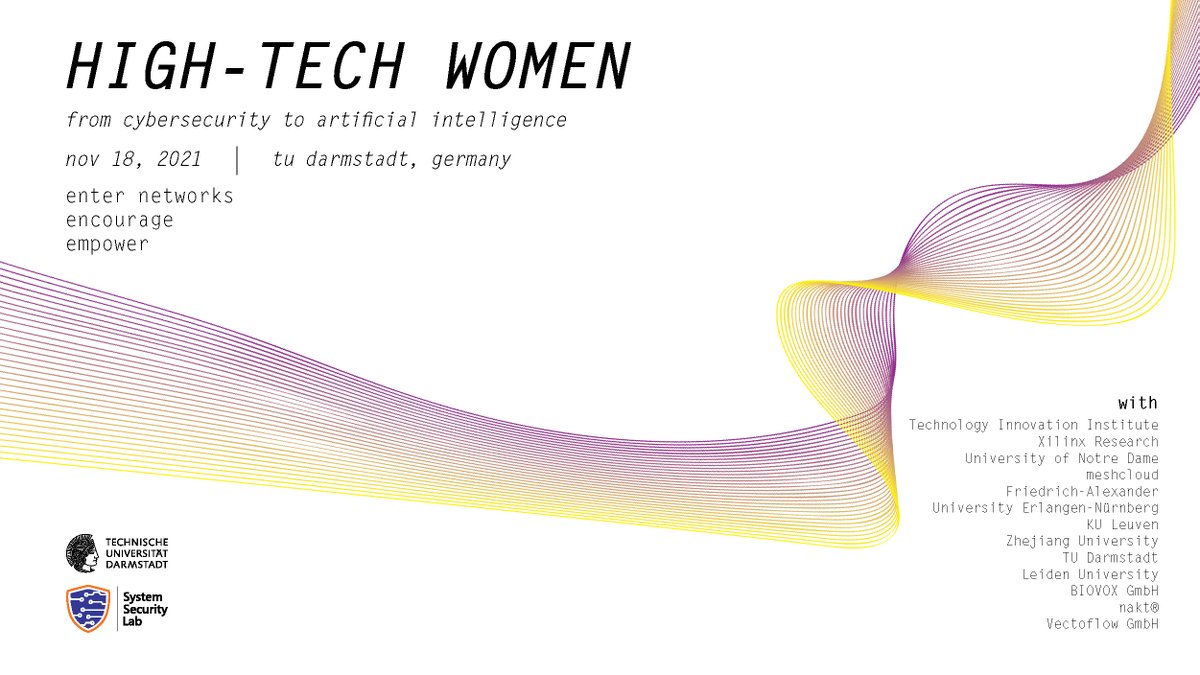
Attend a conference featuring talks by internationally renowned female speakers from all over the world.
"Empowering Women in Science: A Journey of Discovery and Inspiration. Join us!!" More information about the event on March 30th is available at https://t.co/PKaIaVu553.
Aufgepasst und zugehört. Prof. Ahmad-Reza Sadeghi spricht im neuen Podcast "Pod Save Security" mit Prof. Johannes Buchmann über Demokratie und Digitalisierung. Ab jetzt jeden Monat auf https://t.co/MBIxRFcFEb, https://t.co/qZ2TbBFExF oder https://t.co/SILS8NJdPR
Wir behalten das Thema #CoronaWarnApp im Auge:
Kontaktnachverfolgung: Weitere 50 Millionen Euro für die Corona-Warn-App https://t.co/2yPl6zCLv0 via @welt
#GhostTouch - capturing cell phones without contact. Together with researchers at Zhejiang University in Hangzhou, we have managed targeted attacks on touchscreens. More information here:
Researchers at TU Darmstadt's @RealSystemSec have succeeded in hijacking smartphones by faking touches on the touchscreen - remotely and without contact. Various attack scenarios can be realised with this "GhostTouch". https://t.co/Q2qGOPk6xF
#GhostTouch – kontaktlos das Handy kapern. Gemeinsam mit Forschenden an der Zhejiang-Universität in Hangzhou sind uns gezielte Angriffe auf Touchscreens gelungen. Mehr Informationen dazu hier:
Forschenden am @RealSystemSec der TU Darmstadt ist es gelungen, Smartphones durch Fake-Berührungen auf dem Touchscreen zu kapern - ferngesteuert und kontaktlos. Verschiedene Angriffs-Szenarien lassen sich mit diesem "GhostTouch" verwirklichen. https://t.co/1aqhb5s3Xs
Immer mehr Geräte sind vernetzt oder mit automatischen Funktionen ausgestattet. Sie erleichtern zwar den Alltag, doch sind sie auch sicher genug? Daran forscht ein Team am System Security Lab @CS_TUDarmstadt, das nun durch den Pioneer Fund gefördert wird. https://t.co/QXAyO3sQHu
We've finished our panel on research, innovation and #startups! Very refreshing to see so many interesting and inspiring female entrepreneurs sharing their insights with us. #HighTechWomen#TUDa