New article!
"Hidden in Plain Sight: The Covering of Patients' Eyes and a Microethics of Medical Photography"
This article is really the first foray into my second book project: a history of anonymity in medical photography.
Let me know if you'd like a PDF
https://t.co/PyV8S7pNHd
Today, we received the second proofs of our yearbook “History of Intellectual Culture” (@dg_history). Just a few more minor steps and @CharlotteLerg, @DrJanaWeiss and I as editors are ready to let it go to print. Publication later this autumn.
"When I learned that I had been sterilized … I was devastated. … I would be marked by the stigma of inferiority for the rest of my life."—Dorothea Buck
Dorothea was among 400,000 Germans sterilized under a Nazi law, passed in July 1933, targeting people with disabilities.
Yvonne Gavallér hat heute ihre Dissertation zum Thema "Wissenschaftstransfer zwischen Deutschland und Schweden anhand des Beispiels der Neurasthenie 1880-1920" erfolgreich verteidigt. Herzlichen Glückwunsch!
The term 'New Woman' was first stated by Irish writer Sarah Grand, late 19thc, relating to a growing number of independent women, including those calling for social change. This 1897 image shows a woman wearing the knickerbockers while a man in a dress cleans #WomensHistoryMonth
Thrilled to share with you our 2024 Call for Papers. Master's and PhD students researching the history of memory or emotions during any time or place in history are welcome. Deadline to email abstracts is 7 January 2024.
Please Like and Repost to help us share this invitation!
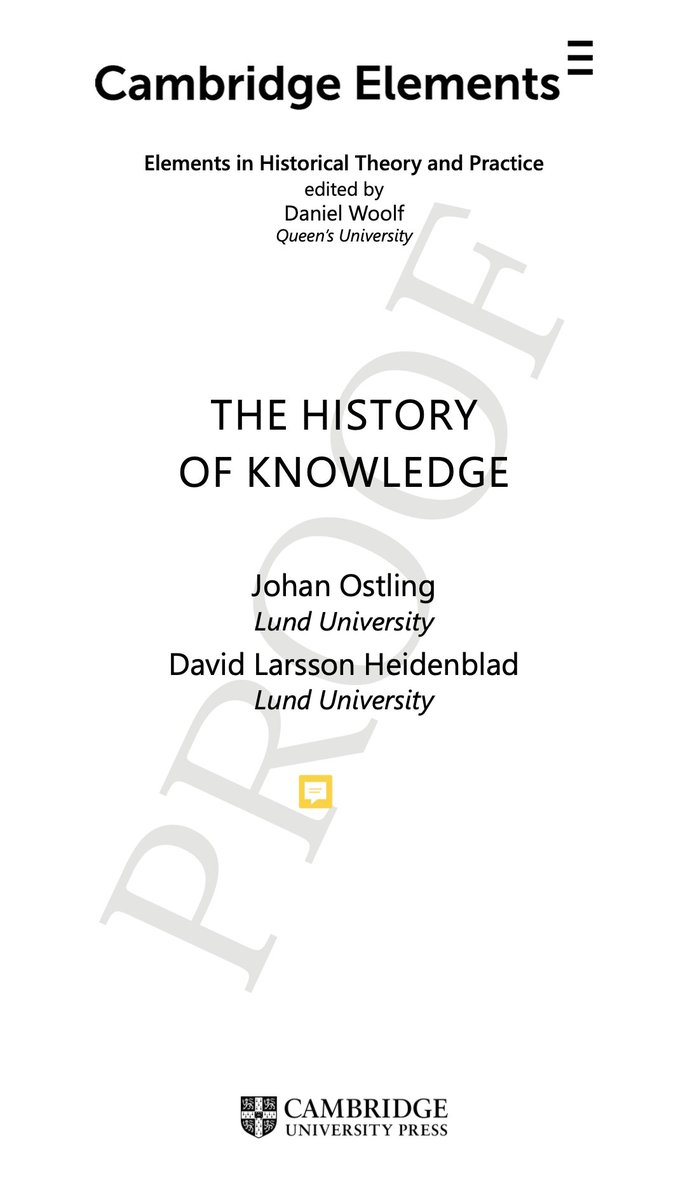
Reading proofs of “The History of Knowledge” (@CambridgeUP).
@DLHeidenblad's and my new book is due to be published in December. Open access and print.
BOOK LAUNCH:
LUCK’s first seminar this semester takes place on 18 September, 13.15–14.30 (CEST), and is a digital book launch of “Knowledge Actors: Revisiting Agency in the History”. Welcome to join us!
https://t.co/Tkl7qKxCje
From our archives Karen Chase's 2014 article looks to give the fidget its due and to initiate more scholarly conversation on the circle of issues that it generates: mind and body, subjects and objects, textual continuity and its disruptions: https://t.co/bYJTzqpxNo
The salary of a PhD student in many European countries is now higher than the typical starting salary of a UK lecturer, with a postdoc in Europe often surpassing a UK lecturer salary. Meanwhile, some top UK depts now require a published monograph for entry-level positions (1/2)
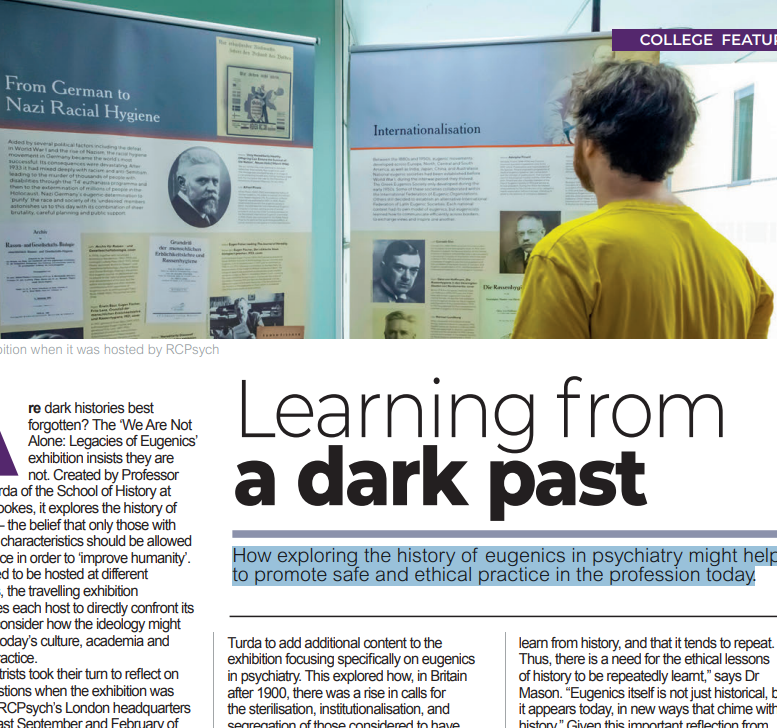
Learning from a dark past: how exploring the history of eugenics in psychiatry might help to promote safe and ethical practice in the profession today.
Check out the article in Insight about our recent exhibition with @mariusturda
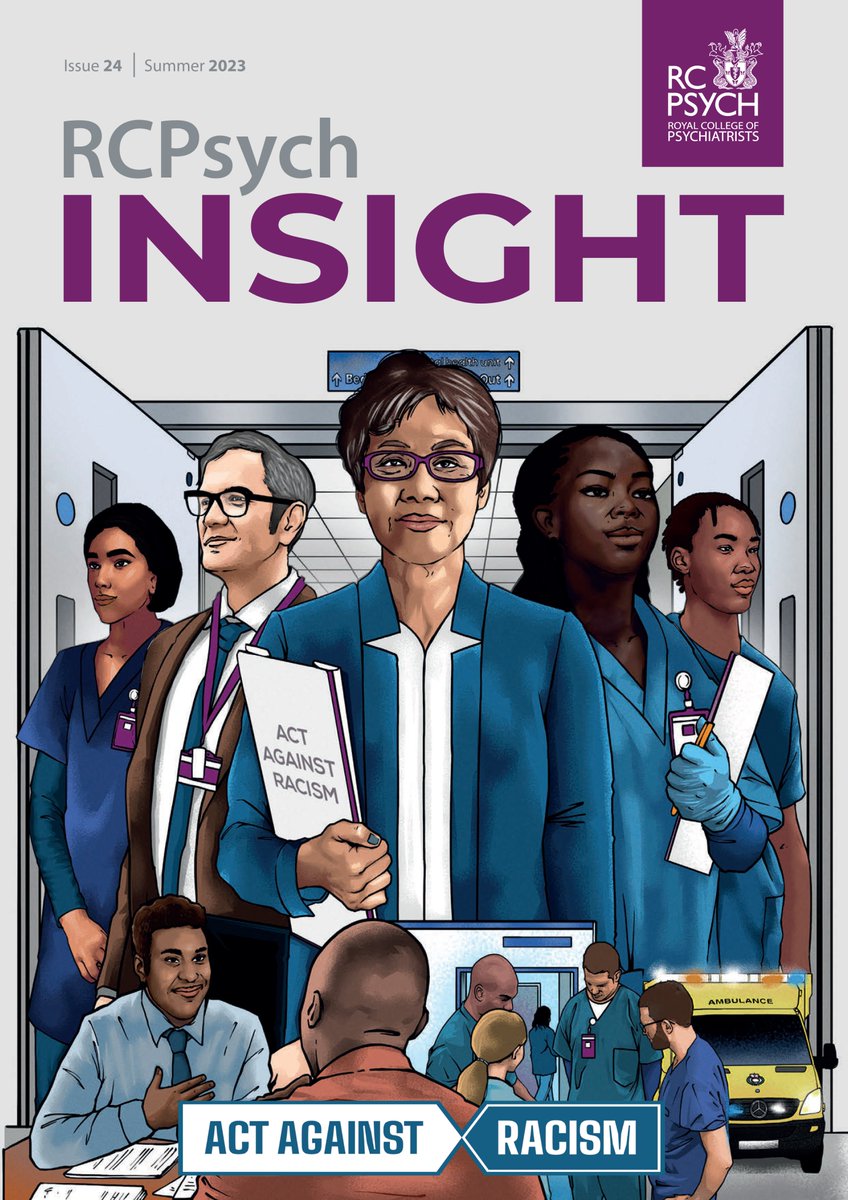
The last issue of #Insight highlights the launch of the @rcpsych's most ambitious and far-reaching equality & inclusion work to date: Act against Racism campaign. To have the exhibition on the legacies of #eugenics featured here as well it's just amazing!
https://t.co/VE7o1rwg3L
"In Britain after 1900, there was a rise in calls for the sterilisation, institutionalisation, and segregation of those considered to have undesirable psychological traits, which eugenicists believed were hereditary."
Prof Matt Cook celebrates #PrideMonth & his recent appointment as the UK’s first professor of LGBTQ+ history at Oxford! He shares his thoughts on his 18-year tenure at Birkbeck, celebrating how studies of queer history have evolved over this time: https://t.co/CBys5ByglC
I am a slow writer. And today it's even worse because I've happened across H. Erichsen's 'Methods of Authors' (1894) which describes the (vastly mythologised) writing habits of other authors. A morbidly fascinating thread #SlowWriterSolidarity#amwriting 1/-