Nice move. I'm just wondering why people *think* it's acceptable abusing this without getting themselves caught 😂 If you want OpenClaw why not use cheap alternatives - Plenty out there already.
Anyways hope now less outages on legit usages, thanks for the free credit!
Starting tomorrow at 12pm PT, Claude subscriptions will no longer cover usage on third-party tools like OpenClaw.
You can still use these tools with your Claude login via extra usage bundles (now available at a discount), or with a Claude API key.
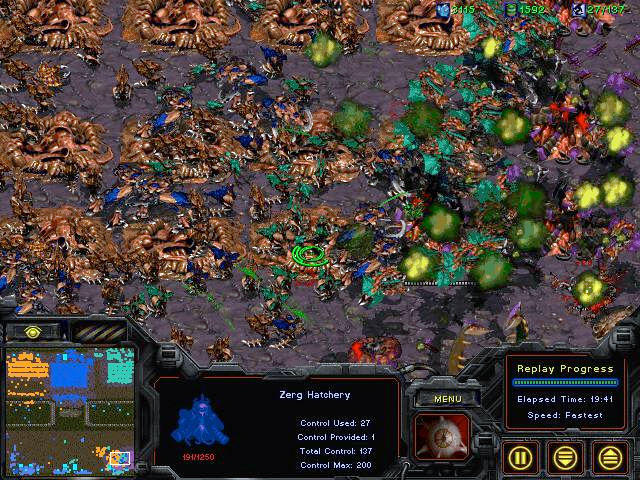
Still, when people complain about strategies (Zerg Rush) they mean "A dominant META and everyone's abusing it makes me feel repetitive and boring".
IMHO the "deal with it" approach only works when counterplay exists, however not always the case for games like TFT.
As I get older, it's fascinating watching history repeat itself or seeing the same phenomenon in many different examples. The latest one to catch my eye is PVP games and player excuses.
I remember going to the arcade and playing Street Fighter II or Mortal Kombat III and witnessing a variety of player excuses for losing. "You just spammed Hadokens" or "Kabal is cheap and unfair". It was always the game or the unfair strategies fault you lost! This was before the internet though, so each pocket of the world had it's own strategy that was unfair and witnessing it live was pretty cool to see.
Then it was Starcraft for me. Getting into that game and dealing with Zerg rushes when you liked to play Terran was just unfair and not fun. Why should I adapt when this strategy is clearly broken and shouldn't exist? But of course, for the real greats, Zerg rushing was a noob stomping strategy and learning how to deal with it was a big step in actually getting good at the game. The internet was still relatively new so it was harder to find sources to improve, but when you finally beat it and your opponent FF'd, it was so satisfying!
Now in modern times though, the same thing occurs where it's easier to blame the game and the strategy for losing a PVP game, but the current internet gives you reinforcement for that opinion, rather than incentive to improve. It's easier to go on social media and complain about a 52% win rate champ and have hundreds of people agree with you, than it is to device a strategy against it.
Or better yet, with the concept of patching, demand the game and rules change. Get the unfair strategy nerfed in the next patch if you can get enough people to agree with you! If that doesn't work, advocate for a ban to the strategy, and change the rules. Maybe Steve just needs to not be allowed so the game can be fun again.
It's really fascinating to study how modern communication has changed the approach to PVP across the entire gaming industry. I'm not smart enough on the human psyche and how it interacts with social experiences to have a solve, but it's definitely an interesting topic to see how different games tackle it. Watching the Tekken scene, or TFT, or CS, or whatever, all have a different approach and seeing how their players respond. One thing is true no matter what game it is though...if you want to get good, you have to learn and adapt. That hasn't changed in more than 30 years.
Ok, that's it for today. Hope everyone has a great week! Patch rundown is up, patch is on Wednesday, and then we get to talk Artifacts! Until next time, take it easy :)
As a player I prefer not to rely on one trick, as a game designer dealing with balancing issues that's why we always flipping levers and trying to create multiple viable ways to win.
"How did this ship? How did no one see that this would be a problem?" - A player of almost every game ever.
Oh they did. Trust me, someone on the team saw this was an issue, but the reality is due to the complex nature of people and leadership structures it's not always easy to guarantee the best result in game development. And where that can crop up often has to do with a company's preferred culture.
Take Nintendo for example. Nintendo is an extremely conservatively cultured top down approach. If the game director or someone above you says "We're doing X", then guess what...it's happening. The challenge was navigating those conversations to convince that leader that something was going to be an issue. Depending on the quality of that leader, the conversation could go well, or it could go no where. So sometimes you'd find yourself knowing something was off, but being unable to do anything about it. For the devs on the team, this can be extremely demotivating. If you had a good lead though, their experience and wisdom can help keep games on track and making the right decisions to avoid major issues.
Now take Riot as the opposite example. Riot is almost the opposite, and can often be bottom up in it's culture, empowering people to make decisions towards their projects. This can feel awesome, as even newer people on teams and companies can make major impacts by driving decisions they think make the best game. However, this can result in high experienced leads having to let their teams make mistakes and live with those consequences. As an example, I remember distinctly during Set 5 development telling Meddler that we were making Shadow Items (due to a lack of time and other options), and they were going to be kiss/curse versions of the core items. Meddler strongly advised me to reconsider, since every time League had tried kiss/curse, it had gone very poorly. I figured it was fine, we were a strategy game and our players would like that sort of challenge. At Nintendo Meddler could have simply said "Nope" and that would be that. But at Riot he had to watch as I made the mistake.
No matter where a company falls on this spectrum, eventually a decision has to be made somewhere by someone. And no one, no matter how skilled or experienced, has a perfect track record. All you can do is if you are in the position to make key decisions, make sure you take everything into account. If you're a lead with a team yelling at you not to do a thing, understand why and don't just assume you're right. If you're an IC with leads warning you to be careful before shipping something and waving big red flags, stop and consider that you may be wrong and you're missing something. It's tough...but it's the job.
Ok that's it for today. And yes for those of you that like detecting undertones or reasoning for posts, this totally came up from a certain gold augment. So yeah... Ok now I'm taking the family out for waffles. Until tomorrow, take it easy!
One of our goals going from Remix Rumble to Inkborn Fables was to increase how often players were able to reach higher levels, and hit that end game fantasy more often.
With Remix Rumble, we would see low elo players hit Level 10 in around 3-5% of their games, while high elo was 5-9% of their games. It felt bad for low elo players to only experience this 1 in 20 games or more, so we set out to increase that. However we needed to be careful to not bloat it too much, as we didn't want it every game.
We changed some of the XP numbers back and forth during PBE, there was the new loot system that launched in 14.5 that was generally more generous, and then we have the encounters. All of this took steps to making this true, so the question is, how did we do?
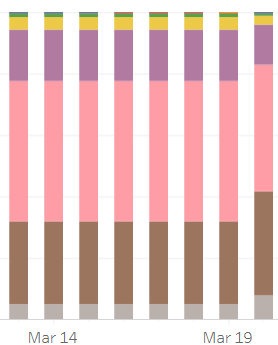
It's still early of course, but from the first day of data, low elo players are making it to Level 10 8% of the time now, while high elo is 10%. This is good news in that we moved up low elo without affecting high elo too much...but it's still early. The real test will be in a week or two.
Level 9 went from 24-27% in low elo to 34%, and 38-42% in high elo to 42%. So far the plan seems to be working! I'll check again in around two weeks, and if we're still looking about the same, that will help decide if we need to make any more adjustments...but so far this looks to be hitting our goals.
As you play games this weekend, keep track of how often you hit Level 9 and 10. Is it around these numbers? If not, maybe there's areas to improve your econ! Something to keep an eye out for. Happy Friday, and I look forward to playing ranked all day Saturday. Until then, take it easy :)
Absolutely agree that as a game designer, making an actual working idea is 100x harder than throwing some random stuff on Reddit. Since that one idea often leads to 100 more questions that need to be answered.
Augments are probably the single most important addition to TFT that weren't in the original game. They provide the game to game variance that TFT needs to be replayable for hundreds of games each set, and create narratives around each experience for the player.
As a designer, the most interesting thing about the augment space is that it's essentially a blank canvas for design space. Literally anything you can think of could be an augment. Pretty much every other set mechanic, if it hasn't already, can fit into the augment space. There's just no limit! An augment that says "Now dragons show up in your shop"? Sure why not! That elegance of the "Pick one of 3" space combined with any modification to the existing core TFT game really is something we can build on forever.
However with infinite possibilities comes the need for rules, limitations, and restrictions. TFT is a game that continually needs to innovate and push the limits of its own rules, but in the augment space that hasn't always been crystal clear where the line is, and to keep innovating we need to keep pushing that line.
Sometimes when a design is presented to me, it's obvious it will be a big success. Augments like Golden Egg and Built Different promote unique play patterns and provide new high moments, that as long if balanced properly, are shining examples of what can be done in the augment space.
On the other hand, sometimes I have to shoot down designs that are just clearly not right for TFT. I've talked about the augment "Rushdown" before (Your team gains 80% attack speed for the first 8 seconds of combat) and how it just accelerated combats in unhealthy ways. It was pretty easy to shoot this one down.
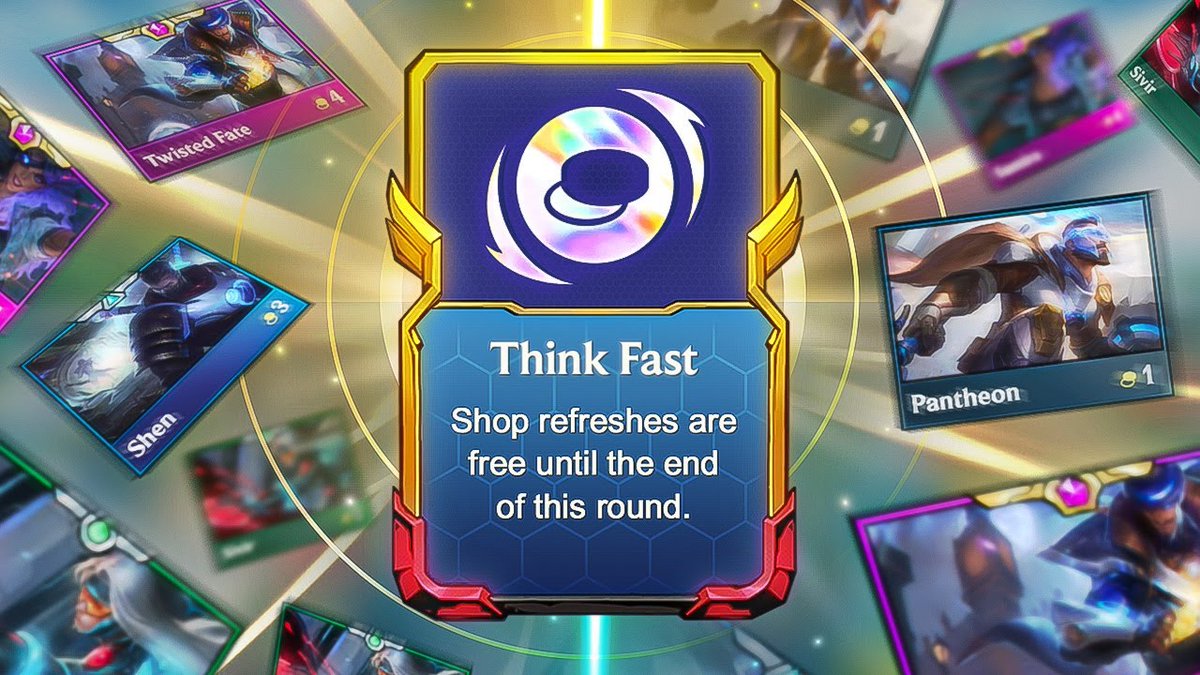
But sometimes, it's not perfectly clear. Augments like Think Fast and Blank Slate are augments that the conservative side of me knows the risks and could easily just block, but the side of me that is searching for that innovation in the space, decides to give it a try to see how players will react. Because they are both clearly FUN...but sometimes the power masks the actual levels of fun. They are risks that I sign off on, and that's on me when they don't end up healthy for the game.
Now here's the moral of the story. It's VERY easy to see a bunch of new augment pitches, put on my conservative high level player hat and say "Nope, too risky" and shoot down these proposals. Saying something won't work is easy, costs nothing, and statistically you're probably right. Most ideas and creations are bound to not work. Shooting down ideas and being right, doesn't make you smart. The hard part is taking an idea, seeing the potential, and helping it rise to success. You take the risk and put your judgement on the line to prop something up and get it out for people to enjoy. THAT'S the hard part of being a leader.
This lesson can be applied outside of game design as well. It's easy to claim things are bad and predict they won't work out, and you'll probably be right. That's just how making things works. But it's also just the easy way out.
TLDR - Making new augments is fun. Can't wait to show you more! Until then, take it easy :)
One of the hardest parts about working in the game dev industry for everyone involved, is cancelled projects.
Games can get cancelled for a lot of different reasons. Maybe the core of the game wasn't shaping up to be good enough to meet company goals. Maybe the company is changing their strategy and has decided they don't need that game. Maybe the cost of taking the vision to the finish line was too high and not worth that cost. Maybe the company lost faith in the team leadership that was running the project. These are just a few of TONS of possible reasons.
As players, the thing you can do is not jump to conclusions or make assumptions about what happened. As I talked about earlier in the week, a lot of devs on a cancelled project might be amazing devs who did great work, and the reason for the project being cancelled might be out of their control.
For these devs, depending on the project the situation, it might be pretty rough for them. If the game was announced, at least they might be able to point to a trailer and say "I worked on that part" or talk about the game at least. But I've seen people work on games 3-5 years or even more that never saw the light of day, and these devs can't even mention its existence. That can be pretty demoralizing.
If you're a hiring manager, keep this in mind when you interview potential candidates. You can find some amazing talent if you focus on asking about their individual impact and ignore the overall project they may have been working on. Most of the time it's out of their control, so ask how their level worked, or the code they wrote, or whatever, and focus on what impacts they made at the individual level.
If you're one of these devs who has a gap because of a cancelled project, focus on highlighting the work you did and how driven you are. "I took the goals given by the director and made a level that highlighted the core gameplay in unique ways, focusing on keeping a good level pace." The more you can talk confidently about it, even in the abstract, will show how much you cared and tried to impact the project in a positive way.
In my 19 years, I've been part of two cancelled projects, so I'm pretty fortunate. One was at Nintendo when I was still a contractor and associate designer. I made the best enemies and levels I could, and did everything I could to try to talk to other people on the team and improve the game. But especially when you're that junior, it's near impossible to make an impact large enough to change a doomed direction. Almost every dev goes through this at some point, so if you have, don't feel like it's a personal failure.
The second one, I was the Design lead on. And this message goes out to all the leaders out there. Please...PLEASE avoid sunk cost fallacy and trap people into a project that will take large chunks of their career. One of my proudest moments in my career was as the lead of this project, we had been working on it for 10 months, and I went to my bosses and said "We need to cancel this. It's not doomed, but I can see where this goes, it will take 4+ years and won't have the impact you want." I saved a TON of wasted time by making a tough call that could have made me look like a failure, since it was my project to lead. Someday I'll tell more about this, but leads out there, you have a responsibility to your teams. Make the tough calls.
Ok, now I'm going to brave the rain to get breakfast on campus. Have a good Thursday everyone and take it easy :)
TLDR - We're lowering item drop variance in 14.3 as we head into the final leg of the competitive season, and then will be launching a larger scale update to in game loot distribution in 14.5
TFT is the kind of game that is most fun and successful when every time you play, the game feels a bit different, and you get a unique experience. Much like the roguelike genre, that game to game variance keeps each time you play unique and full of wonder. What type of game will it be this time?
Over the years, we've found more and more successful systems that have successfully added this variance. Augments and Portals right now especially change up each game in unique ways, and the combinatorics mean there are so many potential unique experiences. The shop alone accomplishes this in a big way as well.
But as we add these systems and outcomes, it's important to realize that not EVERY system needs to be something that increases potential outcomes. If the scope of possibilities gets too wild, then the game will reach a point where it's almost unlearnable except by the most hard core. As an example, imagine if every game the amount of XP to reach each level was randomized. That would likely be too much.
This leads us to items and loot orbs. Back, long before we even had augments, we relied on the orb drop system to be one of those sources of variance. Some games you might get a spatula, some games you'll get more gold than items, etc. And it worked for a time. But as players have gotten better at the game, their understanding of fair has changed as well. Being down two components but up 12 gold on 2-1 is no longer variance, but just unfairness as we understand truly which outcome can be optimized better.
We still want there to be SOME variance in the systems output, but likely a whole lot less since we've been able to add that needed variance in other places. So we've been working on a fairly large change to the system that will include some surprises, and lead to more fair but still variant game experiences.
The challenge is, that system will be ready for patch 14.4 at the earliest. That's the Remix Rumble Championship patch. Probably not a good idea to launch a system overhaul that patch. So instead we will be aiming for the patch right after, 14.5. Makes sense. But in the mean time, this would mean no changes before the main competitive season, and right now this system is bearing the brunt of the perceived unfairness at the highest level.
So as a temporary measure, in 14.3 we will take the current system and lower it's max item variance from 2 to 0. The short version of what this means is that all players will always have the same number of item components, and essentially gold starts are gone. It will leave the overall system a bit more bland than we'd like (though not completely, gold orb drops still exist), but for 2 patches late into the set and to help competitive integrity, the trade off is worth it.
I look forward to sharing the details of the changes in the future, but for now, this should make for another exciting competitive circuit where the best players can really shine. Until then, take it easy :)
@ClementKChu No this is much weaker than any reroll comps, 3* Bard + Kaisa only 4.29 on average, without Lucian 4.66 on average. Considering 3 items on each completely not worth the investment.
Luckily I was awarded a full GDC pass years ago by the IGDA scholarship program and still grateful for that experience. However tbh the price tag is still too high including travel costs. The Expo pass is mostly for networking so maybe only works for locals though.
I think the one important principle of game balancing is that it's never about creating anything mathematically identical for all parties, but about creating imbalanced metas that reward people who know how to take advantage of them.
Okay, I’ve researched enough on this subject to know whats going on
Riot Games is WASTING MONEY for NO Reason on Teamfight Tactics, which is
EASILY AVOIDABLE, and I’m going to write in the article below.
Right now, TFT is well funded, but they’re being very inefficient with its usage and starting to waste.
And I think its important to discuss and TALK about this.
This Article will be VERY LONG, and VERY BRUTAL. This article is Offensive. I am sorry. It is. But I don’t want Riot to STOP FUNDING TFT. So here we start.
#1 What is this article About
This article is to discuss whether or not the TFT Balancing Team, is just a complete waste of money, that provides no value whatsoever to the gameplay experience in TFT,
And Even worse, since they patch it biasedly towards their own preferences and not based on the Majority*, ruining the gameplay experience causing a lot less players to be interactive with TFT.
è The Balancing Team in TFT, if Balancing is all they do, then they are a waste of money.
This article will also discuss the money wasted in the Tournament scene in Korea.
Majority of Korean Influencers are Youtubers that don’t play TFT, most Casual Korean TFT players, that buy eggs, do not even know there is a tournament due to VERY POOR marketing.
The tournaments in Korea, is just a charity, towards game addicts that have an average salary of less than 2,000$ a month, driving for school kids. (Real case Example)
It does not make the game more popular whatsoever.
è Tournaments in Korea, does not provide any Marketing Value whatsoever, so they are a waste of money.
#2 Why are we writing this Article.
Because I am very realistic Person.
Right now, Business is well for TFT,
Good playerbase, a LOT of people buying eggs, decent profit considering we didn’t expect much from it in the first place.
And what happens to EVERY empire or individual that gets rich?
They get inefficient.
There becomes a lot of Unneeded fat stacking,
And eventually that starts BLOCKING ARTERIES.
These small inefficiencies are going to STACK, and once business goes bad, it won’t look so small anymore.
Twitch Ran out of Korea, and I am terrified that Riot Games will stop Funding TFT due to these inefficiencies.
Riot games is a BUSINESS, not a Charity owner. And I don’t want be the one PUNISHED for someone else’s mistakes. And I am going to make sure I prevent that here.
#3. Credentials
For those who don’t know me, My name is Bebe872, from South Korea
I have been Rank 1 in All Major Autochess Game Genres such as, and have over 20,000 Hours of gameplay experience, due to my work ethic of 70~90+ Hrs a week.
Rank 1 Global Dota Underlords
Rank 1 Asia Pacific Hearthstone Battlegrounds (Asia)
Rank 1 Korea, North America, Europe West, and Global TFT Season 3,4,5,6,7,8,9,10
Diamond 1 Season 4 League of Legends Korea Server
Legend in Hearthstone
Rank 7 Global in Cyphers
The University I graduated is Ranked #9, in Business Management within my Country
GPA 4.2, with a Full Grade Scholarship for 3 years.
Vice School President During High School,
ROK NAVY and a Participant of the Somalian Expedition
Son of a Economics Professor, who Graduated the Equivalent to Harvard Law School in prestige, in South Korea.
I come from a good background, and I am very passionate about games.
#4. TFT Balancing Team -> Is it a Waste of Money?
A. I do not see any value to the balancing team, if their job is ONLY balancing and nothing else.
B. The balancing has been receiving bad feedback for YEARS, not just a day or two. And a lot of people just GAVE UP, because they seem hopeless.
C. TFT Balancing does not Cater to SKILLED players NOR Casual Players. Meaning its NEITHER FUN or Competitive.
D. The Balance Patches they do are VERY SHORT, and probably something most workers can do on a daily basis. But they do it in two weeks. Meaning that they barely do any work in the first place.
And Many more but the MOST IMPORTANT Factor is C.
TFT Balancing IS NEITHER FOR SKILLED PLAYERS NOR CASUALS.
NOBODY WINS HERE.
#5 TFT Balancing is Neither Skilled for Competitive players NOR FUN for Casuals.
TFT Fundamentally cannot be a Skill Game nor Competitive. This is because FAIRNESS is a core part of competition, and if TWO PEOPLE start the same game, and are offered different resources not on their abilities but by pure luck, such a game is NOT COMPETITIVE.
Even if TFT was Perfectly Balanced in Comp distribution, it still wouldn’t solve the fairness issue, so it can’t EVER CATER to Competitive Players Theoretically.
At best it can Balance out comps, to give more Viable strats, to reward Deck Knowledge. That’s it.
So making the game FUN should ALWAYS be the priority,
But TFT Set 10 took a really WEIRD TURN.
They TRIED to make it “more competitive” I think for the Las Vegas event?
But they didn’t make it more competitive to ALL players,
The feedback Teamfight Tactics got, was from the majority of NA players that are in Master+ Online.
And their Major Playstyle is Level 8 into 4 Cost Value. IT HAS BEEN LIKE THAT SINCE SET 3. MAYBE EVEN LONGER.
That is their CULTURE, THEIR PERSONAL PREFERENCE, and it may seem like the majority, since the culture there is unified on the subject and are very vocal, but they are a VERY SMALL MARKET of people that does not represent the entirety of TFT.
Which is the reason why TFT, has been focusing on Buffing 4 Cost Metas for a LONG TIME, by FORCE when they don’t even have to. In Set 10. Which explains the most recent B-Patch.
#6 Casual Players
The Next three Opinions have been popular with Casual Players
A. I LOVE REROLL DECKS XDD
B. I don’t really care about the patch, don’t even read them :D
C. I like TFT, because of the various strategies it provides, but I hate forcing something.
My Friend, who is a casual player spent over a Thousand Dollars by herself. Just because she wanted the Kaisa Legend.
She is a good representation of the Silent Majority, who loves TFT casually as a full time worker.
And these are the type of players we NEED TO FOCUS ON, to increase the marketability of TFT. I am seriously Concerned how much TFT Balancing has Deviated away from this route.
Okay the Article is Way too long, I want to talk about the money riot is wasting in Korea too, but this is it for now.
I want TFT’s Balancing Team to Explain as to why they keep making bad balancing decisions nearly every single patch, in very thorough detail.
Because it Affects me. It affects everybody that loves TFT. And wants it to thrive longer.
And I am sorry for being Toxic, But I strongly feel this is an issue we NEED TO TALK ABOUT.
@CuewarsTaner It’s interesting, isn’t it more fun just to try different comps offered by the game rather than one trick for the best comp? This applies to both casual and competitive players. At least this set I’m happier to pivot knowing those who don’t gets an easier bot4😂
@JeanAnimate@nestormronda@LAMORKITU_Z si tu développes pas un projet de fin d'étude aussi épique, tes parents auront gâché 5 ans d'études sup en argent pour rien littéralement.