Wishing Everyone a Happy New Year filled with love, laughter, and cherished moments with family and friends! 🎄❤️ May the joy of the season bring you peace and happiness. May your heart be light and your spirits high this holiday season and always! 🌟🕯️
Mark, you are such an emotional whining cry baby.
- Antoine Semenyo: Wanted only Manchester City. Ruben Amorim called him, Berrada had a meeting with him but he only wanted MANCHESTER CITY.
- Yan Diomande: Reported cost by Athletic is €130M. We spent a fortune getting our Frontline just last season. Moreover, the report have him favouring a move to either Liverpool or PSG.
- Anderson: He wants only MANCHESTER CITY. He follows only Manchester City. Unless Manchester City pulls out of the deal, he is City bound. Plus, he is going to cost £125M + extra add ons. We all agree we need at least 3 midfielders for next season, are you going to run GoFundMe campaign to get us extra budget? Or you think this if football manager 25?
- Sandro Tonali: Firstly, he doesn't fit into what Micheal Carrick wants to play according to strong reports. Secondly, Newcastle aren't in a position to sell. They recently just scammed Barcelona about £80M for Anthony Gordon. So that means one thing, Sandro Tonali will cost a fortune.
- Morgan Rogers: He seems to be on his way to Arsenal. Micheal Carrick loves him but just like every other sensible coach, board, directors will do, you attack your important position before strengthening other areas of the team. We are so featherweight in the middle of the park, you don't expect us to target a position where we have at least 2 person in the team occupying it.
We aren't walking away. We are strategic.
We have signed Ederson, and we are set to move for Mateus Fernandes. And if sale of Ugarte occur, Alex Scott or another player as the third midfield signing.
Unlike City, Arsenal and co that have quality and quantity, we are lacking in both.
You don't expect us to move like we have got a blank cheque to spend.
I SUMMARIZED THIS EXCHANGE
🇿🇦: We are against illegals in SA
🇳🇬: But I am not illegal
🇿🇦: We don’t want foreigners who take our jobs
🇳🇬: I created jobs for South Africans
🇿🇦: We just want you to leave our country even if you created jobs & are documented
🇳🇬: No problem, pay what I invested, I will leave
🇿🇦: We will see you on June 30th
NOTE: That business might get destroyed & the owner killed if this issue is not handled swiftly.
🇦🇷🇩🇿 A lot of people are saying Messi should’ve seen a red card 🟥 here, but if you really take a closer look at the situation, analyze his body position, consider the angle of his foot, factor in the movement of the Algerian player, take the emotional context of the match into account and seriously ask yourself why Messi’s foot ends up exactly there…
you’ll come to the only logical conclusion:
That is absolutely a red card.
🚨🎙️ Roy Keane on Messi’s career ending tackle overlooked by VAR and the referee ;
🗣️”After the match yesterday all you see is Messi’s praises everywhere, the hype, the headlines, the hat-trick talk. Yeah, maybe he deserves some of it — the lad can still play.
But no one wants to say the truth. No one wants to address what went wrong yesterday.
That challenge was an absolute disgrace. Late, studs up, straight into the Achilles — career-ending territory. On any other player, anywhere else, it’s a straight red card and you’re marching off before half-time. But not when it’s Messi.
The referee bottles it, VAR takes a quick look and says ‘nah, carry on lad.’ Give me a break!
This is the World Cup, the biggest stage in the game. This is where the rules are supposed to mean something. Not bent, not softened, not ignored because of the name on the back of the jersey. Players have been sent off for half as much in this tournament. Where’s the consistency? Do the laws of the game suddenly not apply when it’s Lionel Messi?
This is why the game’s gone soft. Big names get protected, the rest get crucified. Absolute joke of officiating on the greatest stage of all.”
As brilliant and utterly irrepressible as Lionel Messi is, there have been a few occasions during his illustrious career when opponents — and certainly opposition fans — have suggested that he has received “special treatment” from referees.
What is certain is that, between scoring his first and second goals against Algeria, he got lucky. A challenge on Algeria captain Aissa Mandi, who was caught by Messi on his right calf and Achilles tendon, could have earned at least a yellow card — and plausibly a red card — but Polish referee Szymon Marciniak was content to award a free kick.
It was a strange incident. Mandi was in control of the ball, going nowhere fast, and there was little prospect of dispossessing him from Messi’s position. To make a lunge like that, with his studs up, seemed incomprehensible, never mind dangerous.
Special treatment? At the very least it was lenient refereeing. A yellow card would perhaps have been the most widely expected outcome — a red card second — but Messi was certainly lucky to get away scot-free.
✍️ @OliverKay
FREE TO READ: https://t.co/qmXtQ0ErQN
SpaceX just acquired Cursor for $60B
> be Cursor
> 4 MIT students start a side project in 2022
> build the AI coding tool developers love
> hit a $10B valuation
> decide copilots aren’t enough
> move into models
> need massive compute to compete with OpenAI, Anthropic & Google
> meanwhile xAI is losing the coding race
> realizes catching up could take years
> skips the line
> buys Cursor for $60B
> Cursor gets compute
> xAI gets the coding leader
> founders become multi-billionaires
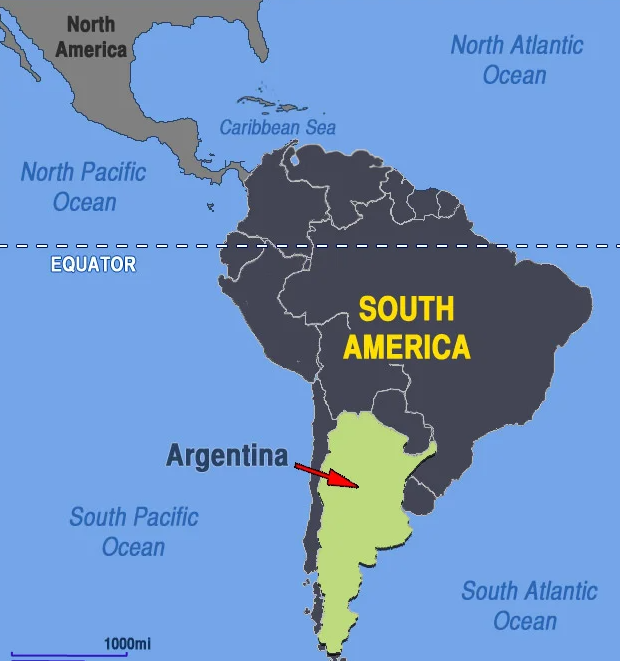
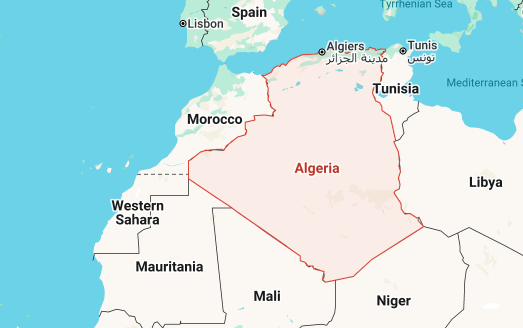
Argentina v Algeria is the World Cup’s only group-stage match between the largest Spanish-speaking country and the largest Arabic-speaking country in the world.
Argentina is the largest country where Spanish is the dominant language. Algeria is the largest country where Arabic is the dominant language.
Stay tuned for more cutting-edge, geography-based World Cup analysis.
The underrated stars of the World Cup have been the Asian goalkeepers.
All 5 we’ve seen have been superb.
Al Owais 🇸🇦 - 9 saves, .5g prevented
Beach 🇦🇺 - 9 saves, 1.5g prevented
Abunada 🇶🇦 - 5 saves, .8g prevented
Suzuki 🇯🇵 - 4 saves, .2g prevented
Kim 🇰🇷 - 3 saves, 1.1g prevented
Great Wall Of AFC.
I’m not a seer, but I’ve watched football long enough to understand patterns.
When Spain drew against Iraq in that friendly, people said it’s just a friendly.
Friendly games are not just friendlies anymore, especially when they’re played close to a major tournament.
Those games are played to try out systems. They’re played to test the soundness of technical relationships on the pitch and define methods and balance. There’s also something about winning games, just any game at all, it raises your confidence, puts you in the mood and when you don’t, doubt creeps in.
Pre-tournament friendlies are like preseason games. That’s when the tournament begins.
That draw against Iraq showed that they struggled to break teams down and we’ve seen it from the Cape Verde game.
Now the conversation internally will be seeking solutions. What can change?
Iraq played a draw against Spain.
Lol.
Football has totally turned around. Systems are so close now. That gap is increasingly shrinking.
It's not a question of who started for Spain. They had good players on the pitch. Times have changed. Even if it's a friendly match, you don't go into these games now thinking you own the day. Football has never been this close.
Like we saw Morocco make it to the semis at the last World Cup, there’ll be shockers this time too.
Part 5. East Japan and West Japan run on different electrical frequencies. This has been true since the 1890s, when two city governments bought equipment from different countries and nobody caught the problem until the grid was already built. In 2011, the split became a crisis.
Japan runs on 100 volts, the lowest household voltage of any industrialized country. The US uses 120V; most of Europe and the UK use 230V. At 100 volts, a shock delivers about one-fifth the energy of a 230-volt shock, because electrical power scales with the square of the voltage. This is why Japan can safely run a simple flat two-pin plug with no earth connection on most appliances, the opposite of Britain’s approach.
But Japan’s 100V standard applies across the whole country. The frequency does not. In the 1890s, Tokyo Electric Light Company imported generators from Germany’s AEG, which ran on 50 cycles per second. Osaka Electric Light Company imported generators from America’s General Electric, which ran on 60Hz. The two cities built their grids independently. By the time anyone saw the problem, too much infrastructure existed to fix it.
Today, East Japan (Tokyo, Sapporo, Sendai) runs on 50Hz, while West Japan (Osaka, Kyoto, Nagoya, Hiroshima, Fukuoka) runs on 60Hz. The boundary follows roughly the Fuji River in Shizuoka Prefecture. Frequency converter stations sit at the border, but their combined capacity in 2011 was roughly one gigawatt, about the output of a single medium-sized power plant.
In March 2011, a magnitude-9 earthquake and tsunami took 27 gigawatts of generating capacity offline in East Japan. Rolling blackouts hit Tokyo. West Japan had surplus electricity it could not move east in any meaningful quantity. The converters were the chokepoint.
The electricity crisis in Tokyo during 2011 was partly caused by a purchasing decision made in the 1890s by a city government that no longer exists.
Japan has since expanded its converter capacity and added interconnections between East and West. The two frequencies still haven’t been unified. Estimates put the cost of doing so in the trillions of yen.
The British plug’s shape was locked in by a 1947 safety committee. Japan’s split grid was locked in by purchasing decisions made in the 1890s. Neither has been changed since.
Your phone charger can electrocute a toddler who pokes a fork into the socket. The British plug cannot. That difference comes from a 1947 engineering project that refused every shortcut and turned a household plug into one of the most deliberately safe objects ever mass-produced.
Britain published BS 1363 in 1947, built for the post-war housing boom. The country was wiring millions of new homes at once and needed one standard that would work safely for everyone. They picked the most paranoid option available.
The earth pin (the large top prong) is longer than the other two. When you push a British plug in, the earth pin goes in first. Inside the socket, it presses a lever that opens two metal shutters covering the live and neutral slots. A fork pushed into an empty British socket hits only shutters. The shutters block it.
The two conducting pins are also coated in plastic for their lower half. A plug halfway out of the wall is still safe to touch. You would have to pull it completely clear before any live metal is exposed.
Inside every plug is its own fuse. UK homes wire their sockets in a loop called a ring circuit, which runs at 32 amps, enough to melt a lamp's cord if the cord fails. So each plug carries a fuse matched to the appliance: 3 amps for a lamp, 13 for a kettle. When something goes wrong in your appliance's wiring, only that plug's fuse blows.
The standard US plug (flat two-pin or three-pin) has none of the pin coating and no individual fuse. American building codes began requiring shuttered outlets in new construction in 2008, decades after Britain made shutters standard. Even those newer shuttered versions lack pin coating and plug-level fuses.
Britain's plug is bulky because a fuse, a shutter mechanism, insulated pins, and three contact prongs all need room. The plug looks the way it does because safety engineers refused to sacrifice any of those features to make it smaller, and that decision is now 79 years old.