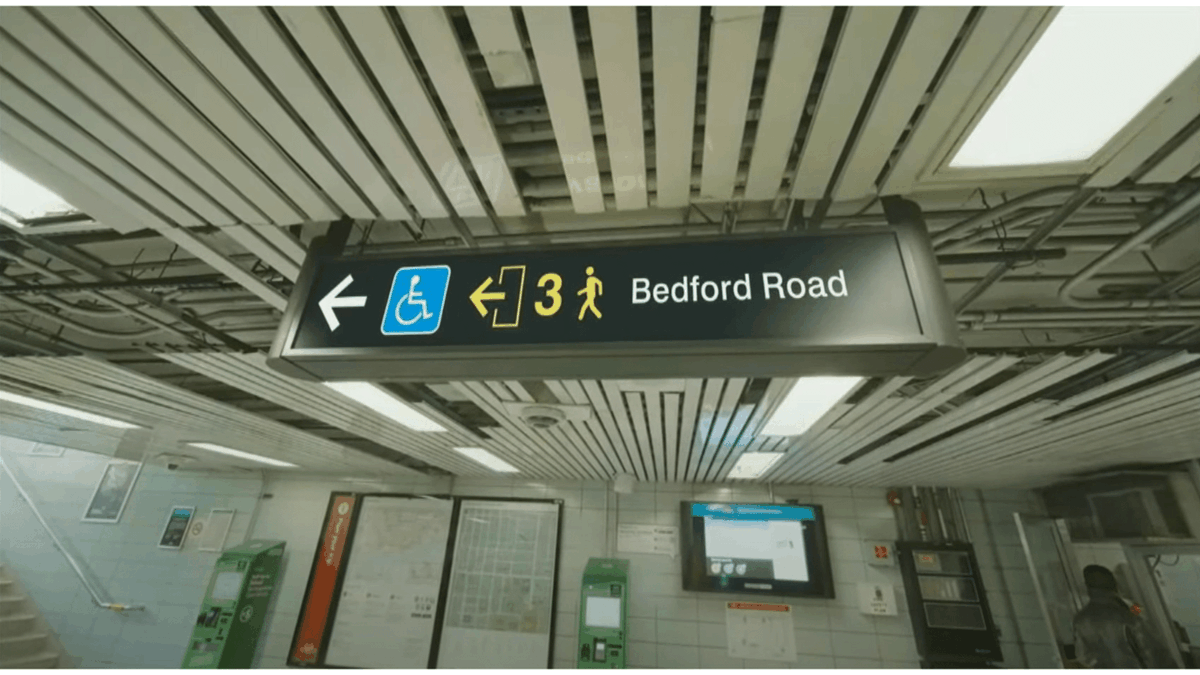
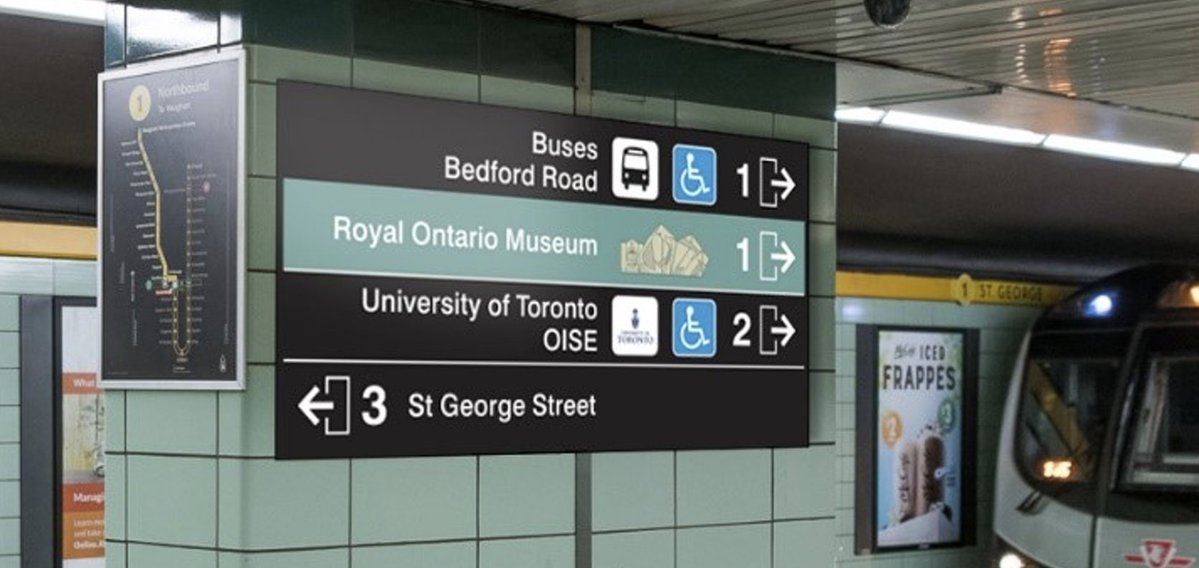
Exit code is at the same hierarchy as station identification and line number, which is inappropriate and not self-explanatory. The goal of the main signage should be solely to identify a transit facility. Exit code should be de-prioritized and placed on the door/wall
New exit wayfinding at King Station.
Good start but already introducing inconsistency between signs. Exit B1 only displays King (North Side) but lists King East and Yonge on other sign. Exit B2 displays streetcars and King (South Side) but not listed on other sign.
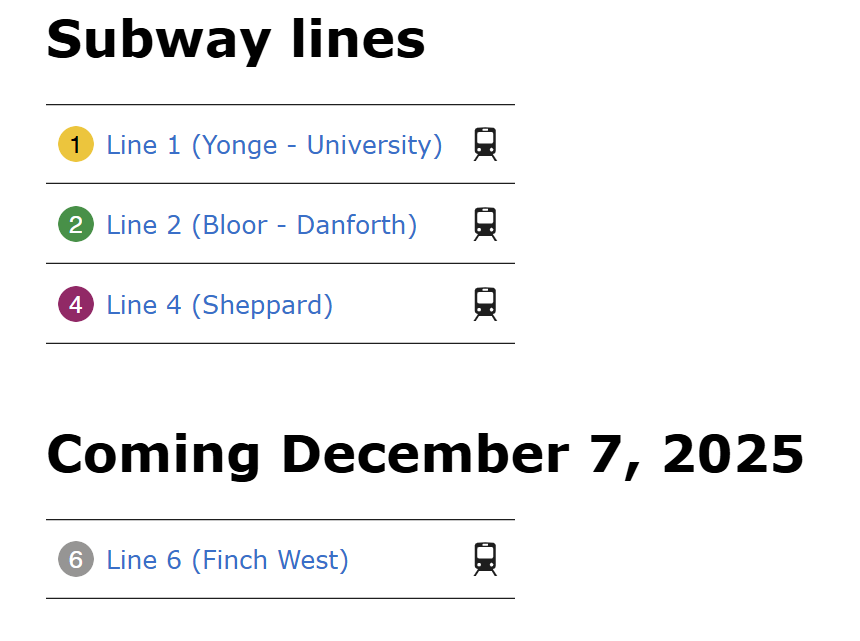
Small detail from the TTC website. The subway/light rail pictogram has been updated and is now consistent with the Metrolinx subway/light rail pictogram.
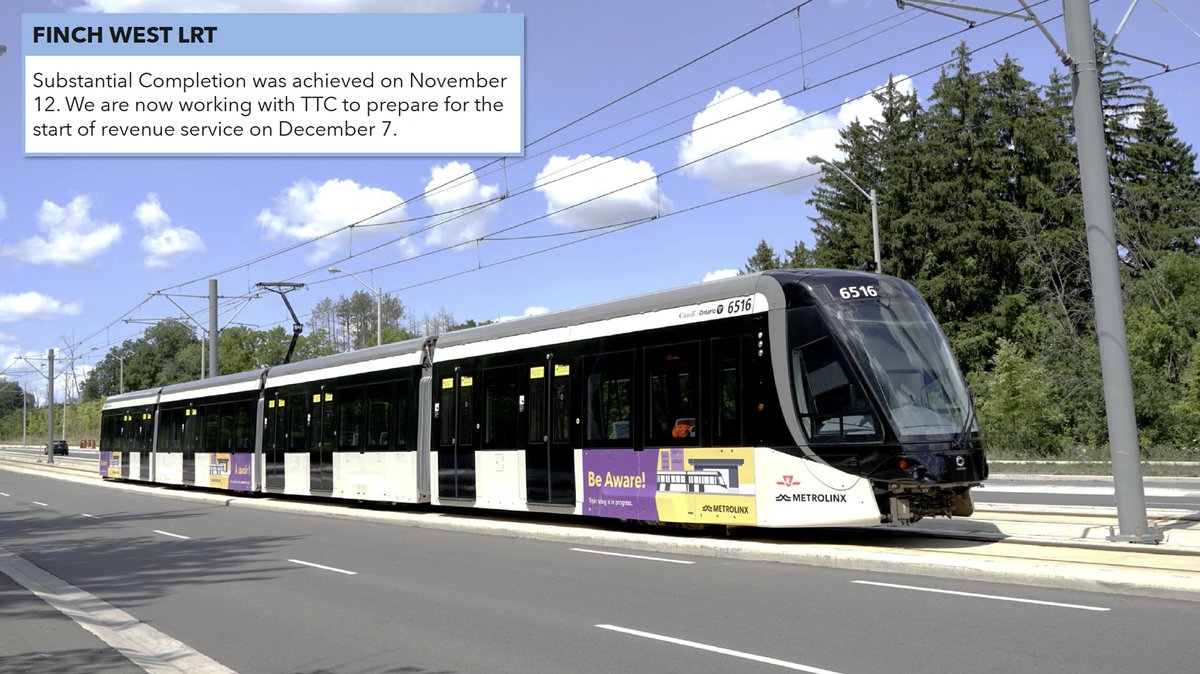
Upcoming Metrolinx board meeting confirms that December 7 is the planned opening date
Note that the line was handed over to the TTC on November 12, and the TTC decides when to open it, not Metrolinx.
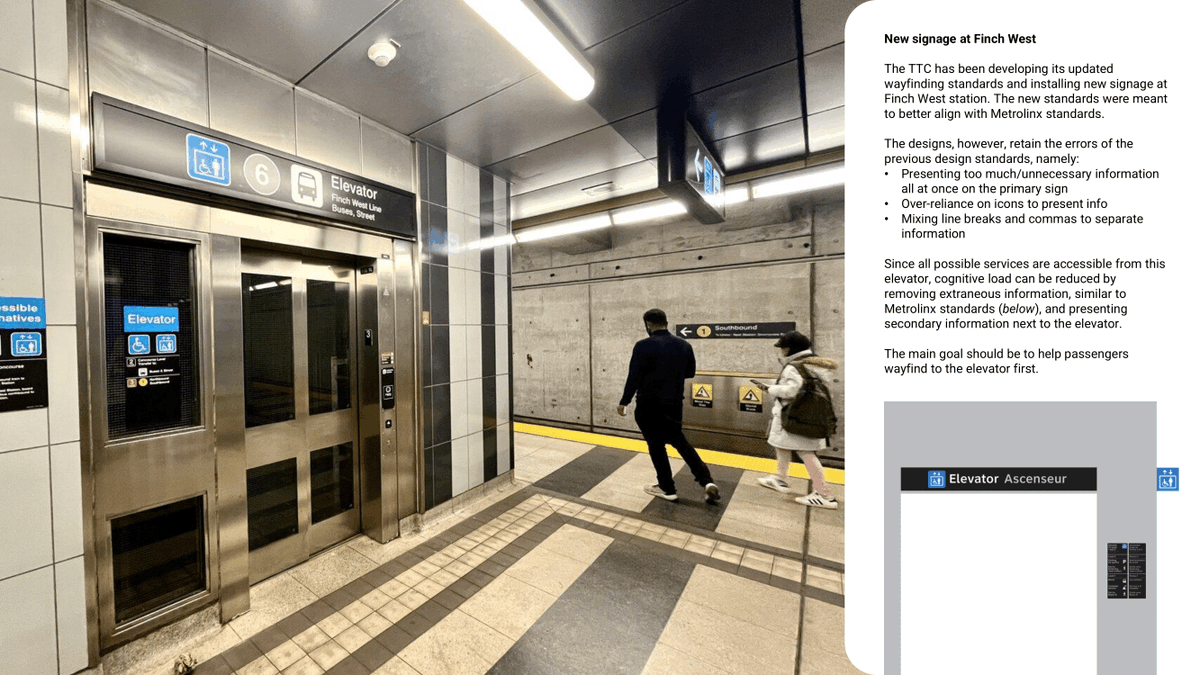
New sign at Finch West. Lots of talk from TTC about harmonizing signage with MX, but designs suboptimal.
If only one elevator accesses all services, users just need to find the elevator. Extra info makes users question decision making, when there are no further decisions to make
@Diego_Mann_ Why should signage use less legible fonts when Clearview is designed to be legible and easy to discriminate similar appearing letters?
Signage is not a branding exercise, despite what MiWay and TTC may believe.
Numbered exits were proposed back in 2020, with this rendering included in a report.
Difficult to understand why the proposed designs have gotten worse over these past 5 years. Hopeful that TTC will take feedback seriously when they begin rolling out new signage.
Numbered exits are proposed, although presentation is suboptimal. Signs are too reliant on presenting all possible information at once and are filled with icons.
Exits now introduce three separate icons: a yellow door, number, and pedestrian. Compared to MX simpler approach.
Numbered exits are proposed, although presentation is suboptimal. Signs are too reliant on presenting all possible information at once and are filled with icons.
Exits now introduce three separate icons: a yellow door, number, and pedestrian. Compared to MX simpler approach.
Sample of proposed TTC signage presented at Board Meeting this week. Issue persists that signage is cluttered with icons unfamiliar to visitors. Nothing on the sign intuitively represents a subway station.
Compare to MX approach which explicitly includes subway icon.
Line names have returned, which is the correct approach, and consistent with MX approach.
When the TTC removed line names from signage, they were forced to use either "Eastbound Westbound" or "Kennedy Kipling" to refer to the Bloor-Danforth Line.
Numbered exits are proposed, although presentation is suboptimal. Signs are too reliant on presenting all possible information at once and are filled with icons.
Exits now introduce three separate icons: a yellow door, number, and pedestrian. Compared to MX simpler approach.
@Diego_Mann_@wtml_96 There are real world constraints to implementation beyond a lack of will. Understand your frustration, but there are monetary, contractual, ownership, and partnership barriers. This isn't a MX issue, every org faces these constraints.
The Metrolinx Wayfinding Standards have been updated to present the new threshold sign designs.
New designs emphasize the operator logo, which is what the TTC had been requesting. Hopefully this improves buy-in from TTC. Updated TTC standards should be coming soon.
@wtml_96@Diego_Mann_ Updated Line 5 signs needed to fit in the existing casings of the designs made by Entro. Replacing the entire casing is expensive and hard to justify.
@LongBranchMike1@WBMetro62 Woodbine will not be the final station name. This is also hinted in the bottom right text of the rendering, and MX CEO quotes not referring to the station as Woodbine.
@yyzMYA@WBMetro62@JackTattTran@JayBeeGooner @joshuahind This mockup is the clearest example that passenger flow has never been considered. A person leaving the station needs to know exit info first and foremost, not where to find the Presto machine.
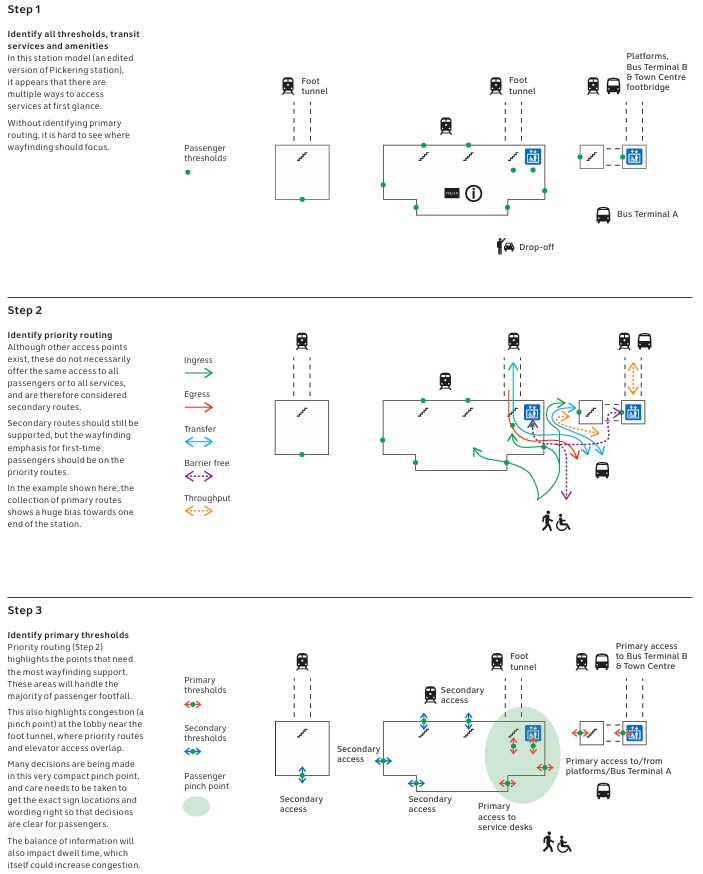
@yyzMYA@WBMetro62@JackTattTran@JayBeeGooner @joshuahind Wayfinding is a system of thinking, of which signage plays a role. Planning wayfinding requires first understanding how people move in an area, and designing signage to support that mvmt. Unless this is done, KDA is just producing a graphic design project, not wayfinding project.