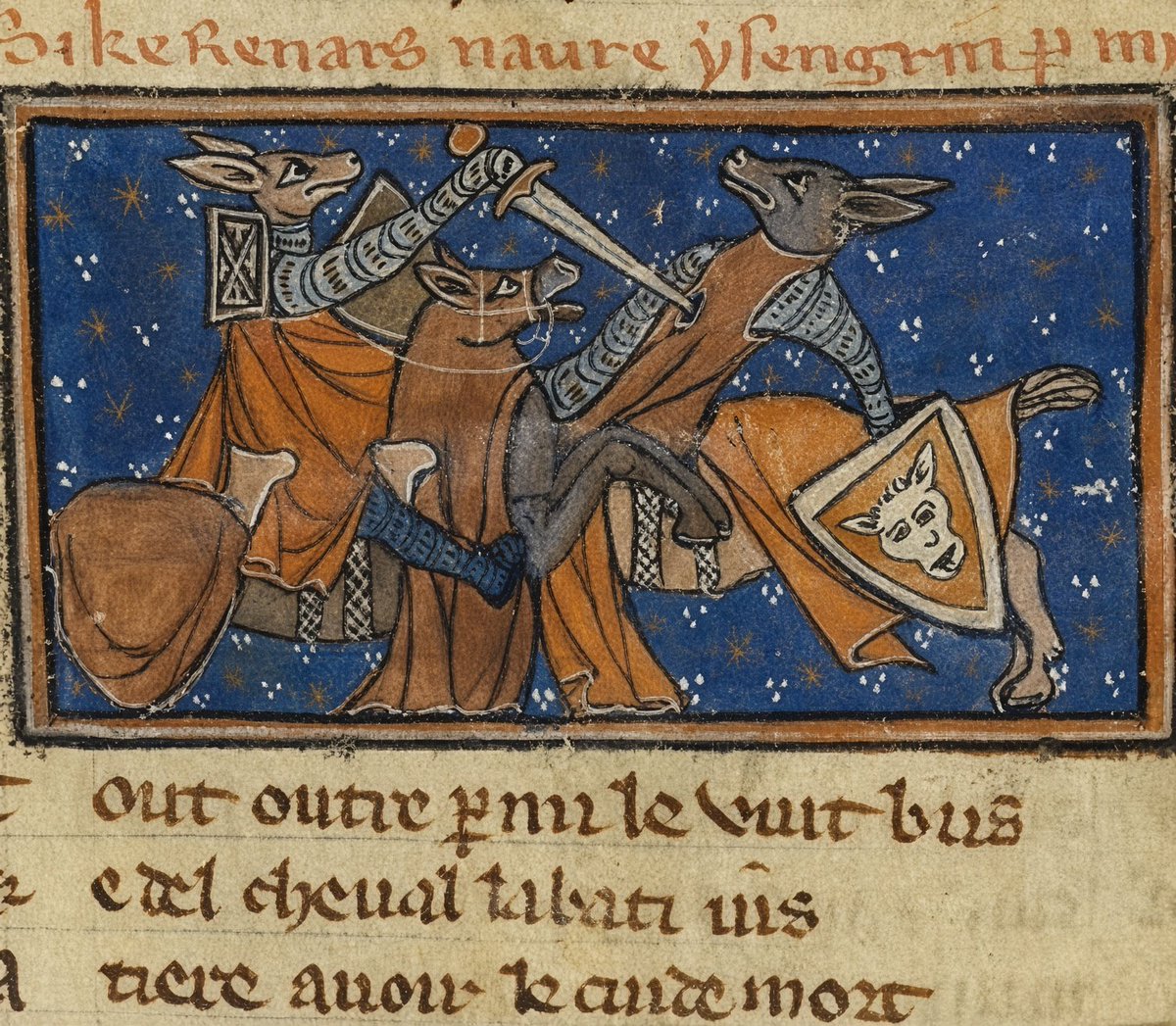
People still remember Reynard the fox (echoes of him are in Fox McCloud and Nick Wilde even today,) but many folk have forgotten about the wolf who came before him: the legendary Ysengrimus, also called Isengrim.
His and Reynard's stories were so popular that they transcended cultural boundaries; some people were even obsessed by them. They could be considered early examples of "pop culture" icons. In his time, the wolf was apparently so popular that people would hang pictures of him in their houses (an early Western example of secular "fan art.") This was a good 200 years before Robin Hood hit his stride.
In the medieval period, Isengrim was written as an anthropomorhic satire poking fun at aristocracy, corrupt monarchy, and misguided church leaders. He's a decidedly medieval wolf: obsessed with power, prideful, arrogant, and with a ravenous hunger for flesh... but he's also short-sighted and easy for the clever Reynard to trick.
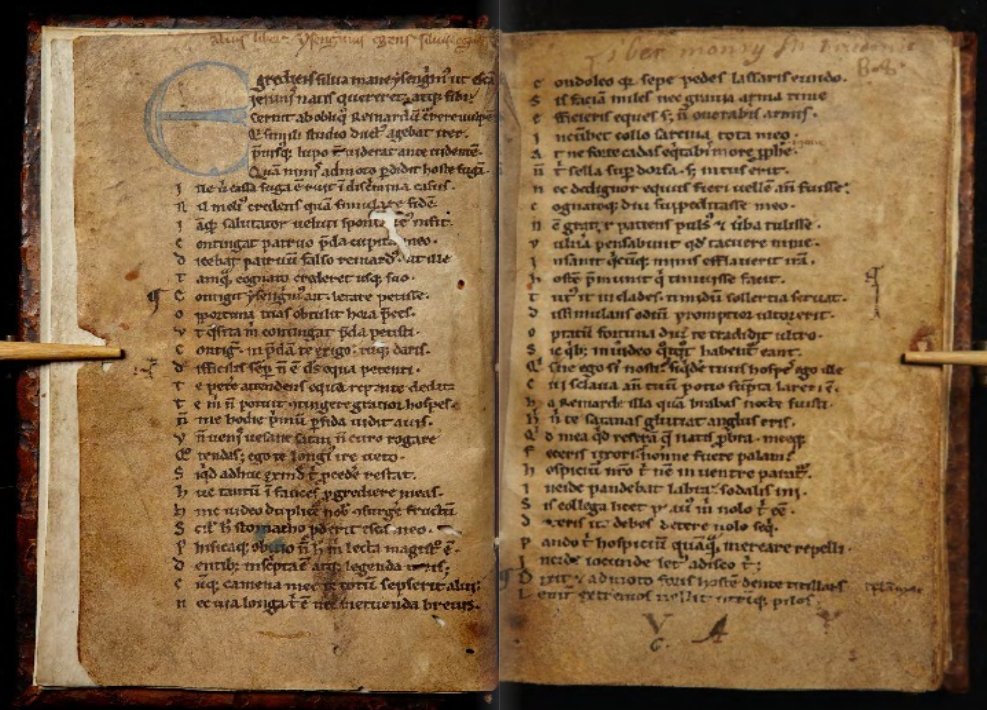
The "magnum opus" of Isengrim the wolf and his introduction to Reynard is a seven-volume Latin poem written in Flanders, in or near 1149 AD, and it's often attributed to the cleric Nivard of Ghent. It's a brutal satire where all manner of disasters befall Isengrim, from being beaten and tortured to ultimately devoured by the very animals he wants to eat. The poem is filled with tales meant to illustrate his ravenous wolf-like nature, which becomes his undoing (there's one where he goes to school to learn Latin but all he can think about is food... he can't stop being a wolf even when he wants to).
He becomes a monk for a similar reason: he thinks he'll find food in the monastery, only to see himself whipped and kicked out instead.
Unlike the Big Bad Wolf, Isengrim and Reynard are mostly civilized creatures, living in their own anthropomorphic medieval world and going about their daily lives as people of their station would do (albeit with a lot of church and court politics involved.) But their world is merely a facade: Isengrim wears a civil mask, but in the end, he's nothing more than a gluttonous, vain wolf who gets his comeuppance.
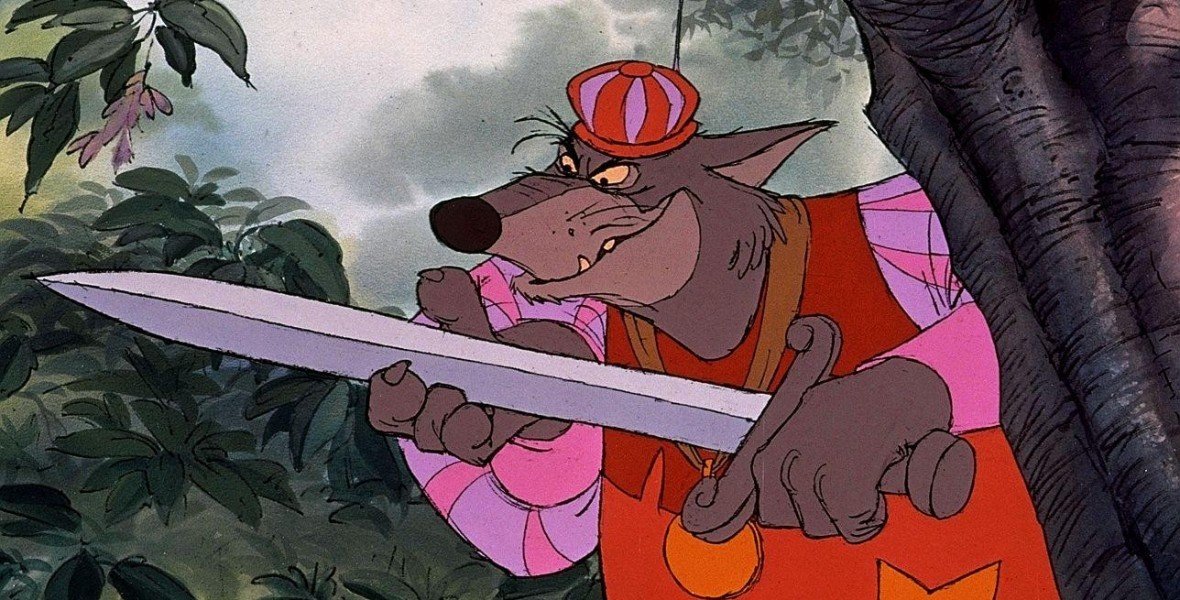
It's possible that the Sheriff of Nottingham in Disney's Robin Hood was chosen to be a wolf out of vague inspiration from Isengrim. It's also likely that Maugrim, the Captain of the Secret Police in C.S. Lewis's the Lion the Witch and the Wardrobe, was based on him, but Lewis never stated it explicitly.
From a fantasy or D&D perspective, if Isengrim was brought into your game, he would be an example of an anthropomorphic animal character done right. He can't easily be swapped for a human, because despite outwardly acting like a human on the surface, in truth he's a forest beast driven by instincts that he barely tries to suppress. In our upcoming animal adventure, I resurrect him as the sadistic Ghralmir, Captain of the King's Elite, the Isenwulfr. #fantasy #ttrpgs
I'll be sincerely honest, I too am also in the same boat, and while I love my oomfs to death, I just can't make the first move to chat especially when it comes to DMs and social groups, gives me PTSD to when I would always be that one person in that friend group that wouldnt talk